Start with the guided reading below, or search this chapter for a person, quotation or topic. Follow the writing and evidence behind this part of GIBBS.
What would you like to explore in Madam, You Have Your Answer?
Go beyond the book · Madam, You Have Your Answer
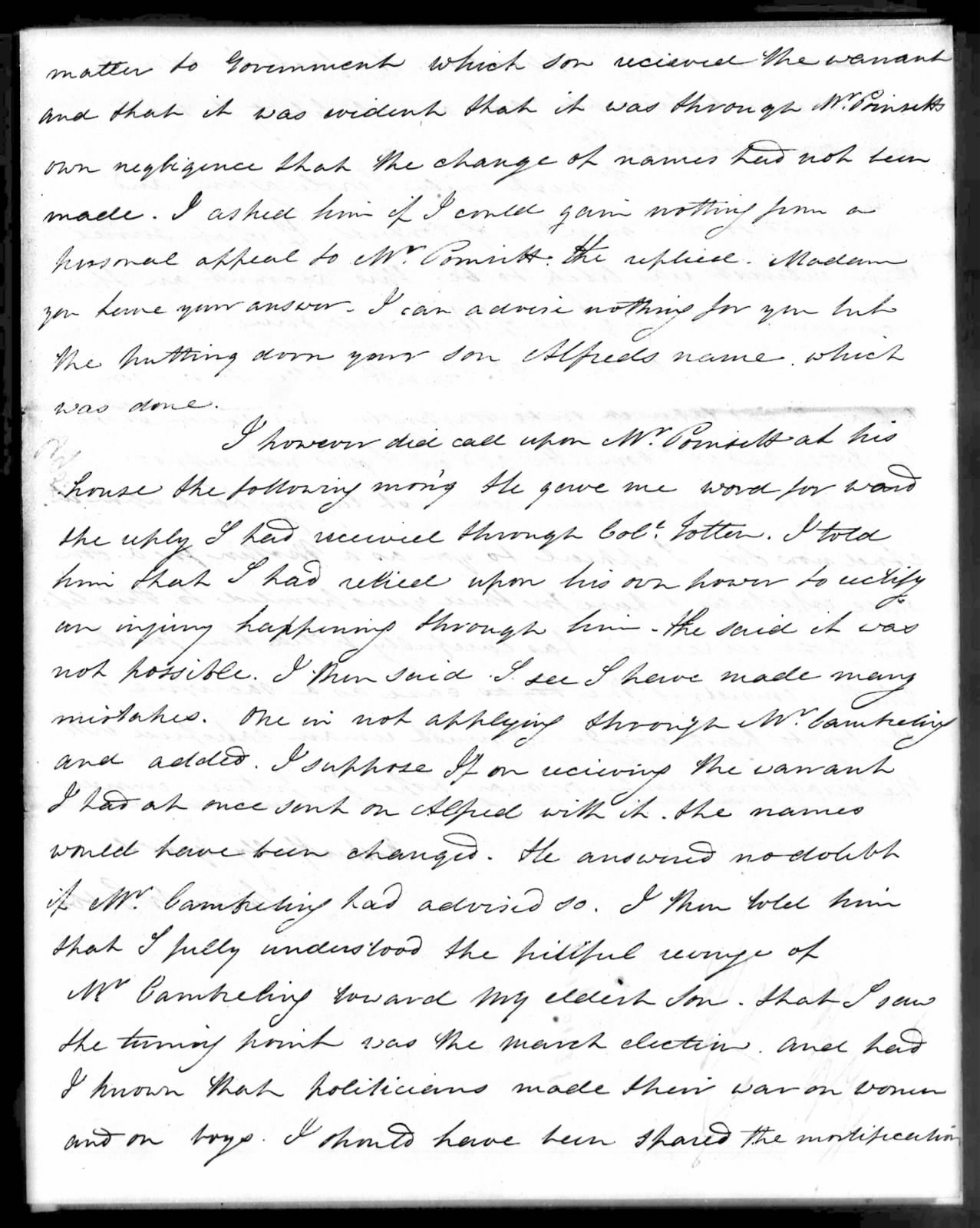
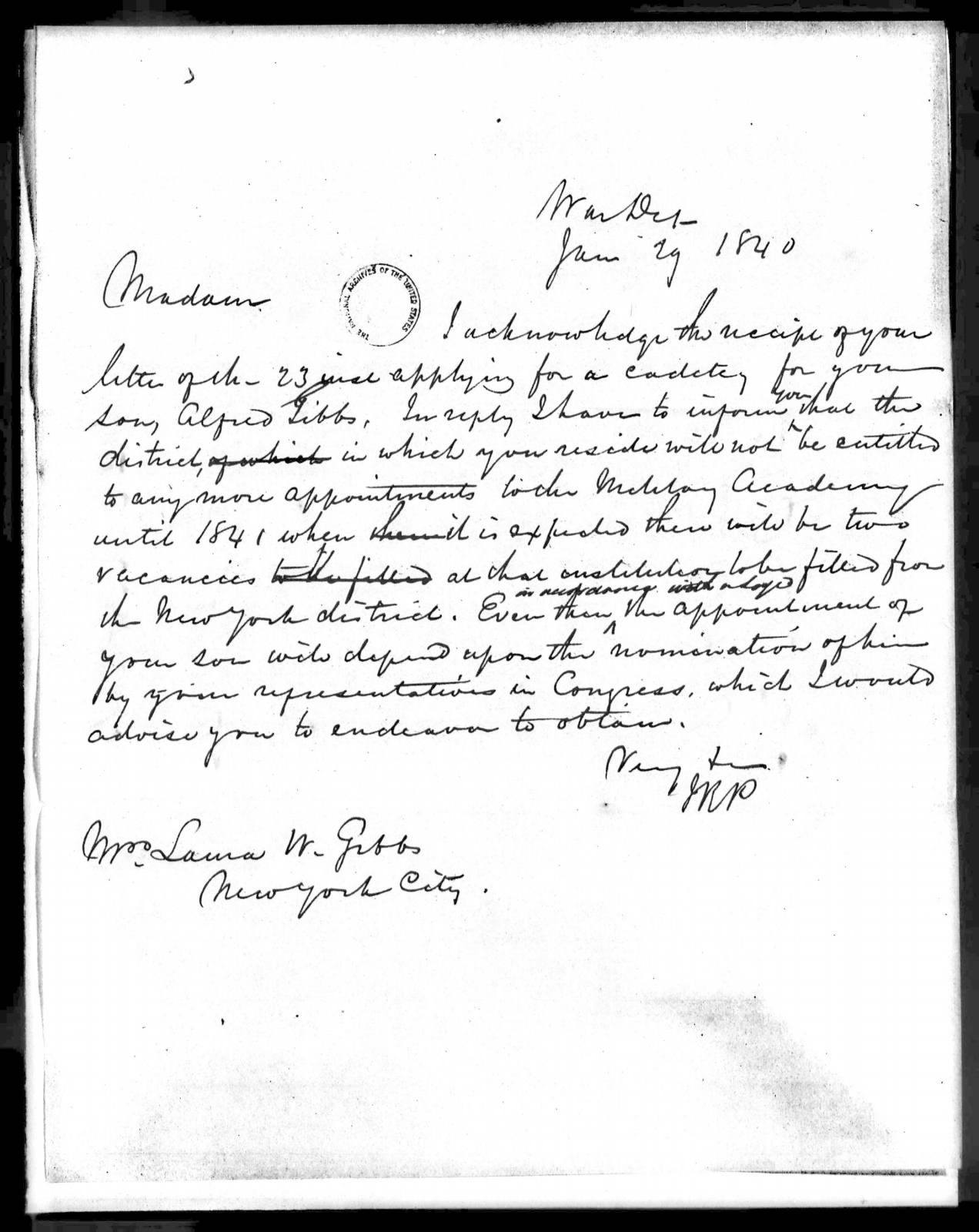
Hear Laura’s account, then check its setting
This chapter follows a mother’s attempt to gain a hearing in Washington. Her written account supplies a voice that a list of appointments cannot convey.
New to these records? A little context.
A docket is an office’s summary or filing note; it may be on a wrapper rather than in the letter. An endorsement is another official’s response or forwarding note. Read each voice and date separately. A transcription is a reading of a document, with uncertain words marked where the exhibit provides them.
Who said “Madam, you have your answer”?
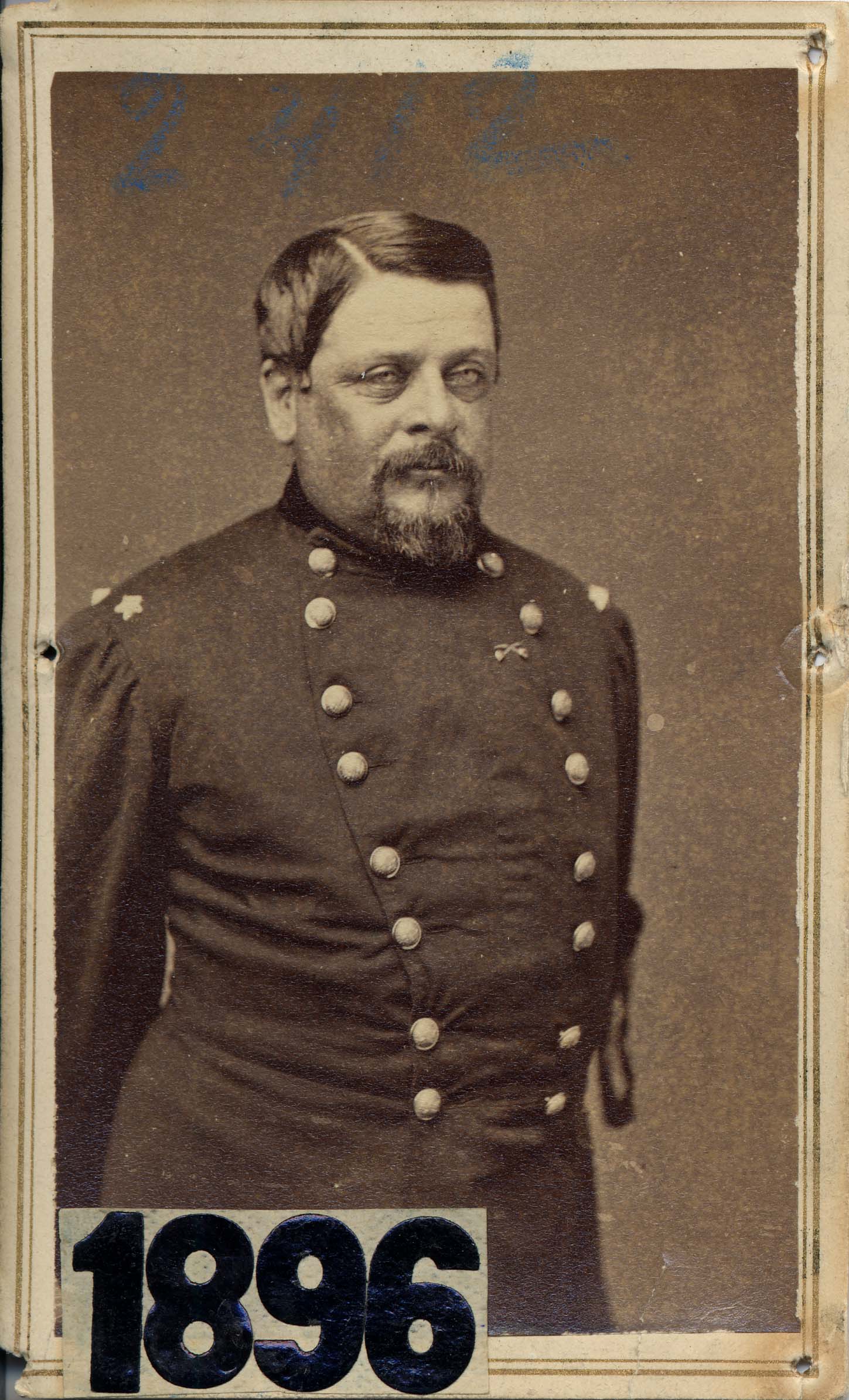
gibbs-cadet-file-hero-header · From the linked account. Its original credits and image status are preserved there.
Read the source exhibit & its explanation
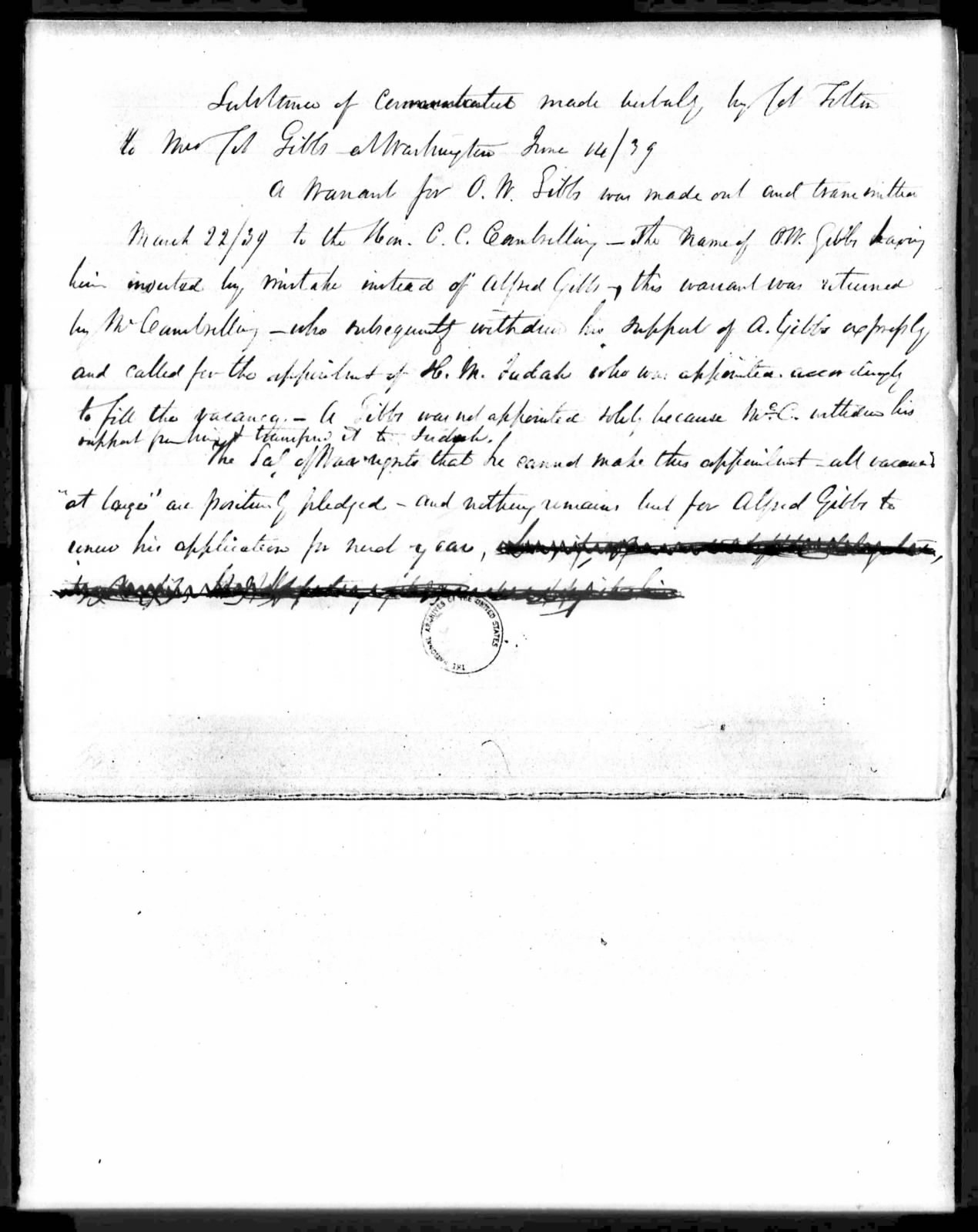
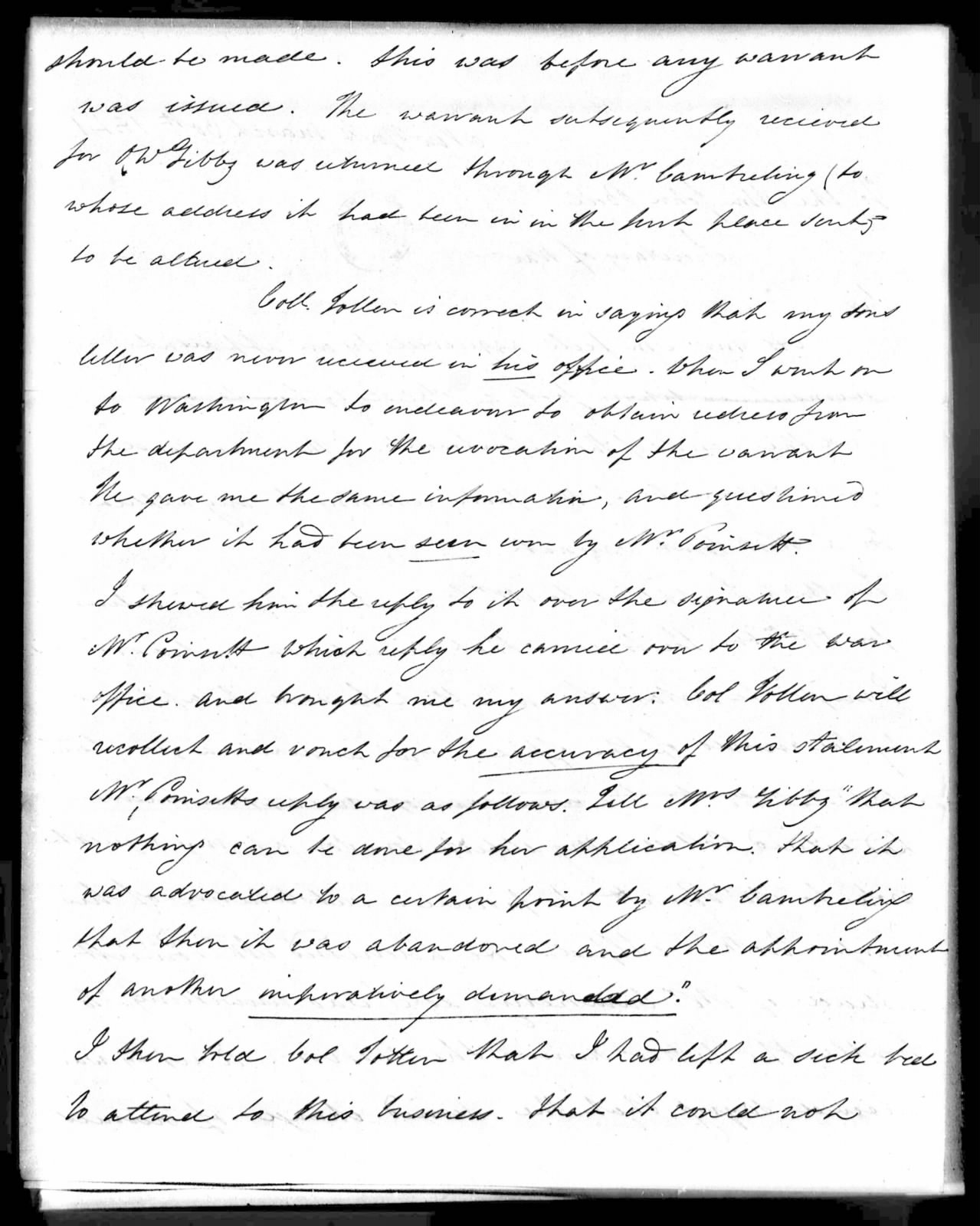
Laura’s account of the Washington appeal
The exhibit includes Laura’s account and an explicit correction identifying Colonel Totten, rather than Secretary Poinsett, as the speaker of the phrase. That correction matters to how the scene is understood.
What to examine: Read Laura’s account before the editorial explanation. Separate what she reports hearing from later captions or summaries.
Keep this distinction in mind: The exhibit corrects an earlier attribution. Preserve the distinction between Laura’s recollection and the department’s administrative record.
Keep your question in view as you explore. The reading tray retains Madam, You Have Your Answer. Close it to return to this point, or deliberately choose to explore outside the chapter.
Follow a life beyond the page
People you meet here
The book brings you into these lives. Follow a person to the family, service and research records available here. Pension material is identified separately from biography and recollection.
Follow Gibbs through the service and medical records, then Peggy’s petitions after his death. These sources let you distinguish what a doctor observed, what a widow asked for and what an official record actually establishes.
Totten's office ran West Point when Laura appealed for her son. Follow the institutional relationship behind her petition rather than treating the application as a private family matter alone.
These connections come from the v172 manuscript and existing subject pages. A pension not connected here may still exist elsewhere. Namesakes and uncertain identities are not silently joined.
Follow the words into the evidence
What caught your attention?
Find a line from your reading, then follow its document and the record around it. Matching words helps locate evidence; checking who wrote them, when, and why helps you understand it.