The book is finished. GIBBS: The Forgotten Warrior of the First New York Dragoons, by Garland H. Green Jr. How to order is coming soon; you can reserve a copy now. Reserve a copy →
Alfred GibbsThe research archive
Menu

The evidence behind your reading · The Widow's Forty Years

Read the records behind this chapter

Follow a letter, report, recollection or family record beyond the passage in the book. Each source below shows where the chapter uses it and what to examine. Open it here, compare its pages, and return without losing your chapter.

Begin with a question: What did Peggy have to establish to obtain support?

Go beyond the book · The Widow's Forty Years

Follow Peggy’s claim in her own legal record

After Alfred’s death, Peggy’s story continued through pension declarations, witnesses, petitions, and family obligations. These papers make the widow an active claimant rather than an ending in a soldier’s biography.

New to these records? A little context.

A pension file records a claim and the evidence gathered to decide it. A burial list records an interment or the information copied from a marker. These records can contain mistakes, and each has a different purpose from a later family history.

What did Peggy have to establish to obtain support?
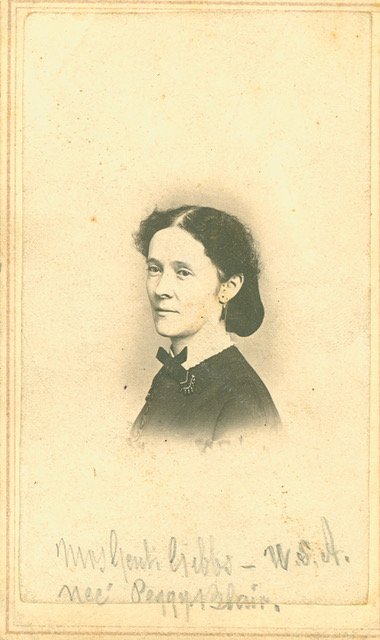
Peggy Foushee Blair Gibbs — original carte de visite
Peggy Foushee Blair Gibbs — original carte de visite · From the linked account. Its original credits and image status are preserved there.

Read the source exhibit & its explanation

Peggy’s family and pension research

Her research page brings pension material together with family records and later notices. It provides the named documents behind the chapter’s account of the long claim.

What to examine: Find the declarations and witness statements, then compare them with the award and petition dates. Ask what each witness actually observed and what Peggy requested.

Keep this distinction in mind: A witness’s medical opinion and an administrative pension decision are distinct evidence. Do not treat an award as proof of every causal claim made in support of it.

Follow this question into 261 Greene Street →

Keep your question in view as you explore. The reading tray retains The Widow's Forty Years. Close it to return to this point, or deliberately choose to explore outside the chapter.

12 distinct source records · Page 2 of 2

Named source

page to confirm

Labeled document illustration, not a scan. Local scan not connected.

Named source

Dr. John Blair Gibbs's words as reported in 1898 (newspaper or letter quoted on spanamwar.com); original to name

Begin with who made this record, when and for whom. Compare the book’s words with the scan and the surrounding transcription. Distinguish what the writer observed from a request, opinion or later interpretation.

Your passage · The boy who lisped

I don't see how with any self-respect I could stay in New York while such a scrap was going on.

Source identified; page to confirm. Read the surrounding record before drawing a conclusion.

· page to confirm

Where this chapter uses this source · 1 passage

The boy who lisped

I don't see how with any self-respect I could stay in New York while such a scrap was going on.

Source identified; page to confirm

Examine quotation 39-030 →

Open the record and its pages →

0 catalogued pages. Transcription and image availability are shown on the document view.

Citation and source credit

Dr. John Blair Gibbs's words as reported in 1898 (newspaper or letter quoted on spanamwar.com); original to name

Citation details need review.

Printed page (archive.org leaf 249) · Internet Archive scan
Printed page (archive.org leaf 249) · Internet Archive scan · Document preview; the quoted page may differ.

Named source

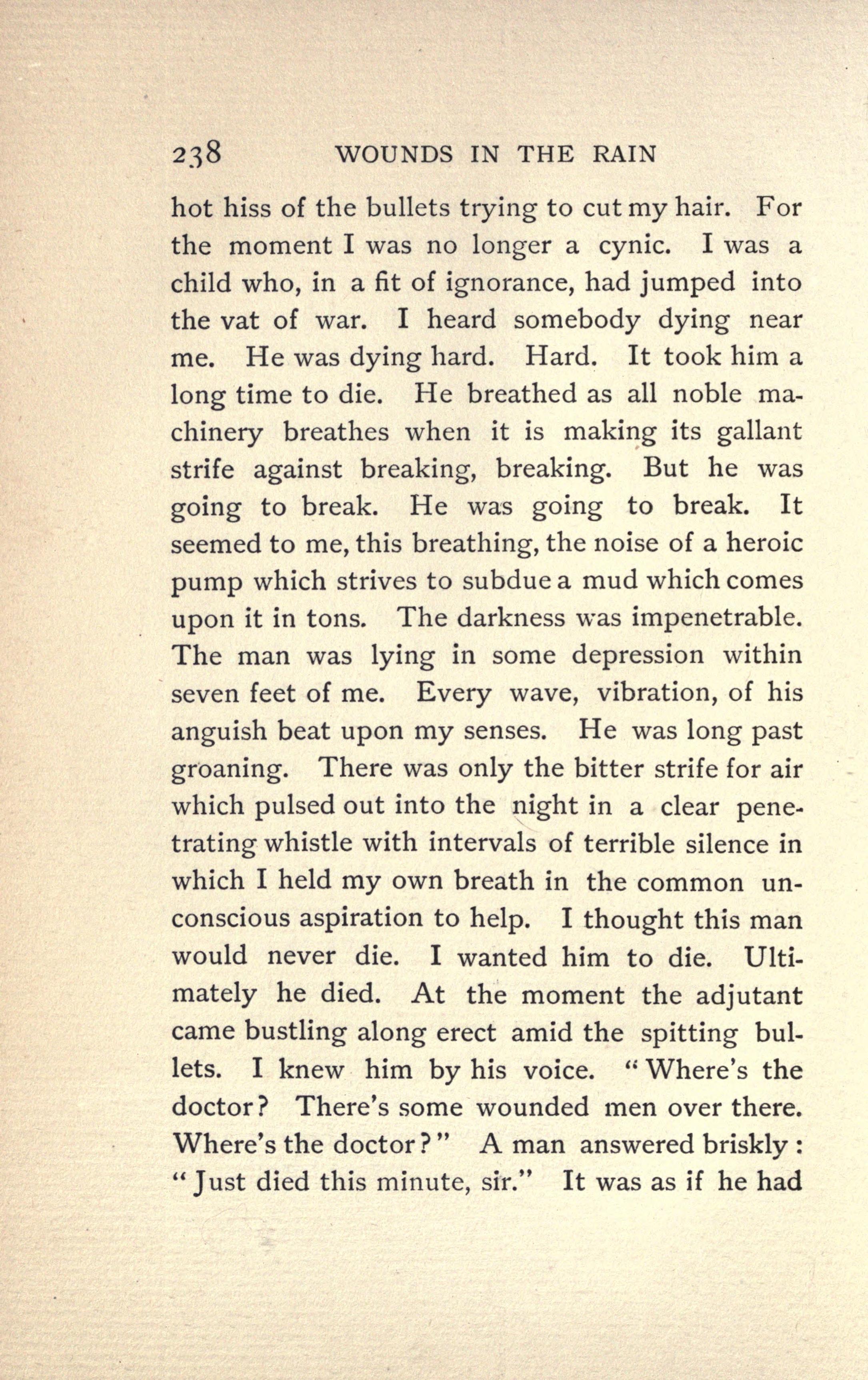
Crane, S. (1899). War memories. The Anglo-Saxon Review, 3 (reprinted in Wounds in the Rain, 1900); quoted on spanamwar.com and Garland's page

Begin with who made this record, when and for whom. Compare the book’s words with the scan and the surrounding transcription. Distinguish what the writer observed from a request, opinion or later interpretation.

Your passage · The boy who lisped

He was dying hard. Hard. It took him a long time to die.

Source identified; supplied locator: p. 238. Read the surrounding record before drawing a conclusion.

· p. 238

Where this chapter uses this source · 4 passages

The boy who lisped

He was dying hard. Hard. It took him a long time to die.

Source identified; supplied locator: p. 238

Examine quotation 39-031 →

The boy who lisped

He breathed as all noble machinery breaths when it is making its gallant strife against breaking, breaking. But he was going to break.

Source identified; supplied locator: p. 238 · Review flag: close match, not exact: check the wording against the scan

Examine quotation 39-032 →

The boy who lisped

Just died this minute, sir.

Source identified; supplied locator: p. 238

Examine quotation 39-034 →

The boy who lisped

One's eye could not pick the living from the dead until one saw that a certain head had beaten it a great dark pool.

Source identified; supplied locator: p. 239 · Review flag: close match, not exact: check the wording against the scan

Examine quotation 39-036 →

Open the record and its pages →

2 catalogued pages. Transcription and image availability are shown on the document view.

Citation and source credit

Crane, S. (1899). War memories. The Anglo-Saxon Review, 3 (reprinted in Wounds in the Rain, 1900); quoted on spanamwar.com and Garland's page

Citation details need review.

Scan shown on AlfredGibbs.com
Scan shown on AlfredGibbs.com · Document preview; the quoted page may differ.

Named source

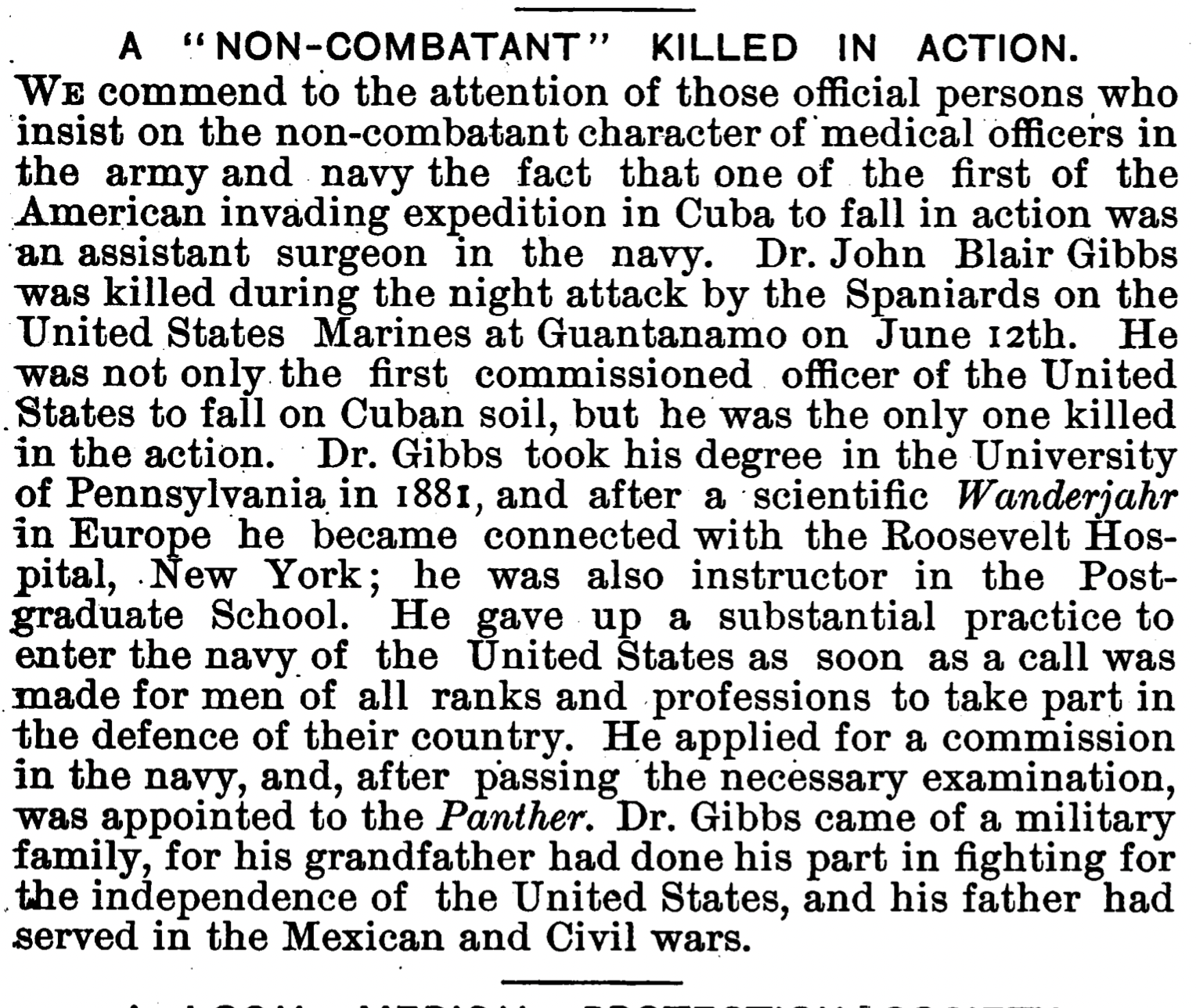
Contemporary 1898 account quoted on spanamwar.com ("1st Marines: Gibbs"); original to name

Begin with who made this record, when and for whom. Compare the book’s words with the scan and the surrounding transcription. Distinguish what the writer observed from a request, opinion or later interpretation.

Your passage · The boy who lisped

the first commissioned officer of the United States to fall on Cuban soil.

Source identified; page to confirm. Read the surrounding record before drawing a conclusion.

· page to confirm

Where this chapter uses this source · 1 passage

The boy who lisped

the first commissioned officer of the United States to fall on Cuban soil.

Source identified; page to confirm

Examine quotation 39-035 →

Open the record and its pages →

1 catalogued pages. Transcription and image availability are shown on the document view.

Citation and source credit

Contemporary 1898 account quoted on spanamwar.com ("1st Marines: Gibbs"); original to name

Citation details need review.

Named source

p. 119

Labeled document illustration, not a scan. External scan link available.

Named source

Elizabeth B. Custer to Peggy Blair Gibbs, Paris, June 19, 1898, as printed in Blair, L. C. G. (1933), The Blairs of Richmond, Virginia (Longer Note 23)

Begin with who made this record, when and for whom. Compare the book’s words with the scan and the surrounding transcription. Distinguish what the writer observed from a request, opinion or later interpretation.

Your passage · The boy who lisped

Where my boys were born.

Source identified; supplied locator: p. 119. Read the surrounding record before drawing a conclusion.

· p. 119

Where this chapter uses this source · 6 passages

The boy who lisped

Where my boys were born.

Source identified; supplied locator: p. 119

Examine quotation 39-037 →

The boy who lisped

Where my boys were born.

Source identified; supplied locator: p. 119

Examine quotation 39-038 →

The boy who lisped

Paris, June 19th, 1898

Source identified; supplied locator: p. 119

Examine quotation 39-045 →

The boy who lisped

The hundred little incidents of the boys' lives, their quaint speeches, their courtesy and kindness as tiny fellows—their dear dog—indeed so much is indelibly impressed on my mind as I go back to thos…

Source identified; supplied locator: p. 119

Examine quotation 39-048 →

The boy who lisped

The few brief lines I have yet had prove how worthy a son of such a father and of such courageous ancestors. It was a grand departure from this life to die so heroically while working to save the live…

Source identified; supplied locator: p. 120

Examine quotation 39-049 →

The boy who lisped

May the Saviour comfort you.

Source identified; supplied locator: p. 120

Examine quotation 39-050 →

Open the record and its pages →

0 catalogued pages. Transcription and image availability are shown on the document view.

Citation and source credit

Elizabeth B. Custer to Peggy Blair Gibbs, Paris, June 19, 1898, as printed in Blair, L. C. G. (1933), The Blairs of Richmond, Virginia (Longer Note 23)

Citation details need review.

Printed page (archive.org leaf 30) · Internet Archive scan
Printed page (archive.org leaf 30) · Internet Archive scan · Supplied page connection.

Printed book (public domain)

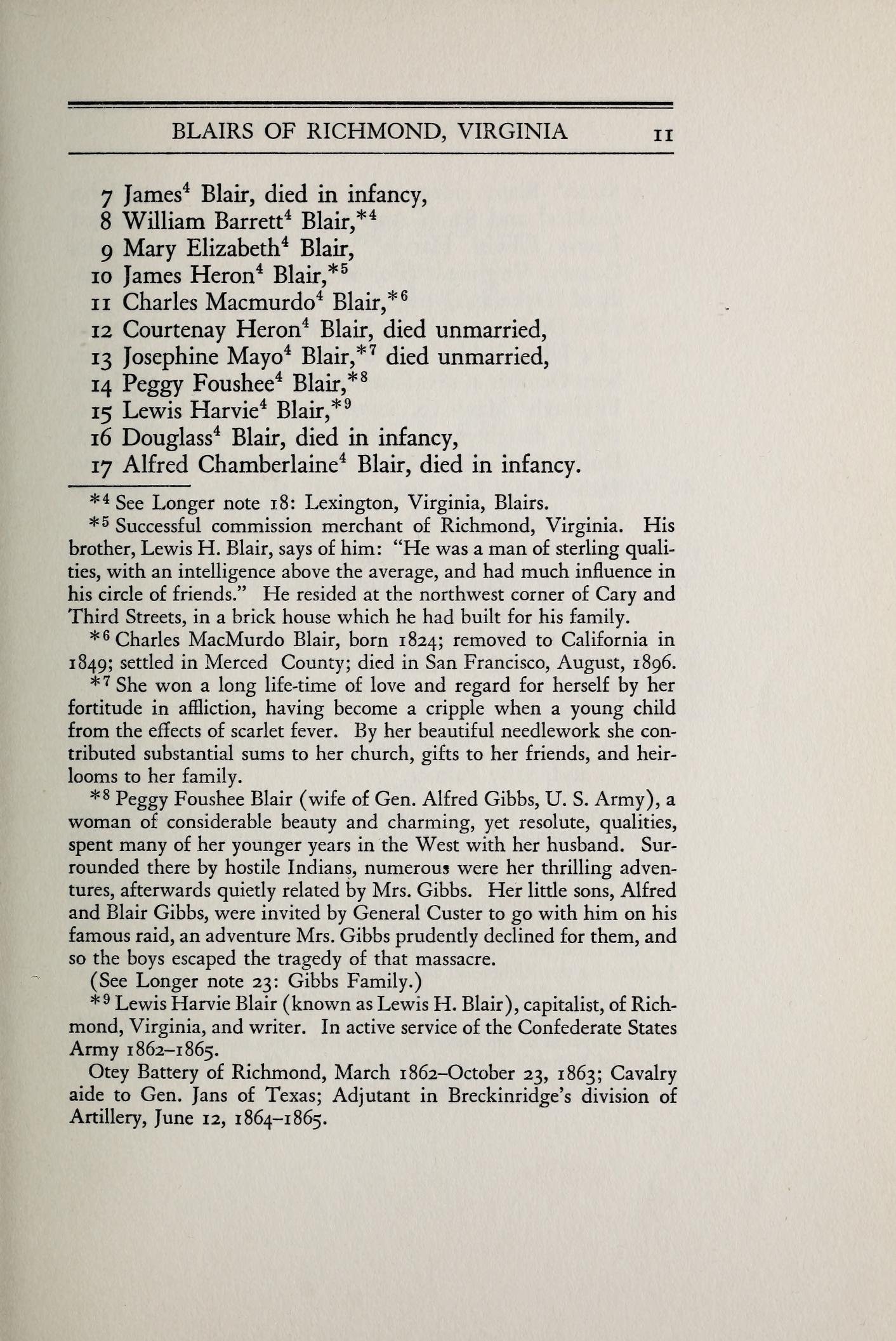
Blair, L. C. G. (1933). The Blairs of Richmond, Virginia, p. 11

Identify the author and publication date before weighing this account. A later recollection and a contemporary document answer different questions. Read the cited page and its surrounding passage.

Your passage · The boy who lisped

Her little sons, Alfred and Blair Gibbs, were invited by General Custer to go with him on his famous raid, an adventure Mrs. Gibbs prudently declined for them, and so the boys esca…

Source identified; supplied locator: p. 11. Read the surrounding record before drawing a conclusion.

· p. 11

Where this chapter uses this source · 1 passage

The boy who lisped

Her little sons, Alfred and Blair Gibbs, were invited by General Custer to go with him on his famous raid, an adventure Mrs. Gibbs prudently declined for them, and so the boys escaped the tragedy of t…

Source identified; supplied locator: p. 11

Examine quotation 39-040 →

Open the record and its pages →

2 catalogued pages. Transcription and image availability are shown on the document view.

Citation and source credit

Blair, L. C. G. (1933). The Blairs of Richmond, Virginia, p. 11

Citation details need review.

Named source

p. 119

Labeled document illustration, not a scan. External scan link available.

Named source

Elizabeth B. Custer to Peggy Blair Gibbs, June 19, 1898, as printed in Blair (1933), Longer Note 23.

Begin with who made this record, when and for whom. Compare the book’s words with the scan and the surrounding transcription. Distinguish what the writer observed from a request, opinion or later interpretation.

Your passage · The boy who lisped

My heart is heavy with sorrow for you in this dark hour of your life. . . . All the memories of long ago come to me:—the children playing their little pranks on my husband and his …

Source identified; supplied locator: p. 119. Read the surrounding record before drawing a conclusion.

· p. 119

Where this chapter uses this source · 1 passage

The boy who lisped

My heart is heavy with sorrow for you in this dark hour of your life. . . . All the memories of long ago come to me:—the children playing their little pranks on my husband and his delight in their com…

Source identified; supplied locator: p. 119

Examine quotation 39-047 →

Open the record and its pages →

0 catalogued pages. Transcription and image availability are shown on the document view.

Citation and source credit

Elizabeth B. Custer to Peggy Blair Gibbs, June 19, 1898, as printed in Blair (1933), Longer Note 23.

Citation details need review.

← Continue your chapter journey · Follow the people in this chapter →

Your chapter stays open
Your book journey · The Widow's Forty YearsExplore the evidence

Compare the original with its transcription and citation.

Explore outside this journey ↗

This chapter’s source collection as JSON