The book is finished. GIBBS: The Forgotten Warrior of the First New York Dragoons, by Garland H. Green Jr. How to order is coming soon; you can reserve a copy now. Reserve a copy →
Alfred GibbsThe research archive
Menu

The evidence behind your reading · I Knew They Wouldn't

Read the records behind this chapter

Follow a letter, report, recollection or family record beyond the passage in the book. Each source below shows where the chapter uses it and what to examine. Open it here, compare its pages, and return without losing your chapter.

Begin with a question: What could soldiers know in the middle of a campaign?

Go beyond the book · I Knew They Wouldn't

Read the campaign before its outcome was known

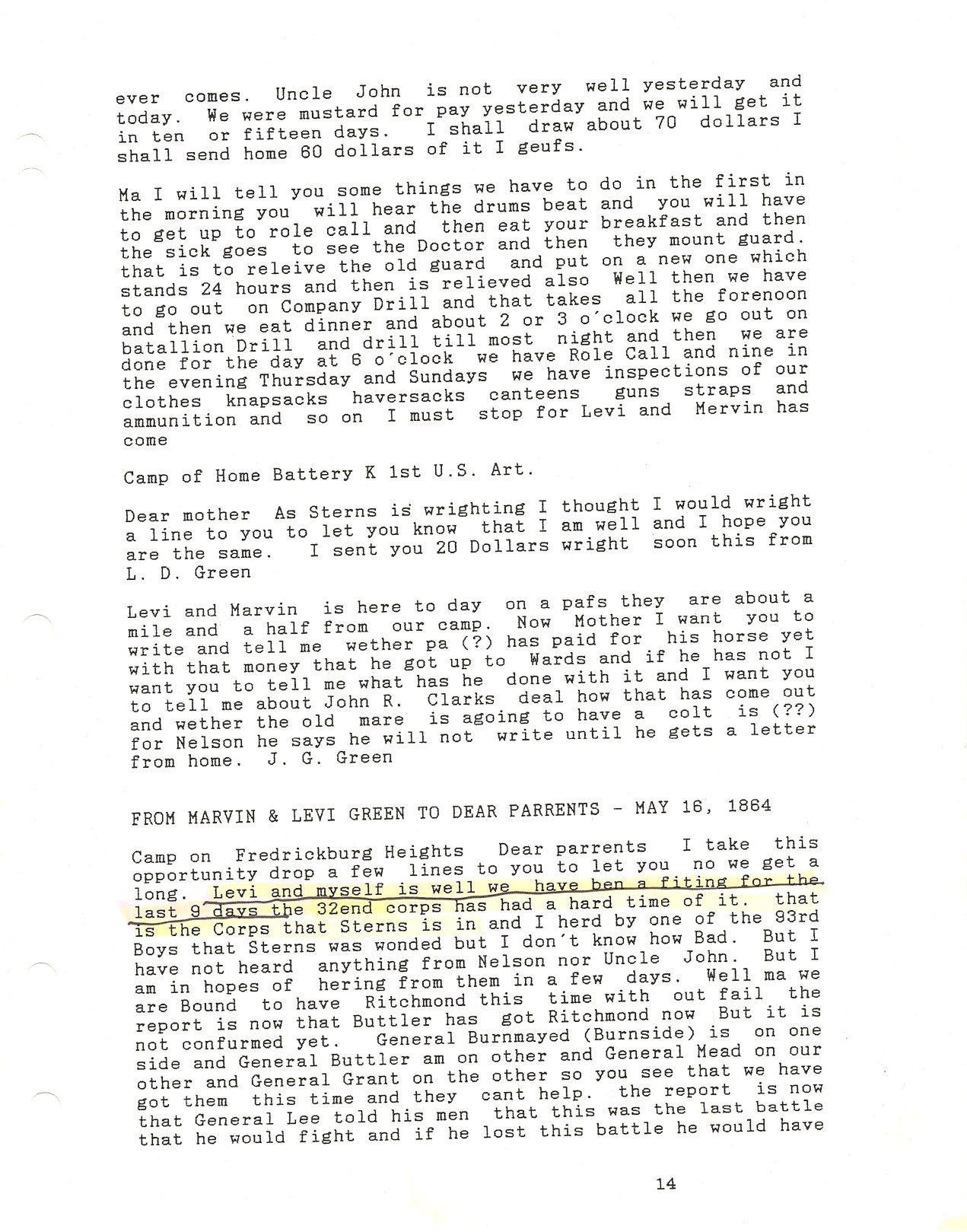
In May 1864, Levi and Marvin wrote home from the Fredericksburg heights after days of fighting. Their letter preserves confidence, rumors, and worry about their brother.

New to these records? A little context.

A transcription records the words of a letter. A typescript is a typed copy, which may survive even when the handwritten original is not on display. The linked account identifies the version it preserves; later explanatory paragraphs are not part of the letter.

What could soldiers know in the middle of a campaign?
Green Family Letters, Marjorie Kuski typescript, page 14
Green Family Letters, Marjorie Kuski typescript, page 14 · From the linked account. Its original credits and image status are preserved there.

Read the source exhibit & its explanation

Marvin and Levi’s joint letter, May 16, 1864

The joint letter reports that they are well and describes recent fighting, while relaying uncertain news about John Sterns Green. It makes the limits of wartime information visible.

What to examine: Find the statements about their own condition, the rumor concerning John, and predictions about Richmond. Sort direct experience, hearsay, and expectation.

Keep this distinction in mind: A hopeful prediction is evidence of belief at the time, not of the campaign’s actual outcome. Read the later context without erasing that uncertainty.

Keep your question in view as you explore. The reading tray retains I Knew They Wouldn't → Fredericksburg. Close it to return to this point, or deliberately choose to explore outside the chapter.

2 distinct source records · Page 1 of 1

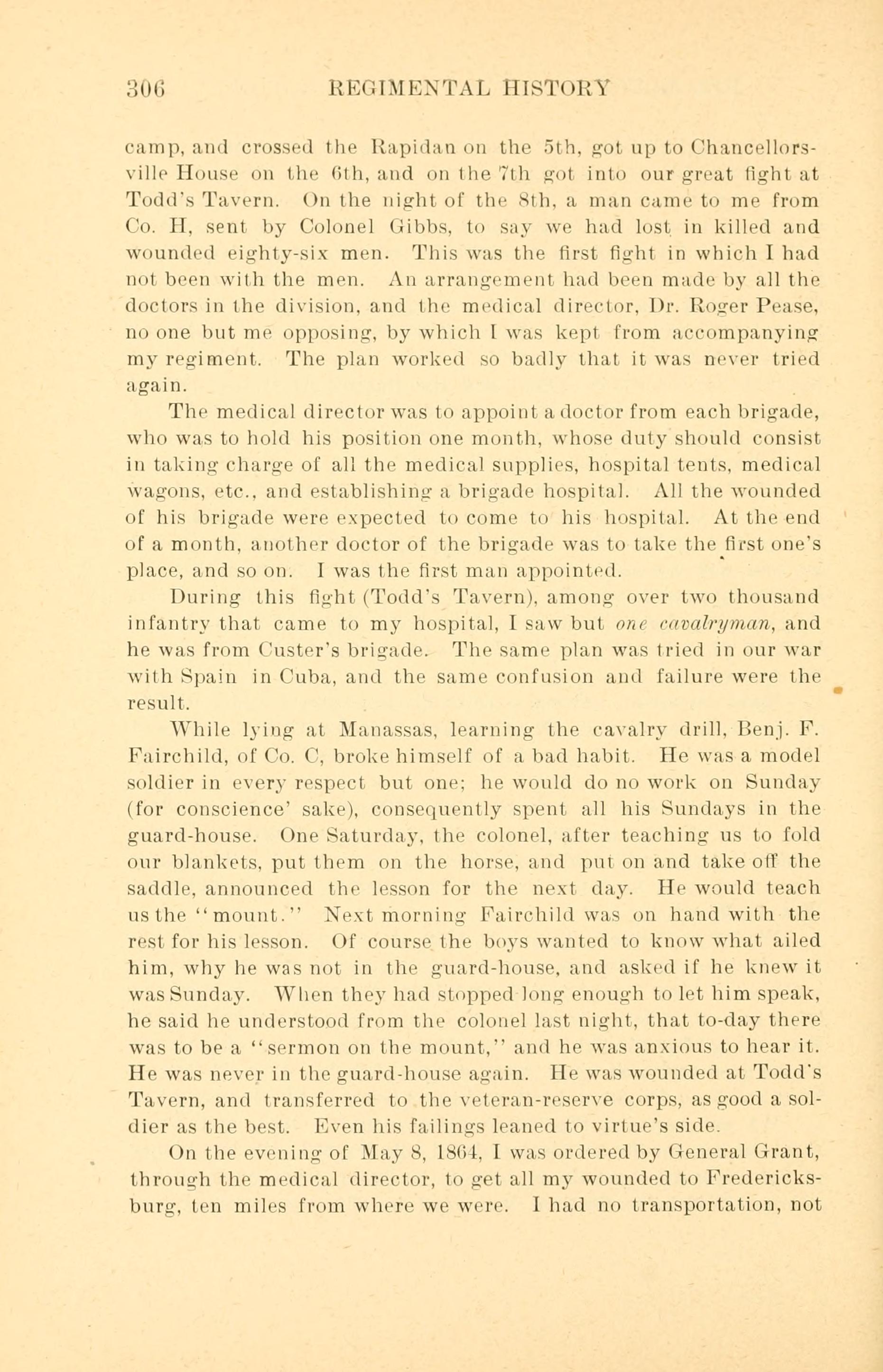
Printed page (archive.org leaf 323) · Internet Archive scan
Printed page (archive.org leaf 323) · Internet Archive scan · Document preview; the quoted page may differ.

Printed book

Bowen, J. R. (1900). Regimental history of the First New York Dragoons, Kneeland, "Recollections of an army surgeon", pp. 306-307.

Identify the author and publication date before weighing this account. A later recollection and a contemporary document answer different questions. Read the cited page and its surrounding passage.

Your passage · Fredericksburg

no transportation, not so much as a wheelbarrow,

Page connection supplied; check matching method. Read the surrounding record before drawing a conclusion.

· pp. 306-307

Where this chapter uses this source · 1 passage

Fredericksburg

no transportation, not so much as a wheelbarrow,

Page connection supplied; check matching method

Examine quotation 30-017 →

Open the record and its pages →

3 catalogued pages. Transcription and image availability are shown on the document view.

Citation and source credit

Bowen, J. R. (1900). Regimental history of the First New York Dragoons, Kneeland, "Recollections of an army surgeon", pp. 306-307.

Citation details need review.

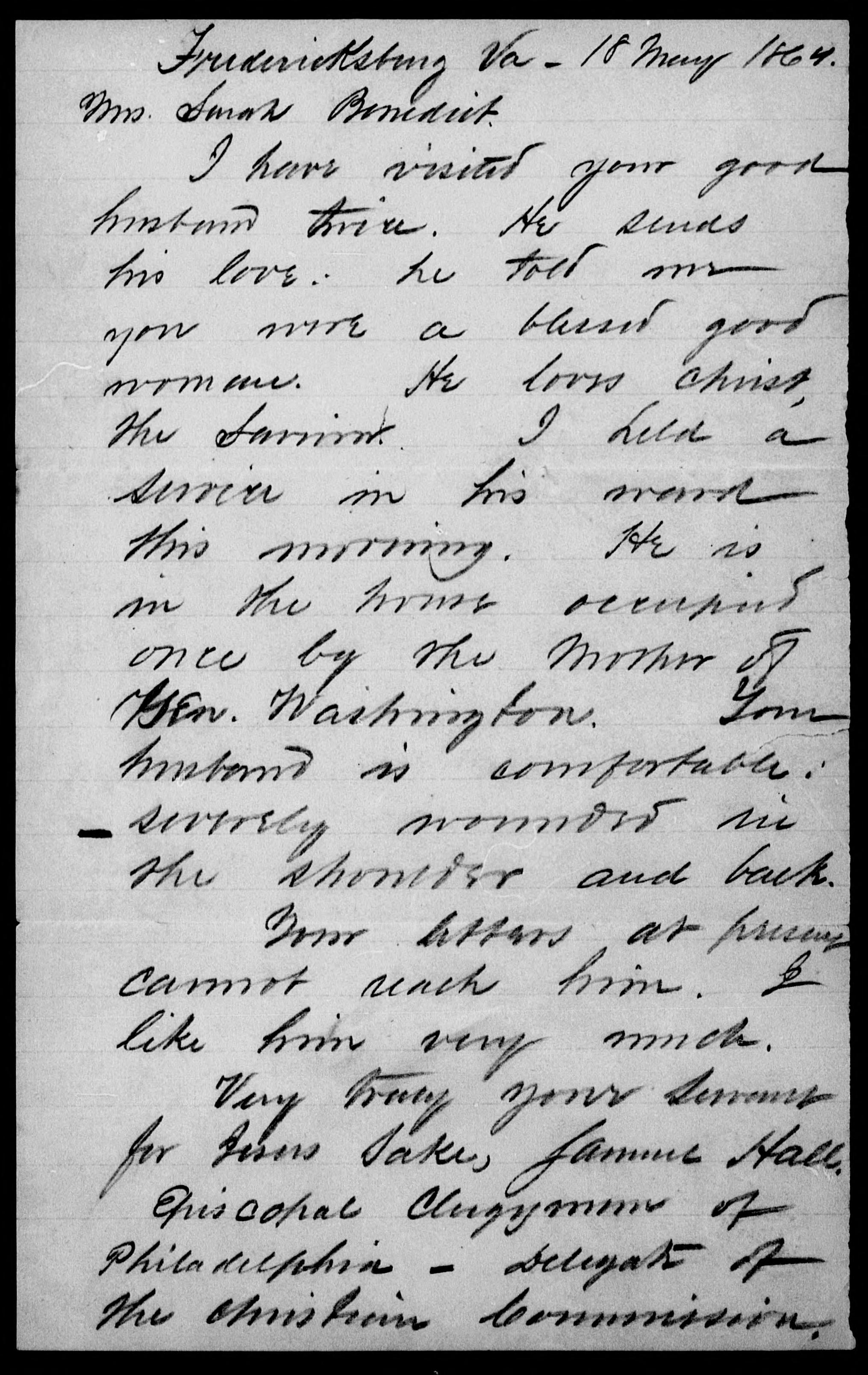
Samuel Hall to Sarah Benedict, Fredericksburg, 18 May 1864 (frame n134) · scan on Garland’s page
Samuel Hall to Sarah Benedict, Fredericksburg, 18 May 1864 (frame n134) · scan on Garland’s page · Supplied page connection.

Named source

George D. Benedict to his wife Sarah, Warrenton, Va., July 31, 1863. George D. Benedict letters, 1863-1864, Collection #4943-z, Southern Historical Collection, Wilson Library, University of North Carolina at Chapel Hill

Begin with who made this record, when and for whom. Compare the book’s words with the scan and the surrounding transcription. Distinguish what the writer observed from a request, opinion or later interpretation.

Your passage · Fredericksburg

I have visited your good husband twice. He sends his love. He told me you were a blessed good woman. He loves Christ, the Saviour. I held a service in his ward this morning. He is …

Page connection supplied; check matching method. Read the surrounding record before drawing a conclusion.

· page to confirm

Where this chapter uses this source · 1 passage

Fredericksburg

I have visited your good husband twice. He sends his love. He told me you were a blessed good woman. He loves Christ, the Saviour. I held a service in his ward this morning. He is in the house occupie…

Page connection supplied; check matching method

Examine quotation 30-019 →

Open the record and its pages →

15 catalogued pages. Transcription and image availability are shown on the document view.

Citation and source credit

George D. Benedict to his wife Sarah, Warrenton, Va., July 31, 1863. George D. Benedict letters, 1863-1864, Collection #4943-z, Southern Historical Collection, Wilson Library, University of North Carolina at Chapel Hill

Citation details need review.

← Continue your chapter journey · Follow the people in this chapter →

Your chapter stays open
Your book journey · I Knew They Wouldn't · FredericksburgExplore the evidence

Compare the original with its transcription and citation.

Explore outside this journey ↗

This chapter’s source collection as JSON