The book is finished.GIBBS: The Forgotten Warrior of the First New York Dragoons, by Garland H. Green Jr. How to order is coming soon; you can reserve a copy now. Reserve a copy →
The evidence behind your reading · I Knew They Wouldn't
Read the records behind this chapter
Follow a letter, report, recollection or family record beyond the passage in the book. Each source below shows where the chapter uses it and what to examine. Open it here, compare its pages, and return without losing your chapter.
Begin with a question: What could soldiers know in the middle of a campaign?
Go beyond the book · I Knew They Wouldn't
You are reading Old Church · May 29 and 30, 1864. The guided starting point below explores Fredericksburg. Evidence for this particular section has not yet been separately assembled; chapter references remain available below.
Read the campaign before its outcome was known
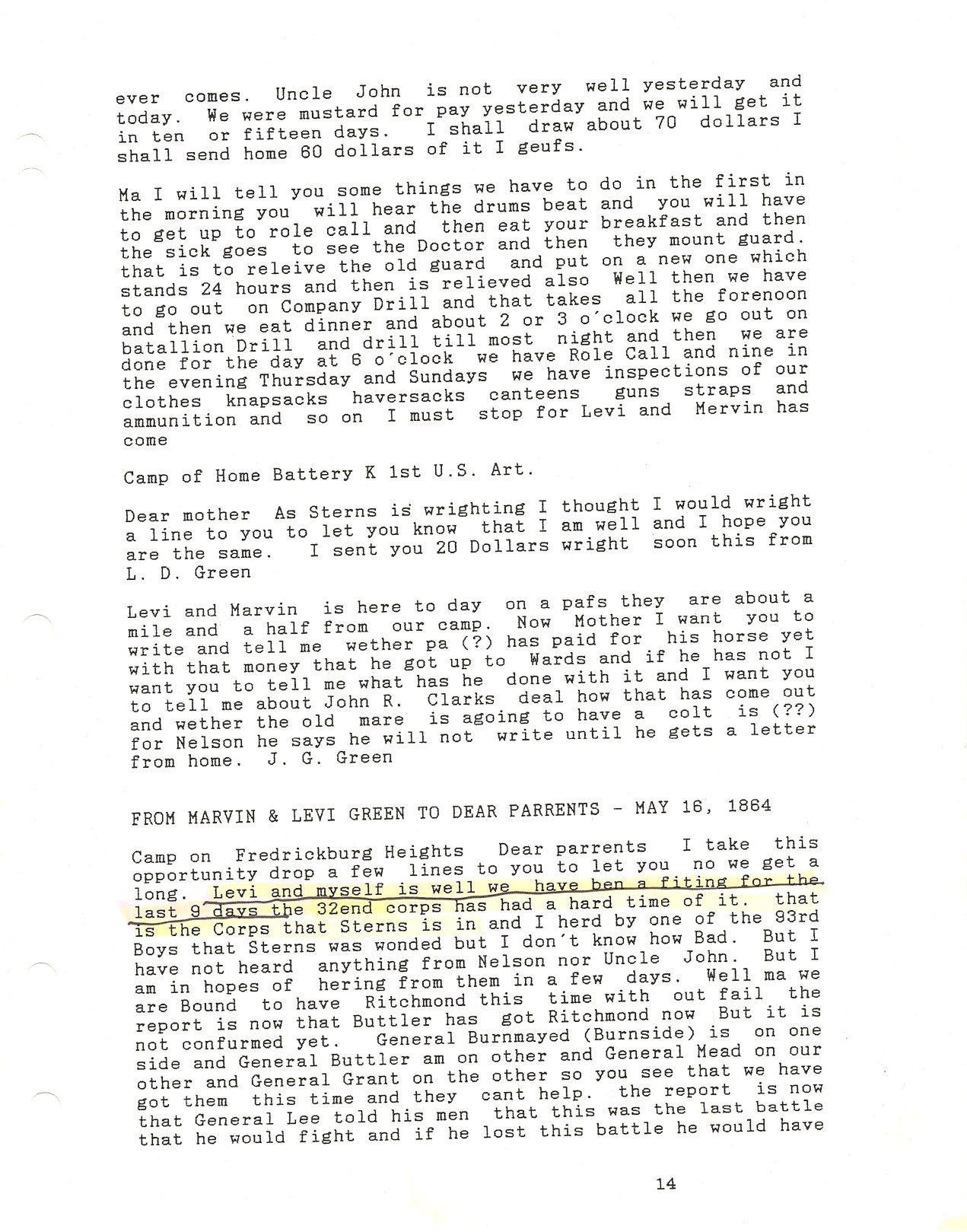
In May 1864, Levi and Marvin wrote home from the Fredericksburg heights after days of fighting. Their letter preserves confidence, rumors, and worry about their brother.
New to these records? A little context.
A transcription records the words of a letter. A typescript is a typed copy, which may survive even when the handwritten original is not on display. The linked account identifies the version it preserves; later explanatory paragraphs are not part of the letter.
What could soldiers know in the middle of a campaign?
Green Family Letters, Marjorie Kuski typescript, page 14 · From the linked account. Its original credits and image status are preserved there.
Read the source exhibit & its explanation
Marvin and Levi’s joint letter, May 16, 1864
The joint letter reports that they are well and describes recent fighting, while relaying uncertain news about John Sterns Green. It makes the limits of wartime information visible.
What to examine: Find the statements about their own condition, the rumor concerning John, and predictions about Richmond. Sort direct experience, hearsay, and expectation.
Keep this distinction in mind: A hopeful prediction is evidence of belief at the time, not of the campaign’s actual outcome. Read the later context without erasing that uncertainty.
Keep your question in view as you explore. The reading tray retains I Knew They Wouldn't → Old Church. Close it to return to this point, or deliberately choose to explore outside the chapter.
Identify the author and publication date before weighing this account. A later recollection and a contemporary document answer different questions. Read the cited page and its surrounding passage.
Your passage · Old Church
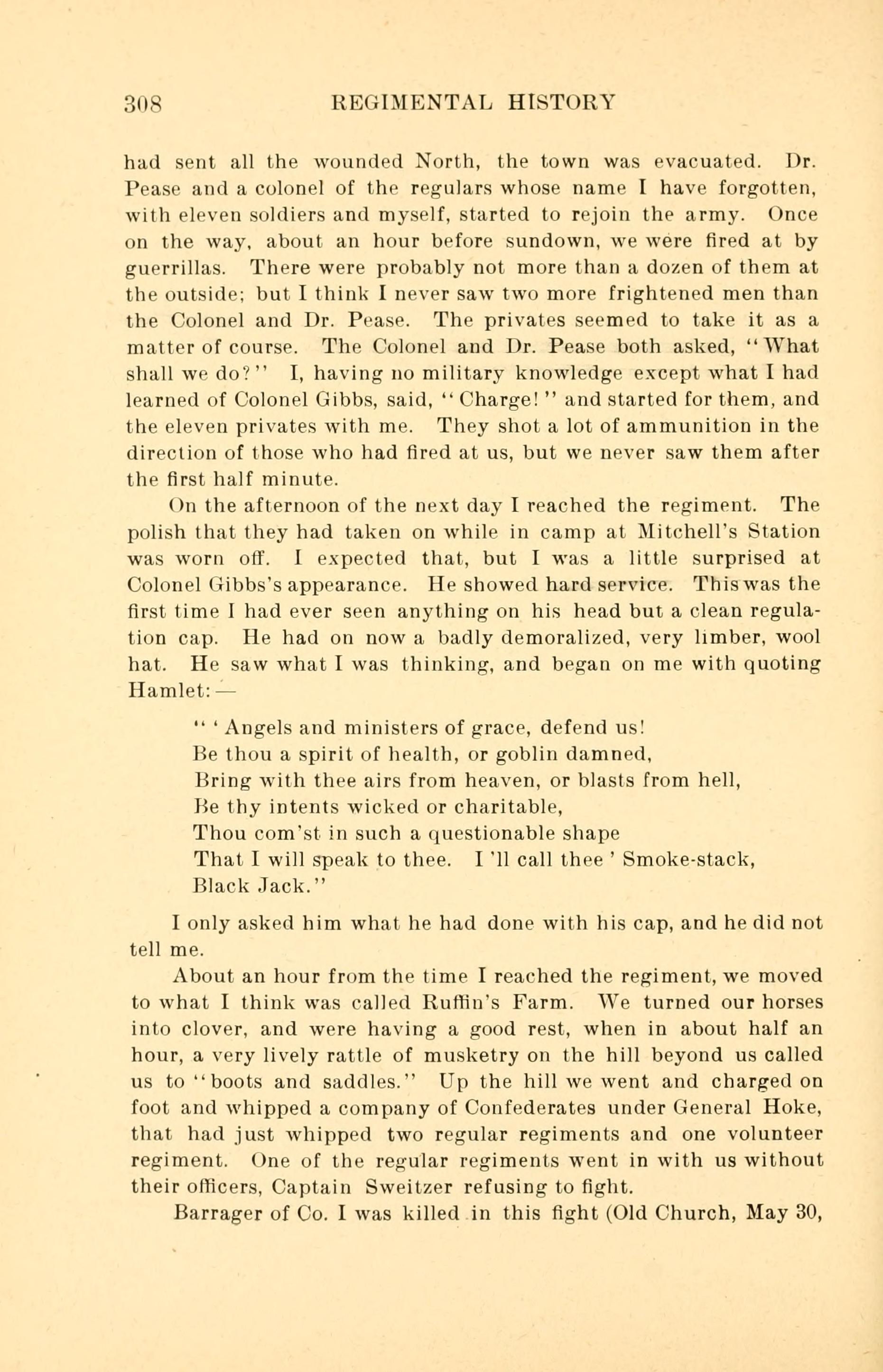
I, having no military knowledge except what I had learned of Colonel Gibbs, said, 'Charge!' and started for them, and the eleven privates with me.
Words matched in source text. Read the surrounding record before drawing a conclusion.
· p. 308
Where this chapter uses this source · 6 passages
Old Church
I, having no military knowledge except what I had learned of Colonel Gibbs, said, 'Charge!' and started for them, and the eleven privates with me.
Angels and ministers of grace, defend us! Be thou a spirit of health, or goblin damned, Bring with thee airs from heaven, or blasts from hell, Be thy intents wicked or charitable, Thou com'st in such …
Identify the author and publication date before weighing this account. A later recollection and a contemporary document answer different questions. Read the cited page and its surrounding passage.
Your passage · Old Church
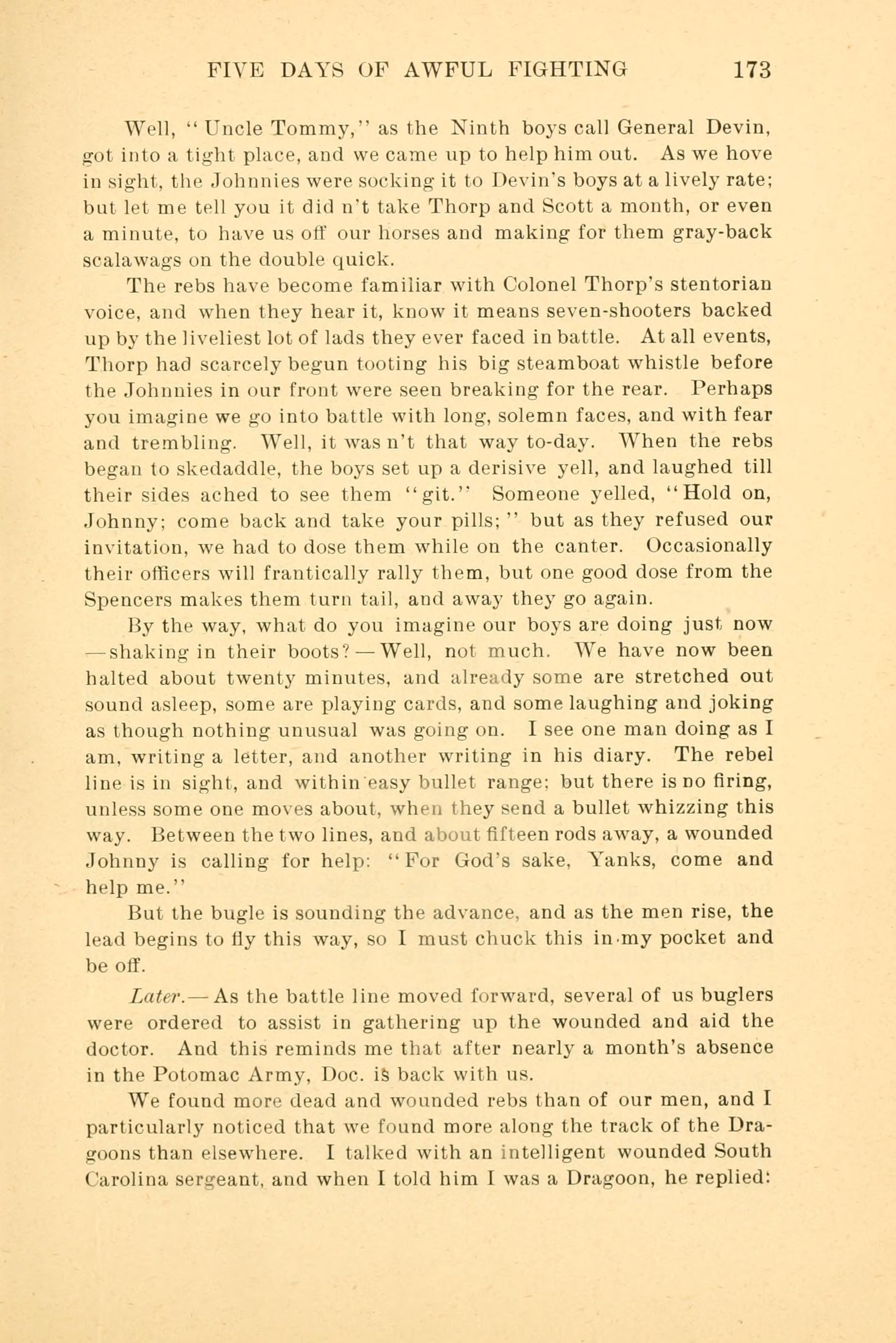
after nearly a month's absence in the Potomac Army, Doc. is back with us.
Words matched in source text. Read the surrounding record before drawing a conclusion.
· p. 173
Where this chapter uses this source · 1 passage
Old Church
after nearly a month's absence in the Potomac Army, Doc. is back with us.
Identify the author and publication date before weighing this account. A later recollection and a contemporary document answer different questions. Read the cited page and its surrounding passage.
Your passage · Old Church
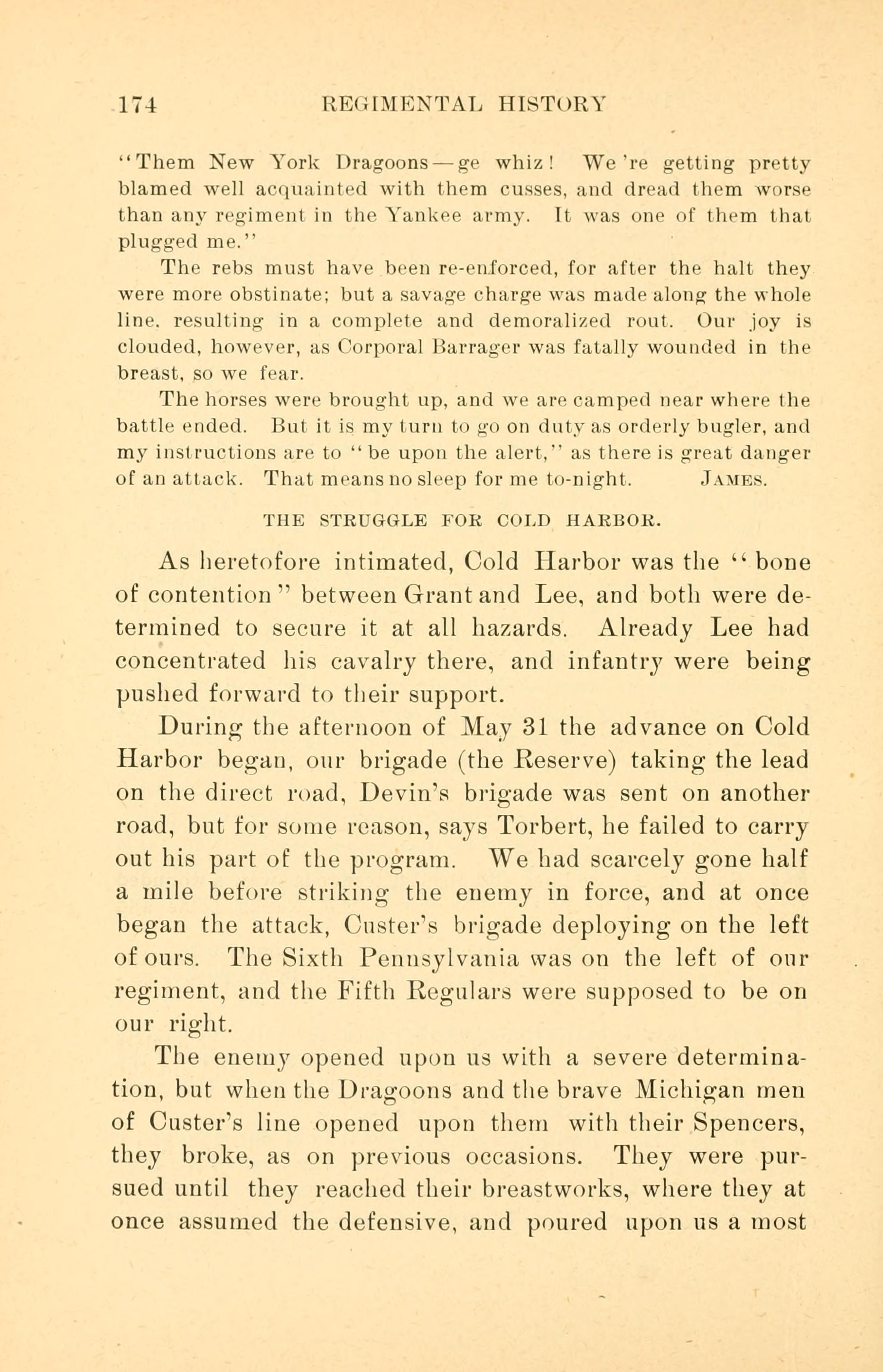
was fatally wounded in the breast, so we fear.
Words matched in source text. Read the surrounding record before drawing a conclusion.