The book is finished.GIBBS: The Forgotten Warrior of the First New York Dragoons, by Garland H. Green Jr. How to order is coming soon; you can reserve a copy now. Reserve a copy →
Start with the guided reading below, or search this chapter for a person, quotation or topic. Follow the writing and evidence behind this part of GIBBS.
What would you like to explore in Obey the Call?
Go beyond the book · Obey the Call
Read a refusal without inventing its motives
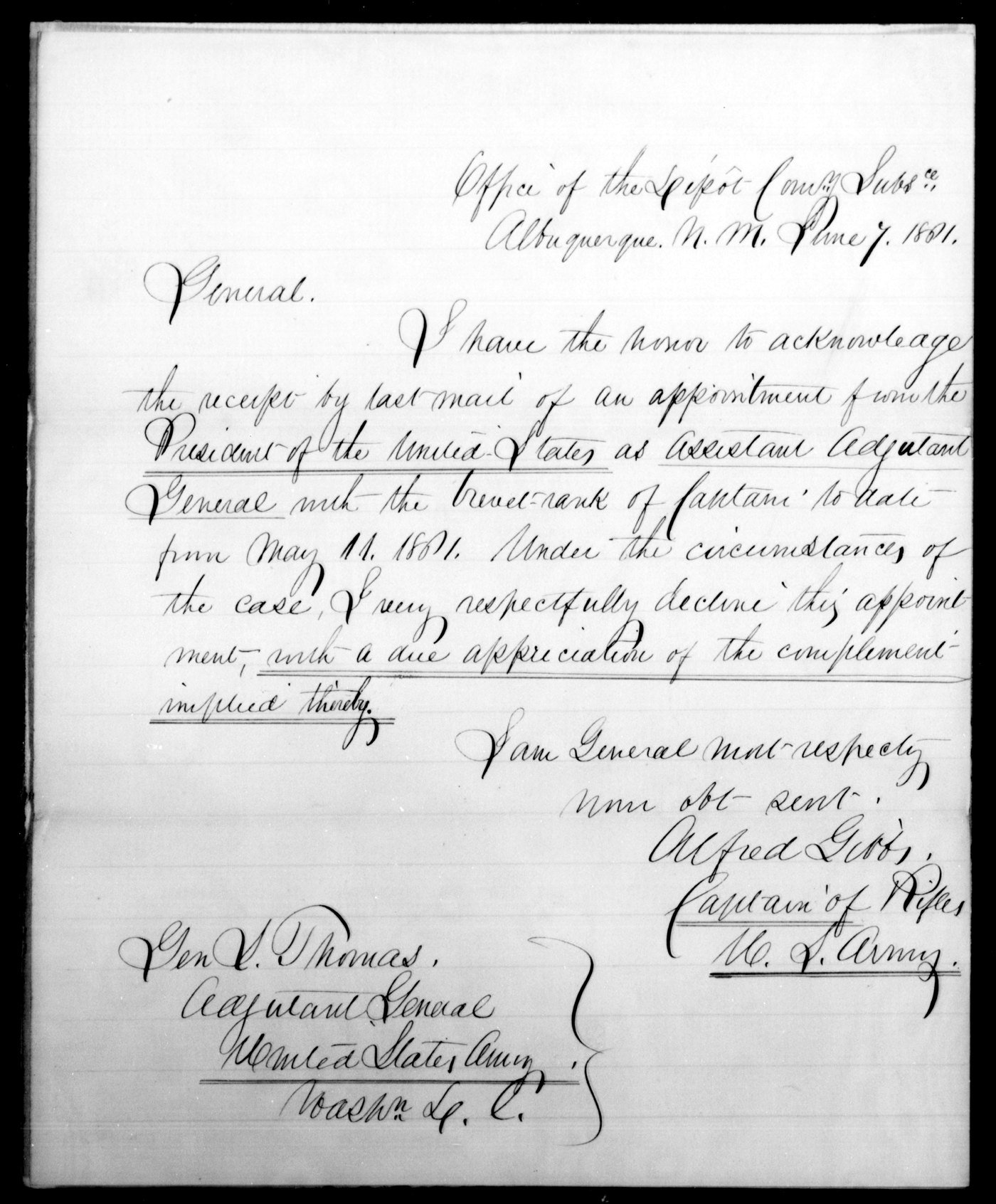
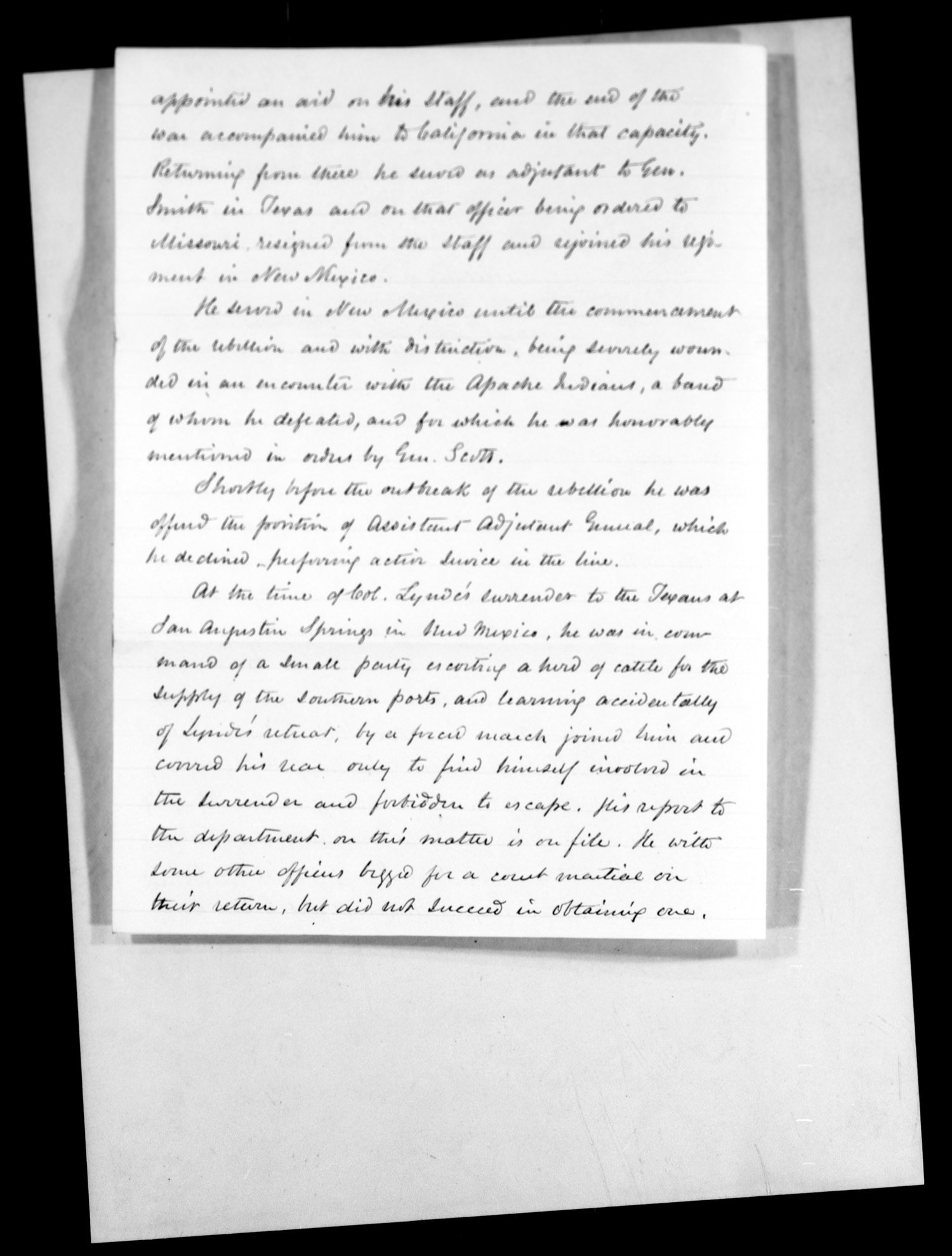
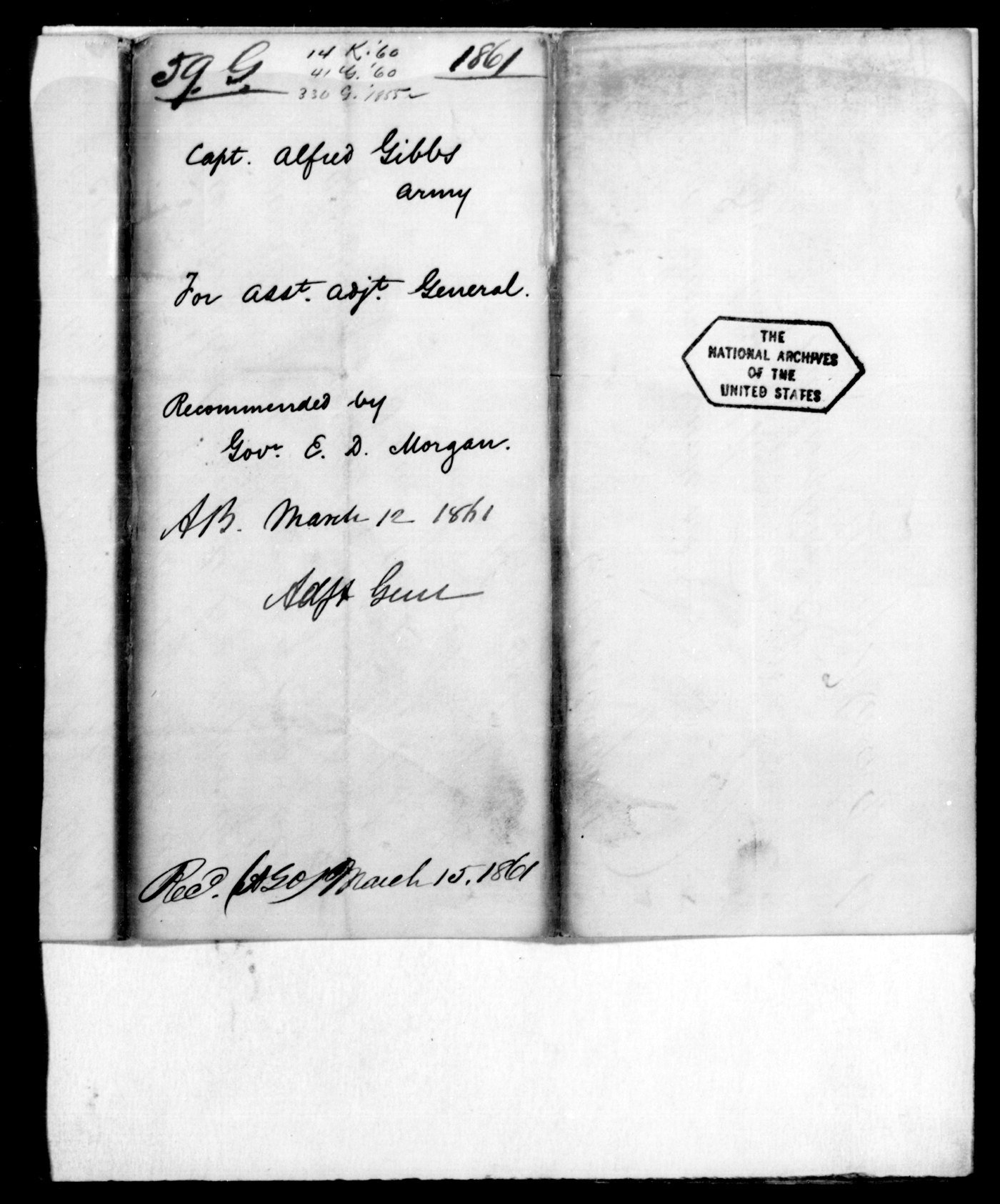
As the country divided, Gibbs received an appointment as Assistant Adjutant General and declined it. His June 1861 reply preserves the act, but says little about the reasons.
New to these records? A little context.
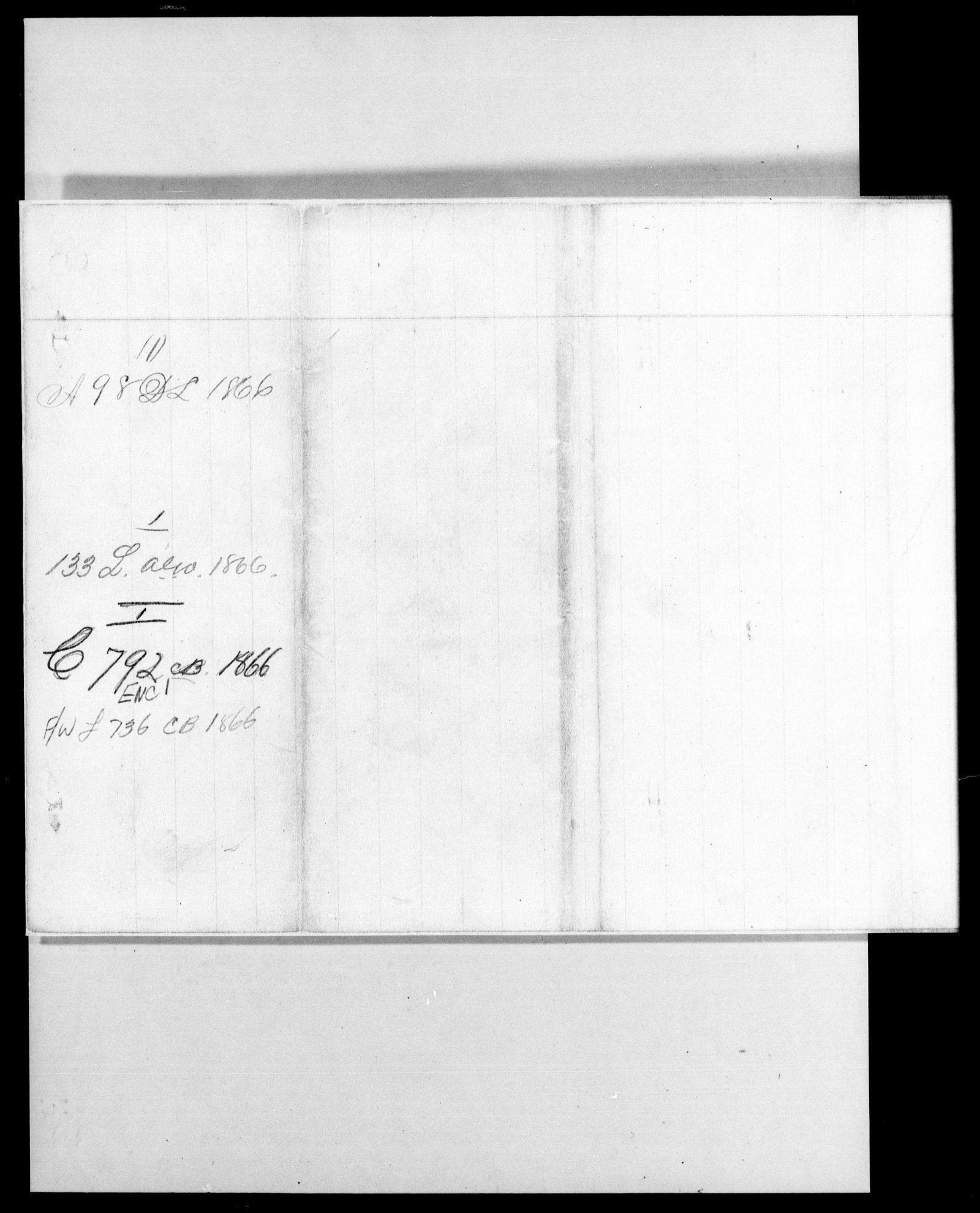
A docket is an office’s summary or filing note; it may be on a wrapper rather than in the letter. An endorsement is another official’s response or forwarding note. Read each voice and date separately. A transcription is a reading of a document, with uncertain words marked where the exhibit provides them.
What can we learn from an officer’s refusal—and what can we not?
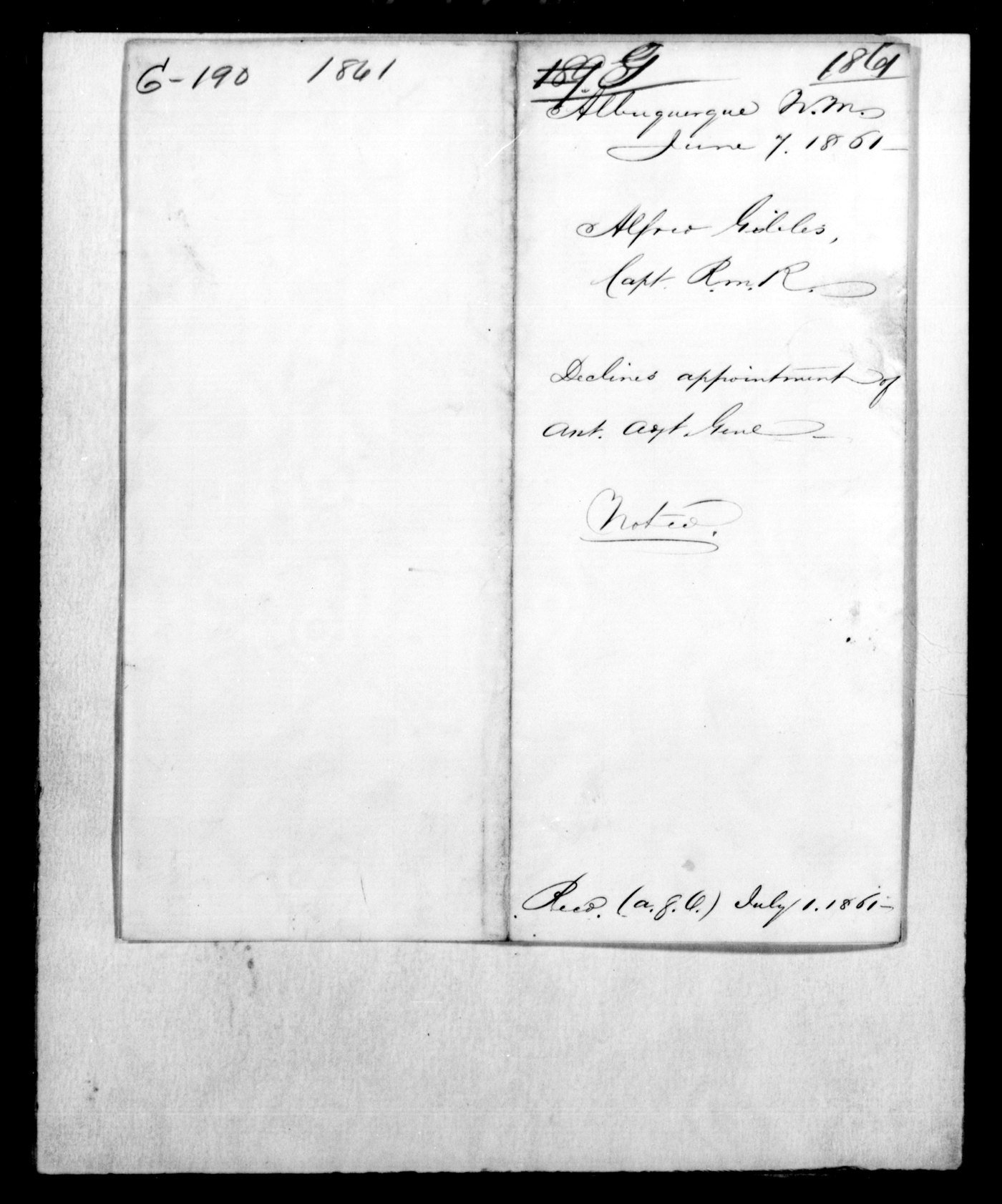
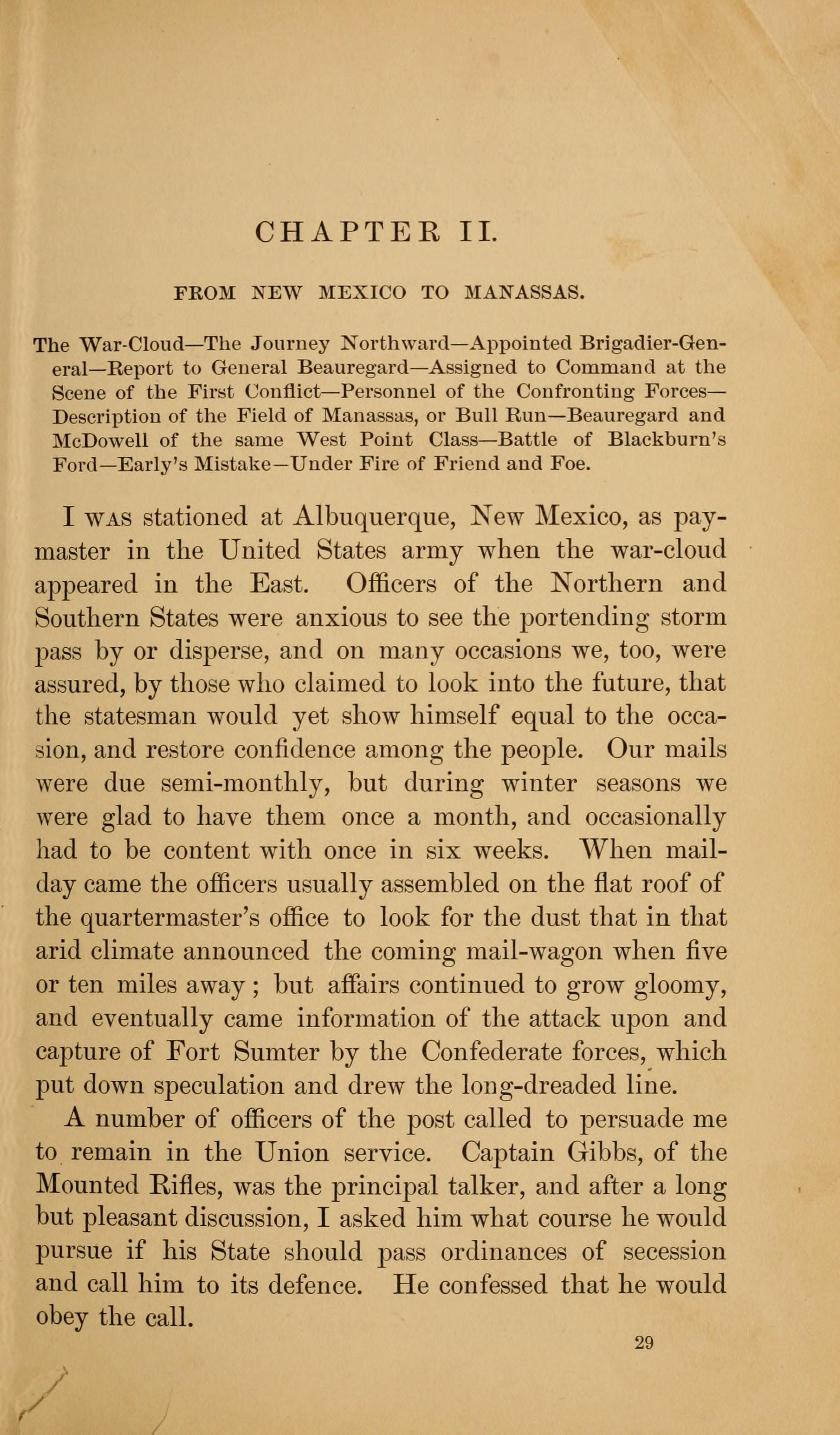
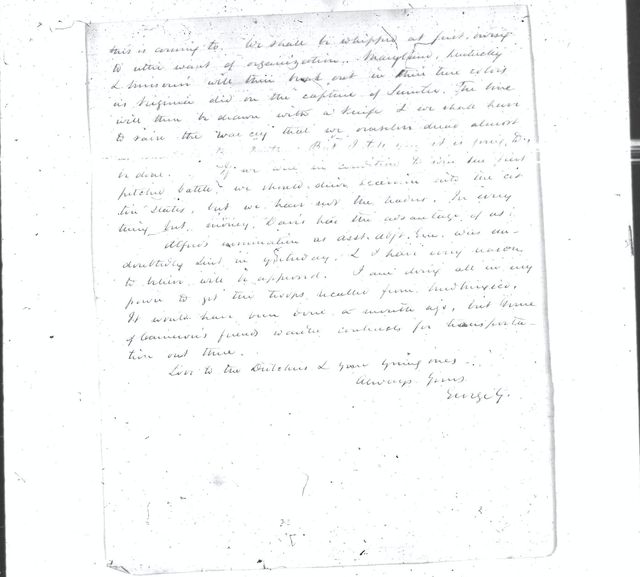
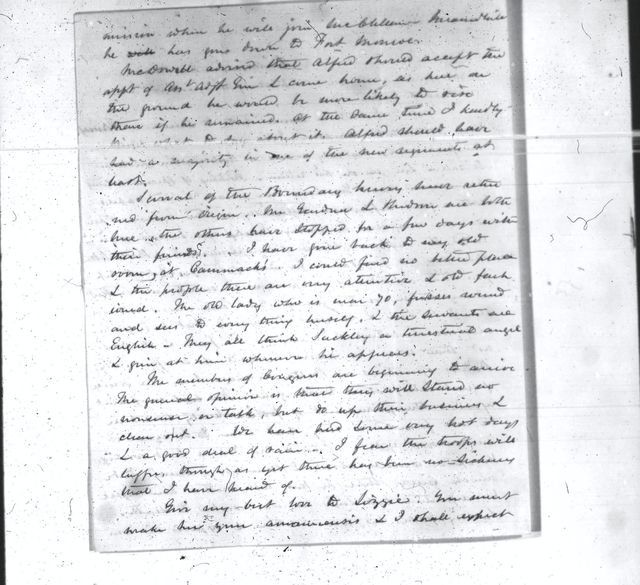
Alfred Gibbs AGO letter 85311534 85311534_001.jpg · From the linked account. Its original credits and image status are preserved there.
Read the source exhibit & its explanation
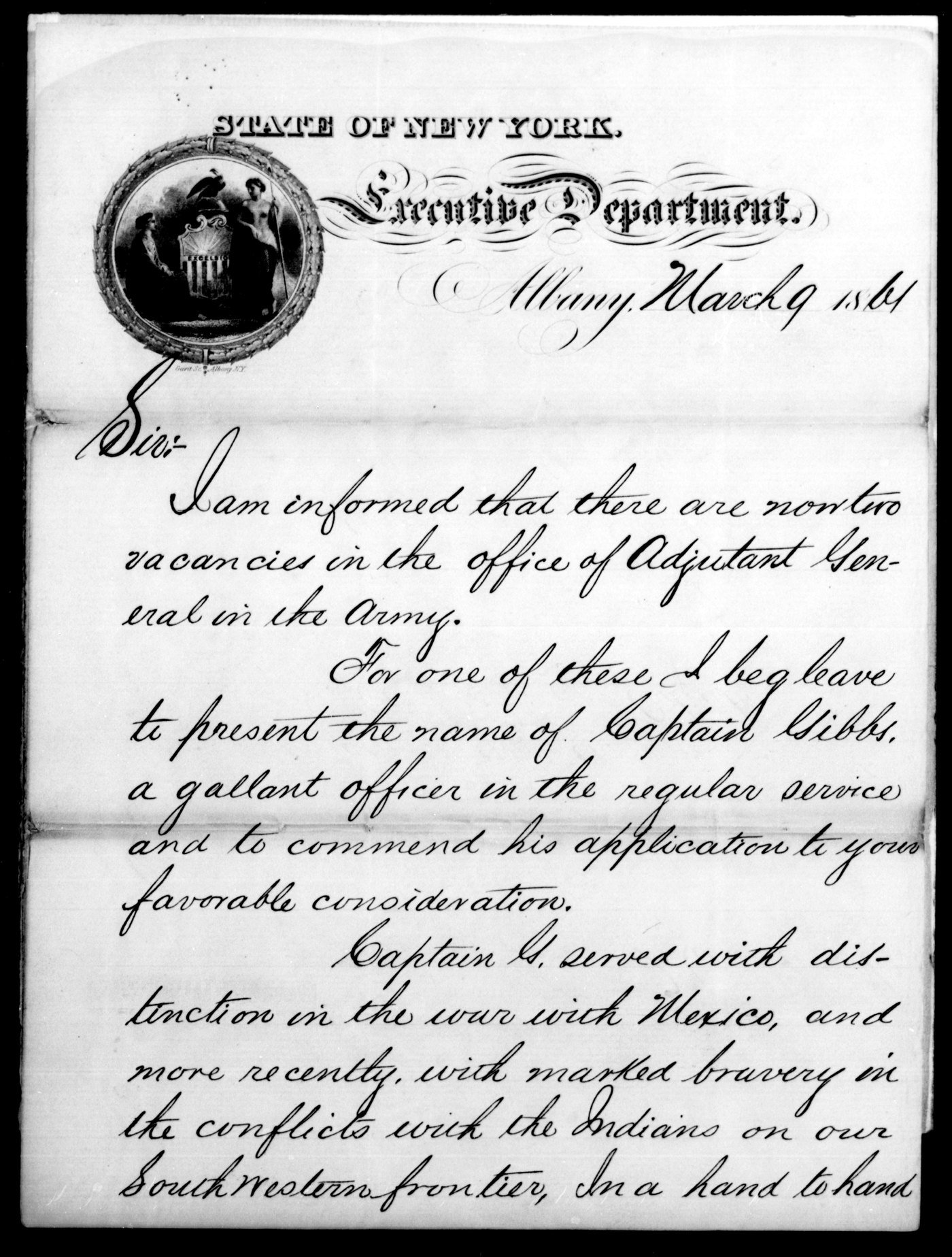
Gibbs declines an appointment, June 7, 1861
The letter acknowledges the presidential appointment and formally declines it. The docket and letter can be compared with the chapter’s account of service in New Mexico.
What to examine: Locate the phrase about the circumstances of the case and the appointment date. Ask what reason the letter actually states, rather than supplying one from later events.
Keep this distinction in mind: The document establishes the refusal. Its brief wording does not by itself establish every political, family, or professional motive.
Keep your question in view as you explore. The reading tray retains Obey the Call. Close it to return to this point, or deliberately choose to explore outside the chapter.
Follow a life beyond the page
People you meet here
The book brings you into these lives. Follow a person to the family, service and research records available here. Pension material is identified separately from biography and recollection.
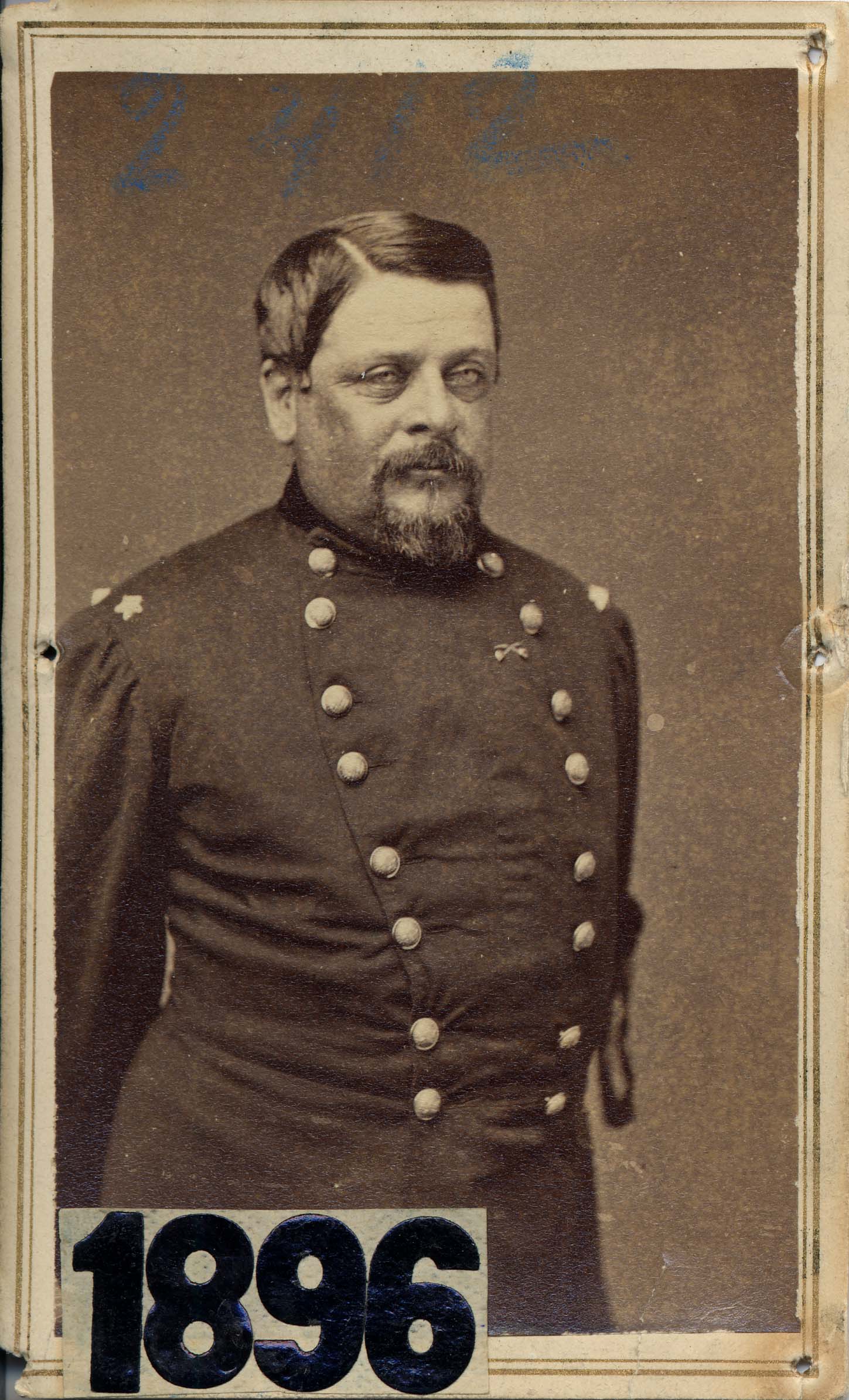
Follow Gibbs through the service and medical records, then Peggy’s petitions after his death. These sources let you distinguish what a doctor observed, what a widow asked for and what an official record actually establishes.
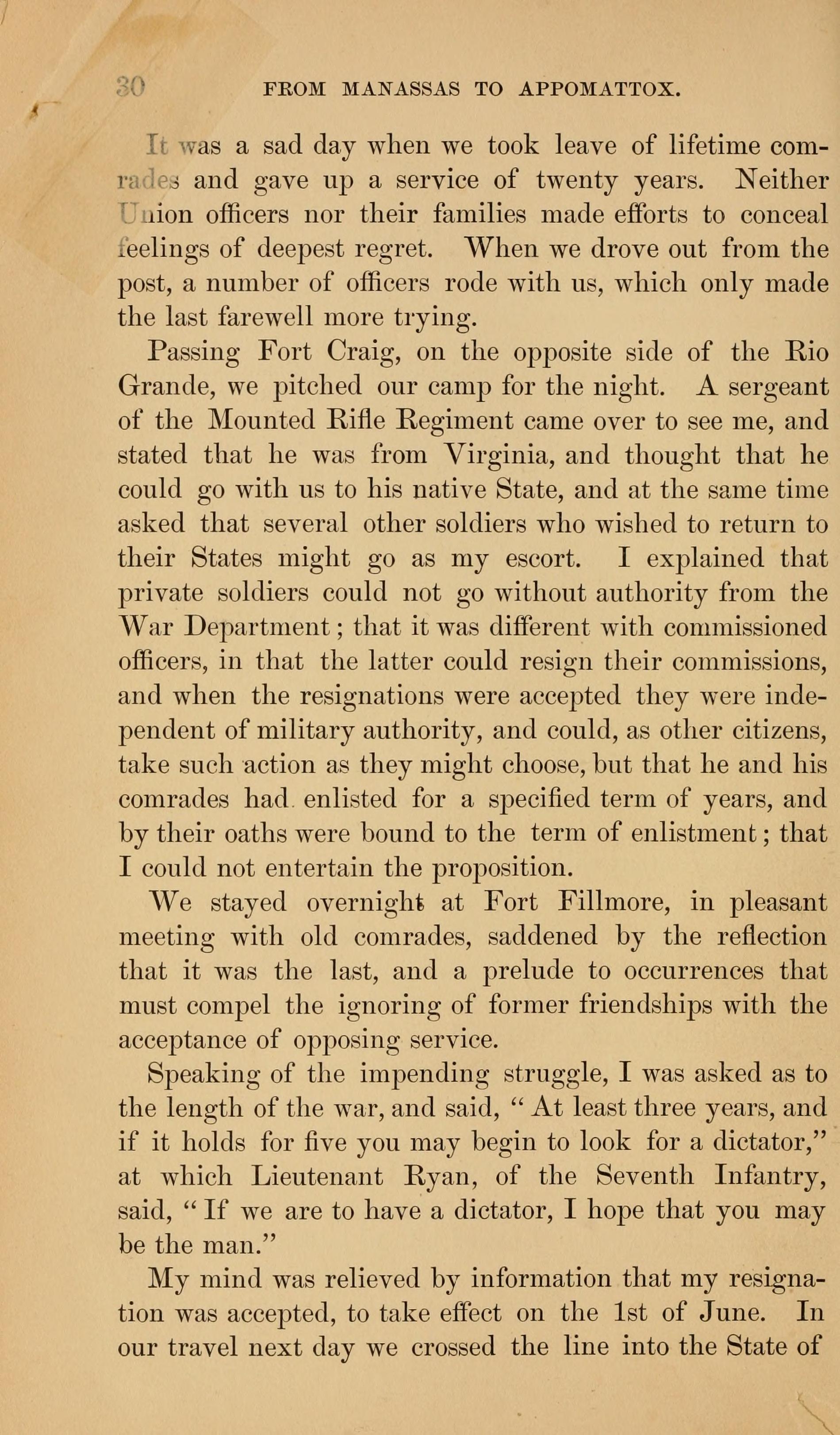
Canby's orders form part of the Fort Fillmore story. Garland's longer Canby page also follows his later career and death. That later account broadens the person's history; it is not evidence for every event at Fort Fillmore.
Morgan supported Gibbs's advancement through New York's political and military networks. Letters of recommendation show how an appointment was sought, not simply how an officer performed in battle.
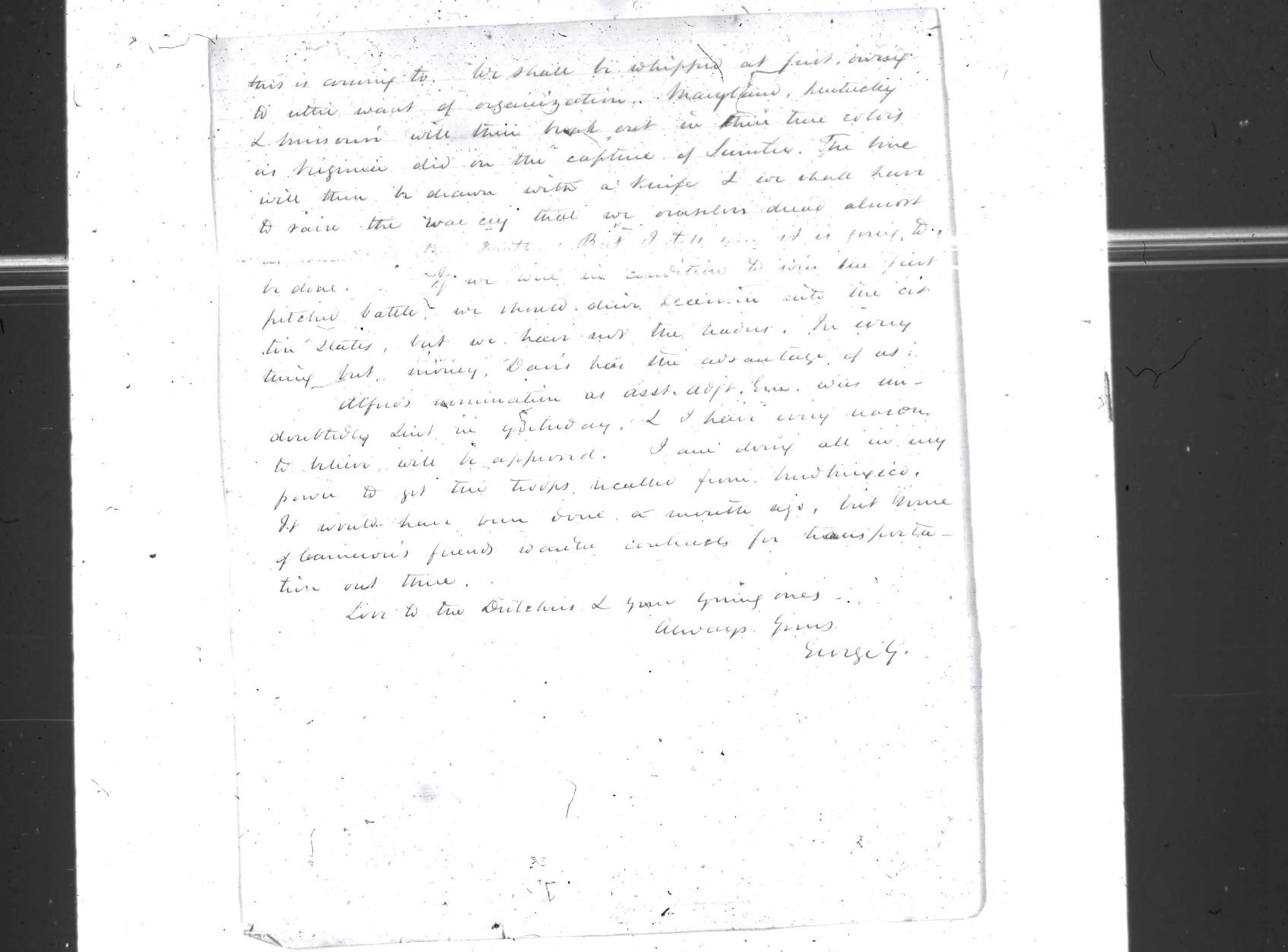
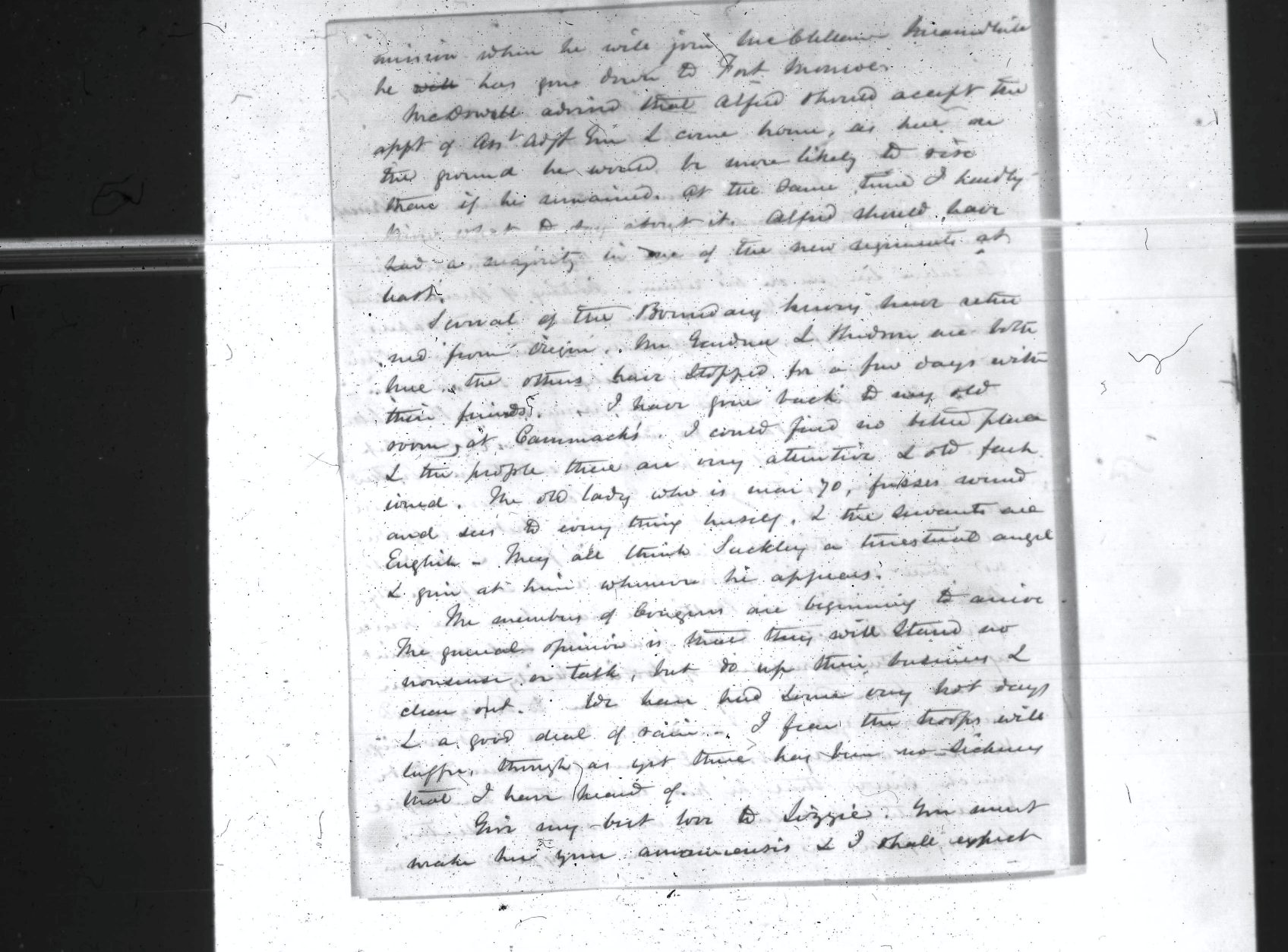
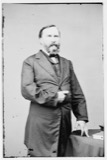
McDowell advised that Gibbs return east to improve his prospects. That advice belongs to the story of appointments and opportunity before the armies' later reputations were settled.
Longstreet signed over supplies to Gibbs before the Civil War. Those mundane transactions recover a working relationship that later battlefield reputations can obscure.
These connections come from the v172 manuscript and existing subject pages. A pension not connected here may still exist elsewhere. Namesakes and uncertain identities are not silently joined.
Follow the words into the evidence
What caught your attention?
Find a line from your reading, then follow its document and the record around it. Matching words helps locate evidence; checking who wrote them, when, and why helps you understand it.