The book is finished. GIBBS: The Forgotten Warrior of the First New York Dragoons, by Garland H. Green Jr. How to order is coming soon; you can reserve a copy now. Reserve a copy →
Alfred GibbsThe research archive
Menu

The evidence behind your reading · Laura's War

Read the records behind this chapter

Follow a letter, report, recollection or family record beyond the passage in the book. Each source below shows where the chapter uses it and what to examine. Open it here, compare its pages, and return without losing your chapter.

Begin with a question: Why did Laura sell Sunswick?

Go beyond the book · Laura's War

You are reading 261 Greene Street, New York · After 1835. The guided starting point below explores Sunswick. Evidence for this particular section has not yet been separately assembled; chapter references remain available below.

A widow’s decision, visible in the letters

After George Gibbs III died, Laura faced the costs of raising her children and keeping Sunswick. The chapter’s move to New York can be explored as a sequence of financial decisions rather than a single biographical sentence.

New to these records? A little context.

A research account can combine historical documents, later recollections, images, and the author’s interpretation. Start with its source notes and captions. Ask who made each item, when it was made, and what kind of question it can answer.

Why did Laura sell Sunswick?
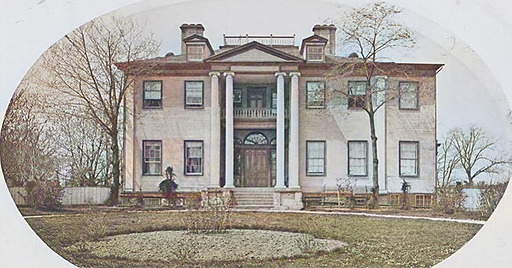
sunswick house colored
sunswick house colored · From the linked account. Its original credits and image status are preserved there.

Read the source exhibit & its explanation

The sale of Sunswick, through family letters

The account follows the family correspondence about school expenses, the mortgaged estate, and the trustee’s figures. It shows what evidence lies beneath the familiar statement that she moved for her children’s education.

What to examine: Read the November 2, 1833 letter and the trustee’s response. Identify who owes or pays each sum, and distinguish a proposal from a completed sale.

Keep this distinction in mind: Letters show what their writers knew and wanted at the time; a later outcome should not be read backward into every proposal.

Keep your question in view as you explore. The reading tray retains Laura's War → 261 Greene Street, New York. Close it to return to this point, or deliberately choose to explore outside the chapter.

2 distinct source records · Page 1 of 1

Book page (PDF page 46) · from the copy on AlfredGibbs.com
Book page (PDF page 46) · from the copy on AlfredGibbs.com · Supplied page connection.

Named source

The Gibbs Family of Rhode Island (1933), Laura Wolcott Gibbs chapter, which prints Dr. H. W. Bellows's 1870 tribute.

Begin with who made this record, when and for whom. Compare the book’s words with the scan and the surrounding transcription. Distinguish what the writer observed from a request, opinion or later interpretation.

Your passage · 261 Greene Street, New York

L. W. Gibbs, pinxit.

Source identified; page to confirm. Read the surrounding record before drawing a conclusion.

· page to confirm

Where this chapter uses this source · 4 passages

261 Greene Street, New York

L. W. Gibbs, pinxit.

Source identified; page to confirm

Examine quotation 02-016 →

261 Greene Street, New York

She was a strong abolitionist,

Source identified; page to confirm

Examine quotation 02-017 →

261 Greene Street, New York

and used to hide negro slaves in her cellar at 261 Greene Street.

Source identified; page to confirm

Examine quotation 02-018 →

261 Greene Street, New York

Mrs. Gibbs, when she found such a mark would go down at night and remove it.

Source identified; page to confirm

Examine quotation 02-019 →

Open the record and its pages →

14 catalogued pages. Transcription and image availability are shown on the document view.

Citation and source credit

The Gibbs Family of Rhode Island (1933), Laura Wolcott Gibbs chapter, which prints Dr. H. W. Bellows's 1870 tribute.

Citation details need review.

As cited by Deb Dodge

Deb Dodge's note 6

Labeled document illustration, not a scan. Local scan not connected.

As cited by Deb Dodge

Laura Wolcott Gibbs’s letter to “Honorable” C.C. Cambreleng US Congressman from New York. Jan 23, 1840, U.S. Military Academy Cadet Application Papers, 1805-1866; (National Archives)

Begin with who made this record, when and for whom. Compare the book’s words with the scan and the surrounding transcription. Distinguish what the writer observed from a request, opinion or later interpretation.

Your passage · 261 Greene Street, New York

formerly of the academy,

Source identified; supplied locator: Deb Dodge's note 6. Read the surrounding record before drawing a conclusion.

· Deb Dodge's note 6

Where this chapter uses this source · 1 passage

261 Greene Street, New York

formerly of the academy,

Source identified; supplied locator: Deb Dodge's note 6

Examine quotation 02-020 →

Open the record and its pages →

0 catalogued pages. Transcription and image availability are shown on the document view.

Citation and source credit

Gibbs, L. W. (1840, January 23). [Letter to Hon. C. C. Cambreleng]. U.S. Military Academy Cadet Application Papers, 1805-1866 (National Archives Microfilm Publication M688). Records of the Adjutant General's Office, Record Group 94. National Archives. As cited by D. A. Dodge, note 6.

← Continue your chapter journey · Follow the people in this chapter →

Your chapter stays open
Your book journey · Laura's War · 261 Greene Street, New YorkExplore the evidence

Compare the original with its transcription and citation.

Explore outside this journey ↗

This chapter’s source collection as JSON