
On November 29, 1864, the First New York Dragoons were in the saddle in the Loudoun Valley of northern Virginia, on the second day of what the regiment called the Loudon Raid — Maj. Gen. Wesley Merritt’s cavalry expedition to strip that fertile country of its forage and stock and to break up the guerrilla bands that sheltered there. Near the village of Bloomfield, deployed on the flank of the column, the Dragoons were suddenly set upon by a force of Col. John S. Mosby’s partisan rangers, and “a pretty lively engagement ensued.” It is this brief, sharp affair that the regiment’s battle-list records as “Bloomfield, Va., Nov. 29, 1864.”
The Loudon Raid
By late November 1864 the great battles of the Shenandoah Valley were over. Jubal Early’s army had been shattered at Cedar Creek on October 19, and Sheridan’s troopers were left, in Bowen’s words, “only occasionally troubled by him.” The remaining enemy was of another kind. Sheridan had “long been annoyed by guerrilla bands, especially by ‘Cut-throat Mosby,’ whose head-quarters were in the Loudon valley,” and on November 28 he sent Merritt’s division east across the Blue Ridge to clear that country — to gather up its forage and stock, burn what could not be carried off, break up the guerrilla bands, and arrest suspicious citizens. It was the northern counterpart of “the Burning” the cavalry had already visited on the upper Valley.
The Dragoons rode with Brig. Gen. Thomas C. Devin’s Second Brigade, still led by Colonel Alfred Gibbs — whose own commission as brigadier-general was then only days away; he would resign the colonelcy on December 8, 1864, to accept it. The first day of the raid carried the column through Ashby’s Gap and Paris to a bivouac near Upperville.
The Fight at Bloomfield
The next morning — November 29 — the division moved north through the valley, the Dragoons deployed well out on the left flank toward the foot of the Blue Ridge. Near Bloomfield, Mosby’s rangers struck. Bowen’s account is brief and unglamorous: the line was drawn in, a lively engagement was fought, and Sergeant Parkins — “Sergt. Jack Parkins, a noble fellow,” of Company A — was mortally wounded, living but a few days. From the inhabitants the troopers learned that Mosby himself had been badly hurt in the affair. The comrades who carried Parkins off the field remembered him afterward as one of the raid’s hardest losses.
There was no grand result to record. The skirmish settled nothing between the two forces; Mosby’s men melted back into the country they knew, and the division pushed on. But the larger work of the raid went forward all the same.
“Moving north in the morning, we were deployed on the left flank, well over toward the foot of the Blue Ridge Mountains. Suddenly a force of Mosby’s men dashed out upon us. Our line was quickly drawn in, and a pretty lively engagement ensued. During the day Sergeant Parkins was mortally wounded, living but a few days. From the inhabitants we learned that Mosby received a bad wound also.”— James R. Bowen, Regimental History of the First New York Dragoons (1900), ch. XVIII, “Various Experiences — The Loudon Raid.” This is very nearly the whole of what Bowen wrote of the fighting at Bloomfield.
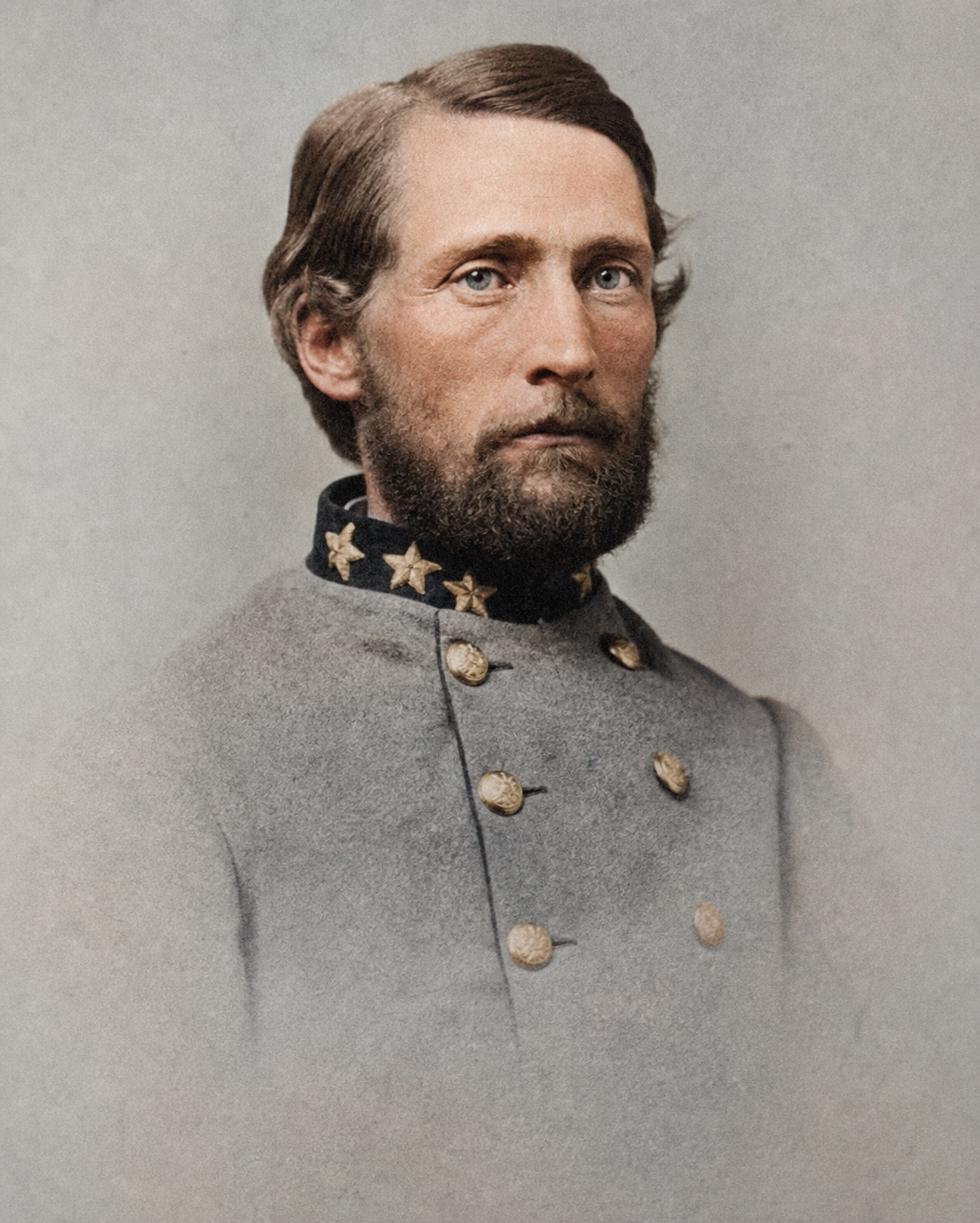
Sweeping the Valley
Continuing down the Loudoun Valley, the Dragoons halted that night near Snickersville, and the next near Lovettsville. The three brigades of the division swept the country as they went, destroying barns, stacks, and mills and driving before them a vast herd of livestock. When the column at last turned back and reached Winchester on December 3, it brought in, by Bowen’s reckoning, some 2,240 head of cattle, 1,000 sheep, 400 hogs, and 400 horses — “a lowing of cattle, bleating of sheep, and squealing of pigs” that the old soldier never forgot. The fight at Bloomfield was one violent hour inside that long, grim, and thoroughly effective errand.
Sources & Further Reading
- Primary James R. Bowen, Regimental History of the First New York Dragoons (originally the 130th N.Y. Vol. Infantry) (1900), ch. XVIII, “Various Experiences — The Loudon Raid” (beginning p. 263), with the engagement listed in the appendix roll of battles as “Bloomfield, Va., Nov. 29, 1864.” The regiment’s own historian and an eyewitness. Full text: archive.org/details/regimentalhistor00bowe.
- Primary U.S. War Dept., The War of the Rebellion: Official Records of the Union and Confederate Armies, Series I, Vol. 43 (Shenandoah Valley operations, autumn–winter 1864, including Merritt’s expedition into Loudoun County). No separate battle report singles out the Bloomfield skirmish.
- Note on the record: The action of November 29, 1864 was a minor skirmish during the Loudon Raid and has no dedicated National Park Service / CWSAC battle summary; it should not be confused with any larger “Battle of Bloomfield.” For the wider partisan war in the Loudoun Valley, see the American Battlefield Trust’s material on Col. John S. Mosby and the 43rd Battalion, Virginia Cavalry: battlefields.org/learn/biographies/john-singleton-mosby.
Trevilian Station · The Shenandoah Valley Campaign · The Audiobook
Views: 17
Explore the evidence
View this article’s connected sources and media →
About this page
This article was brought over from AlfredGibbs.com. Its preserved text, media and citations remain available for comparison.