
Update, July 14, 2026: this page was rebuilt from primary sources — Bowen’s regimental history and the Official Records, both shown below — replacing an earlier AI-assisted overview that did not meet the site’s sourcing standards. Every image from the earlier page has been preserved. The video below, an AI-produced companion piece, remains and is labeled as such.
In late February 1863 the Confederacy detached its most trusted corps commander, Lieutenant General James Longstreet, from Lee’s army and set him at Petersburg with a mission: recover the south side of Hampton Roads for the Confederacy, and begin with Suffolk, the key to Norfolk. Lee’s reply to his lieutenant, preserved in the correspondence Bowen later mined, was confident: “A sudden and vigorous attack on Suffolk will doubtless give you that place.” It did not.
The Investment
On the afternoon of April 11 the pickets came running in, and from Terry’s front the 130th watched Longstreet’s infantry file off to the right and left of the South Quay road. The long roll beat in every camp; the brigade took position in the trenches and, as its own official itinerary records, “remained there ever since.” The townspeople expected deliverance — Bowen records chicken-pie dinners prepared for the Confederate victors — but Longstreet, finding “forts and rifle pits all around, with gunboats in the Nansemond River,” gave up the coup de main and settled into a siege. For nearly three weeks, Bowen wrote, “the roar of cannon and rattle of small arms was almost incessant,” and the sharpshooting across the river ran on what the men called the Donnybrook principle: wherever you see a head, hit it.
April 17: The Regiment’s Reconnaissance
The 130th’s hardest day of the siege came on April 17, when the rebel rifle pits across the front fell suspiciously silent and General Terry sent out a reconnaissance to find out why: six companies of the 130th New York, two of the 99th New York, and a company of New York State Sharpshooters, under Lieutenant Colonel Thorp and Major Scott. The Confederates rose “by the hundred” from the pits and poured in a galling fire; the forts answered over the heads of the retiring line. The regiment lost one man killed — Lyman Mead of Co. C, wounded in the withdrawal and left on the field, whom Bowen’s comrades saw the enemy shoot repeatedly where he lay — and five wounded. Terry’s official brigade return, exhibited below, records precisely that loss: one private of the 130th killed, five wounded. The regimental memory and the official record agree to the man.
Sometimes, however, the monotony was broken by an armistice between the two hostile lines, when the men on both sides would swarm out of the entrenchments and enjoy a season of friendly intercourse, telling stories, cracking jokes, or singing for each other’s entertainment. … When the truce had expired, some of them would sing out: “Hunt your holes, Yanks!” “All right. Good-by, Johnnies,” would be the reply. “Good-by, Yanks; keep yer heads down.” A minute later the whang, bang of muskets and whizzing of bullets was proceeding as before.— James R. Bowen, Regimental History of the First New York Dragoons (1900), ch. V, pp. 75–76. Read the chapter on this site.
Life Between the Lines
Bowen’s siege is as much about the strange intimacy of the trenches as the fighting: truces where the two sides traded hardtack, coffee, and coat buttons; ragged, barefoot Confederates on a daily pound of pork and three-quarters of a pound of poor flour; the evening band concerts across the river that once closed with both bands joined in “Home, Sweet Home”; and the night Longstreet’s crack martial band came down to serenade the Union drum corps at Fort Rosecrans and asked to exchange music the next evening — the next evening Longstreet’s army was retreating toward the Blackwater. The siege also left the regiment its darkest grudge: on its first night General Corcoran shot and killed Lieutenant Colonel Kimball of Hawkins’s Zouaves at a picket challenge, an affair Bowen bluntly calls “nothing less than down-right murder.”
The End of the Siege
On April 19 a storming party of the 89th New York and 8th Connecticut, working with the gunboats, took Battery Huger on Hill’s Point and with it the Confederates’ grip on the lower Nansemond. On May 3, while the 130th sat on its breastworks chatting with its “grayback neighbors” under a local truce, a heavy fight between Getty’s division of the Ninth Corps and Hood’s forces played out in plain sight on the north front. That night Longstreet threw out a strong picket line and began his retreat to the Blackwater. Bowen reckons his total siege loss in killed, prisoners, and deserters at nearly two thousand men. The regiment stayed in the Suffolk lines seven more weeks; its next march took it down the South Quay road to Franklin and the Blackwater crossings.
The Siege in Pictures
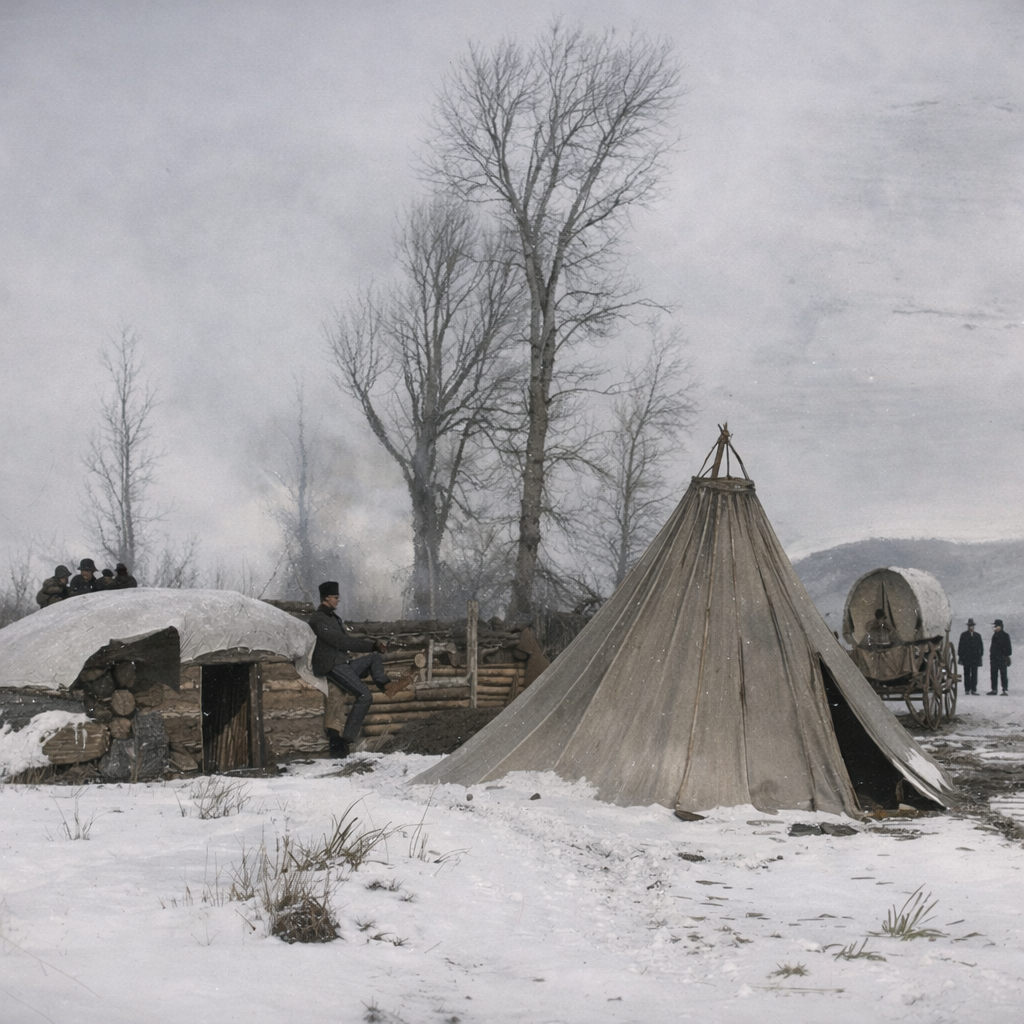
The images below are the page’s curated collection: period sketches and photographs, several digitally enhanced or colorized by the editor, each linked to its original where an enhanced version is shown.
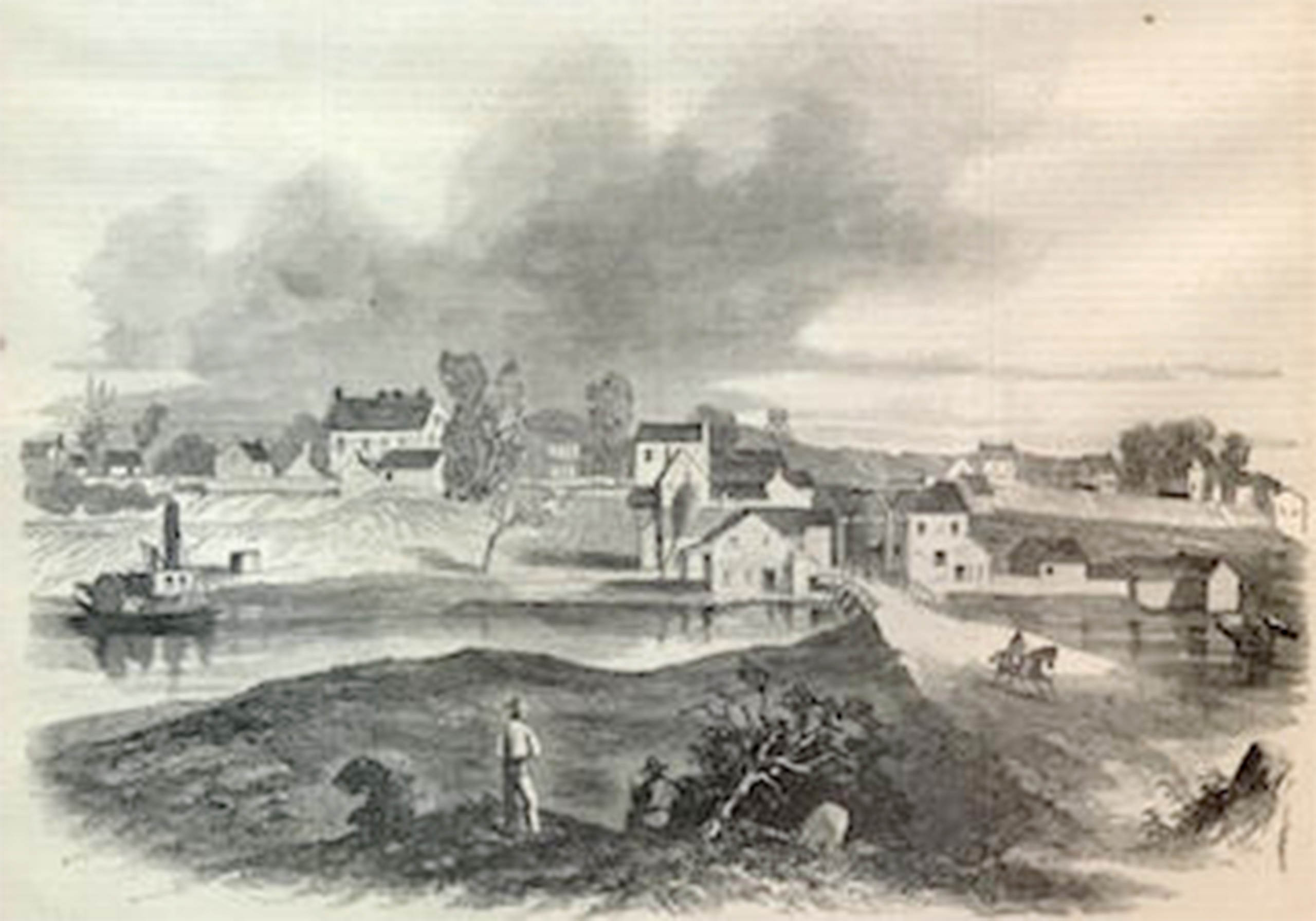
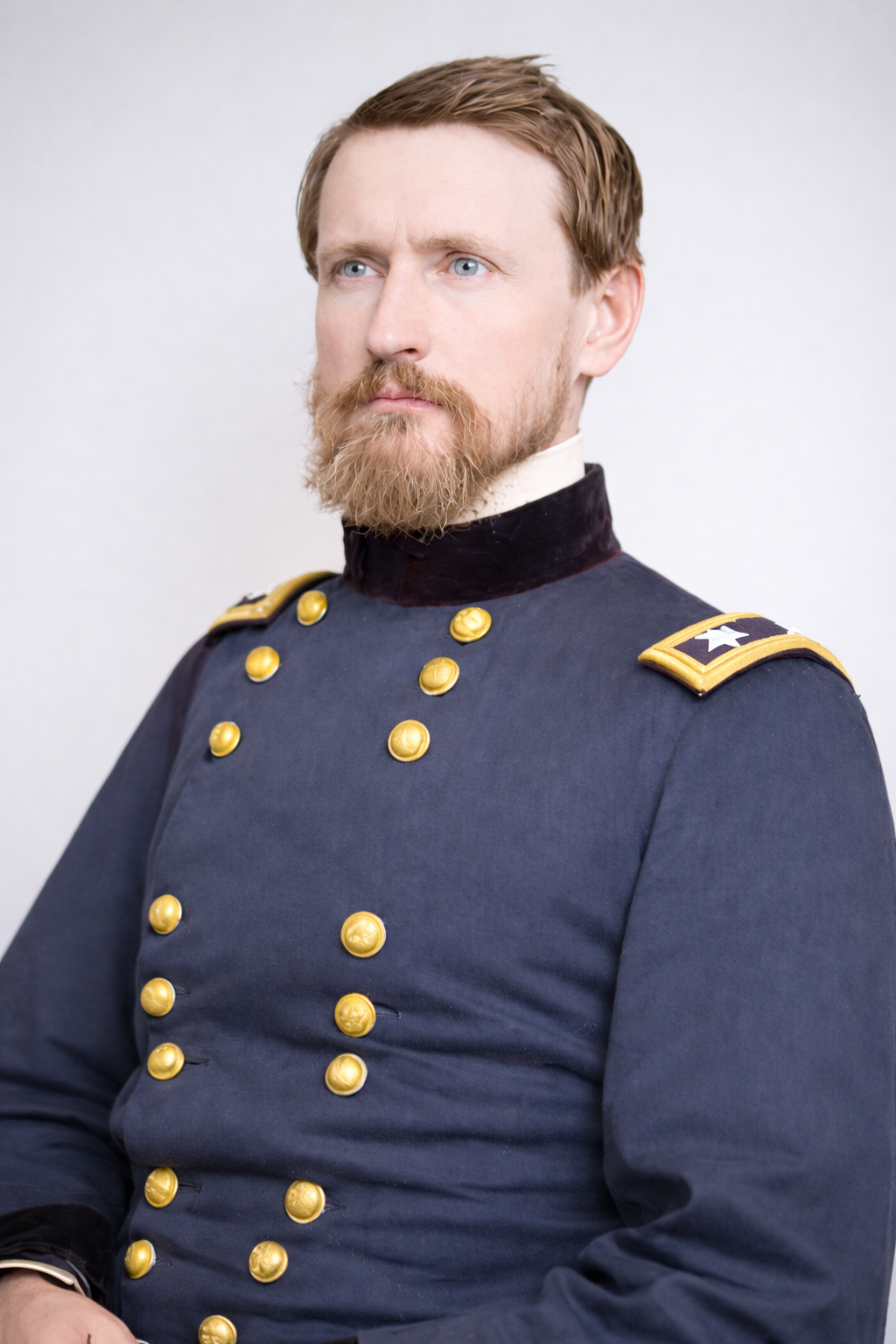
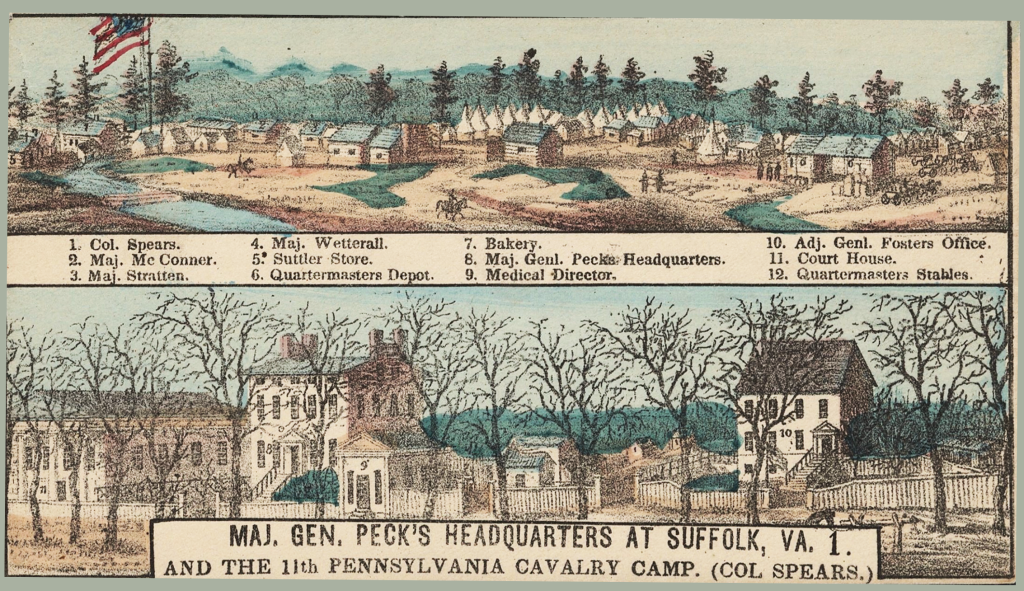

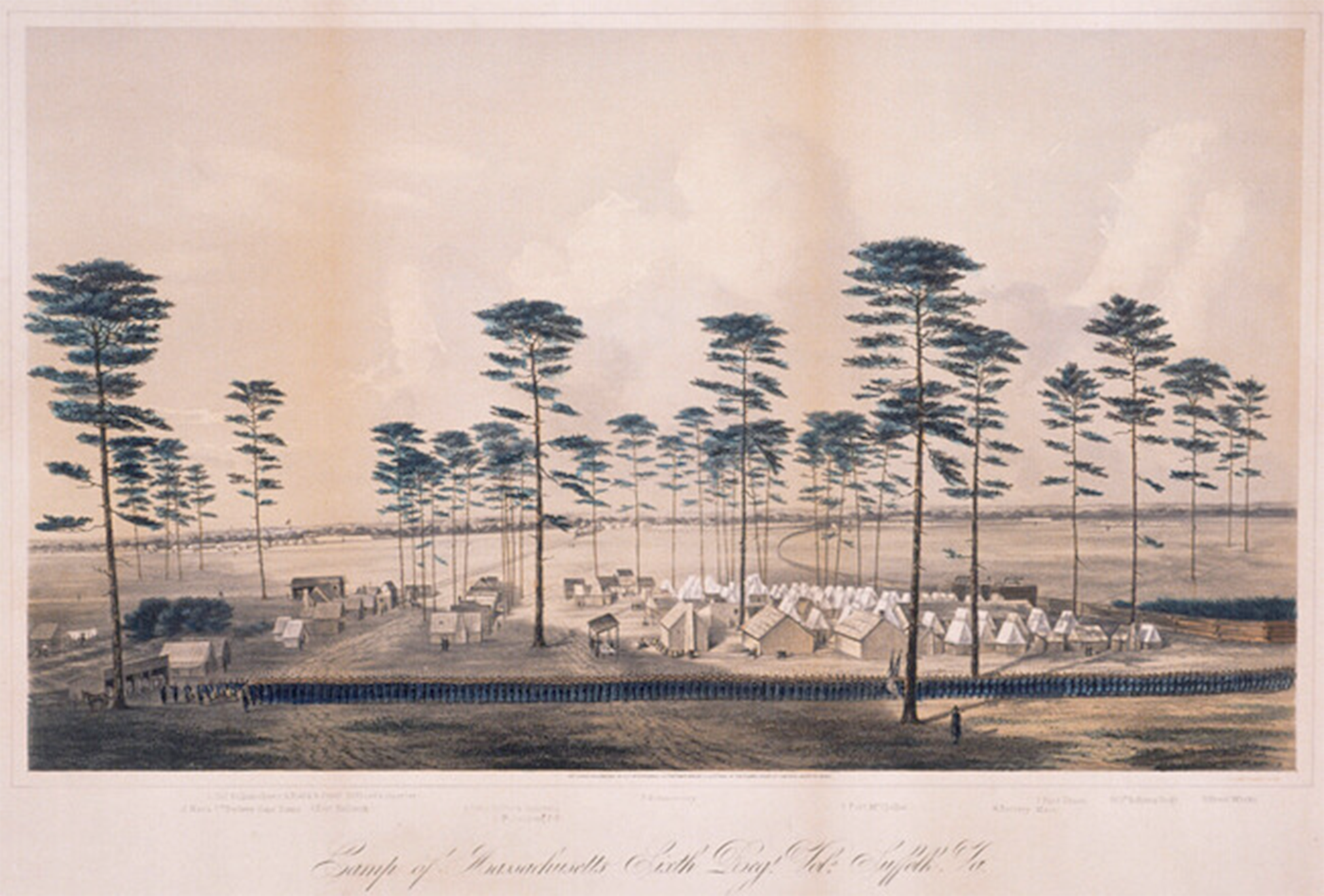
An AI-produced companion video on the siege and Fort Huger, scripted by the editor and labeled as a modern production, not a historical artifact.
The Official Record
Two pieces of the official record are exhibited: the Official Records’ own summary of the siege’s events, and the itinerary of Terry’s First Brigade — the 130th’s brigade — whose April return confirms Bowen’s account of the April 17 reconnaissance in the regiment’s own numbers.
The Siege, Day by Day: The Official Summary
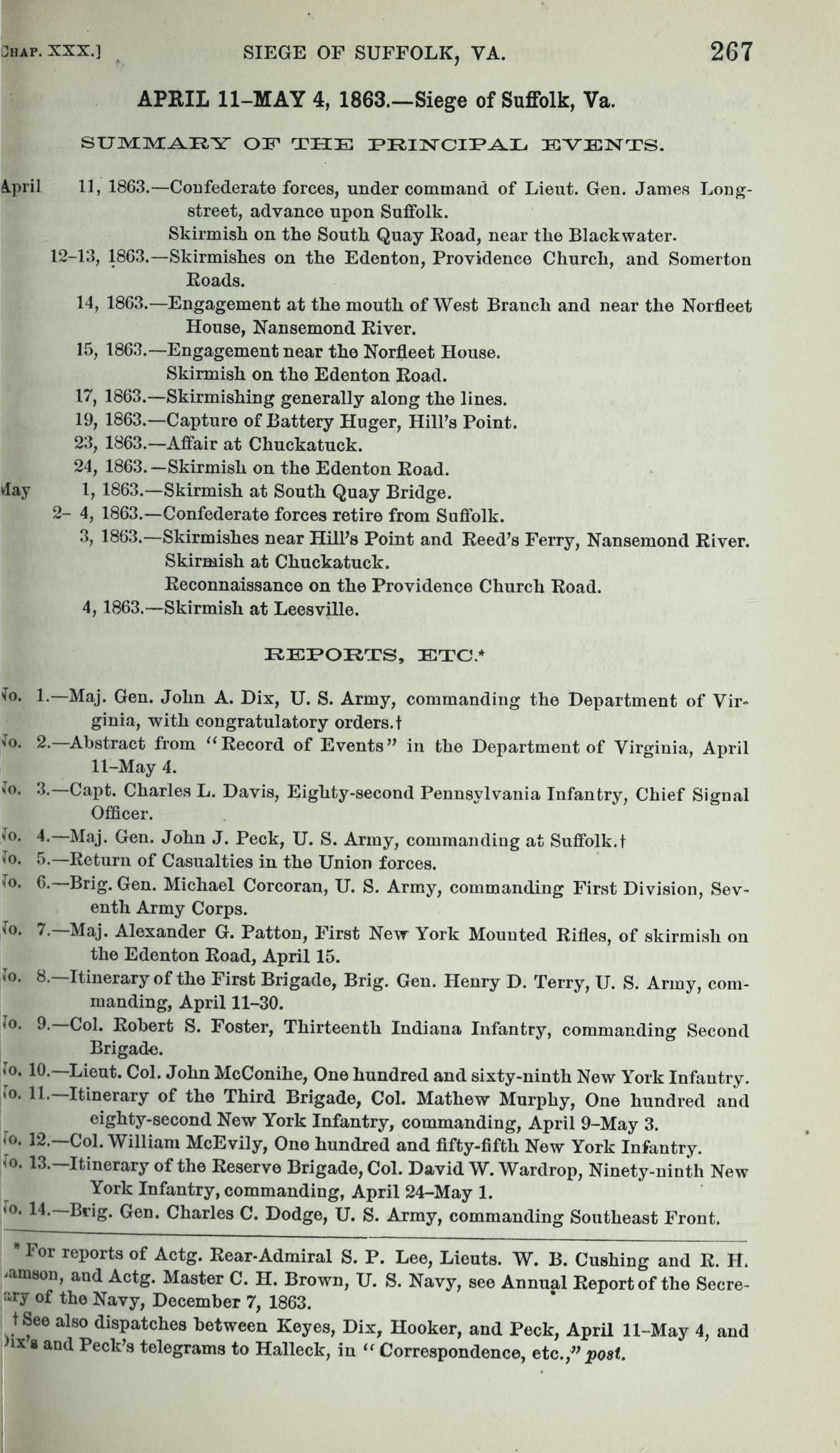
APRIL 11–MAY 4, 1863.—Siege of Suffolk, Va.
SUMMARY OF THE PRINCIPAL EVENTS.
April 11, 1863.—Confederate forces, under command of Lieutenant General James Longstreet, advance upon Suffolk. Skirmish on the South Quay Road, near the Blackwater.
12–13, 1863.—Skirmishes on the Edenton, Providence Church, and Somerton Roads.
14, 1863.—Engagement at the mouth of West Branch and near the Norfleet House, Nansemond River.
15, 1863.—Engagement near the Norfleet House. Skirmish on the Edenton Road.
17, 1863.—Skirmishing generally along the lines.
19, 1863.—Capture of Battery Huger, Hill’s Point.
23, 1863.—Affair at Chuckatuck.
24, 1863.—Skirmish on the Edenton Road.
May 1, 1863.—Skirmish at South Quay Bridge.
2–4, 1863.—Confederate forces retire from Suffolk.
3, 1863.—Skirmishes near Hill’s Point and Reed’s Ferry, Nansemond River. Skirmish at Chuckatuck. Reconnaissance of the Providence Church Road.
U.S. War Dept., The War of the Rebellion: Official Records of the Union and Confederate Armies, Series I, Vol. 18 (Washington: GPO, 1887), p. 267, the opening of the siege section; the page continues into the numbered list of reports. Page scan hosted by this site; the summary is transcribed above through the events of May 3.
Terry’s Brigade Itinerary: The 130th’s Siege, Officially
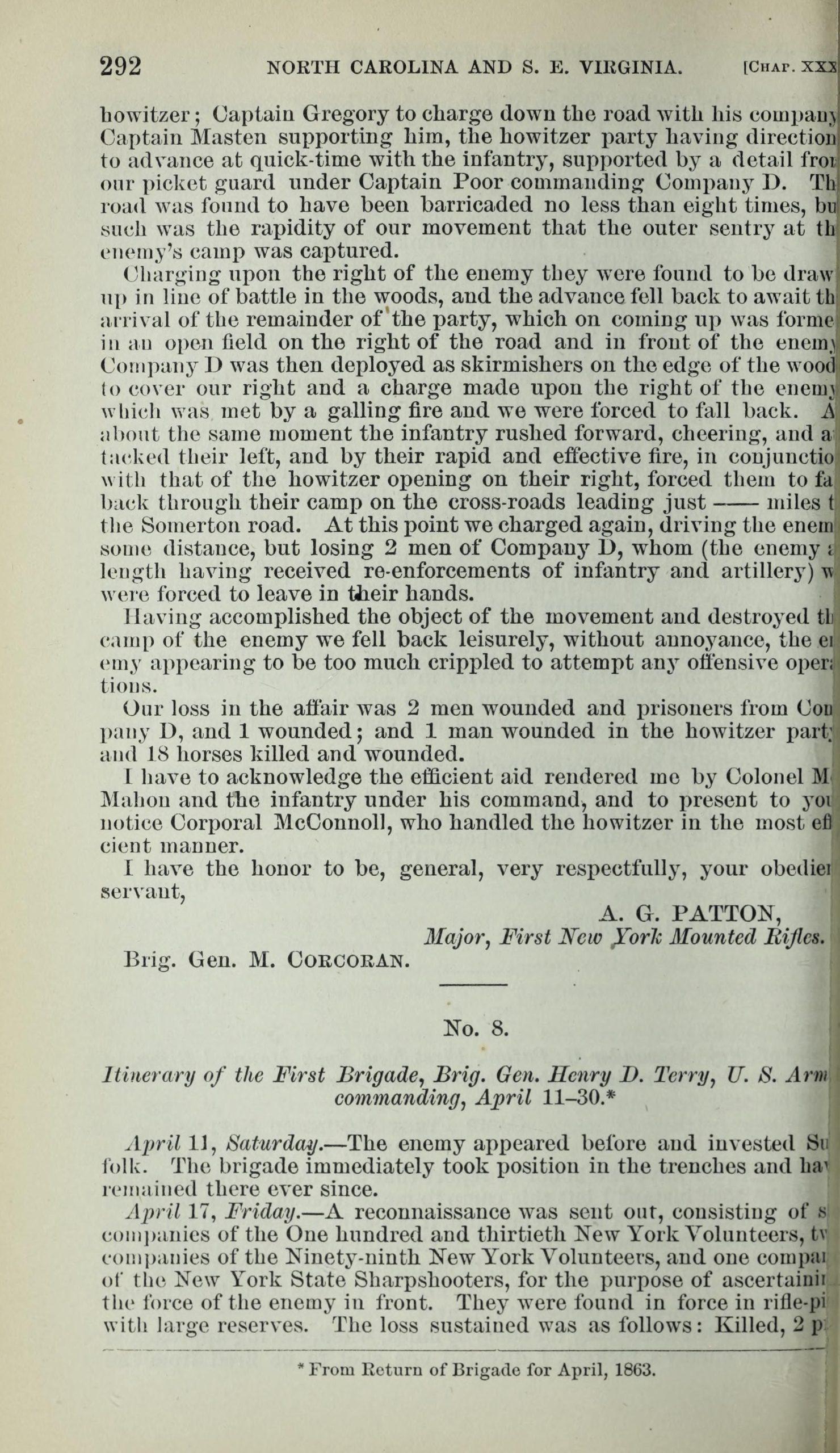
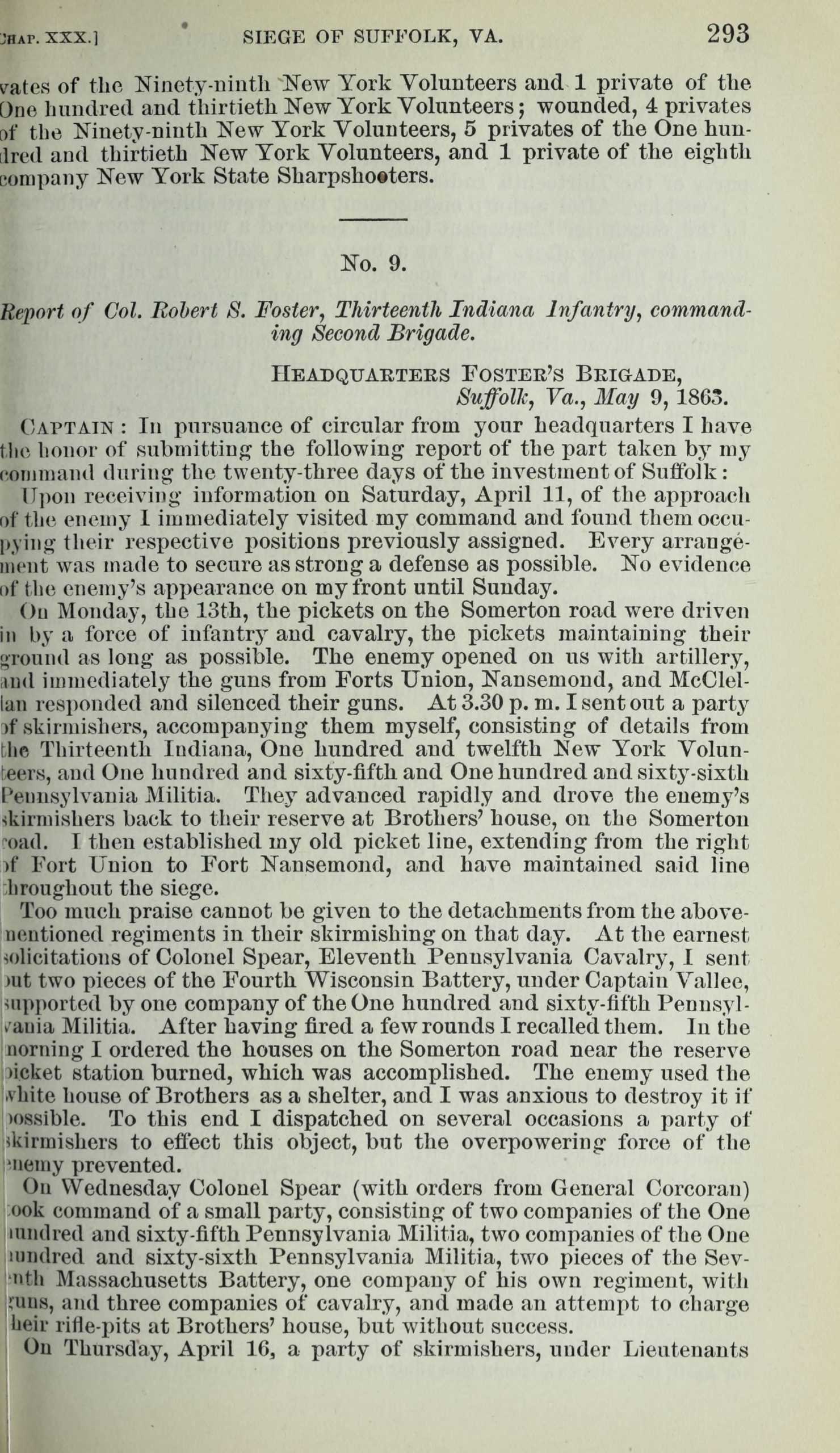
No. 8. Itinerary of the First Brigade, Brig. Gen. Henry D. Terry, U. S. Army, commanding, April 11–30.*
April 11, Saturday.—The enemy appeared before and invested Suffolk. The brigade immediately took position in the trenches and have remained there ever since.
April 17, Friday.—A reconnaissance was sent out, consisting of six companies of the One hundred and thirtieth New York Volunteers, two companies of the Ninety-ninth New York Volunteers, and one company of the New York State Sharpshooters, for the purpose of ascertaining the force of the enemy in front. They were found in force in rifle-pits with large reserves. The loss sustained was as follows: Killed, 2 privates of the Ninety-ninth New York Volunteers and 1 private of the One hundred and thirtieth New York Volunteers; wounded, 4 privates of the Ninety-ninth New York Volunteers, 5 privates of the One hundred and thirtieth New York Volunteers, and 1 private of the eighth company New York State Sharpshooters.
*From Return of Brigade for April, 1863.
U.S. War Dept., The War of the Rebellion: Official Records of the Union and Confederate Armies, Series I, Vol. 18 (Washington: GPO, 1887), pp. 292–293. The brigade’s April return, transcribed in full; it confirms Bowen’s account of the April 17 reconnaissance and the regiment’s loss of one killed and five wounded. Page scans hosted by this site.
Sources & Further Reading
- Primary James R. Bowen, Regimental History of the First New York Dragoons (originally the 130th N.Y. Vol. Infantry) (1900), ch. V, “Siege of Suffolk,” pp. 69–81 — the eyewitness account and the verbatim quotations above. Read the chapter in full on this site; the siege appears in the regiment’s roll of engagements.
- Primary U.S. War Dept., The War of the Rebellion: Official Records of the Union and Confederate Armies, Series I, Vol. 18, pp. 267–348 — the siege’s summary, reports, and casualty returns; p. 267 and pp. 292–293 are exhibited above.
- Note on this page: an earlier version was an AI-drafted overview citing a blog post; it was retired on July 14, 2026 and replaced with this rebuild from the regimental history and the Official Records. All curated images from the earlier page are preserved above.
Blackwater, Dec. 1862 · Deserted House · Franklin, June 1863 · How the 130th Became Cavalry · The Audiobook
Views: 520
Explore the evidence
View this article’s connected sources and media →
About this page
This article was brought over from AlfredGibbs.com. Its preserved text, media and citations remain available for comparison.