
Benjamin Shute of Amity, New York, enlisted in Company G of the regiment that became the First New York Dragoons, originally the 130th New York Volunteer Infantry, in July 1862, at the age of 33. He was transferred from the regiment during his service.
The Service Record
Enlisted: July 1862, at Amity, N.Y.; age 33.
Company: Company G, 130th New York Volunteers → First New York Dragoons.
Rank: Sergeant.
Fate: Transferred to the Veteran Reserve Corps.
Source: New York Adjutant-General’s register of the First New York Dragoons; Bowen, J. R. (1900). Regimental History of the First New York Dragoons.
From the Regimental Register
“Benjamin Shute. Mustered in as Corporal; Co. G, Aug. 14, 1862; appointed Sergeant, date Not Stated; transferred, Nov. 3, to V. R. C.”
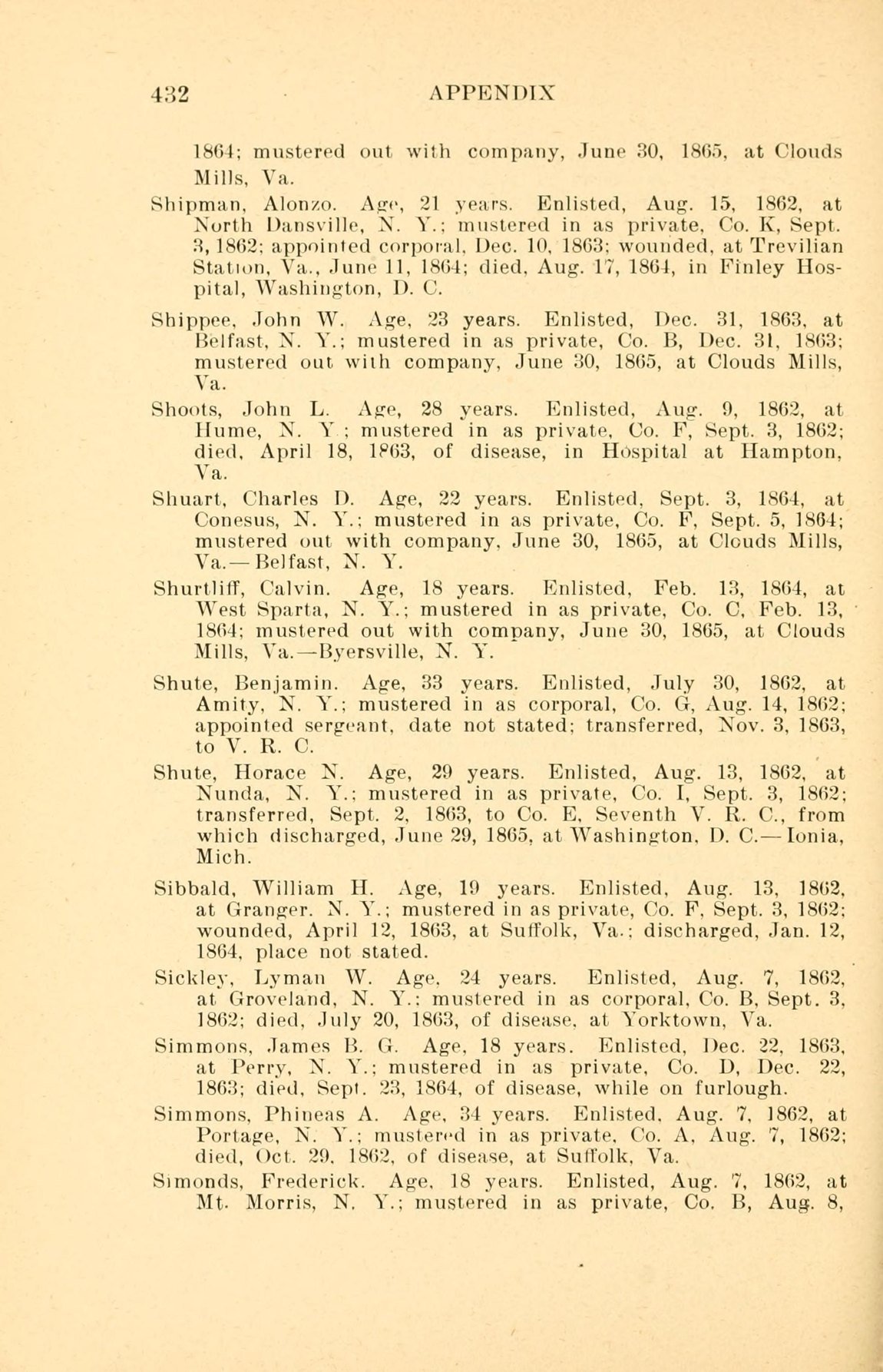
Verbatim from the roster of the First New York Dragoons in the New York Adjutant-General’s report. The page reproduced above is from Bowen, J. R. (1900). Regimental History of the First New York Dragoons (originally the 130th N.Y. Vol. Infantry) (p. 432). Internet Archive. archive.org/details/regimentalhistor00bowe
Compiled Military Service Record
The index to the compiled service records confirms Benjamin Shute in the 19th Cavalry (the regiment’s Fold3 designation; it is the First New York Dragoons), Company G, entering service as Corp and leaving it as Sgt.
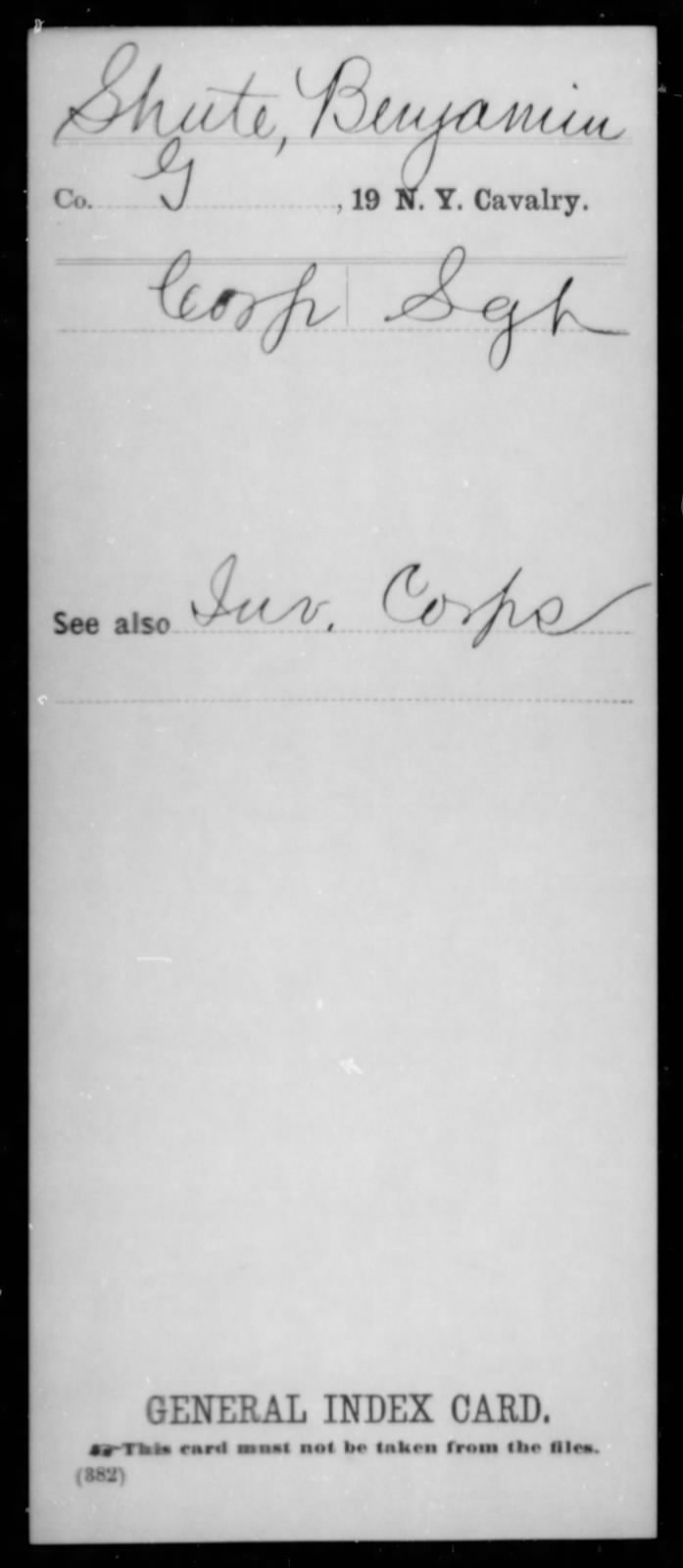
| Military unit | 19th Cavalry |
|---|---|
| Company | G |
| Enlistment rank | Corp |
| Discharge rank | Sgt |
| See also | Inv. Corps |
Shute, Benjamin
Co. G, 19 N. Y. Cavalry.
Corp -        Sgt -
See also Inv. Corps
[printed footer] General Index Card. This card must not be taken from the files. (382)
Source. Compiled Military Service Record, Shute, Benjamin, Co. G, 19th Cavalry. Indexes to the Carded Records of Soldiers Who Served in Volunteer Organizations During the Civil War (NARA microfilm publication M551), Record Group 94. Digital image, Fold3 (https://www.fold3.com/image/291764142), accessed 18 September 2026. Transcribed from the original by sight.
Terms on this page, from brevet and mustered out to the classes of the Roll of Honor, are defined in the site Glossary.
Named in a Comrade’s Letter
Private George D. Benedict of Company G wrote home to his wife Sarah at Belvidere. His letters survive, and they name this man.
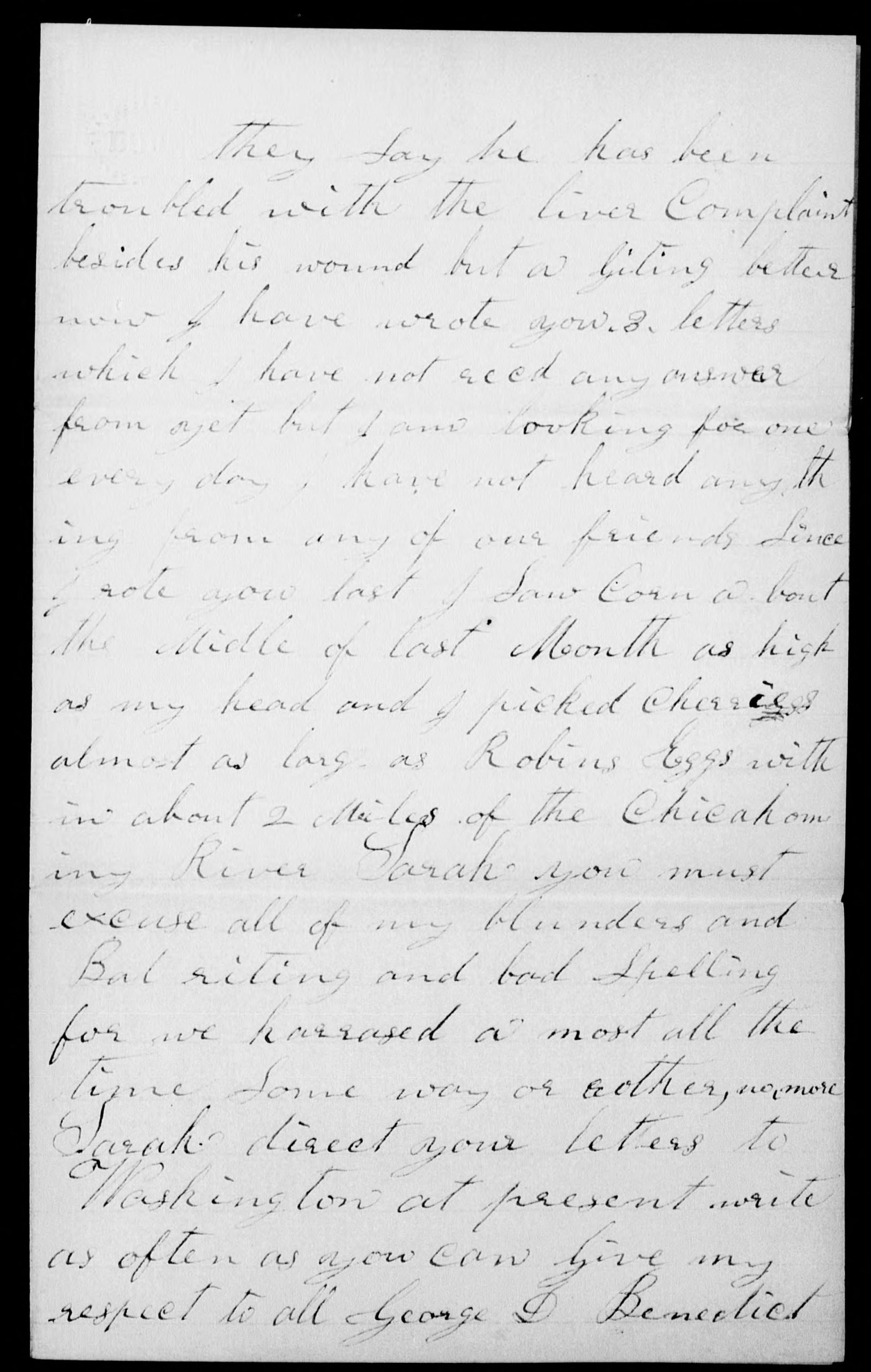
The manuscript. Click to enlarge.
Southern Historical Collection, UNC Chapel Hill, #4943-z.
The passage that names him
“B. Shute was Sent to Fortress Monroe with the rest of the Sick. I have heard from him once or twice; he is agiting better I believe. … [two months later, 7 July] Ben Shute is at the Hospital at fort Monroe. they say he has been troubled with the liver Complaint besides his wound, but a giting better now.”
— George D. Benedict, 11 May and 7 July 1863
Shute was Benedict’s own townsman from Amity and a sergeant of Company G. Benedict mentions him twice, and together the two entries tell a story the official record does not. On 11 May he had gone down to Fortress Monroe with the sick and Benedict thought he was “agiting better.” On 7 July, two months on, he was still in that hospital — and Benedict adds that he was troubled with liver complaint besides his wound. The regimental roster records only that Shute was mustered in as corporal, appointed sergeant, and transferred to the Veteran Reserve Corps on 3 November 1863; it records no wound at all. This letter is the only surviving evidence that he carried one. He never returned to the regiment.
The whole page, transcribed
they say he has been troubled with the liver Complaint besides his wound but a giting better now I have wrote you 3 letters which I have not recd any answer from ayet but I am looking for one every day I have not heard any thing from any of our friends Since I rote you last I Saw Corn about the Middle of last Month as high as my head and I picked Cherries almost as large as Robins Eggs within about 2 Miles of the Chickahominy River Sarah you must excuse all of my blunders and Bad riting and bad Spelling for we harased a most all the time Some way or other, no more Sarah direct your letters to Washington at present write as often as you can give my respect to all
George D. Benedict
Transcribed from the manuscript, in Benedict’s own spelling and punctuation.
Men he served beside
Named alongside him in the same letters, or standing on the same post:
The letters themselves, transcribed page by page, are on the page of Private George D. Benedict, Company G, who wrote them.
Source. Benedict, G. D. (1863–1864). George D. Benedict Papers (Collection #4943-z). Southern Historical Collection, Louis Round Wilson Special Collections Library, University of North Carolina at Chapel Hill.
Named in a Comrade’s Letter — Warrenton, 28 July 1863
Private George D. Benedict of Company G wrote home to his wife Sarah at Belvidere through 1863 and 1864. His letters survive, and this one names this man.
“Ben Shute is at Fortress Monroe and Simeon Bennet they went thare Sick but I understand they are better”
— George D. Benedict, Warrenton, Virginia, 28 July 1863
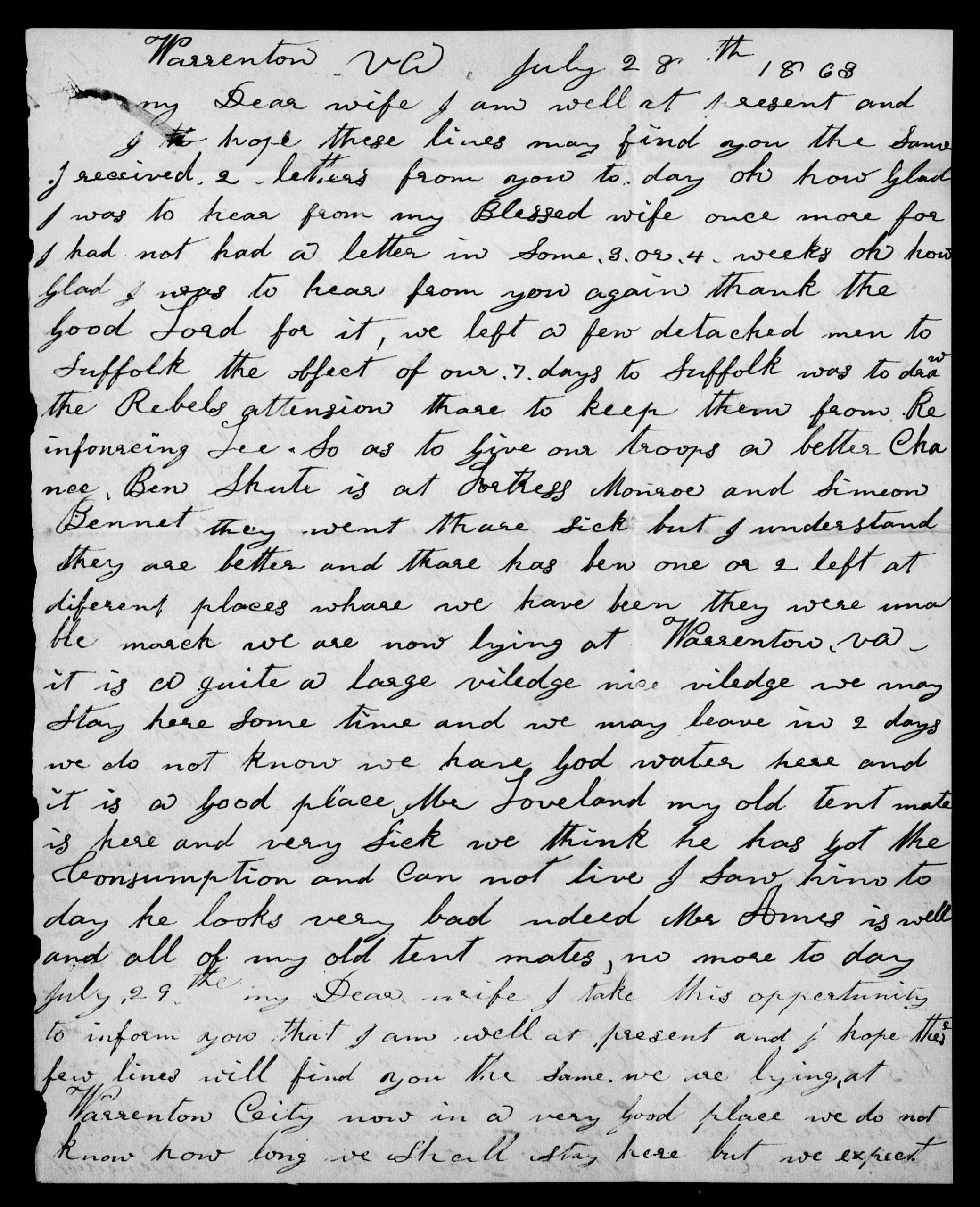
The whole page, transcribed
Warrenton VA July 28th 1863
my Dear wife I am well at present and I hope these lines may find you the Same I received 2 letters from you to day oh how glad I was to hear from my Blessed wife once more for I had not had a letter in Some 3 or 4 weeks oh how glad I was to hear from you again thank the good Lord for it,
we left a few detached men to Suffolk the affect of our 7 days to Suffolk was to draw the Rebels attension thare to keep them from Reinforceing Lee So as to give our troops a better Chance.
Ben Shute is at Fortress Monroe and Simeon Bennet they went thare Sick but I understand they are better and thare has ben one or 2 left at diferent places whare we have been they were unable march
we are now lying at Warrenton Va it is quite a large viledge nice viledge we may Stay here Some time and we may leave in 2 days we do not know we have god water here and it is a good place,
Mr Loveland my old tent mate is here and very Sick we think he has got the Consumption and Can not live I Saw him to day he looks very bad indeed Mr Ames is well and all of my old tent mates, no more to day
July 29th my Dear wife I take this oppertunity to inform you that I am well at present and I hope these few lines will find you the Same we are lying at Warrenton City now in a very good place we do not know how long we Shall Stay here but we expect
Shute was a sergeant of Company G and Benedict’s own townsman from Amity. Benedict had reported him sent away sick as early as 11 May 1863; eleven weeks later he is still at Fortress Monroe, and the news reaching camp is that he is mending.
He never returned to the regiment. On 3 November 1863 Shute was transferred to the Veteran Reserve Corps — the formation for men no longer fit for field service. Benedict’s hopeful reports across the summer of 1863 track a recovery that was never complete enough to bring him back.
Men he served beside. This one page names four men of Company G: Edwin M. Loveland · Simeon Bennett · Benjamin A. Ames. The full run of Benedict’s letters, transcribed page by page, is on his own page.
Source. Benedict, G. D. (1863–1864). George D. Benedict Papers (Collection #4943-z). Southern Historical Collection, Louis Round Wilson Special Collections Library, University of North Carolina at Chapel Hill.
Named in a Comrade’s Letter — Warrenton, 29 July 1863
Private George D. Benedict of Company G wrote home to his wife Sarah at Belvidere through 1863 and 1864. His letters survive, and this one records this man.
“Ben Shute is at Fortress monroe I do not now how he is giting along I do not much from him”
— George D. Benedict, Warrenton, Virginia, 29 July 1863
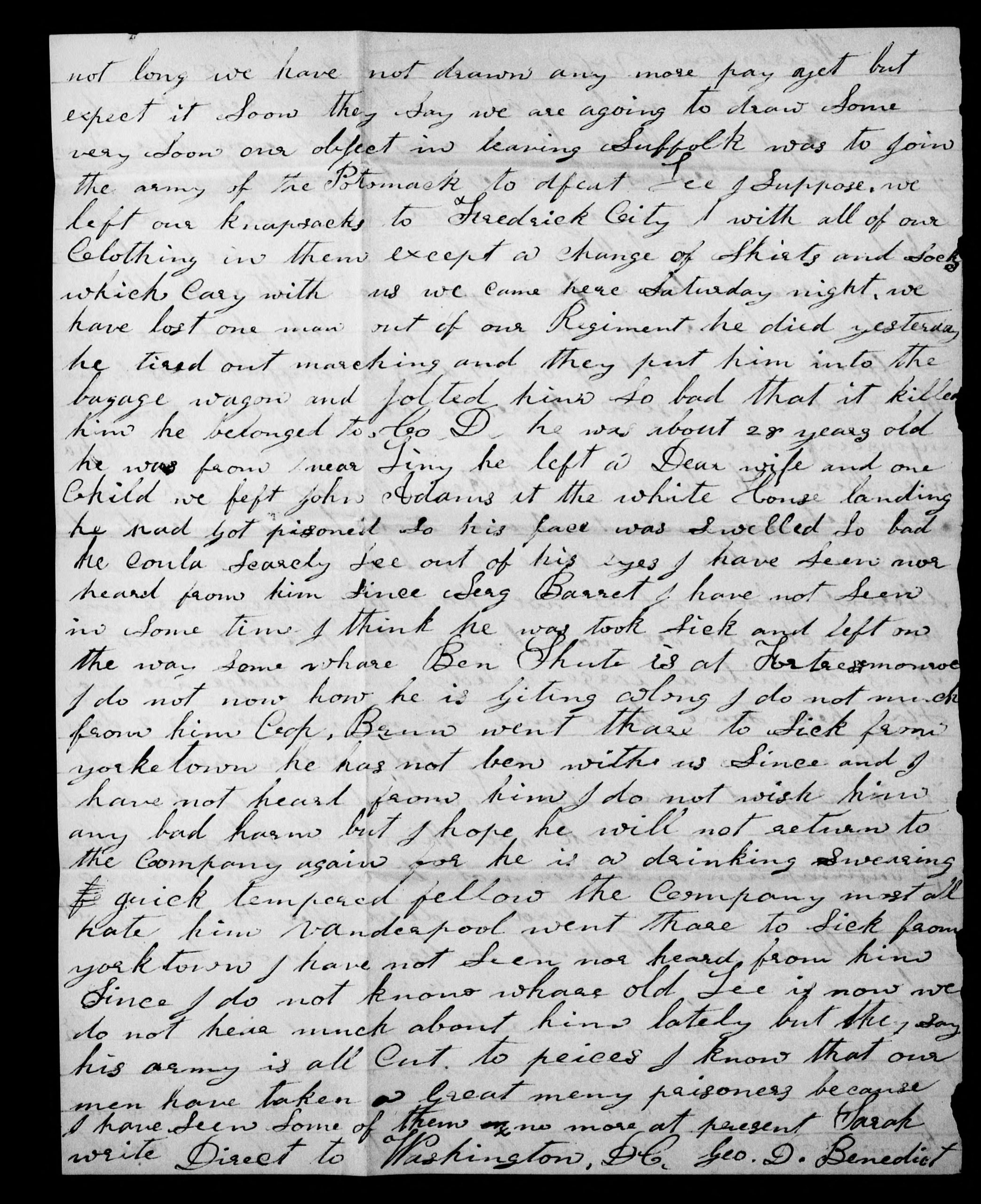
The whole page, transcribed
not long we have not drawn any more pay yet but expect it Soon they Say we are agoing to draw Some very Soon our object in leaving Suffolk was to join the army of the Potomack to defeat Lee I Suppose,
we left our knapsacks to Fredrick City with all of our Clothing in them except a change of Shirts and Socks which Cary with us we came here Saturday night,
we have lost one man out of our Regiment he died yesterday he tired out marching and they put him into the bagage wagon and jolted him So bad that it killed him he belonged to Co D he was about 28 years old he was from near Liny he left a Dear wife and one Child
we left John Adams at the white house landing he had got pisoned So his face was Swelled So bad he could Scarcly See out of his eyes I have Seen nor heard from him Since
Serg Barret I have not Seen in Some time I think he was took Sick and left on the way Some whare
Ben Shute is at Fortress monroe I do not now how he is giting along I do not much from him
Corp. Benn went thare to Sick from yorketown he has not ben with us Since and I have not heard from him I do not wish him any bad harm but I hope he will not return to the Company again for he is a drinking Swearing quick tempered fellow the Company most all hate him
Vanderpool went thare to Sick from yorktown I have not Seen nor heard from him Since
I do not know whare old Lee is now we do not hear much about him lately but they Say his army is all Cut to peices I know that our men have taken a Great meny prisoners because I have Seen Some of them
no more at present Sarah write Direct to Washington, D C
Geo. D. Benedict
This is Benedict’s third report on Shute in eleven weeks, and the tone has changed. In May he was hopeful. On the first sheet of this same letter he wrote that Shute was at Fortress Monroe and understood to be better. Here, a day later, the hope is gone: “I do not now how he is giting along.”
Benedict was right to worry. Shute never returned to the regiment. On 3 November 1863 he was transferred to the Veteran Reserve Corps, the formation for men no longer fit for field service.
Both readings sit on this page together because both are in the record — the encouraging report of 28 July and the doubt of the 29th, written on facing sheets of one letter.
Men named on this same page.Alonzo Hodge · Albert D. Vanderpool · John J. Adams · Alonzo D. Barrett. The full run of Benedict’s letters, transcribed page by page, is on his own page.
Source. Benedict, G. D. (1863–1864). George D. Benedict Papers (Collection #4943-z). Southern Historical Collection, Louis Round Wilson Special Collections Library, University of North Carolina at Chapel Hill.
“He Never Will Be Able to Join the Regiment Again” — 9 August 1863
Private George D. Benedict of Company G to his wife Sarah, Manassas Junction, 9 August 1863.
“Ben Shute is at the hospital Sick yet Ceapt Says he never will be able to join the Regiment again he is on lite duty now”
— George D. Benedict, Manassas Junction, 9 August 1863
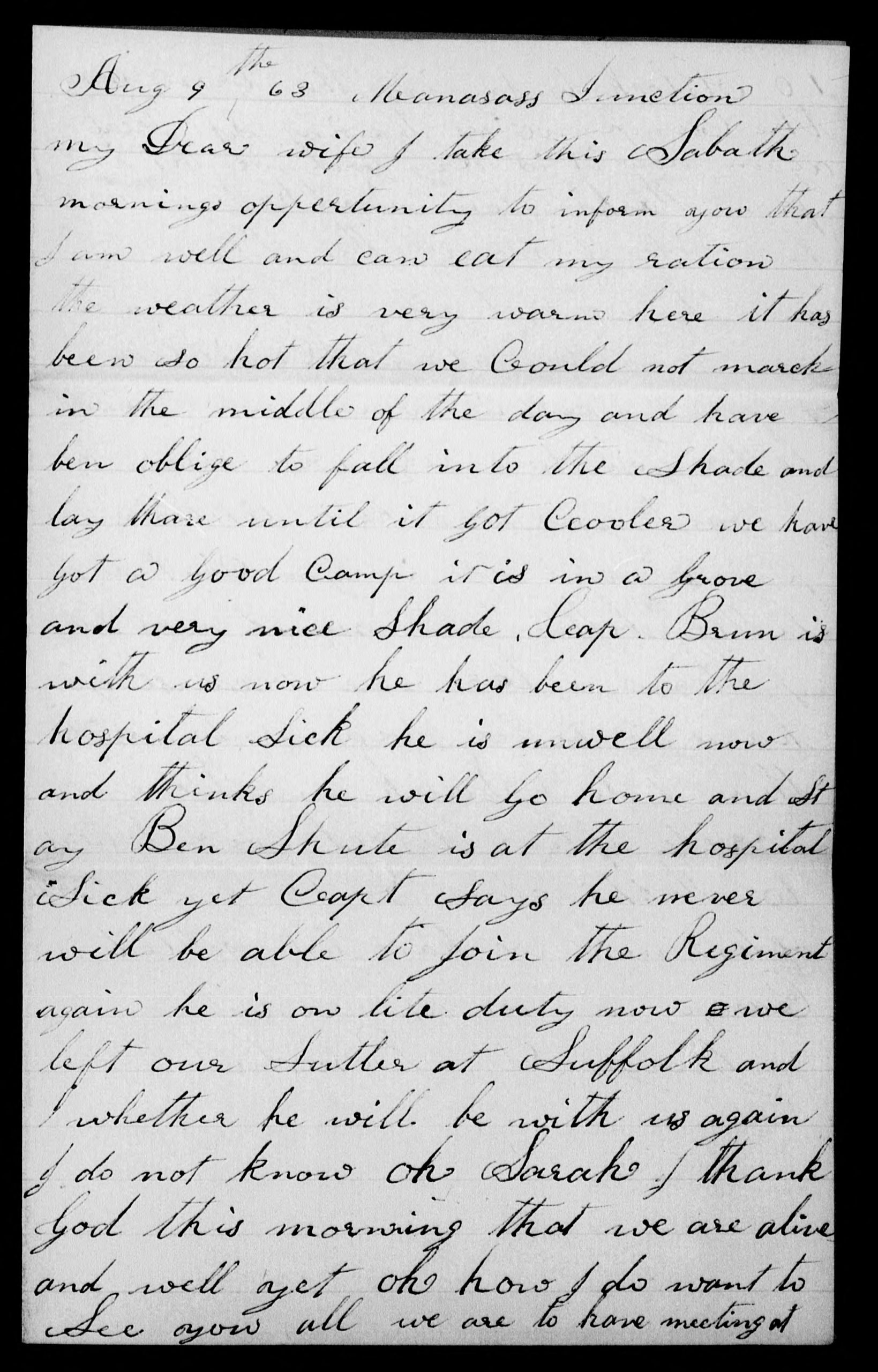
The whole page, transcribed
Aug 9th 63 Manasass Junction
my Dear wife I take this Sabath mornings oppertunity to inform you that I am well and can eat my ration
the weather is very warm here it has been So hot that we Could not march in the middle of the day and have ben oblige to fall into the Shade and lay thare until it got Cooler we have got a good Camp it is in a grove and very nice Shade,
Ceap. Brun is with us now he has been to the hospital Sick he is unwell now and thinks he will go home and Stay
Ben Shute is at the hospital Sick yet Ceapt Says he never will be able to join the Regiment again he is on lite duty now
we left our Sutler at Suffolk and whether he will be with us again I do not know
oh Sarah I thank God this morning that we are alive and well yet oh how I do want to See you all we are to have meeting at
This is the moment the hope ran out, and it is the company commander’s judgement, not a rumour. Through May, June and July Benedict had sent home encouraging reports — Shute was at Fortress Monroe, he was understood to be better. On 9 August Captain Brundage tells the company plainly that Shute will never be fit to rejoin the regiment. He is on light duty.
The record bears the captain out. On 3 November 1863 Sergeant Shute was transferred to the Veteran Reserve Corps, the formation for men no longer fit for field service. He never came back to the Dragoons.
Shute was Benedict’s own townsman from Amity, and he is named in more of these letters than almost any other man. The muster roll records the transfer. Only the letters record the four months of his friends asking after him.
Source. Benedict, G. D. (1863–1864). George D. Benedict letters, 1863–1864 (Collection #4943-z). Southern Historical Collection, Louis Round Wilson Special Collections Library, University of North Carolina at Chapel Hill.
Views: 12
Explore the evidence
View this article’s connected sources and media →
About this page
This article was brought over from AlfredGibbs.com. Its preserved text, media and citations remain available for comparison.