
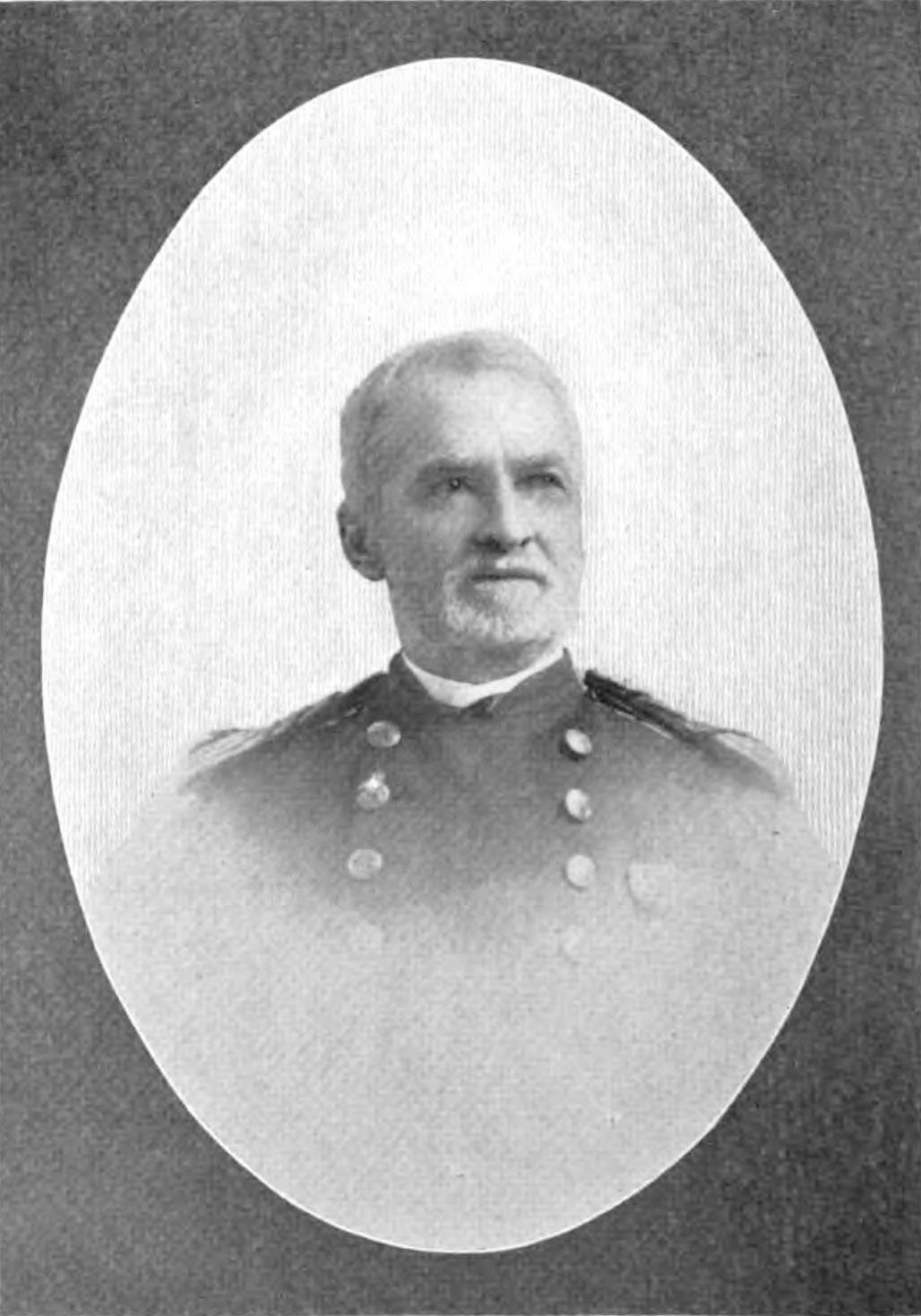
Charles Seaforth Stewart, born on April 11, 1823, aboard the American ship Thames in the Pacific Ocean, was a prominent figure in the United States Army Corps of Engineers. His life and career were marked by significant contributions to military engineering and coastal defense, reflecting a blend of personal resilience and professional excellence (Wikipedia, n.d.).
Early Life and Education
Stewart’s early life was shaped by his family’s naval background. His father, Reverend Charles Samuel Stewart, served as a US Navy chaplain, and his mother, Harriet Bradford Tiffany Stewart, provided a nurturing environment that emphasized education and service. Raised in Cooperstown, New York, and Princeton, New Jersey, Stewart embarked on his first sea journey at 17 as the captain’s clerk aboard the U.S.S. Brandywine (Wikipedia, n.d.). This experience likely influenced his decision to pursue a military career.
In 1842, Stewart entered the United States Military Academy at West Point, where he excelled academically, graduating first in his class in 1846 (United States Military Academy, 1904). This achievement secured him a coveted position in the Corps of Engineers, setting the stage for a distinguished career.
Military Career and Contributions
Stewart’s expertise in seacoast construction became evident early in his career. His initial assignments included planning and overseeing the construction of Fort Trumbull in Connecticut and Fort Warren in Massachusetts (Wikipedia, n.d.). From 1849 to 1854, he served as an assistant professor of engineering at West Point, sharing his knowledge with future military leaders.
During the American Civil War, Stewart’s engineering skills were crucial in several key operations. He served as assistant and chief engineer for the defenses at Hampton Roads and played significant roles in the Siege of Yorktown and the Battle of Williamsburg (Wikipedia, n.d.). His contributions earned him a brevet promotion to lieutenant colonel, recognizing his exceptional service.
Post-war, Stewart continued to influence military engineering. He was the superintending engineer for the defenses of the Delaware River and Bay and later contributed to the planning of Pacific Coast defenses. His work included overseeing construction projects at Fort Point, Point San Jose, and Angel Island in San Francisco Harbor (Wikipedia, n.d.).
Innovations and Legacy
Stewart’s career was marked by several innovative projects. In 1872, he supervised the removal of Rincon Rock from San Francisco Harbor, enhancing navigational safety (Wikipedia, n.d.). He also led examinations of seawalls and breakwaters at various California harbors, contributing to the state’s maritime infrastructure.
Between 1873 and 1886, Stewart’s leadership extended to projects such as the construction of a fort in San Diego, surveys of the San Joaquin River, and improvements to San Diego Bay. His efforts in surveying the Colorado River and examining harbors along the California coast further underscored his impact on regional development (Wikipedia, n.d.).
Stewart’s role as chief engineer of the 12th Lighthouse District and his involvement in planning river and harbor improvements highlighted his commitment to advancing the nation’s infrastructure. His work ensured safer and more efficient maritime operations, benefiting both military and civilian sectors (Wikipedia, n.d.).
Retirement and Recognition
In June 1882, Stewart was promoted to colonel, a testament to his enduring contributions to military engineering (Wikipedia, n.d.). He retired in 1886, settling in Cooperstown, New York. In 1904, in recognition of his superior service, he was promoted to brigadier general on the retired list (United States Military Academy, 1904).
Stewart passed away on July 22, 1904, in Siasconset, Massachusetts, and was laid to rest in Lakewood Cemetery, Cooperstown (Wikipedia, n.d.). His legacy endures through his numerous contributions to engineering and military service, reflecting a lifetime of dedication and achievement.
Conclusion
Charles Seaforth Stewart’s career exemplifies the profound impact of military engineers on national defense and infrastructure. His work during pivotal moments in American history, particularly the Civil War and the post-war period, underscores the critical role of engineering in shaping the nation’s future. Stewart’s legacy continues to inspire future generations of engineers and military leaders, highlighting the enduring value of innovation, resilience, and service.
References
United States Military Academy, Association of Graduates. (1904). Annual Reunion. Retrieved May 10, 2012, from [source AflredGibbs.com].
Waugh, J. C. (1994). The Class of 1846: From West Point to Appomattox: Stonewall Jackson, George McClellan, and Their Brothers. Random House. ISBN 9780345434036.
Wikipedia contributors. (n.d.). Charles Seaforth Stewart. In Wikipedia, The Free Encyclopedia. Retrieved [date you accessed the article], from https://en.wikipedia.org/wiki/Charles_Seaforth_Stewart
Views: 186
Explore the evidence
View this article’s connected sources and media →
About this page
This article was brought over from AlfredGibbs.com. Its preserved text, media and citations remain available for comparison.