
TablePress · Preserved research data
West Point: Class of 1846
Class of 46 West Point. This is a database of the classmates of Alfred Gibbs during his stay in West Point.
62 matching entries of 62 · 25 per page · Page 1 of 3
| Number | Rank | Cadett Name | Sate Born | State Appointed | Cival War Service | Rank Promoted To | Military Service | Additional Source Link | Photo |
|---|---|---|---|---|---|---|---|---|---|
| — | Birkett D. Fry | CSA | Brigadier General | Dismissed From West Point for poor grades. Fry received his education at Virginia Military Institute in Lexington, and attended the United States Military Academy, but di… Read full entryDismissed From West Point for poor grades. Fry received his education at Virginia Military Institute in Lexington, and attended the United States Military Academy, but did not graduate with the Class of 1846, having failed mathematics and been subsequently dismissed. He then returned to his native Virginia to study law. He resumed his interest in the military with the outbreak of the Mexican–American War, serving as a First Lieutenant of Voltigeurs (skirmishers). Following the war, Fry moved to California as a "Forty-Niner." Fry practiced law in Sacramento City and was elected Justice of the Peace, Fourth Ward in 1852. In 1859 he moved to Alabama and engaged in cotton manufacturing. With Alabama's secession from the Union, Fry enlisted in the Confederate army and was appointed Colonel of the 13th Alabama Infantry. The regiment was transported to Virginia and fought in the Peninsula Campaign. Colonel Fry was wounded in action at the Battle of Seven Pines. He recovered in time to command his regiment in the savage fighting at Antietam, where he was again wounded, suffering a shattered arm. Fry rejoined his regiment and led it during the 1863 Battle of Chancellorsville, where he suffered a third wound.[1] During the subsequent Gettysburg Campaign, Fry's regiment was among the first Confederate units to deploy into battle line and engage the Union cavalry of John Buford at the opening of the Battle of Gettysburg on July 1, 1863. His men suffered considerable casualties as the day progressed after being driven off McPherson's Ridge by the arrival of the Federal Iron Brigade. With the capture of Brig. Gen. James J. Archer, Fry assumed command of Archer's Brigade of Tennesseans and Alabamians.[1] Held in reserve on July 2, Fry's brigade was a key part of the July 3 attack that became famous as Pickett's Charge.[1] He suffered yet another wound, and fell near the Union lines. Fry was treated in a local field hospital then held as a prisoner of war at Fort McHenry in Baltimore, There, rumors circulated that Fry had been involved in the August 1862 murder of Union general Robert L. McCook in Alabama. Fry's West Point classmate, John Gibbon, who ironically commanded the troops that had shot Fry at Gettysburg, vouched for his character and the matter was forgotten. Exchanged in 1864, Fry rejoined the Army of Northern Virginia in time for the beginning of the Siege of Petersburg. During Philip H. Sheridan's raid on Richmond in early May, Fry was assigned command of Seth Barton's Virginia brigade, leading it during the Battle of Meadow Bridge. He was promoted to brigadier general on May 24, 1864. During the final months of the war, Fry was placed in command of a military district in South Carolina and Georgia. After surrendering in Augusta, Fry emigrated to Cuba at the close of hostilities, lodging in Havana hotels with several other former prominent Confederates, including Jubal A. Early, John C. Breckinridge, Robert A. Toombs, and John B. Magruder, among others. He did not return to the United States until 1868, when he returned to Tallassee, Alabama as a businessman. Fry later expanded his business career in Florida, and, in 1881, moved to Richmond, Virginia, where he was president of a cotton mill for a decade.[4] Fry died in Richmond on January 21, 1891 and was buried in Oakwood Cemetery in Montgomery, Alabama. | Read More">Read More | 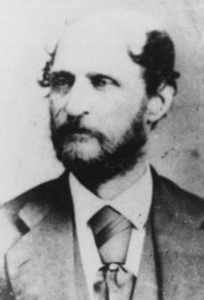 | |||
| — | Thomas J. Lowe | NONE | Dismissed for irrepressibly questionable conduct. | NO DATA |  | ||||
| — | Samuel H. Raymond | NONE | Died at West Point 1845 | NO DATA | | ||||
| 1272 | 1 | Charles Seaforth Stewart | At Sea | New Jersey | Colonel Retired | During the American Civil War, Stewart mainly served in Virginia, and his assignments between 1861 and 1865 included various engineering roles. He worked as an assistant … Read full entryDuring the American Civil War, Stewart mainly served in Virginia, and his assignments between 1861 and 1865 included various engineering roles. He worked as an assistant engineer and chief engineer for the defenses at Hampton Roads (1861-1864) and supervised the construction of field works in Newport News (1861). Stewart also served as an assistant engineer during the Siege of Yorktown (1862), the Battle of Williamsburg (1862), and while scouting with the advance forces led by George Stoneman between Williamsburg and Mechanicsville (1862). After recovering from an illness at Fort Monroe, Stewart held several consulting engineer positions, such as during the defense of Suffolk, Virginia (1863), the construction of defenses in Portsmouth and Norfolk (1863), and during demonstrations outside of Richmond (1863). He went on to supervise the construction of defenses at Port Lookout, Maryland (1864) and served as the chief engineer of the Middle Military Division (1864-1865). Stewart's later assignments included special duty in Baltimore and Cumberland, Maryland (1865) and at Fort Clinch, Florida (1865). In recognition of his contributions during the war, Stewart received a brevet promotion to lieutenant colonel. | Read More | 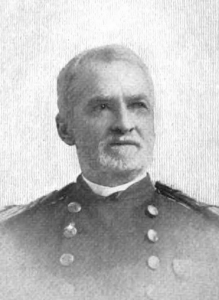 | |
| 1273 | 2 | George Brinton McClellan | Pennsylvania | Pennsylvania | USA | Major General | President Lincoln approved him Major General in the regular army. He was outranked only by General-in-Chief Winfield Scott. He reorganized a disjointed and poorly discipl… Read full entryPresident Lincoln approved him Major General in the regular army. He was outranked only by General-in-Chief Winfield Scott. He reorganized a disjointed and poorly disciplined army, pushing it into the field in response to Lee's invasion. In 1862, McClellan's Peninsula Campaign unraveled after the Seven Days Battles, and he also failed to decisively defeat Robert E. Lee's Confederate Army at the Battle of Antietam. After the Battle of Antietam, frustrated by McClellan's cautious tactics, Lincoln removed him from command and McClellan was ordered to turn over his command to his good friend Ambrose E. Burnside and to go home to New Jersey to await further orders. These orders never came. In 1864, McClellan was nominated for President by the Democratic Party but lost the election. He did serve as governor of New Jersey from 1878-1881. | Read More | 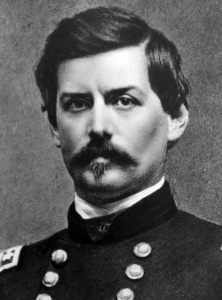 |
| 1274 | 3 | Charles E. Blunt | New Hampshire | At Large | USA | Colonel Retired | Over forty years as a military engineer, primarily of harbors | Read More | |
| 1275 | 4 | John Gray Foster | New Hampshire | New Hampshire | USA | Major General | An engineer during the Civil War he was several times breveted for gallantry in action in the Carolinas and eventually commanded various important Departments; after the war he worked in harbor improvements. | Read More | 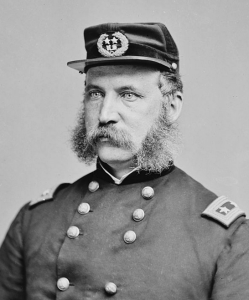 |
| 1276 | 5 | Edmund L. Hardcastle | Maryland | Maryland | NONE | Bvt. Captain | Fought in the Mexican War, and resigned after a 10 year Army career. Delegate to the Democratic Conventions of Charleston and Baltimore; a Marylander, he then sidestepped… Read full entryFought in the Mexican War, and resigned after a 10 year Army career. Delegate to the Democratic Conventions of Charleston and Baltimore; a Marylander, he then sidestepped the War between the States: state politics, railroads, and farming were his life. Resigned from the Army 1856 | Read More | 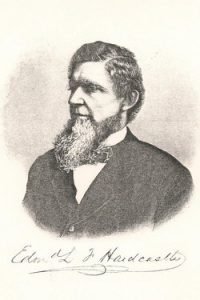 |
| 1277 | 6 | Francis T. Bryan | North Carolina | North Carolina | NONE | U.S. Captain | As a lieutenant in the Topographical Engineers, he served during the Mexican War on the staff of Gen. Zachary Taylor, was wounded at Buena Vista, and was decorated and br… Read full entryAs a lieutenant in the Topographical Engineers, he served during the Mexican War on the staff of Gen. Zachary Taylor, was wounded at Buena Vista, and was decorated and brevetted first lieutenant for gallant and meritorious conduct. He was promoted to first lieutenant in July 1851 and to captain in July 1860. With the outbreak of the Civil War he resigned his commission, on June 10, 1861, and started to return to North Carolina but was arrested so that he could not join the Confederate Army. | Read More | |
| 1278 | 7 | George H. Derby | Massachusetts | Massachusetts | NONE | Lieutenant | Served at various posts in the western United States as a , Topographical Engineer where he conducted surveys and mapping expeditions. He was also involved in several mil… Read full entryServed at various posts in the western United States as a , Topographical Engineer where he conducted surveys and mapping expeditions. He was also involved in several military campaigns during the Mexican-American War and the Indian Wars. In addition to his military service, Derby was known for his wit and humor, and he wrote several books and articles under the pen name "John Phoenix." One of his most famous works is a satirical guidebook to the western United States called "Phoenixiana; Squibob Papers. or, Sketches and Burlesques." The book was widely read and influential in its time, and it is still remembered for its humor and insight into the American West in the mid-19th century. Died on sick leave 1861. | Read More | 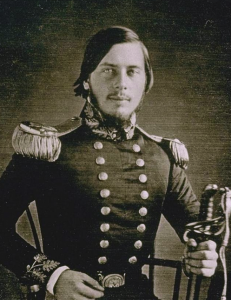 |
| 1279 | 8 | Jesse Lee Reno | Virginia | Pennsylvania | USA | Major General | Several brevets for gallantry in the Mexican War. Mortally wounded commanding 9th Corps, Army of the Potomac at South Mountain 1862. Mortally wounded commanding 9th Corps… Read full entrySeveral brevets for gallantry in the Mexican War. Mortally wounded commanding 9th Corps, Army of the Potomac at South Mountain 1862. Mortally wounded commanding 9th Corps, Army of the Potomac at South Mountain 1862. Jesse Lee Reno, whose surname was originally Renault, was born June 20, 1823, in the Ohio River town of Wheeling, Virginia (now West Virginia); however, his parents moved to Venango County, Pennsylvania around 1832. He was graduated from the Military Academy in 1846, ranking eighth in the class which included George B. McClellan, Stonewall Jackson, and George Pickett. Although he was an ordnance officer from his graduation until the early months of the Civil War, Reno won the brevets of first lieutenant and captain for gallantry at Cerro Gordo and Chapultepec. In the course of the next fifteen years his duties were varied: they included teaching at West Point, membership on ordnance boards, participation in topographical surveys, chief of ordnance on the Utah expedition under Albert Sidney Johnston, and the successive commands of the Mount Vernon, Alabama, and Leavenworth, Kansas, arsenals. He was forced to surrender the Mount Vernon arsenal to the state forces of Alabama in January, 1861. On November 12 of that year Reno was commissioned brigadier general of volunteers and subsequently commanded a brigade of Ambrose E. Burnside's expedition against the Carolina coast that winter, fighting at Roanoke Island, New Bern, and Camden. From April until his recall north in August, 1862, he directed a division in the newly established Federal Department of North Carolina. Reno was appointed major general on August 20 to rank from July 18, 1862, andduring the campaign of Second Manassas, directed Burnside's IX Corps while the latter was in charge of the right wing of John Pope's army which was advancing northward from the line of the Rappahannock. Reno's corps sustained itself well at the battle of Second Manassas and again the following day (September 1, 1862) at Chantilly; then, the IX Corps retired to the Washington defenses along with the rest of Pope's forces. It remained in the capital until it was led out a few days later under the banner of George B. McClellan, who had been restored to command of the Army of the Potomac. In the subsequent Maryland campaign against R. E. Lee's Confederate invaders. Reno was mortally wounded while leading his men into Fox's Gap in South Mountain on September 14, 1862. The field where he was injured is now marked by a seldom seen monument to his memory. His body was first taken to Boston, where his wife was residing, and placed in a vault in Trinity Church. On April 9, 18 67, his remains were removed to Oak Hill Cemetery, Georgetown, D. C. | Read More | 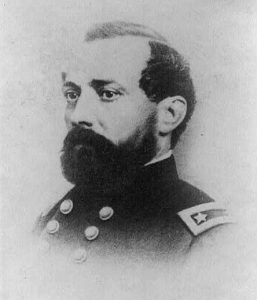 |
| 1280 | 9 | Clarendon J. L. Wilson | Virginia | Virginia | NONE | First Lieutenant | Fought in the Mexican War; Died on duty New Mexico Territory 1853. | Read More | |
| 1281 | 10 | Thomas Wheedbee | North Carolina | North Carolina | NONE | First Lieutenant | Ordnance officer, died on sick leave 1849. | Read More | |
| 1282 | 11 | Edmund Hayes | Pennsylvania | Pennsylvania | NONE | First Lieutenant | Artilleryman, served in the Mexican War and the Third Seminole War; died Died Nov. 25, on duty at sea in 1853. | Read More | |
| 1283 | 12 | Edward Carlisle Boynton | Vermont | Vermont | USA | Major | Artilleryman, fought in the Mexican War and served in the Third Seminole War; taught chemistry at the Military Academy and elsewhere, served as Adjutant or Quartermaster … Read full entryArtilleryman, fought in the Mexican War and served in the Third Seminole War; taught chemistry at the Military Academy and elsewhere, served as Adjutant or Quartermaster at the Academy for ten years, and was an amateur historian, publishing among other things one of the earliest histories of West Point. Adjutant & Quartermaster at West Point DIED MAY 13, 1893, AT NEWBURGH, N. Y. AGED 69. | Read More | 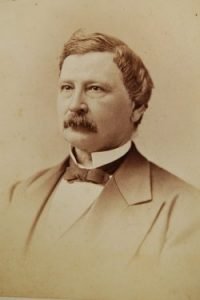 |
| 1284 | 13 | Darius Nash Couch | New York | New York | USA | Major General | Fought in the Mexican War, served in the Third Seminole War and on the western frontier, and fought for the Union in the Civil War, commanding the II Corps. DIED FEB. 12, 1897, AT NORWALK, CT.: AGED 74 | Read More | 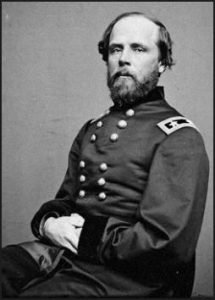 |
| 1285 | 14 | Henry B. Sears | Massachusetts | Massachusetts | NONE | First Lieutenant | Artilleryman, fought in the Mexican War and served in the Third Seminole War; taught chemistry at the Military Academy and elsewhere, served as Adjutant or Quartermaster … Read full entryArtilleryman, fought in the Mexican War and served in the Third Seminole War; taught chemistry at the Military Academy and elsewhere, served as Adjutant or Quartermaster at the Academy for ten years, and was an amateur historian, publishing among other things one of the earliest histories of West Point. Resigned 1849. Died, Feb. 12, 1880, at Liverpool, England, aged 55 | Read More | |
| 1286 | 15 | William Dutton | Connecticut | Connecticut | USA | Colonel | Resigned immediately due to illness, and was a civilian educator and businessman; joined the Army again and fought for the Union in the Civil War, but died in 1862 of illness during the war. | Read More | |
| 1287 | 16 | John A. Brown | Maryland | Maryland | CSA | Lieutenant Colonel | Served in the Mexican War and two tours of duty in the Third Seminole War; fought for the Confederacy in the Civil War, and was an engineer after the war. Died, Oct. 8, 1877, at Washington, N. C, aged 51. | Read More | |
| 1288 | 17 | Thomas Jonathan Jackson | Virginia | Virginia | CSA | Lieutenant General | Best know by his nickname "Stonewall Jackson," who fought in the Mexican War and taught science and artillery at the Virginia Military Institute; and was a valiant Confed… Read full entryBest know by his nickname "Stonewall Jackson," who fought in the Mexican War and taught science and artillery at the Virginia Military Institute; and was a valiant Confederate commander, mortally wounded at Chancellorsville, May 1863, commanding 2nd Corps, Army of Northern Virginia. | Read More | 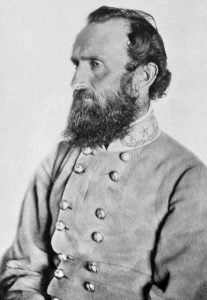 |
| 1289 | 18 | Albert L. Magilton | Delaware | Pennsylvania | USA | Colonel | Fought in the Mexican War and served in the Third Seminole War; resigned his commission in 1856 but fought for a year for the Union in the Civil War; as a civilian. Profe… Read full entryFought in the Mexican War and served in the Third Seminole War; resigned his commission in 1856 but fought for a year for the Union in the Civil War; as a civilian. Professor of Infantry Tactics in the Philadelphia Pennsylvania Free Military School for applicants for the command of African-American troops, Feb. 8 to Sep. 15, 1864. Deputy Collector of U. S. Internal Revenue, at Philadelphia, Pa., 1864-75. | Read More | 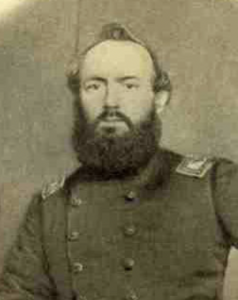 |
| 1290 | 19 | Truman Seymour | Vermont | Vermont | USA | Major General | Artilleryman, fought in the Mexican War and served in the Third Seminole War. He was present at the Battle of Fort Sumter. He commanded the Union troops at the Battle of Olustee, the only major Civil War battle fought in Florida. | Read More | 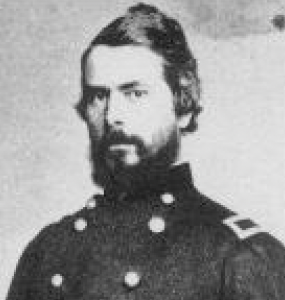 |
| 1291 | 20 | Colville J. Minor | District Of Columbia | District Of Columbia | NONE | Second Lieutenant | Sent to the California theater of the Mexican War, where he died thirteen months after graduating. Died, Aug. 17, 1847, at Monterey, Cal.: Aged 23. | Read More | |
| 1292 | 21 | Charles Champion Gilbert | Ohio | At Large | USA | Brigadier General - Acting Major General not confirmed by the Senate. | Infantryman, fought in the Mexican War, against Indians on the western frontier, and for the Union in the Civil War; after the war, commanded several frontier posts, most… Read full entryInfantryman, fought in the Mexican War, against Indians on the western frontier, and for the Union in the Civil War; after the war, commanded several frontier posts, mostly in the northwest. He was promoted to Acting Major General but not confirmed by the Senate. | Read More | 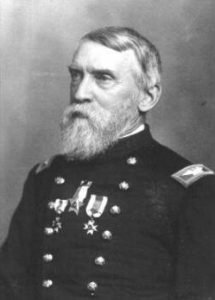 |
| 1293 | 22 | Marcus D.L. Simpson | New York | New York | USA | Colonel | Fought in the Mexican War and spent forty-two years in the Army. Served: on Special duty, under the orders of the Secretary of War, at San Francisco, Cal., May 8, 1866, t… Read full entryFought in the Mexican War and spent forty-two years in the Army. Served: on Special duty, under the orders of the Secretary of War, at San Francisco, Cal., May 8, 1866, to Jan. 12, 1867; as Chief Commissary of Subsistence, Division of the Pacific, Nov. 23, 1867, to Oct. 7, 1873, — of the Division of the Atlantic and Department of the East, Oct. 21, the last thirty-three were as a Commissary officer. Died April 7, 1909, at Riverside, Ill.: Aged 85 | Read More | |
Preserved from AlfredGibbs.com, 7 November 2026. Original wording and source-table differences remain intact. Open this table on its own →
Views: 127
Explore the evidence
View this article’s connected sources and media →
About this page
This article was brought over from AlfredGibbs.com. Its preserved text, media and citations remain available for comparison.