
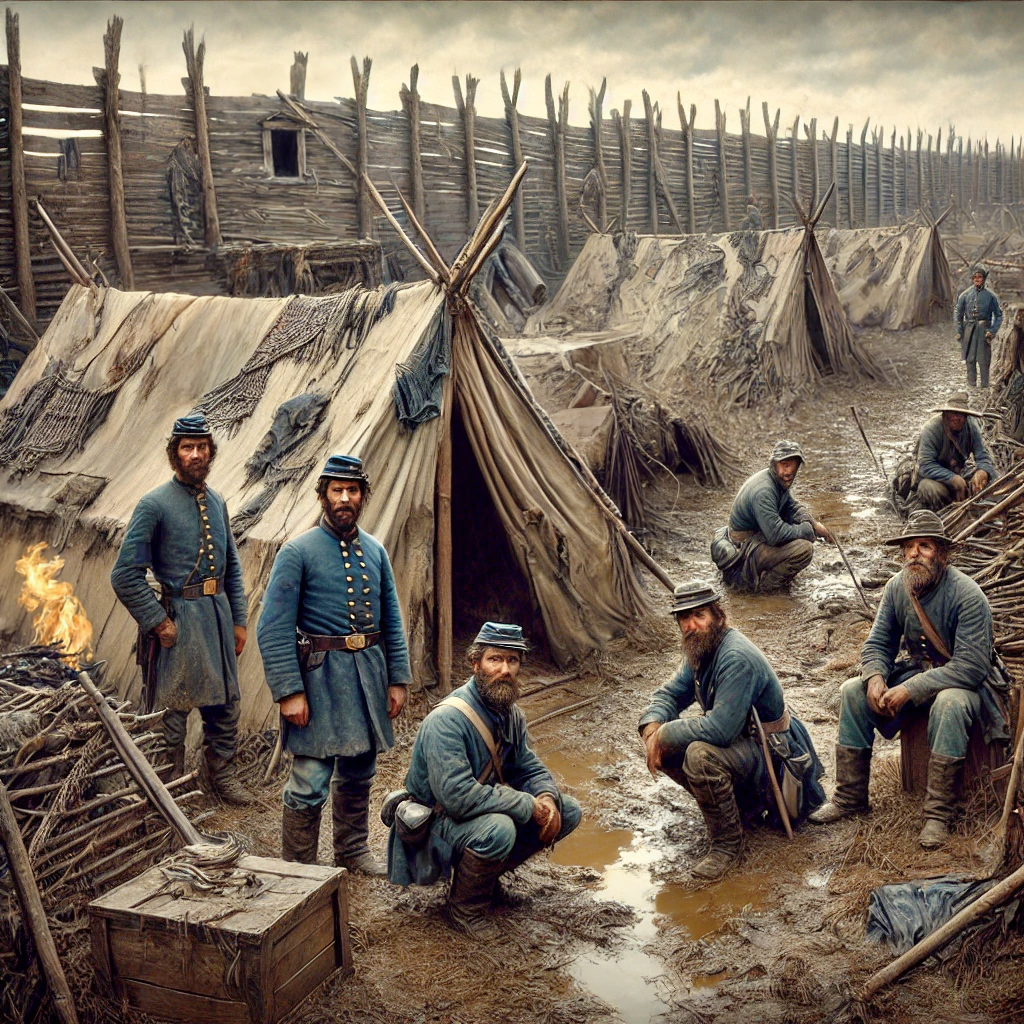
A Chronicle of Suffering, Resilience, and Legacy
This report is the culmination of several years of research, much of it inspired by my interest in the life of Levi Davis Green, my relative who fought in the First New York Dragoons. Levi was held at Andersonville before being sent to Camp Lawton, also known as the Millen Prison. Learning about his experiences drove me to uncover more about the conditions at Andersonville and the broader struggles faced by Union prisoners of war. Through my research, I have come to appreciate not only the human suffering endured there but also the resilience and determination of those who survived.
The story of Andersonville Prison Camp, officially known as Camp Sumter, is one of the most haunting and tragic chapters in American history. Over 45,000 Union soldiers were held in this Confederate prison in rural Georgia from February 1864 to April 1865, and nearly 13,000 of them perished due to overcrowding, disease, starvation, and the lack of adequate medical care. For me, this story is not just a historical account–it is deeply personal.
In Part 1: Foundations of Horror, I examine the establishment of Andersonville, including the logistical challenges and systemic failures that shaped its creation. From the decisions of Confederate leaders to the resource constraints of a war-torn South, this report reveals how the camp became a grim symbol of neglect and desperation.
Part 2: Life Behind the Gates takes you inside the camp to explore the daily lives of its prisoners. With more than 30,000 men crammed into a space designed for 10,000, survival was a battle against overcrowding, contaminated water, and insufficient rations. This report captures the spread of disease, the mental toll of imprisonment, and the resilience of the human spirit as prisoners fought to endure their dire circumstances.
Finally, Part 3: Legacy of Camp Sumter reflects on Andersonville’s place in history. From the trial and execution of Captain Henry Wirz to the transformation of the site into a National Historic Site, this report delves into the ethical debates surrounding responsibility and the enduring significance of Andersonville as a place of remembrance.
These reports are more than historical summaries –they are an opportunity to honor the memory of men like Levi Davis Green and countless others who endured unimaginable hardship. They offer a comprehensive exploration of Andersonville’s tragic beginnings, the immense suffering of its prisoners, and its enduring legacy. By reflecting on this dark chapter of American history, we can better understand the human cost of war and the importance of preserving the past to shape a more just future.
Explore, reflect, and remember.
Views: 100
Explore the evidence
View this article’s connected sources and media →
About this page
This article was brought over from AlfredGibbs.com. Its preserved text, media and citations remain available for comparison.