
The Battle of Spotsylvania Court House, fought from May 8 to May 21, 1864, was the second great collision of Lieutenant General Ulysses S. Grant’s Overland Campaign — a thirteen-day infantry grapple that gave the war the “Bloody Angle.” It is one of the most famous battles in American history, yet the part the First New York Dragoons played in it was neither at the salient nor in the trenches. The regiment’s blood was spilled a day earlier and a few miles away, at Todd’s Tavern on May 7 — the savage cavalry fight that pried the road open toward Spotsylvania — after which the Dragoons galloped south with Sheridan on his first great raid and were gone before the infantry battle reached its climax. This page tells that honest story, drawn from the regiment’s own historian.
Into the Wilderness
On May 4, 1864 the Army of the Potomac broke camp and crossed the Rapidan to open Grant’s Overland Campaign. The Dragoons crossed at Ely’s Ford on the 5th. “For the first two or three days,” Bowen recalled, “Torbert’s division guarded the great trains of the army, but on the 7th we were pushed to the front. Terrific fighting had been going on for two days, in which our infantry and two divisions of cavalry were engaged.” The regiment rode forward into the tangled second-growth forest of the Wilderness, where Grant and Lee were already locked together “like wild beasts amid the dense thickets.”
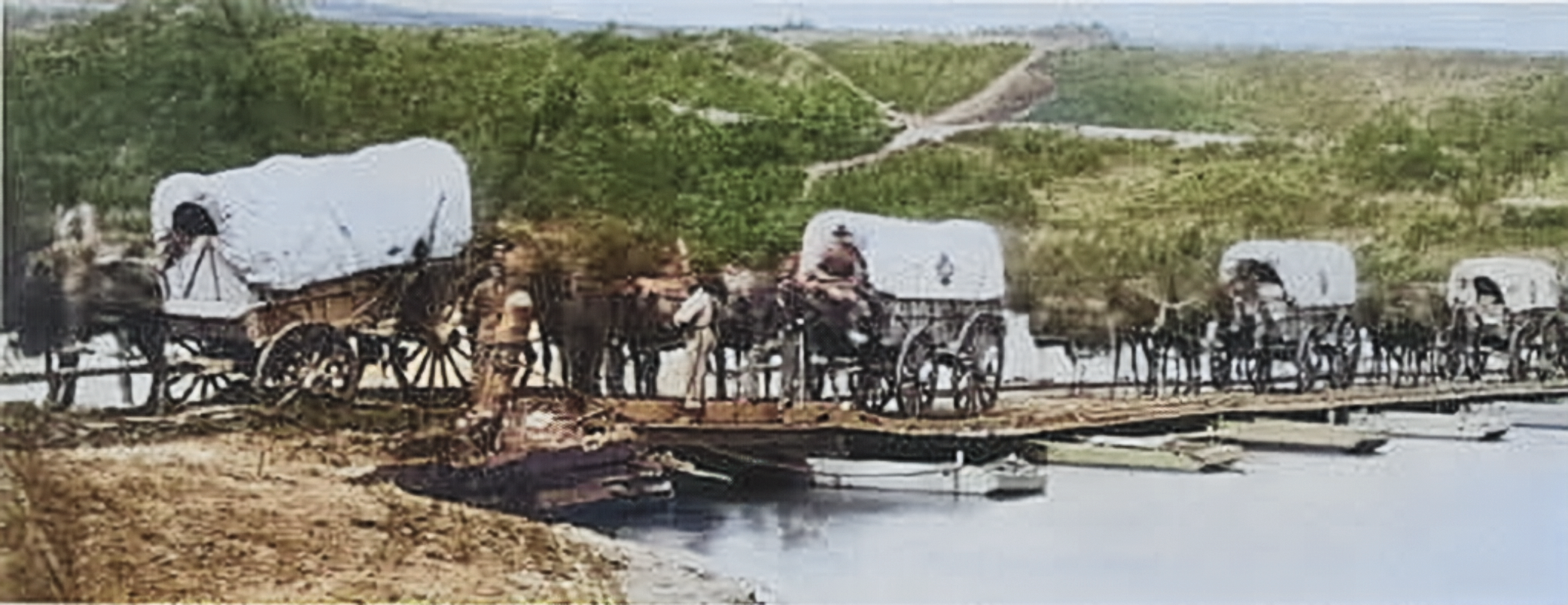
Todd’s Tavern — the Dragoons’ Real Fight
The regiment’s first severe engagement of the spring came not at Spotsylvania but at Todd’s Tavern on May 7, 1864, a crossroads a few miles to the northwest. Bowen calls it “of the most sanguinary character, the First New York Dragoons sustaining the heaviest loss of any cavalry regiment, in any one engagement during the entire war” — a distinction he cites to Colonel Fox’s Three Hundred Fighting Regiments. Having started the campaign with about four hundred carbines, the Dragoons went in dismounted and made a desperate stand, losing 20 killed, 36 wounded, and 35 missing — a total of 91 men.
An officer of the regiment remembered that near nightfall General Meade, “in the face of a strong protest from Sheridan,” sent the small dismounted force against Lee’s infantry behind log breastworks. “Notwithstanding the immense disadvantage in numbers, our heroic troopers charged up to the very breastworks, poking their carbines between the logs and firing at close range, eventually setting the works on fire.” When the supports failed to come up, the Confederates swept around the flanks and captured the remnant of the forlorn hope. Companies I and F suffered most; Company I alone lost twenty-four.
“At 3 P.M. the regiment is dismounted and moved across the country for more than a mile at the ‘double quick,’ when the enemy are met. With a terrible yell the Dragoons go to work, loading and firing their carbines with the utmost rapidity and with deadly effect. … Over eighty of the dragoons lie upon the ground either killed or severely wounded. … On the following morning the battle is renewed with great fury, the enemy being dislodged from his first line of works and driven to Spottsylvania.”— Lieutenant Josiah H. Flint, in his regimental sketch, quoted in J. R. Bowen, Regimental History of the First New York Dragoons (1900), ch. IX, “The Spring Campaign.”
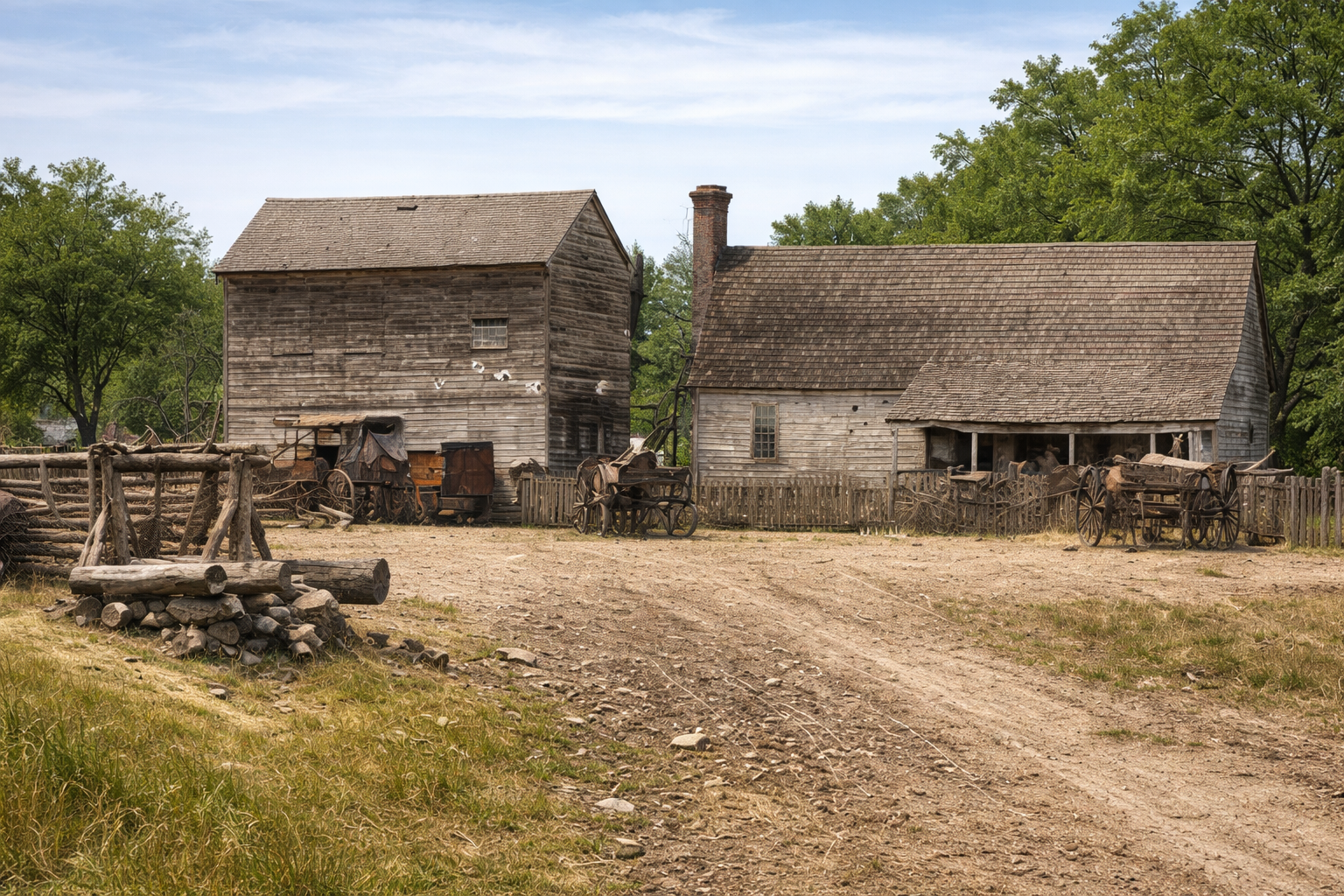
“Your Regiment Has Been Badly Cut to Pieces”
The morning after the slaughter, Lieutenant Flint overheard the regiment’s commander, Lieutenant Colonel Thomas J. Thorp, make his verbal report to Colonel Alfred Gibbs, then commanding the brigade: “Colonel, it is a sore task for me to tell you that your regiment has been badly cut to pieces; that we have lost nearly a hundred — killed, wounded, or captured. Officers Britton, Lewis, West, and Abbott are prisoners.” Gibbs, “deeply affected, and hardly able to control his voice, inquired whether any of his men ran. On being assured in the negative, he replied, ‘I knew they wouldn’t.’”
This is the command picture the records confirm for May 1864: the Dragoons formed part of the Reserve Brigade of Wesley Merritt’s First Cavalry Division, with Colonel Gibbs leading the brigade and Lieutenant Colonel Thorp leading the regiment in the field.
Driven Toward Spotsylvania — Then Gone
On the morning of May 8 the fight at Todd’s Tavern was renewed; in Lieutenant Flint’s words, the enemy was “dislodged from his first line of works and driven to Spottsylvania.” That same day the great infantry struggle for Spotsylvania Court House opened in earnest — but the Dragoons would not be part of it. On May 9 the regiment started south on Sheridan’s first great raid toward Richmond, fighting at Beaver Dam Station, Yellow Tavern (where Jeb Stuart was mortally wounded on May 11), and the outer works of Richmond. While Hancock’s men stormed the Mule Shoe and the Bloody Angle ran red on May 12, the First New York Dragoons were many miles to the south, in the saddle every day of the raid.
Bowen himself drew the line plainly. Riding past the Spotsylvania ground weeks later on the way to the Trevilian Raid, he noted only that the men “were particularly interested at Spottsylvania, where one of our hard cavalry battles were fought” — meaning Todd’s Tavern. By Sheridan’s own account, “the bloody battles of Todd’s Tavern and Spottsylvania need not have occurred but for Meade’s unwarranted interference” with the cavalry — the quarrel that, ironically, set Sheridan loose on the raid that carried the Dragoons away.
The Larger Battle, and Its Ruined Ground
For the record, the battle the Dragoons rode away from was one of the costliest of the war. From May 8 Grant hammered Lee’s lines around the Spotsylvania crossroads; on May 10 Colonel Emory Upton’s column briefly broke the works, and on May 12 Hancock’s assault on the Mule Shoe Salient touched off the twenty-hour hand-to-hand horror remembered as the Bloody Angle. Lee’s army held a new line, and on May 21 Grant once more sidled south — the relentless pressure that defined the campaign.
The fighting scarred the land as well as the armies. The region’s thick forests were stripped for breastworks, firewood, and corduroy roads; a Pennsylvania soldier wrote that an army “is worse than seven-year locusts,” and Theodore Lyman, revisiting the field, thought it looked as if “a whirlwind had twisted off each trunk and left the top hanging by the torn fibers.” The deforestation of Spotsylvania County left scars that outlasted the war, complicating the local recovery for years (Powell, 2010).
Roll of Loss — Charlottesville, Todd’s Tavern & Spotsylvania, 1864
Named casualties of the First New York Dragoons compiled from the regimental records for the Charlottesville Raid (March), Todd’s Tavern (May 7), and the Spotsylvania road (May 8). Linked names lead to short biographies.
| Type | Name | Company | Rank |
|---|---|---|---|
| Captured | Romanzo Wells [short bio] | E | Private |
| Killed | Lyman Z. Whiting [short bio] | H | Corporal |
| Wounded | Prosper B. Annis [short bio] | B | Private |
| Killed | William Black | I | Private |
| Wounded | Martin V. Barber | H | Private |
| Wounded | Charles E. Armstrong | H | Private |
| Killed | Silas Armstrong | C | Private |
| Captured | Randall Haynes (or Haines) | I | Private |
Sources & Further Reading
- Primary James R. Bowen, Regimental History of the First New York Dragoons (originally the 130th N.Y. Vol. Infantry) (1900), ch. IX, “The Spring Campaign” — the regiment’s own historian and eyewitness, quoting Lt. Flint’s sketch and the May 1864 itinerary; the source of every Dragoon quotation on this page. Full text: archive.org/details/regimentalhistor00bowe.
- Primary U.S. War Dept., The War of the Rebellion: Official Records of the Union and Confederate Armies, Series I, Vol. 36 (Sheridan’s, Torbert’s, and Merritt’s reports of the Wilderness–Spotsylvania operations and the Richmond raid).
- William F. Fox, Regimental Losses in the American Civil War (Three Hundred Fighting Regiments, 1889) — cited by Bowen for the Dragoons’ record loss at Todd’s Tavern.
- Gordon C. Rhea, The Battles for Spotsylvania Court House and the Road to Yellow Tavern, May 7–12, 1864 (Louisiana State University Press, 1997) — the standard modern narrative of the campaign.
- J. Michael Powell, The Deforestation of Spotsylvania County during the American Civil War (2010) — on the environmental devastation of the battleground.
- American Battlefield Trust — Battle of Spotsylvania Court House: battlefields.org/learn/civil-war/battles/spotsylvania-court-house.
- National Park Service / CWSAC Battle Summary, Spotsylvania Court House (VA048): nps.gov/abpp/battles/va048.htm.
Trevilian Station · The Shenandoah Valley Campaign · The Audiobook
Views: 49
Explore the evidence
View this article’s connected sources and media →
About this page
This article was brought over from AlfredGibbs.com. Its preserved text, media and citations remain available for comparison.