
Read the original · Check the transcription
Gibbs Family Papers, Reel 1, frame 660 (reading copy)
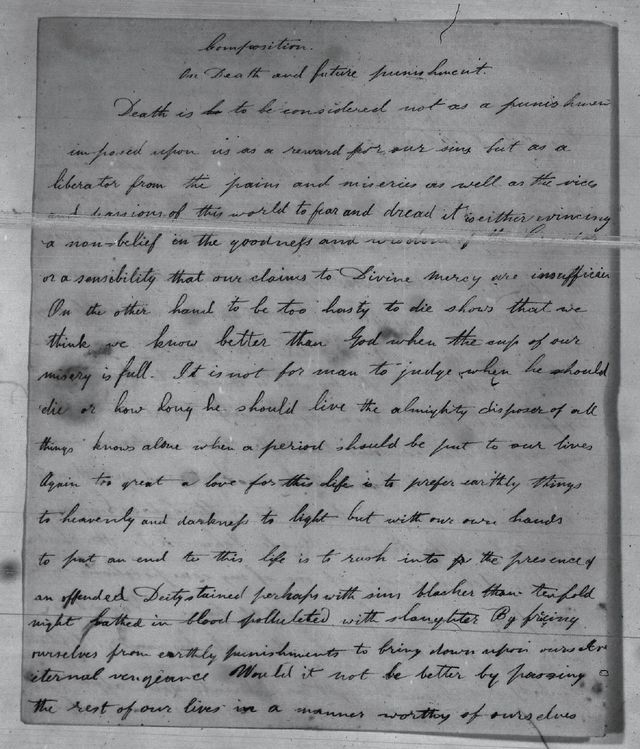
Preserved transcription
Transcription matched to this Wisconsin microfilm frame. Preserved from the supplied frame transcription; compare uncertain readings with the scan.
Composition.
On Death and future punishment.
Death is [struck: be] to be considered not as a punishmen[t]
imposed upon us as a reward for our sins but as a
liberator from the pains and miseries as well as the vices
and passions of this world to fear and dread it is either evincing
a non-belief in the goodness and wisdom[?] of[?] the Creator[?]
or a sensibility that our claims to Divine mercy are insufficien[t]
On the other hand to be too hasty to die shows that we
think we know better than God when the cup of our
misery is full. It is not for man to judge when he should
die or how long he should live the almighty disposer of all
things knows alone when a period should be put to our lives
Again too great a love for this life is to prefer earthly things
to heavenly and darkness to light but with our own hands
to put an end to this life is to rush into [struck: p] the presence of
an offended Deity stained perhaps with sins blacker than tenfold
night bathed in blood polluleted[?] with slaughter By freeing[?]
ourselves from earthly punishments to bring down upon oursel[ves]
eternal vengeance Would it not be better by passing
the rest of our lives in a manner worthy of ourselves
Wisconsin Historical Society · WHS-R1-660 · "On Death and Future Punishment": A Schoolboy's Composition
Open the complete archive frame record →