
Read the original · Check the transcription
Gibbs Family Papers, Reel 2, frame 3777 (reading copy)
Preserved transcription
Transcription matched to this Wisconsin microfilm frame. Preserved from the supplied frame transcription; compare uncertain readings with the scan.
[page number: 133]
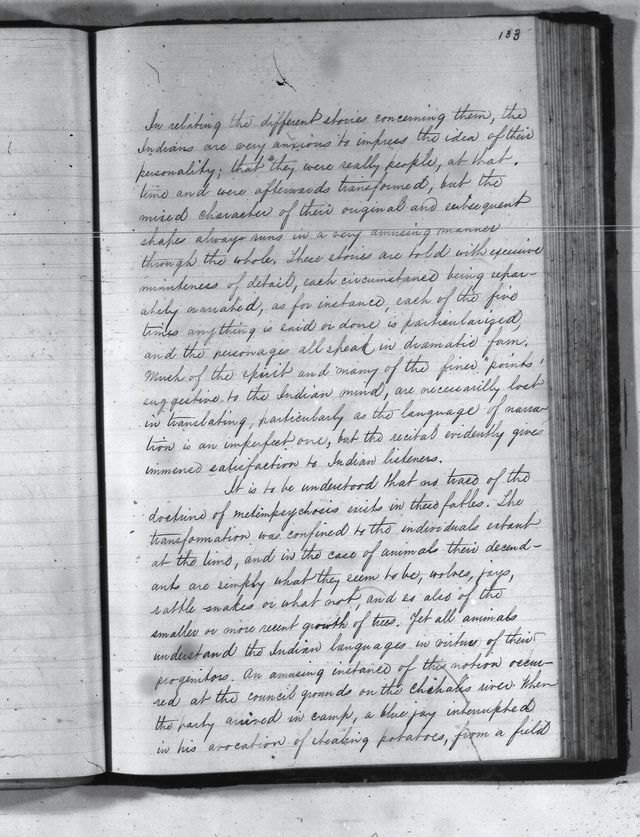
In relating the different stories concerning them, the
Indians are very anxious to impress the idea of their
personality; that they were really people, at that.
time and were afterwards transformed, but the
mixed character of their original and subsequent
shapes always runs in a very amusing manner
through the whole. These stories are told with excessive
minuteness of detail, each circumstance being separ-
ately narrated, as for instance, each of the five
times anything is said or done is particularized,
and the personages all speak in dramatic form.
Much of the spirit and many of the finer "points,"
suggestive to the Indian mind, are necessarilly lost
in translating, particularly as the language of narra
tion is an imperfect one, but the recital evidently gives
immense satisfaction to Indian listeners.
It is to be understood that no trace of the
doctrine of metempsychosis exists in these fables. The
transformation was confined to the individuals extant
at the time, and in the case of animals their decend-
ants are simply what they seem to be, wolves, jays,
rattle snakes or what not, and so also of the
smaller or more recent growth of trees. Yet all animals
understand the Indian languages in virtue of their
progenitors. An amusing instance of this notion occur-
red at the council grounds on the Chehalis river. When
the party arrived in camp, a blue jay interrupted
in his avocation of stealing potatoes, from a field
Wisconsin Historical Society · WHS-R2-3777 · George Gibbs IV (manuscript volume, ms p. 133), 1856 (Olympia) and later additions
Open the complete archive frame record →