
Read the original · Check the transcription
Gibbs Family Papers, Reel 2, frame 1649 (reading copy)
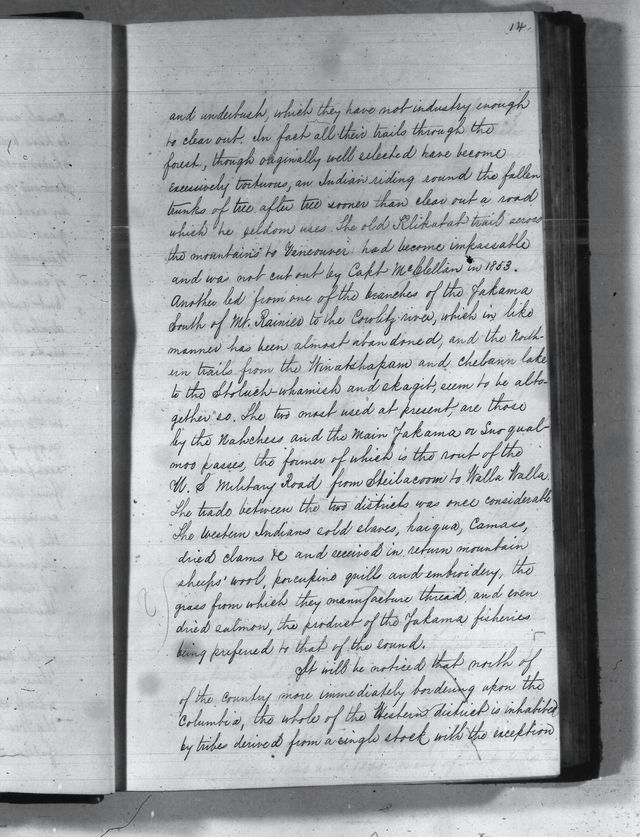
Preserved transcription
Transcription matched to this Wisconsin microfilm frame. Preserved from the supplied frame transcription; compare uncertain readings with the scan.
[page number, top right: 14.]
and underbush, which they have not industry enough
to clear out. In fact all their trails through the
forest, though originally well selected have become
excessively tortuous, an Indian riding round the fallen
trunks of tree after tree sooner than clear out a road
which he seldom uses. The old Klikatat trail across
the mountains to Vancouver had become impassable
and was not cut out by Capt McClellan in 1853.
Another led from one of the branches of the Yakama
South of Mt. Rainier to the Cowlitz river, which in like
manner has been almost abandoned, and the North-
ern trails from the Winatshapam and chelann lake
to the Stoluch-whamish and Skagit, seem to be alto-
gether so. The two most used at present, are those
by the Nahchess and the Main Yakama or Snoqual-
moo passes, the former of which is the rout of the
U. S Military Road from Steilacoom to Walla Walla.
The trade between the two districts was once considerable
The Western Indians sold slaves, haiqua, Camass,
dried clams &c and received in return mountain
sheeps' wool, porcupine quills and embroidery, the
grass from which they manufacture thread and even
dried salmon, the product of the Yakama fisheries
being preferred to that of the Sound.
It will be noticed that north of
of the country more immediately bordering upon the
Columbia, the whole of the Western district is inhabited
by tribes derived from a single stock with the exception
Wisconsin Historical Society · WHS-R2-1649 · George Gibbs IV ethnographic ms., notebook p.13 (document), c.1856
Open the complete archive frame record →