
Read the original · Check the transcription
Gibbs Family Papers, Reel 2, frame 3745 (thumbnail)
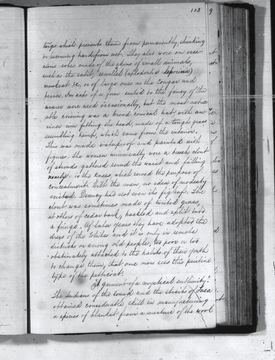
Preserved transcription
Transcription matched to this Wisconsin microfilm frame. Preserved from the supplied frame transcription; compare uncertain readings with the scan.
[printed or written page number: 103]
twigs which prevents them from permanently, shrinking
or becoming hard from wet. They also wore on occa-
sions robes made of the skins of small animals,
such as the rabit, sewellel (aplodontia leporina)
muskrat &c, or of large ones as the cougar[?] and
beaver. Fur caps of a form suited to the fancy of the
wearer were used occasionally, but the most notice-
able covering was a broad conical hat, with an
inner rim fitting the head, made of a tough grass
resembling hemp, which came from the interior.
This was made waterproof and painted with
figures. The women universally wore a breech clout
of strouds gathered round the waist and falling
nearly to the knees, which served the purpose of
concealment. With the men, no idea of modesty
existed. Decency had not even its figleaf. The
clout was sometimes made of twisted grass,
at others of cedar bark, hackled and split into
a fringe. Of later years they have adopted the
dress of the Whites and it is only in remote
districts or among old people, too poor or too
obstinately attached to the habits of their youth
to change them, that one now sees this pristine
type of the petticoat.
"A garment of a mystical sublimity".
The Indians of the sound[?] and the straits of Fuca
obtained considerable skill in manufacturing
a species of blanket from a mixture of the wool
Wisconsin Historical Society · WHS-R2-3745 · George Gibbs IV (manuscript volume, ms p. 103), 1856 (Olympia) and later additions
Open the complete archive frame record →