
Read the original · Check the transcription
Gibbs Family Papers, Reel 2, frame 1709 (thumbnail)
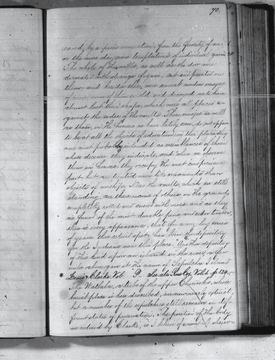
Preserved transcription
Transcription matched to this Wisconsin microfilm frame. Preserved from the supplied frame transcription; compare uncertain readings with the scan.
saved, by a pious veneration, from the ferocity of war
or the more dangerous temptations of individual gain.
The whole of the walls, as well as the door were
decorated with strange figures, cut and painted on
them; and besides these, were several wooden images
of men, some of them so old and decayed as to have
almost lost their shape, which were all placed a-
gainst the sides of the vaults. These images as well
as those, in the houses we have lately seen, do not appear
to be at all the objects of adoration: in this place, they
were most probably intended as resemblances of those
whose decease they indicate, and when we observe
them in houses, they occupy the most conspicuous
part, but are treated more like ornaments than
objects of worship. Near the vaults, which are still
standing, are the remains of others on the ground,
completely rotted and covered with moss: and as they
are formed of the most durable pine, and cedar timber,
there is every appearance, that for a very long series
of years, this retired spot, has been the depository
for the Indians near this place." [mark: ⋕, written above the line] Another depository
of this kind upon an island in the river, a few
miles above, gave it the name of Sepulchre Island
⋕ Lewis & Clarke. Vol 2[?]_ See also Ross Cox. Vol. 1. p. 124.
The Watlala, a tribe of the upper Chinooks, whose
burial place is here described, are now nearly extinct,
but a number of the sepulchres still remain in dif-
ferent states of preservation. The position of the body
as noticed by Clarke, is I believe of universal observ-
Wisconsin Historical Society · WHS-R2-1709 · George Gibbs ms. draft on Washington Territory Indians (notebook p.61) (document), n.d. (c.1854-57?)
Open the complete archive frame record →