
Read the original · Check the transcription
Gibbs Family Papers, Reel 2, frame 1697 (thumbnail)
Preserved transcription
Transcription matched to this Wisconsin microfilm frame. Preserved from the supplied frame transcription; compare uncertain readings with the scan.
[printed: 58][?]
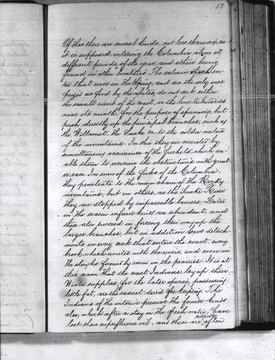
Of these there are several kinds, not less than six, as
it is supposed, entering the Columbia alone at
different periods of the year, and others being
found in other localities. The salmon which en-
ter that river in the Spring, and are the only ones
prized as food by the whites, do not seek either
the small rivers of the coast, or the lower tributaries
near its mouth, for the purpose of spawning, but
push directly up the principal branches, such as
the Willamet, the Snake &c. to the colder waters
of the mountains. In this they are assisted by
simultaneous occurrence of the freshets, which en-
able them to overcome the obstructions with great-
er ease. In some of the forks of the Columbia,
they penetrate to the main chain of the Rocky
mountains; but in others, as the Snake River
they are stopped by impassable barriers. Later
in the season inferior kinds are abundant, and
these also succeed in forcing their way up the
larger branches; but in addition leave detach-
ments in every creek that enters the coast, every
brook which unites with the rivers, and even in
the sloughs formed by rain in the prairies. It is at
this season that the coast Indians, lay up their
Winter supplies, for the later species, possessing
little fat, are the easiest dried for keeping. The
Indians of the interior preserve the former kinds
also, which after a stay in the fresh water, have
lost their superfluous oil, and these are [inserted: actually] often
Wisconsin Historical Society · WHS-R2-1697 · Manuscript (George Gibbs ethnography)
Open the complete archive frame record →