
Read the original · Check the transcription
Gibbs Family Papers, Reel 2, frame 1687 (thumbnail)
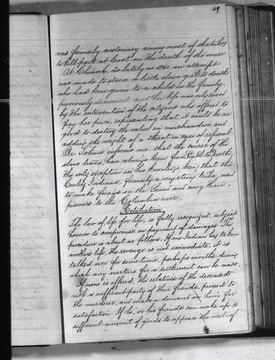
Preserved transcription
Transcription matched to this Wisconsin microfilm frame. Preserved from the supplied frame transcription; compare uncertain readings with the scan.
[page number, top right: 49]
was formerly customary among most of the tribes
to kill part at least on the death of the owner
At Chinook, as lately as 1850, an attempt
was made to starve a little slave girl to death
who had been given to a child in the family
previously deceased; and her life was only saved
by the intervention of the citizens who offered to
pay her price, representing that it would be as
good to destroy the value in merchandise, and
adding the weight of a threat in case of refusal.
Dr. Tolmie informs me. that the course of the
slave trade, has always been from South to North,
the only exception in his knowledge being that the
Cowlitz Indians, formerly a very strong tribe, used
to make forays on the Sound and carry their -
prisoners to the Columbia river.
Relatiation
The law of life for life, is fully recognized, subject
however to compromise on payment of damages. The
procedure is about as follows; If one Indian has taken
another's life, the revenge is not immediate. it is
talked over for some time. perhaps months. during
which any overture for a settlement can be made.
If none is offered. the relatives of the deceased[?]
with a sufficient party of their friends, proceed to
the murderer, and make a demand on him for
satisfaction. If he, or his friends can make up a
sufficient amount of goods to appease the next of
Wisconsin Historical Society · WHS-R2-1687 · Manuscript (George Gibbs ethnography)
Open the complete archive frame record →