
Read the original · Check the transcription
Gibbs Family Papers, Reel 2, frame 1666 (thumbnail)
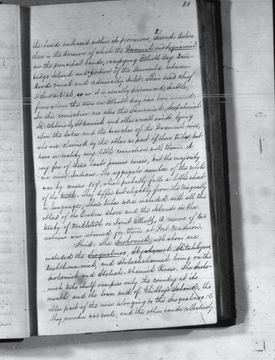
Preserved transcription
Transcription matched to this Wisconsin microfilm frame. Preserved from the supplied frame transcription; compare uncertain readings with the scan.
[page number, top right: 30]
the bands embraced within its provisions, [inserted: P][?] Second: Below
these is the division of which the Dwamish and Suquamish
are the principal bands, occupying Elliott Bay. Bain-
bridge Island and [inserted: a] portion of the Peninsula between
Hood's canal and admiralty Inlet. Their head chief
is Se-a-a-t-hl[?], or[?] as it is usually pronounced, Seattle,
from whom the town on Elliott Bay has been named.
In this connection are also the Samamish, Scopahmish[?]
Sk'tehlmish, St'kamish and other small bands lying
upon the lakes and the branches of the Dwamish river,
who are claimed by the others as part of their tribe but
have in reality very little connection with them. A
very few of these last possess horses, but the majority
are river Indians. The aggregate number of the whole
was by census 807, which probably falls a little short
of the truth. They differ but slightly from the Nisqually
in language. These tribes were included with all the
others of the Eastern shore and the Islands in the
treaty of Mukleteoh or Point Elliott. A reserve of two
sections was retained for them at Port Madison.
Third: The Snohomish, with whom are
included the Snoqualmoo, Skywhamish, Sk'tah-le-jum,
Quehtl-ma-mish, and Stoluchwhamish living on the
Snohomish and Stoluch-Whamish Rivers. The Snoho-
mish tribe itself occupies only the country at its
mouth, and the lower end of Whidbey's Island, the
upper part of the river belonging to the Snoqualmoo.[illegible]
They number 441 souls, and the other bands collectively
Wisconsin Historical Society · WHS-R2-1666 · George Gibbs manuscript, ethnography of Washington Territory Indians (notebook p.29), n.d. [c.1856]
Open the complete archive frame record →