
Read the original · Check the transcription
Gibbs Family Papers, Reel 2, frame 1639 (thumbnail)
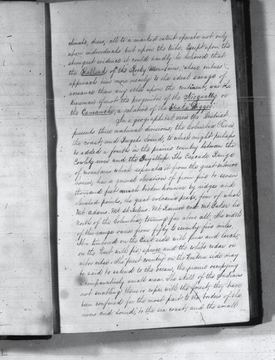
Preserved transcription
Transcription matched to this Wisconsin microfilm frame. Preserved from the supplied frame transcription; compare uncertain readings with the scan.
[page number, top right: 4]
climate, dress, all to a marked extent operate not only
upon individuals but upon the tribe. Except upon the
strongest evidence it could hardly be believed that
the Flathead of the Rocky Mountains, whose virtues
approach him more nearly to the ideal savage of
romance than any other upon the continent, was the
kinsman if not the progenitor of the Nisqually or
the Camanche, a relative of the Snake "Digger".
In a geographical view the District
presents three natural divisions; the Columbia River,
the coast, and Pugets Sound, to which might perhaps
be added a fourth in the prairie country between the
Cowlitz river and the Puyallup. The Cascade Range
of mountains which separates it from the great interior
basin, has a general elevation of from five to seven
thousand feet much broken however by ridges and
elevated points, the great volcanic peaks, four of which
Mt. adams. Mt. St. Helens. Mt. Rainier and Mt. Baker lie
North of the Columbia; towering far above all. The width
of this range varies from fifty to seventy five miles.
It is timbered on the East side with pines and larch;
on the West with fir, spruce and the white cedar or
arbor vitae. The forest country on the Western side may
be said to extend to the ocean, the prairie occupying
a comparatively small area. The skill of the Indians
not enabling them to cope with the forest, they have
been confined for the most part to the borders of the
rivers and Sound; to the sea coast, and the small
Wisconsin Historical Society · WHS-R2-1639 · Letter from George Gibbs to Gov. I. I. Stevens, 1856
Open the complete archive frame record →