
Read the original · Check the transcription
Gibbs Family Papers, Reel 2, frame 1592 (thumbnail)
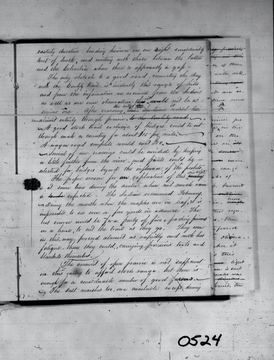
Preserved transcription
Transcription matched to this Wisconsin microfilm frame. Preserved from the supplied frame transcription; compare uncertain readings with the scan.
easterly direction. bending however on our right considerably
west of South, and uniting with those between the latter
and the Columbia. where there is apparently a gap –
The only obstacle to a good road, connecting the Bay
with the Cowlitz trail. is evidently this range of hills
and from the information we received from the Indians
as well as our own observation, [struck: this] [inserted: it] would not be a
serious one. After crossing [struck: this] [inserted: the hills] [struck: to] [struck: the road] [inserted: it] would [struck: be]
run almost entirely through prairie. [struck: to the Cowlitz road]
A good stock trail exclusive of bridges could be cut
through such a country for about $15 per mile.
A wagon road complete would cost $50.
Several of our crossings could be avoided by keeping
a little farther from the river, and points could be –
selected for bridges beyond the influence of the freshets.
The proper season for an exploration of this [struck: country] [inserted: district]
is at some time during the winter. when not much rain
is [struck: to be] expected. The Indians recommend February.
During the months when the maples are in leaf, it is
impossible to see even a few yards in advance. The
best course would be for a party of five, packing provisions
on a horse, to cut the trail as they go. They can
in this way proceed almost as rapidly and with less
fatigue than they could, carrying provisions tools and
blankets themselves.
(The amount of open prairie is not sufficient
in this valley to afford stock range. but there is
enough for a considerable number of good farms.
The salt marshes too, are available except during
[stamp: 0524]
Wisconsin Historical Society · WHS-R2-1592 · Letter from George Gibbs to (report), 1854-02-26
Open the complete archive frame record →