
Read the original · Check the transcription
Gibbs Family Papers, Reel 2, frame 1540 (thumbnail)
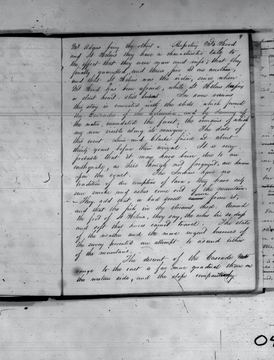
Preserved transcription
Transcription matched to this Wisconsin microfilm frame. Preserved from the supplied frame transcription; compare uncertain readings with the scan.
[page number: 9]
Mt Adams being the others. Respecting Mts Hood
and St Helens they have a characteristic tale to
the effect that they were man and wife; that they
finally quarrelled, and threw fire at one another,
and that St Helens was the victor, since when
Mt Hood has been afraid, while St Helens keeping[?]
a stout heart - still burns[?]. In some versions
this story is connected with the slide which formed
the Cascades of the Columbia, and by damming up
the water, inundated the forest, the remains of which
are now visible along its margin. The date of
this event Lewis and Clarke fixed at about
thirty years before their arrival. It is very
probable that it may have been due to an
earthquake, as these though not frequent, are known
upon the coast. The Indians have no
tradition of an eruption of lava, they have only
seen smoke and ashes come out of the mountain.
- They add that a bad smell [struck: came] [inserted: arose] from it,
and that the fish in the streams died. Around
the foot of St Helens, they say, the ashes lie so deep
and soft that horses cannot travel. The state
of the weather and the more urgent business of
the survey prevented an attempt to ascend either
of the mountains.
The descent of the Cascade [struck: illegible]
range to the east is far more gradual than on
the western side, and the slope comparatively
Wisconsin Historical Society · WHS-R2-1540 · Letter from George to Capt. G. B. McClellan, 1854-05-01
Open the complete archive frame record →