
Read the original · Check the transcription
Gibbs Family Papers, Reel 2, frame 3885
Preserved transcription
Transcription matched to this Wisconsin microfilm frame. Preserved from the supplied frame transcription; compare uncertain readings with the scan.
[page number: 233]
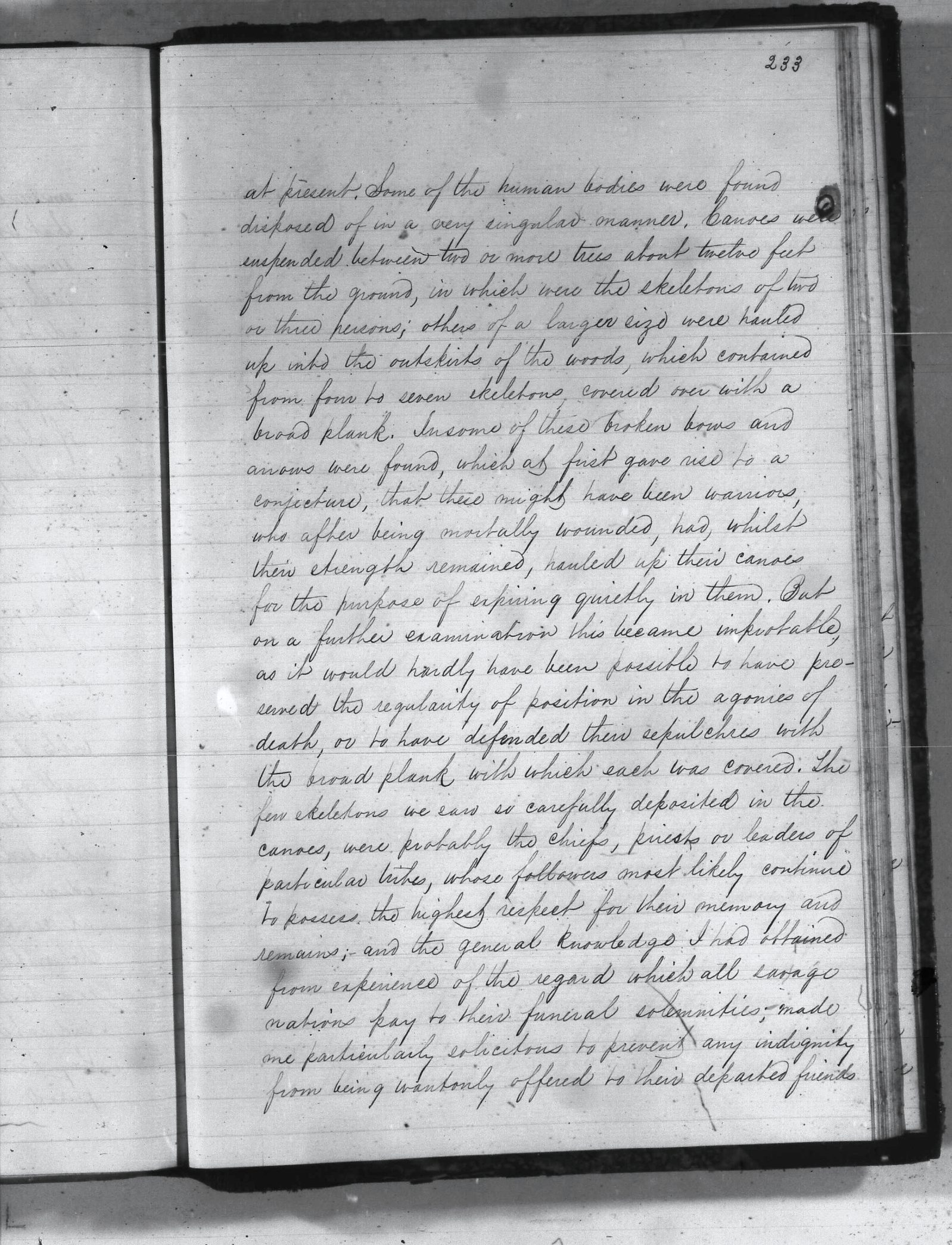
at present. Some of the human bodies were found
disposed of in a very singular manner. Canoes were
suspended between two or more trees about twelve feet
from the ground, in which were the skeletons of two
or three persons; others of a larger size were hauled
up into the outskirts of the woods, which contained
from four to seven skeletons, covered over with a
broad plank. In some of these broken bows and
arrows were found, which at first gave rise to a
conjecture, that these might have been warriors,
who after being mortally wounded, had, whilst
their strength remained, hauled up their canoes
for the purpose of expiring quietly in them. But
on a further examination this became improbable,
as it would hardly have been possible to have pre-
served the regularity of position in the agonies of
death, or to have defended their sepulchres with
the broad plank with which each was covered. The
few skeletons we saw so carefully deposited in the
canoes, were probably the chiefs, priests or leaders of
particular tribes, whose followers most likely continue
to possess the highest respect for their memory and
remains;- and the general knowledge I had obtained
from experience of the regard which all savage
nations pay to their funeral solemnities; made
me particularly solicitous to prevent any indignity
from being wantonly offered to their departed friends
Wisconsin Historical Society · WHS-R2-3885 · George Gibbs IV (manuscript volume, ms p. 233), 1856 (Olympia) and later additions
Open the complete archive frame record →