
Read the original · Check the transcription
Gibbs Family Papers, Reel 2, frame 3785
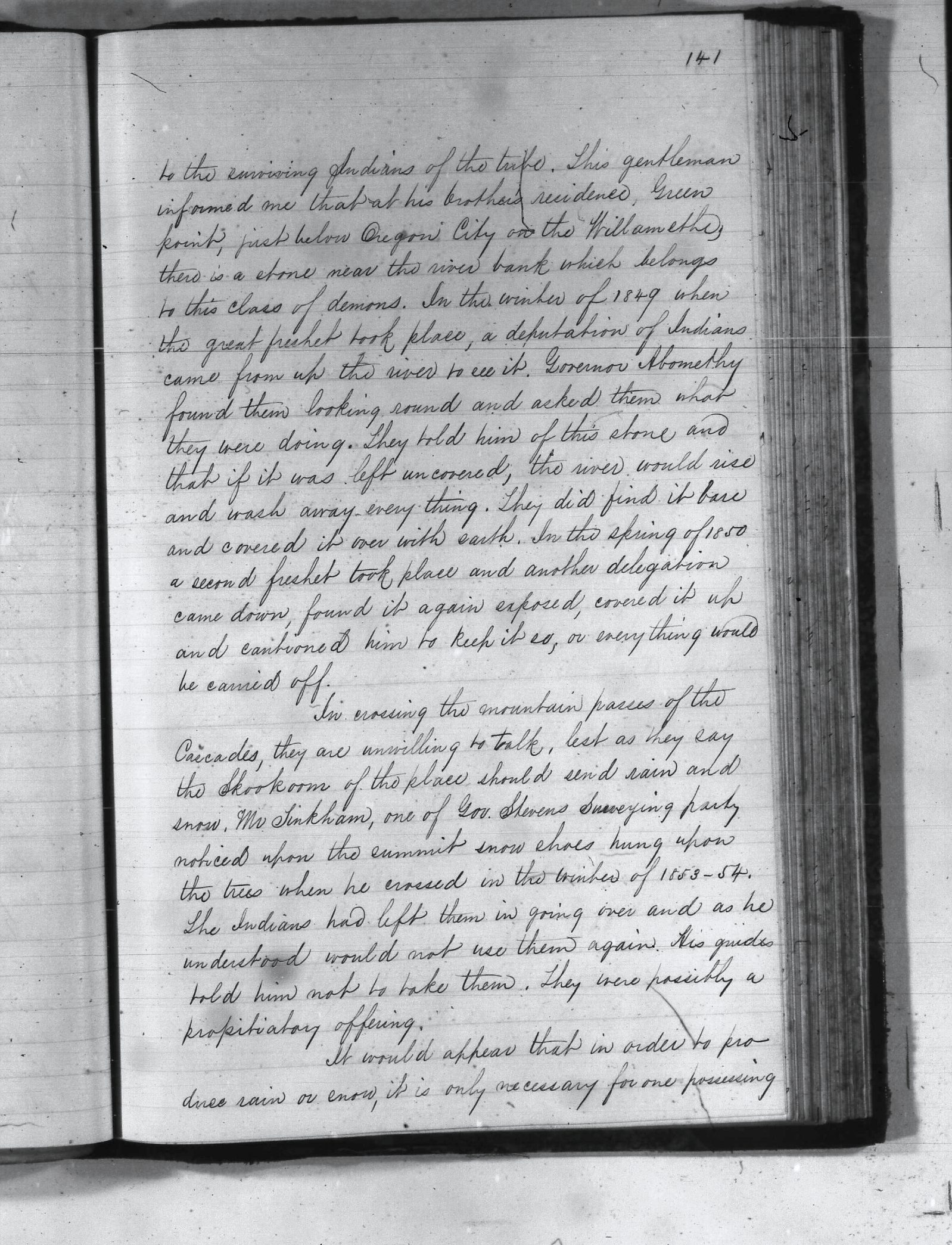
Preserved transcription
Transcription matched to this Wisconsin microfilm frame. Preserved from the supplied frame transcription; compare uncertain readings with the scan.
[page number, top right: 141]
to the surviving Indians of the tribe. This gentleman
informed me that at his brothers residence, Green
point, just below Oregon City on the Willamette,
there is a stone near the river bank which belongs
to this class of demons. In the winter of 1849 when
the great freshet took place, a deputation of Indians
came from up the river to see it. Governor Abernethy[?]
found them looking round and asked them what
they were doing. They told him of this stone and
that if it was left uncovered, the river would rise
and wash away every thing. They did find it bare
and covered it over with earth. In the spring of 1850
a second freshet took place and another delegation
came down, found it again exposed, covered it up
and cautioned him to keep it so, or everything would
be carried off.
In crossing the mountain passes of the
Cascades, they are unwilling to talk, lest as they say
the Skookoom of the place should send rain and
snow. Mr Tinkham, one of Gov. Stevens Surveying party
noticed upon the summit snow shoes hung upon
the trees when he crossed in the winter of 1853-54.
The Indians had left them in going over and as he
understood would not use them again. His guides
told him not to take them. They were possibly a
propitiatory offering.
It would appear that in order to pro
duce rain or snow, it is only necessary for one possessing
Wisconsin Historical Society · WHS-R2-3785 · George Gibbs IV (manuscript volume, ms p. 141), 1856 (Olympia) and later additions
Open the complete archive frame record →