
Read the original · Check the transcription
Gibbs Family Papers, Reel 2, frame 3769
Preserved transcription
Transcription matched to this Wisconsin microfilm frame. Preserved from the supplied frame transcription; compare uncertain readings with the scan.
[printed: 126]
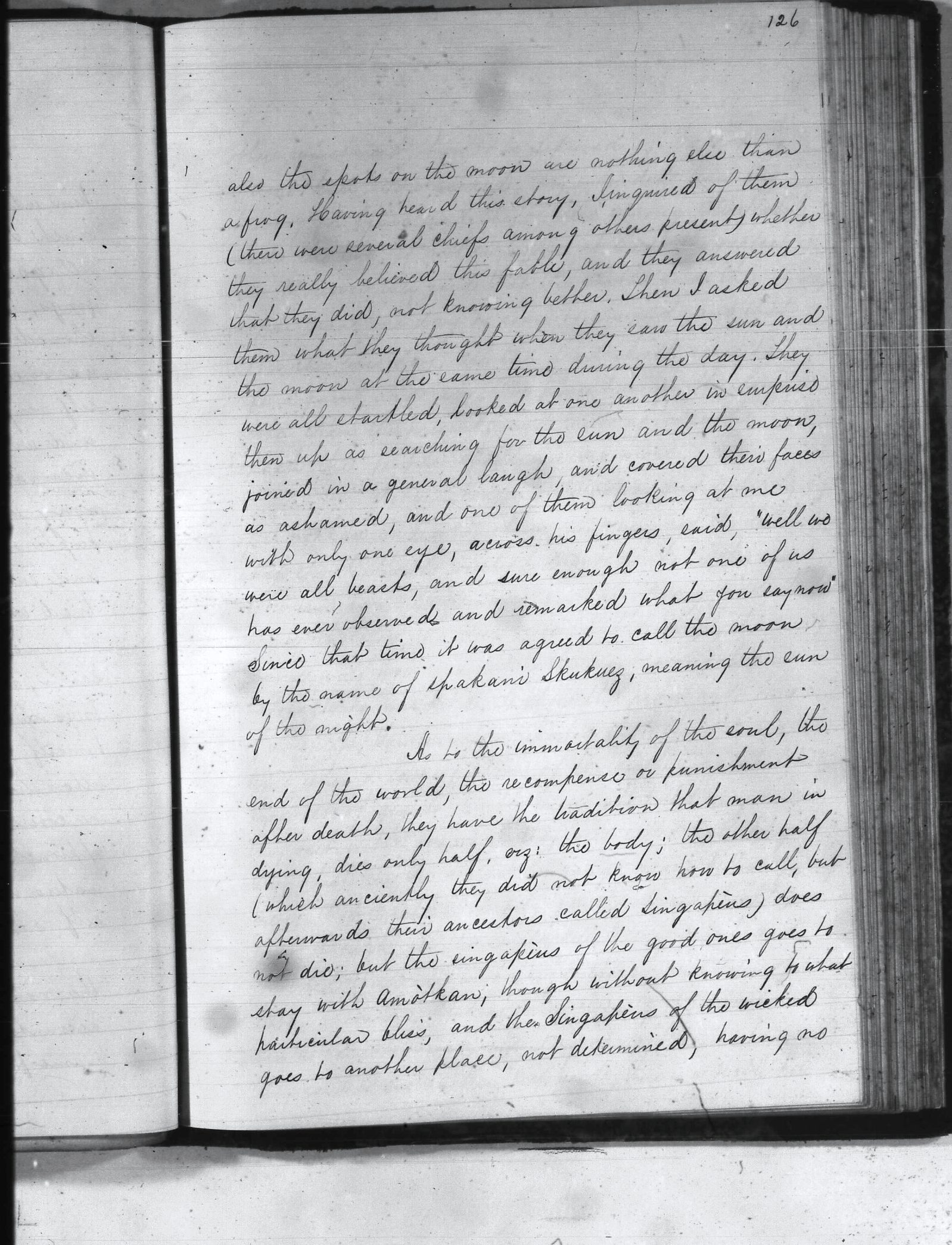
also the spots on the moon are nothing else than
a frog. Having heard this story, I inquired of them
(there were several chiefs among others present) whether
they really believed this fable, and they answered
that they did, not knowing better. Then I asked
them what they thought when they saw the sun and
the moon at the same time during the day. They
were all startled, looked at one another in surprise[?]
then up as searching for the sun and the moon,
joined in a general laugh, and covered their faces
as ashamed, and one of them looking at me
with only one eye, across his fingers, said, "well we
were all beasts, and sure enough not one of us
has ever observeds[?] and remarked what you say now"
Since that time it was agreed to call the moon
by the name of Spakani Skukuez, meaning the sun
of the night.
As to the immortality of the soul, the
end of the world, the recompense or punishment
after death, they have the tradition that man in
dying, dies only half, viz: the body; the other half
(which anciently they did not know how to call, but
afterwards their ancestors called Singapens) does
not die; but the singapens of the good ones goes to
stay with Amotkan, though without knowing to what
particular bliss, and the Singapens of the wicked
goes to another place, not determined, having no
Wisconsin Historical Society · WHS-R2-3769 · George Gibbs IV (manuscript volume, ms p. 126), 1856 (Olympia) and later additions
Open the complete archive frame record →