
Read the original · Check the transcription
Gibbs Family Papers, Reel 2, frame 1713
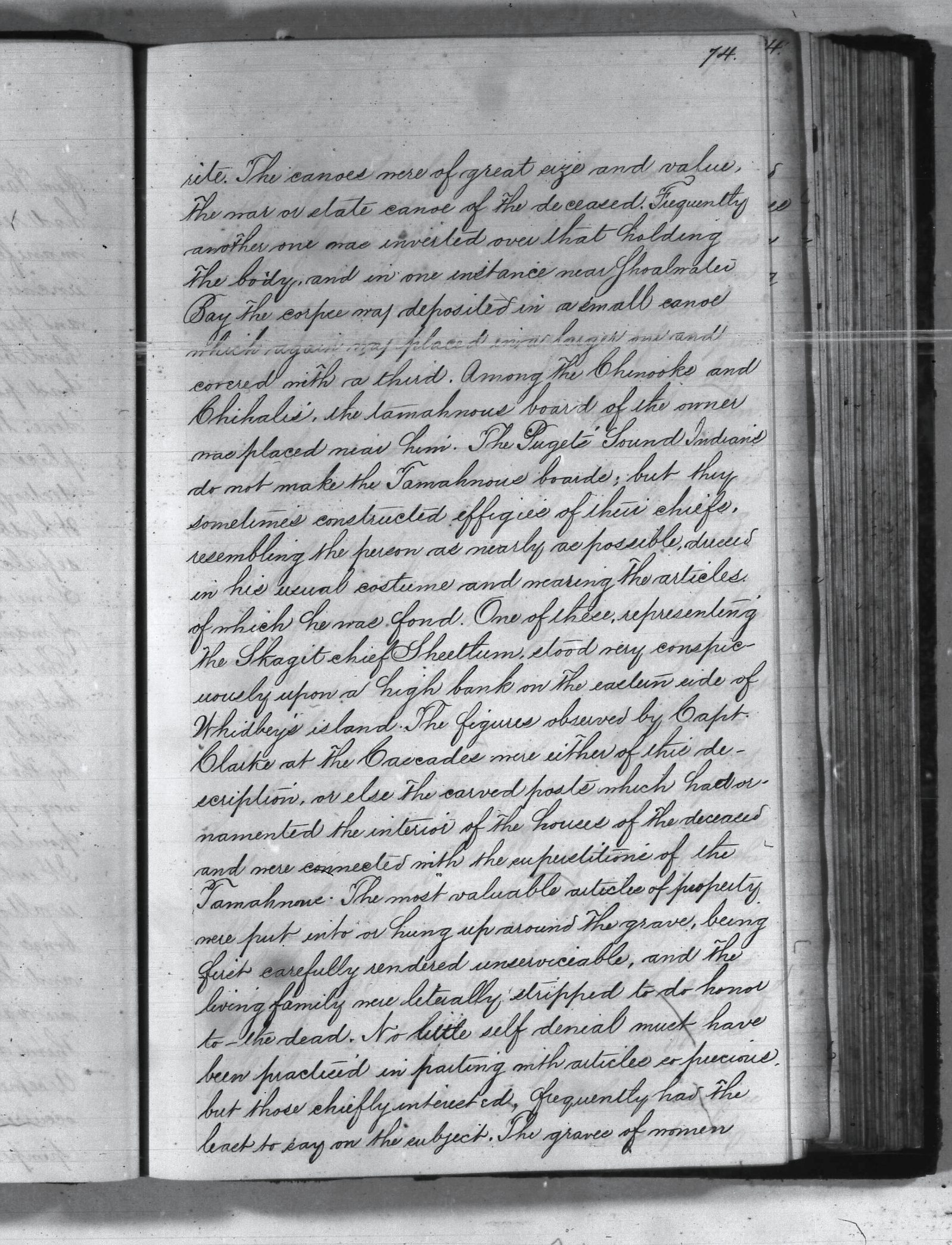
Preserved transcription
Transcription matched to this Wisconsin microfilm frame. Preserved from the supplied frame transcription; compare uncertain readings with the scan.
ite. The canoes were of great size and value,
the war or state canoe of the deceased. Frequently
another one was inverted over that holding
the body, and in one instance near Shoalwater
Bay the corpse was deposited in a small canoe
which again[?] was placed in a larger one and[?]
covered with a third. Among the Chinooks and
Chihalis, the tamahnous board of the owner
was placed near him. The Puget's Sound Indians
do not make the Tamahnous boards; but they
sometimes constructed effigies of their chiefs,
resembling the person as nearly as possible, dressed
in his usual costume and wearing the articles
of which he was fond. One of these, representing
the Skagit chief Sheetlum[?], stood very conspic-
uously upon a high bank on the eastern side of
Whidbey's island. The figures observed by Capt.
Clarke at the Cascades were either of this de-
scription, or else the carved posts which had or-
namented the interior of the houses of the deceased
and were connected with the superstitions of the
Tamahnous. The most valuable articles of property
were put into or hung up around the grave, being
first carefully rendered unserviceable, and the
living family were literally stripped to do honor
to the dead. No little self denial must have
been practised in parting with articles so precious,
but those chiefly interested, frequently had the
least to say on the subject. The graves of women
Wisconsin Historical Society · WHS-R2-1713 · George Gibbs ms. draft on Washington Territory Indians (notebook p.61) (document), n.d. (c.1854-57?)
Open the complete archive frame record →