
Read the original · Check the transcription
Gibbs Family Papers, Reel 3, frame 578 (thumbnail)
Preserved transcription
Transcription matched to this Wisconsin microfilm frame. Preserved from the supplied frame transcription; compare uncertain readings with the scan.
33.
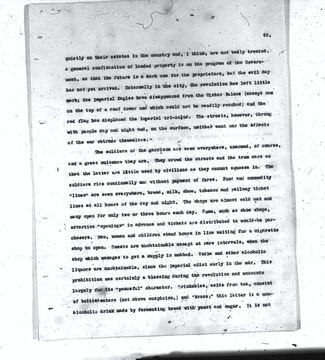
quietly on their estates in the country and, I think, are not badly treated.
A general confiscation of landed property is on the program of the Govern-
ment, so that the future is a dark one for the proprietors, but the evil day
has not yet arrived. Externally in the city, the revolution has left little
mark; the Imperial Eagles have disappeared from the Winter Palace (except one
on the top of a roof tower and which could not be readily reached) and the
red flag has displaced the Imperial tri-color. The streets, however, throng
with people day and night and, on the surface, neither want nor the effects
of the war obtrude themselves.
The soldiers of the garrison are seen everywhere, unarmed, of course,
and a great nuisance they are. They crowd the streets and the tram cars so
that the latter are little used by civilians as they cannot squeeze in. The
soldiers ride continually and without payment of fares. Food and commodity
"lines" are seen everywhere, bread, milk, shoe, tobacco and railway ticket
lines at all hours of the day and night. The shops are almost sold out and
many open for only two or three hours each day. Some, such as shoe shops,
advertise "openings" in advance and tickets are distributed to would-be pur-
chasers. Men, women and children stand hours in line waiting for a cigarette
shop to open. Sweets are unobtainable except at rare intervals, when the
shop which manages to get a supply is mobbed. Vodka and other alcoholic
liquors are unobtainable, since the Imperial edict early in the war. This
prohibition was certainly a blessing during the revolution and accounts
largely for its "peaceful" character. Drinkables, aside from tea, consist
of bottledwaters (not above suspicion,) and "kvass;" this latter is a non-
alcoholic drink made by fermenting bread with yeast and sugar. It is not
Wisconsin Historical Society · WHS-R3-578 · DUPLICATE microfilm exposure of frame 572 (document), (cont.)
Open the complete archive frame record →