
Read the original · Check the transcription
Gibbs Family Papers, Reel 3, frame 57 (thumbnail)
Preserved transcription
Transcription matched to this Wisconsin microfilm frame. Preserved from the supplied frame transcription; compare uncertain readings with the scan.
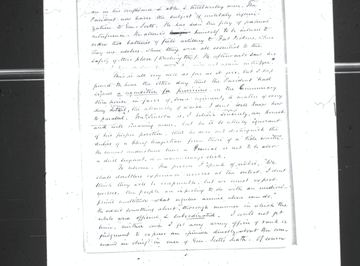
are in his confidence & able & trustworthy men. The
President now leaves the subject of military organi-
zation to Gen. Scott. He has seen the folly of personal
interference. He allowed [struck: himsf[?]] himself to be induced to
order two batteries of field artillery to Fort Pickens, where
they are useless, when they were all essential to the
safety of this place (Washington). He afterwards saw his
[illegible] I have no doubt[?] that he will not again interfere."
This is all very well as far as it goes, but I hap-
pened to hear the other day that the President had
signed a requisition for provisions, on the Commissary
store house in favor of some regiment, a matter of every
day detail, the absurdity of which I don't well know how
to parallel. Mr Lincoln is, I believe sincerely, an honest
and well meaning man, but he is so utterly ignorant
of his proper position, that he does not distinguish the
duties of a Chief Magistrate from those of a table waiter.
He cannot understand that a General is not to be also
a drill sergeant, or a commissary's clerk.
To resume. The person I speak of, added, "We
shall doubtless experience reverses at the outset. I don't
think they will be irreparable; but we must expect
reverses. Our people are expecting to do with an undisci-
plined multitude what regular armies alone can do."
He added something about [inserted: the] thorough manner in which the
rebels were officered & subordinated. I could not get
him, neither can I get any army officer of rank or
judgment to express an opinion directly about the com-
mand in chief &c[?] in case of Gen. Scott's death. Of course
Wisconsin Historical Society · WHS-R3-57 · Letter from unsigned Washington correspondent (hand consistent with George Gibbs IV) to "My Dear Sir" (addressed at foot to John A. Stevens Esq.?), 1861-05-11
Open the complete archive frame record →