
Read the original · Check the transcription
Gibbs Family Papers, Reel 3, frame 29 (thumbnail)
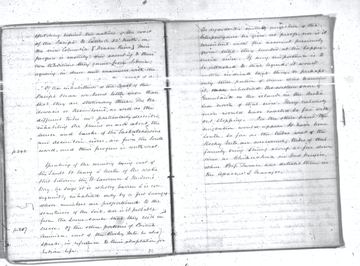
Preserved transcription
Transcription matched to this Wisconsin microfilm frame. Preserved from the supplied frame transcription; compare uncertain readings with the scan.
[left page]
stretching behind the natives of the coast
of the Pacific to latitude 52° North, on
the river Columbia [Fraser River] their
progress is easterly: and according to their
own traditions they came from Siberia;
agreeing in dress and manners with the
people[?] [illegible] found upon the coast of Asia[?]
"Of the inhabitants of the Coast of the
Pacific Ocean we know little more than
that they are stationary there. The Na-
dowasis or Assiniboins, as well as the
different tribes not particularly described,
inhabiting the plains on and about the
source and banks of the Saskatchewine
and Assiniboin rivers, are from the South
p.292 ward, and their progress is north west.
Speaking of the country lying east of
the Sault St Mary & North of the water
shed between the St Lawrence & Hudson's
Bay, he says it is wholly barren & is con-
sequently inhabited only by a few savages
whose numbers are proportioned to the
scantiness of the soil, nor is it probable
from the same cause that they will in
p.287 crease. Of the other portions of British
America, east of the Rocky Mts. he also
speaks, in reference to their adaptation for
Indian life.
[right page]
As regards the easterly migration of the
Chepewyans he gives no proofs, nor is it
consistent with the account previously
given that they landed at the Copper-
mine river. If any importance is to
be attached to that legend, it would
rather indicate that they, or perhaps
only that portion of them who narrated
it, once inhabited the western shore of
Greenland or the islands in the Arctic
Sea north of that river. They certainly
never would have coasted so far with-
out stopping. On the other hand the
migration would appear to have been
South, so far as the tribes west of the
Rocky Mts are concerned, tribes of this
family being strung along as far down
even as Chihuahua in New Mexico,
where Prof. Turner has detected them in
the Apaches & Navajos.
Wisconsin Historical Society · WHS-R3-29 · Letter from George Gibbs (reading notes) to notebook
Open the complete archive frame record →