
Read the original · Check the transcription
Gibbs Family Papers, Reel 3, frame 644
Preserved transcription
Transcription matched to this Wisconsin microfilm frame. Preserved from the supplied frame transcription; compare uncertain readings with the scan.
[printed: 97.]
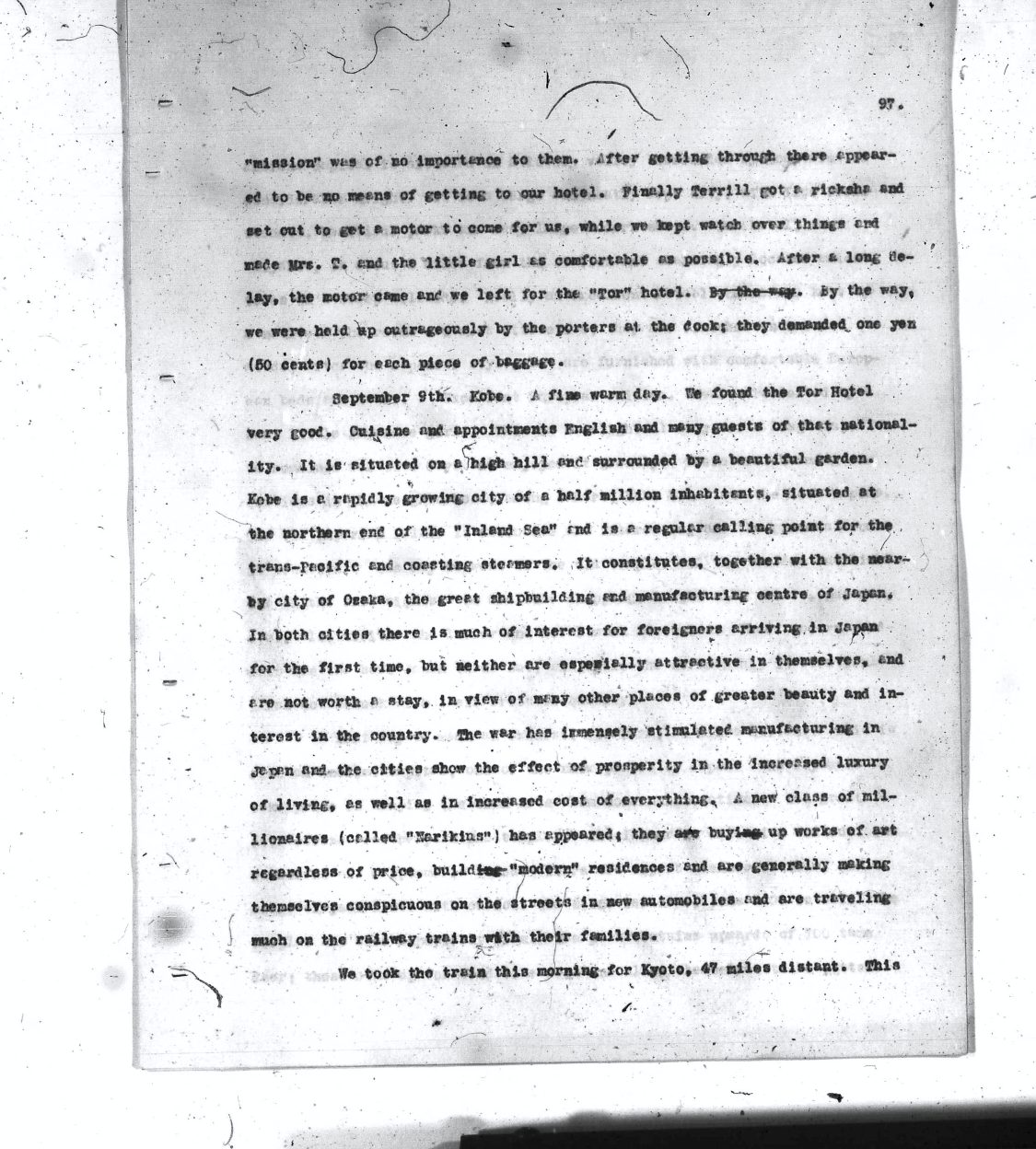
"mission" was of no importance to them. After getting through there appear-
ed to be no means of getting to our hotel. Finally Terrill got a ricksha and
set out to get a motor to come for us, while we kept watch over things and
made Mrs. T. and the little girl as comfortable as possible. After a long de-
lay, the motor came and we left for the "Tor" hotel. [struck: By the way]. By the way,
we were held up outrageously by the porters at the dock; they demanded one yen
(50 cents) for each piece of baggage.
September 9th. Kobe. A fine warm day. We found the Tor Hotel
very good. Cuisine and appointments English and many guests of that national-
ity. It is situated on a high hill and surrounded by a beautiful garden.
Kobe is a rapidly growing city of a half million inhabitants, situated at
the northern end of the "Inland Sea" and is a regular calling point for the
trans-Pacific and coasting steamers. It constitutes, together with the near-
by city of Osaka, the great shipbuilding and manufacturing centre of Japan.
In both cities there is much of interest for foreigners arriving in Japan
for the first time, but neither are especially[?] attractive in themselves, and
are not worth a stay, in view of many other places of greater beauty and in-
terest in the country. The war has immensely stimulated manufacturing in
Japan and the cities show the effect of prosperity in the increased luxury
of living, as well as in increased cost of everything. A new class of mil-
lionaires (called "Narikins") has appeared; they are buying up works of art
regardless of price, building "modern" residences and are generally making
themselves conspicuous on the streets in new automobiles and are traveling
much on the railway trains with their families.
We took the train this morning for Kyoto, 47 miles distant. This
Wisconsin Historical Society · WHS-R3-644 · DUPLICATE microfilm exposure of frame 637 (document), (cont.)
Open the complete archive frame record →