
Read the original · Check the transcription
Gibbs Family Papers, Reel 3, frame 173
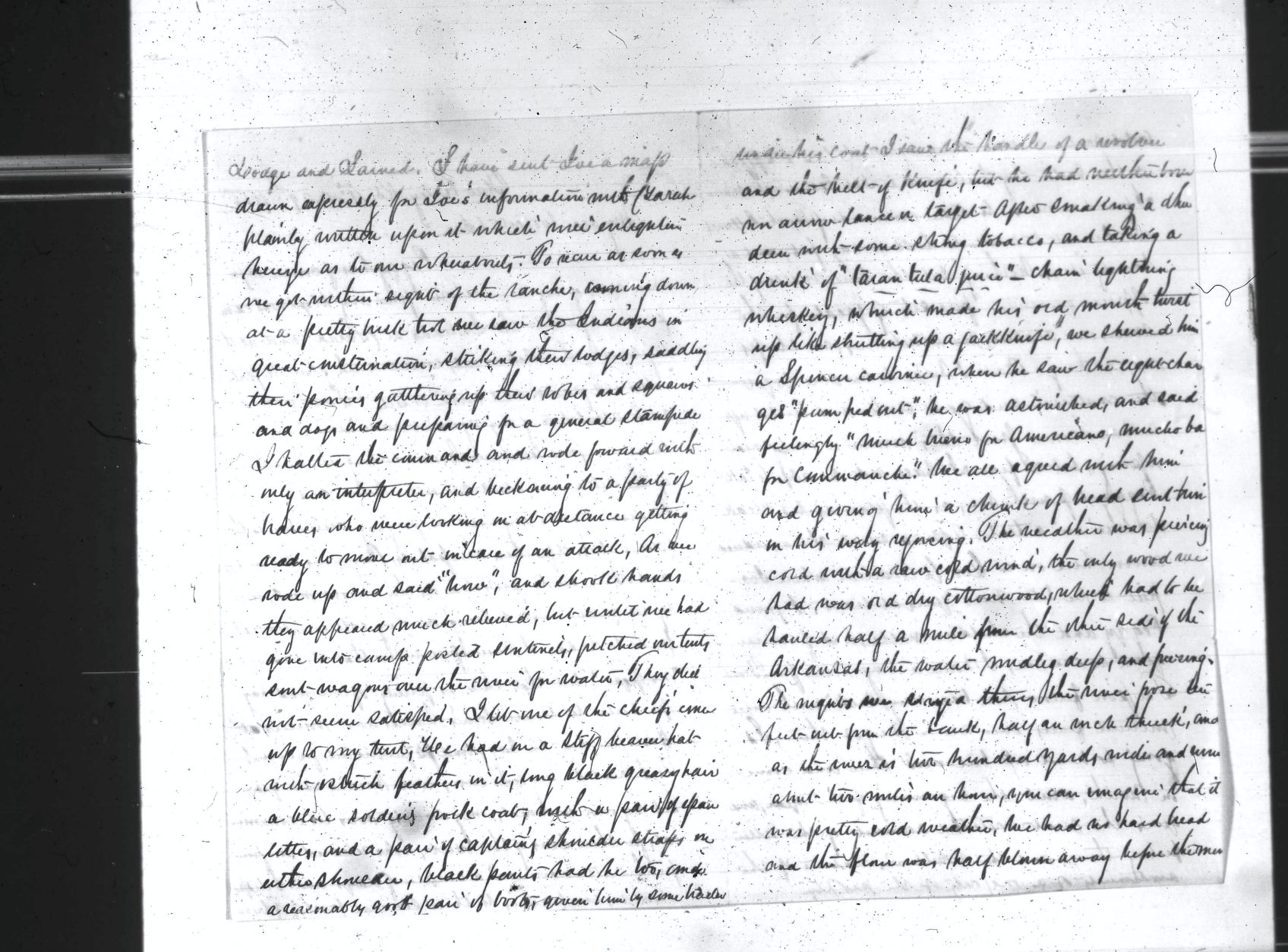
Preserved transcription
Transcription matched to this Wisconsin microfilm frame. Preserved from the supplied frame transcription; compare uncertain readings with the scan.
Dodge[?] and Larned. I have sent Joe a map
drawn expressly for Joe's information with Zarah
plainly written upon it which will enlighten
them[?] as to our whereabouts. So soon as[?] soon as
we got within sight of the ranche, coming down
at a pretty brisk trot we saw the Indians in
great consternation, striking their lodges, saddling
their ponies gathering up their robes and squaws
and dogs and preparing for a general stampede
I halted the command and rode forward with
only an interpreter, and beckoning to a party of
braves who were looking on at a distance getting
ready to move out in case of an attack, As we
rode up and said "how", and shook hands
they appeared much relieved, but until we had
gone into camp posted sentinels, pitched our tents
sent wagons over the river for water, They did
not seem satisfied. Then[?] one of the chiefs came
up to my tent, He had on a stiff beaver hat
with ostrich feathers in it, long black greasy hair
a blue soldier's frock coat, with a pair of epau
lettes, and a pair of captain's shoulder straps on
either shoulder, black pants had he too, and
a reasonably good pair of boots given him by some trader
under his coat I saw the handle of a revolver
and the hilt of knife, but he had neither bow
nor arrow lance or target. After smoking a dhu
deen with some strong tobacco, and taking a
drink of "tarantula juice" – chain lightning
whiskey, which made his old mouth twist
up like shutting up a jackknife, we showed him
a Spencer carbine, when he saw the eight char
ges "pumped out", he was astonished, and said
feelingly "Much bueno for Americano, mucho ba[illegible]
for Cumanche." We all agreed with him
and giving him a chunk of bread sent him
on his way rejoicing. The weather was piercing
cold with a raw cold wind, the only wood we
had was old dry cottonwood, which had to be
hauled half a mile from the other side of the
Arkansas, the water muddy deep, and freezing.
The nights[?] were [illegible] the river froze ten[?]
feet out from the bank, half an inch thick, and
as the river is two hundred yards wide and runs
about two miles an hour, you can imagine that it
was pretty cold weather. We had no hard bread
and the flour was half blown away before the men
Wisconsin Historical Society · WHS-R3-173 · Letter from Alfred Gibbs to Oliver Wolcott Gibbs and "Joe", 1866-11-29
Open the complete archive frame record →