
Union · From the existing generals database
George Armstrong Custer
Loading portrait…
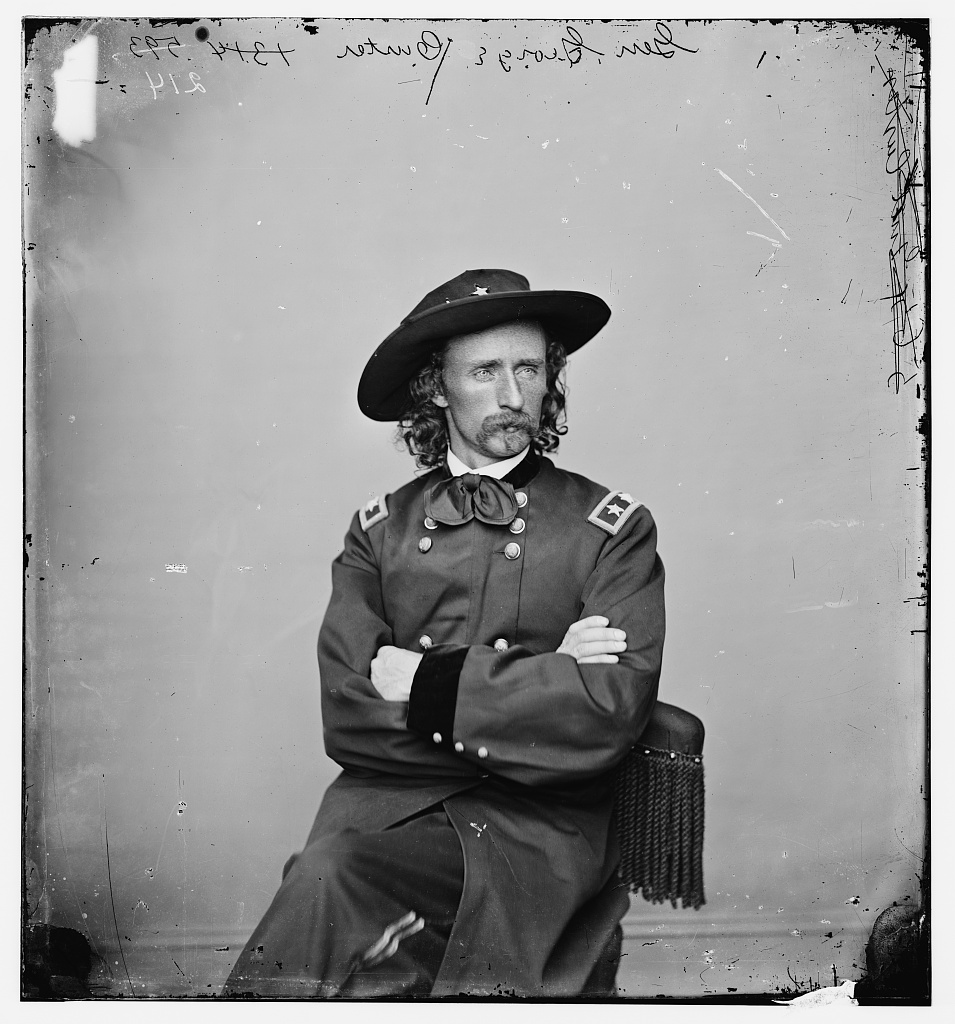
The source image could not be loaded. Use the source reference below.
See the project's colorized portrait
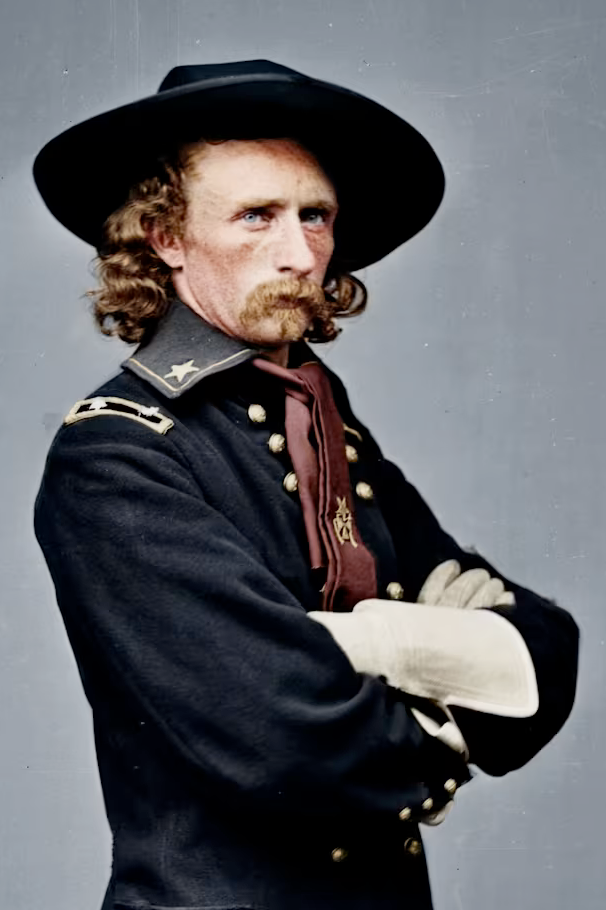
Follow this person through GIBBS
Custer's career crosses Gibbs's through cavalry command and the postwar army. Follow Garland's research on their relationship rather than assuming a famous name supplies all the context a reader needs.
Explore the connected chapters and research →- Highest Substantive Rank
- Major General
- Branch
- USV
- Highest Brevet Rank
- Major General
- West Point
- Yes
- USMA Class
- 1861
- Notes
- USMA, 1861
Biographical overview
Imported from the existing database. This summary has not received a new editorial review and is not primary evidence.
George Armstrong Custer (1839–1876) graduated dead last in the West Point class of 1861, but the war's hunger for aggressive cavalry officers suited him perfectly. Flamboyant and fearless, he was jumped to brigadier general of volunteers at just twenty-three, and his Michigan Brigade helped blunt J.E.B. Stuart's cavalry at Gettysburg. He fought through the Shenandoah Valley and the final pursuit to Appomattox, where he received the Confederate flag of truce.
After the war Custer was posted to the frontier with the newly raised 7th U.S. Cavalry — the same regiment to which Alfred Gibbs was assigned — and became a household name in the Plains Indian Wars. His career ended in catastrophe at the Battle of the Little Bighorn in June 1876, where he and much of his command were annihilated by a coalition of Lakota, Cheyenne, and Arapaho — a defeat that turned “Custer's Last Stand” into enduring American legend.