Your book journey: Fort Wayne, Detroit, Michigan · December 1861.
What would you like to explore in Thirteen Rifles?
Go beyond the book · Thirteen Rifles
Count what a commander could actually defend with
During tension with Britain after the Trent affair, Fort Wayne faced Canada across the river. Gibbs’s report turns a dramatic international crisis into a practical question of weapons and men.
New to these records? A little context.
A docket is an office’s summary or filing note; it may be on a wrapper rather than in the letter. An endorsement is another official’s response or forwarding note. Read each voice and date separately. A transcription is a reading of a document, with uncertain words marked where the exhibit provides them.
What could thirteen rifles protect?
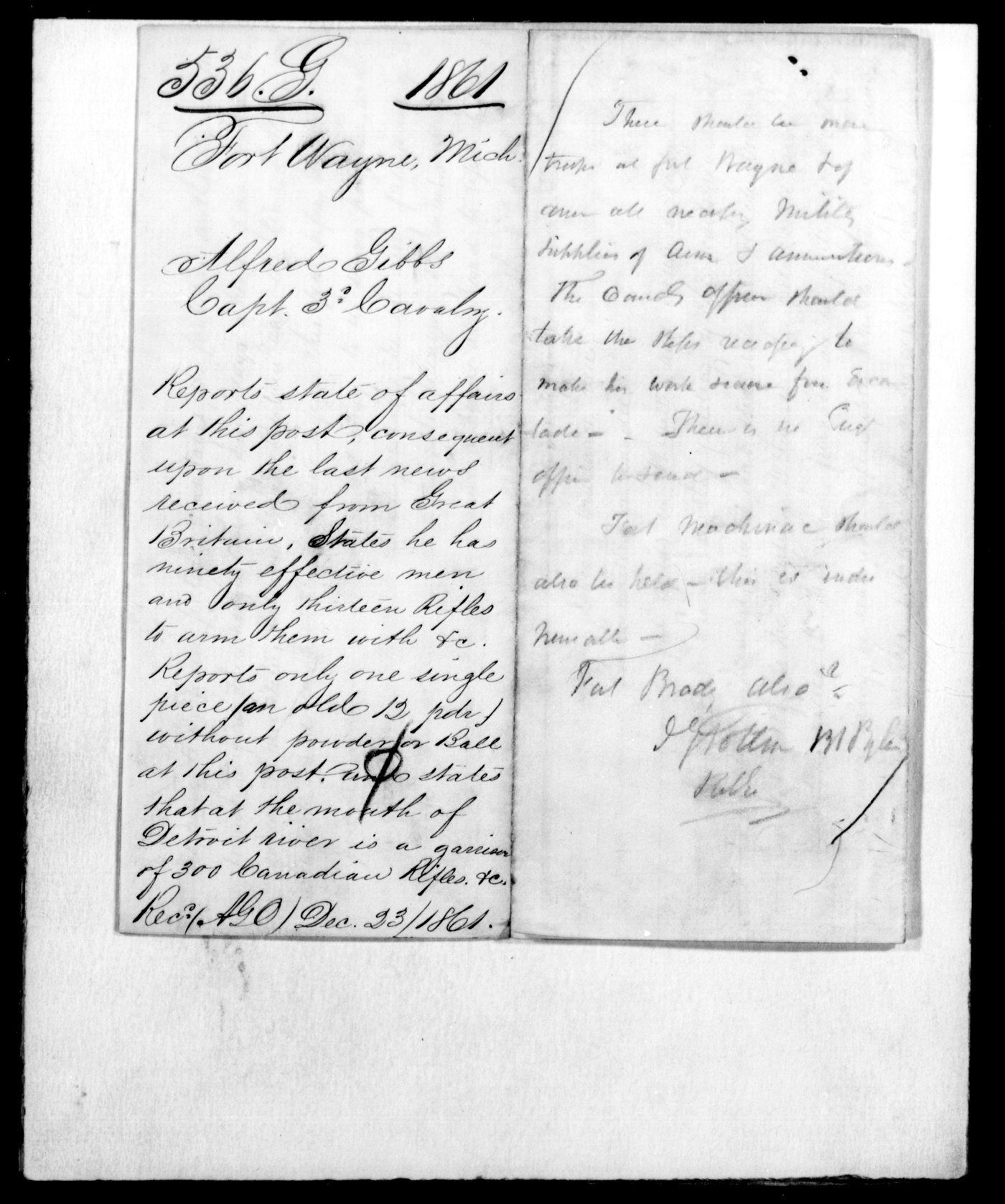
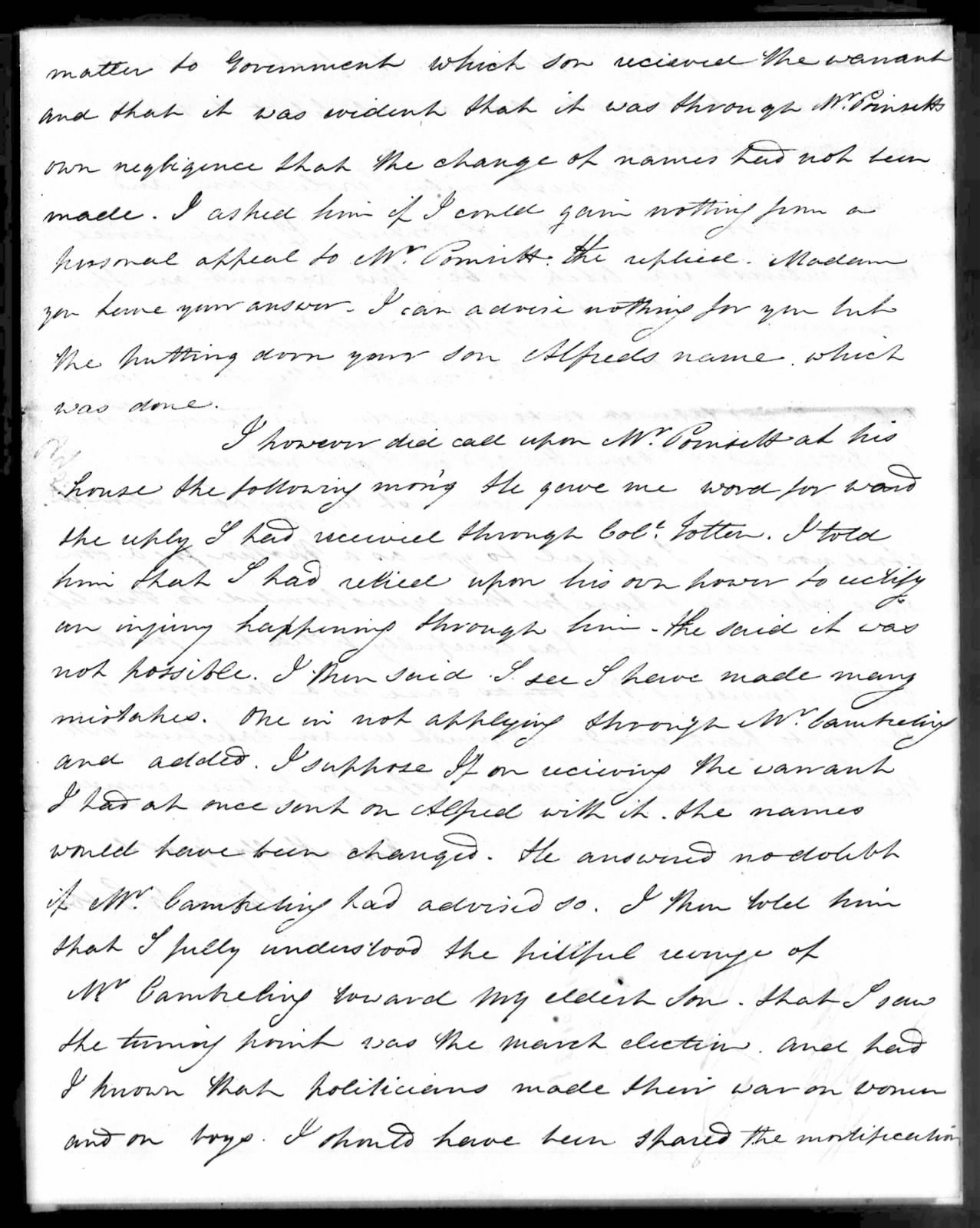
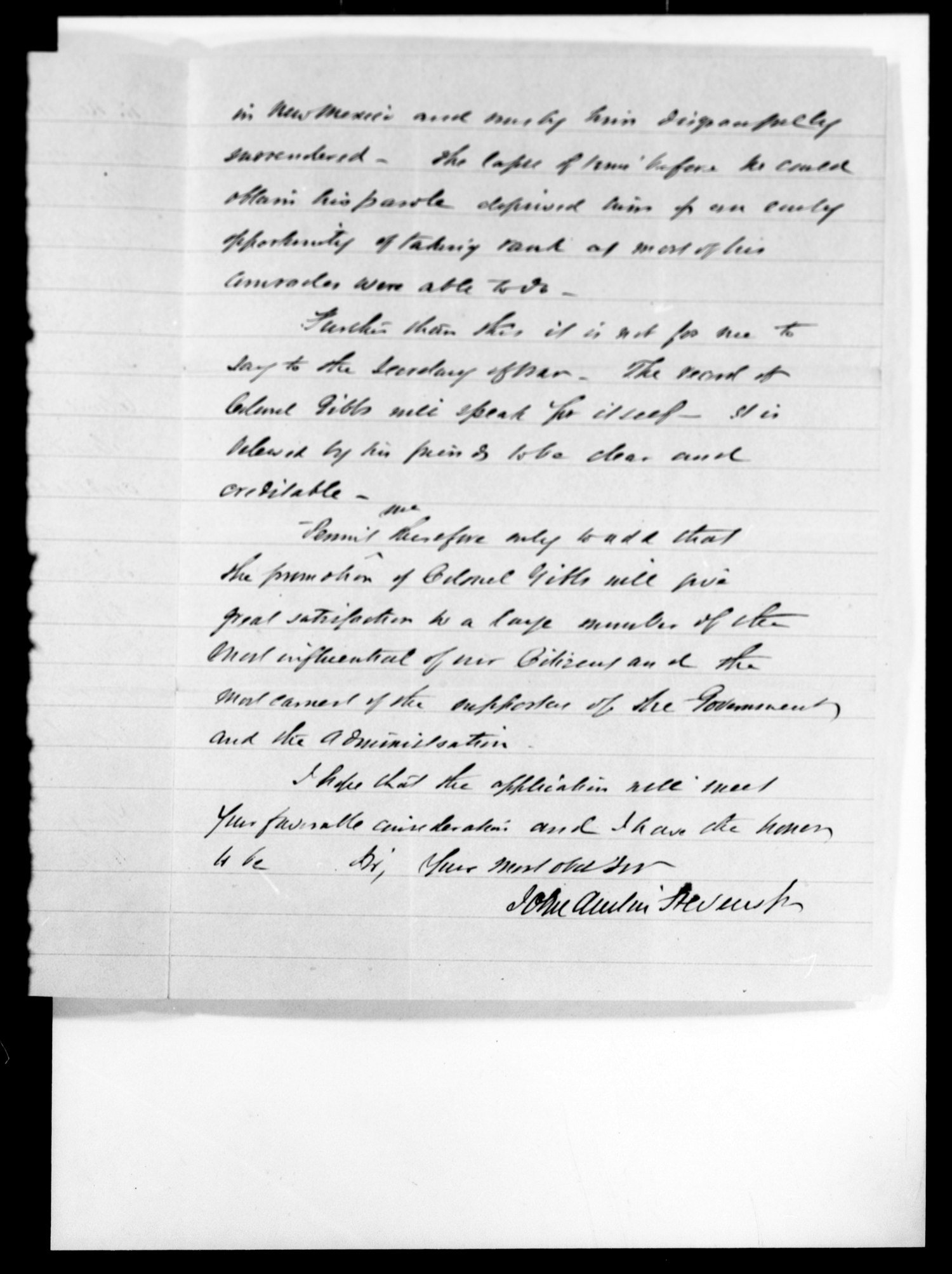
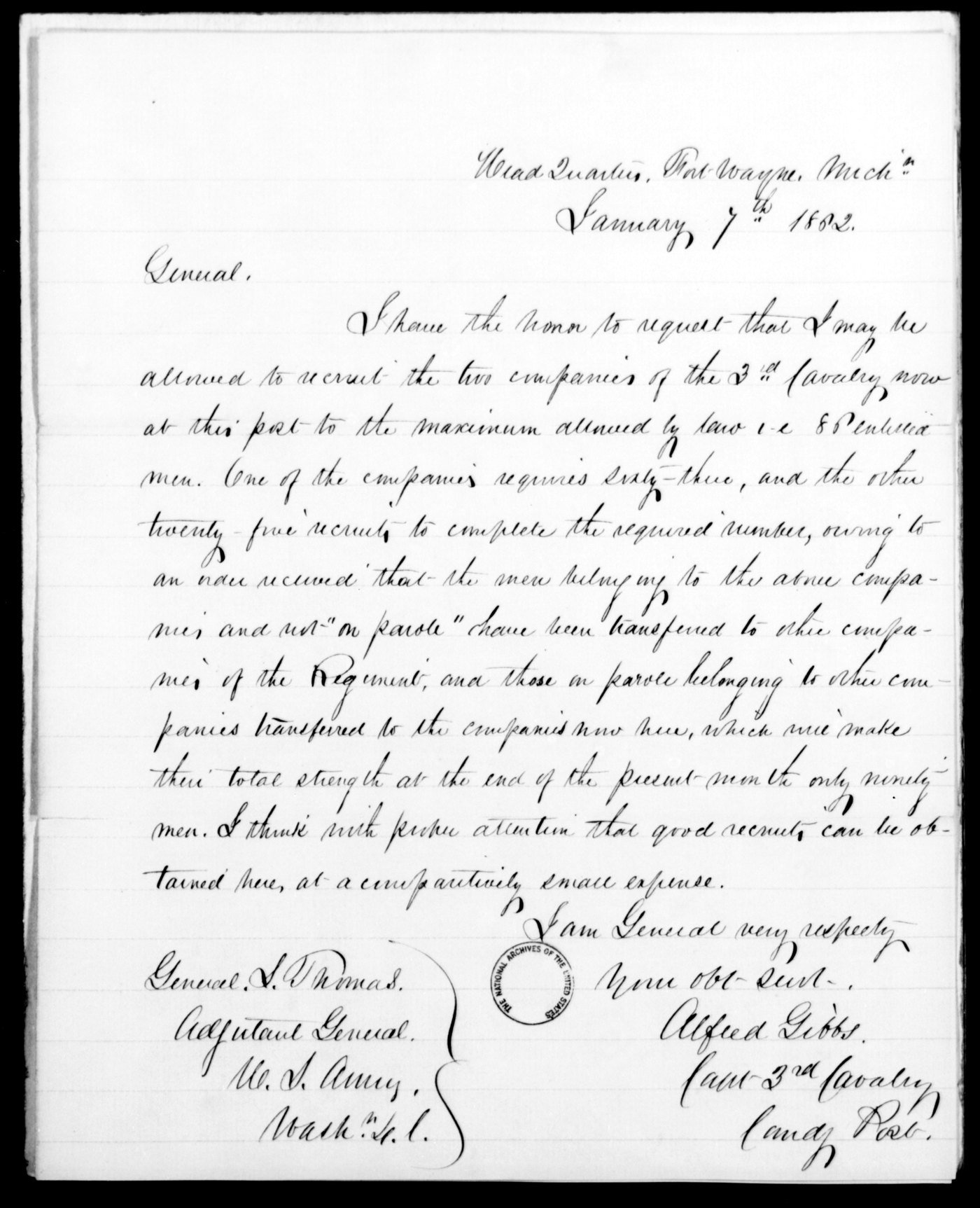
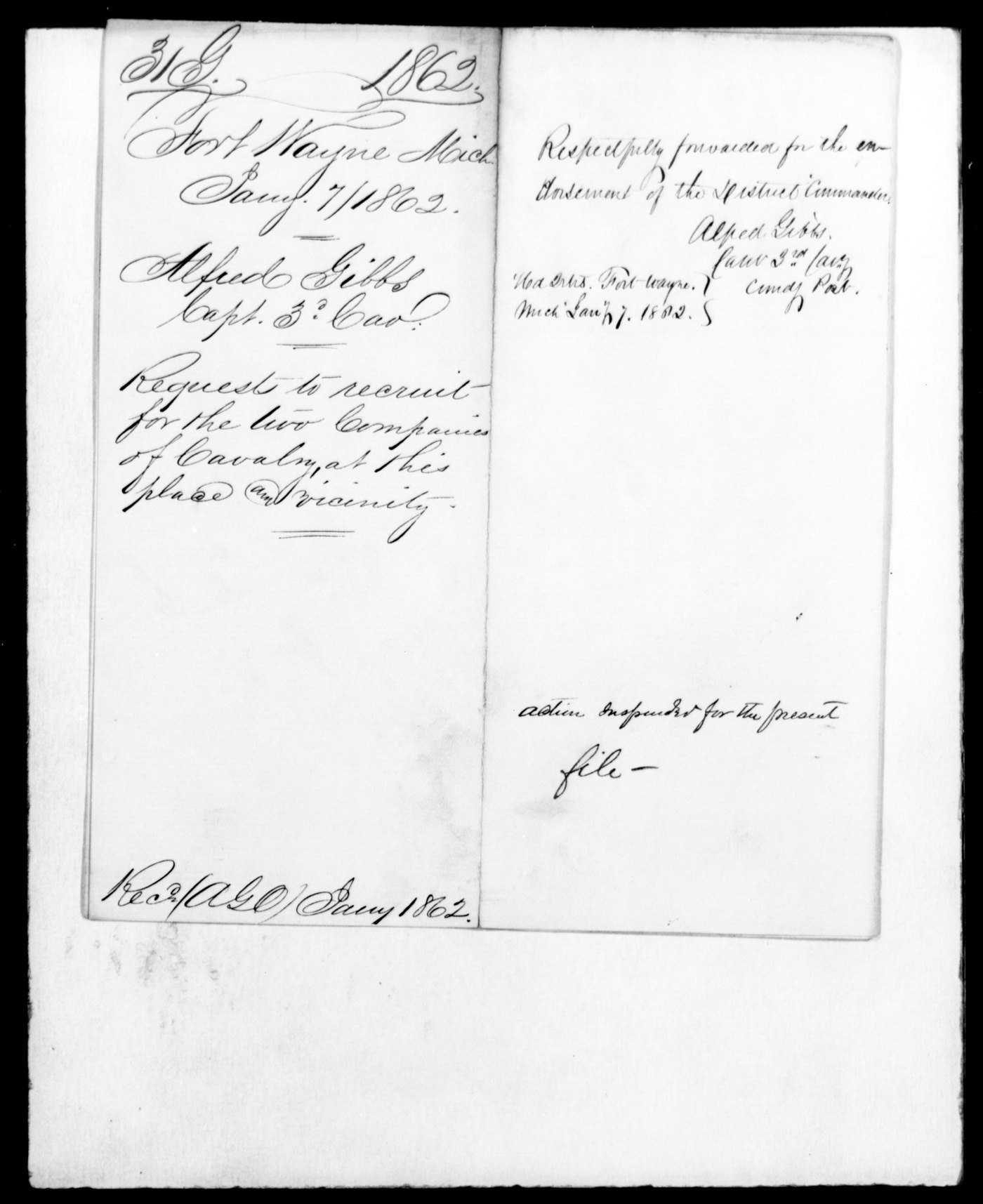
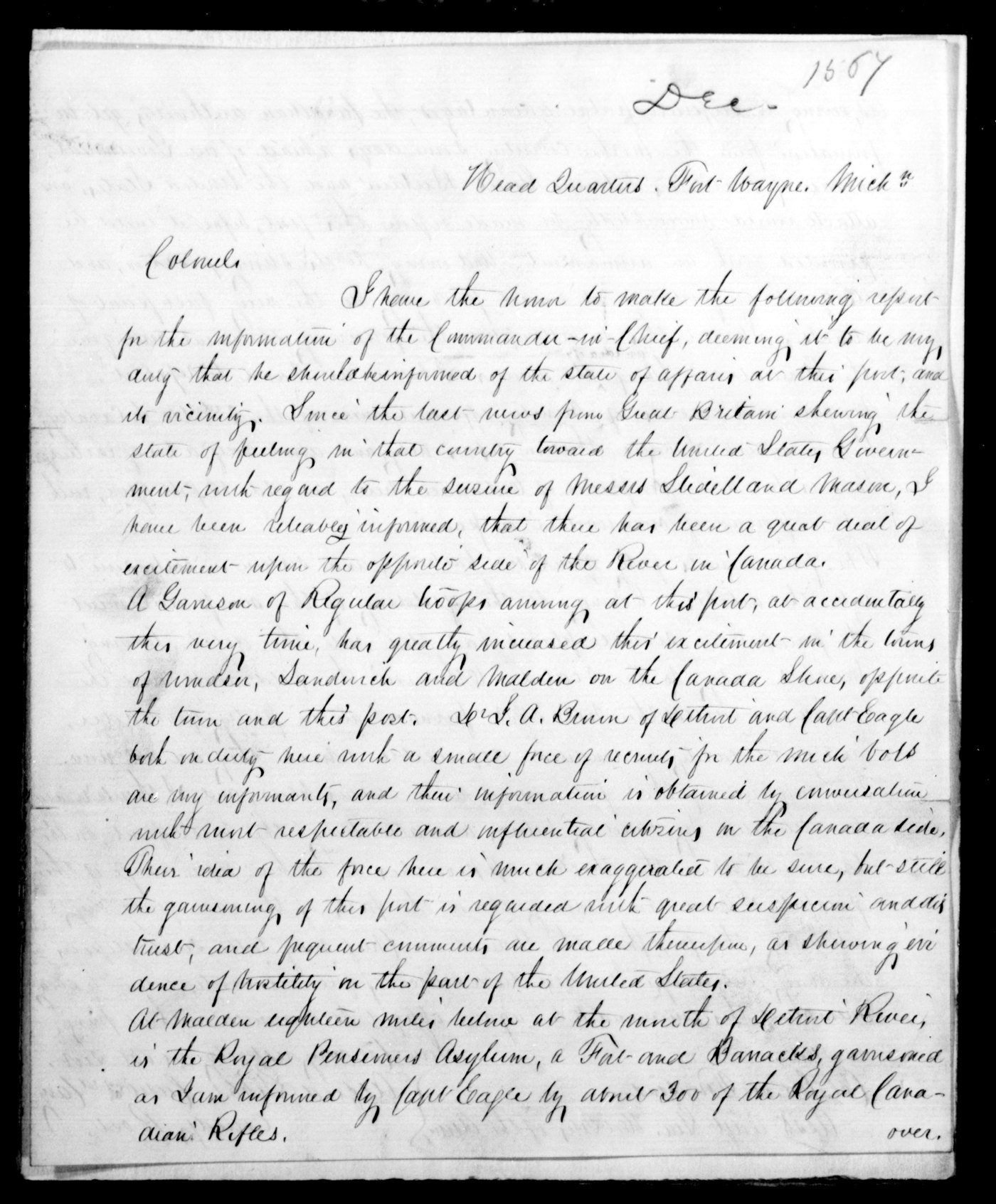
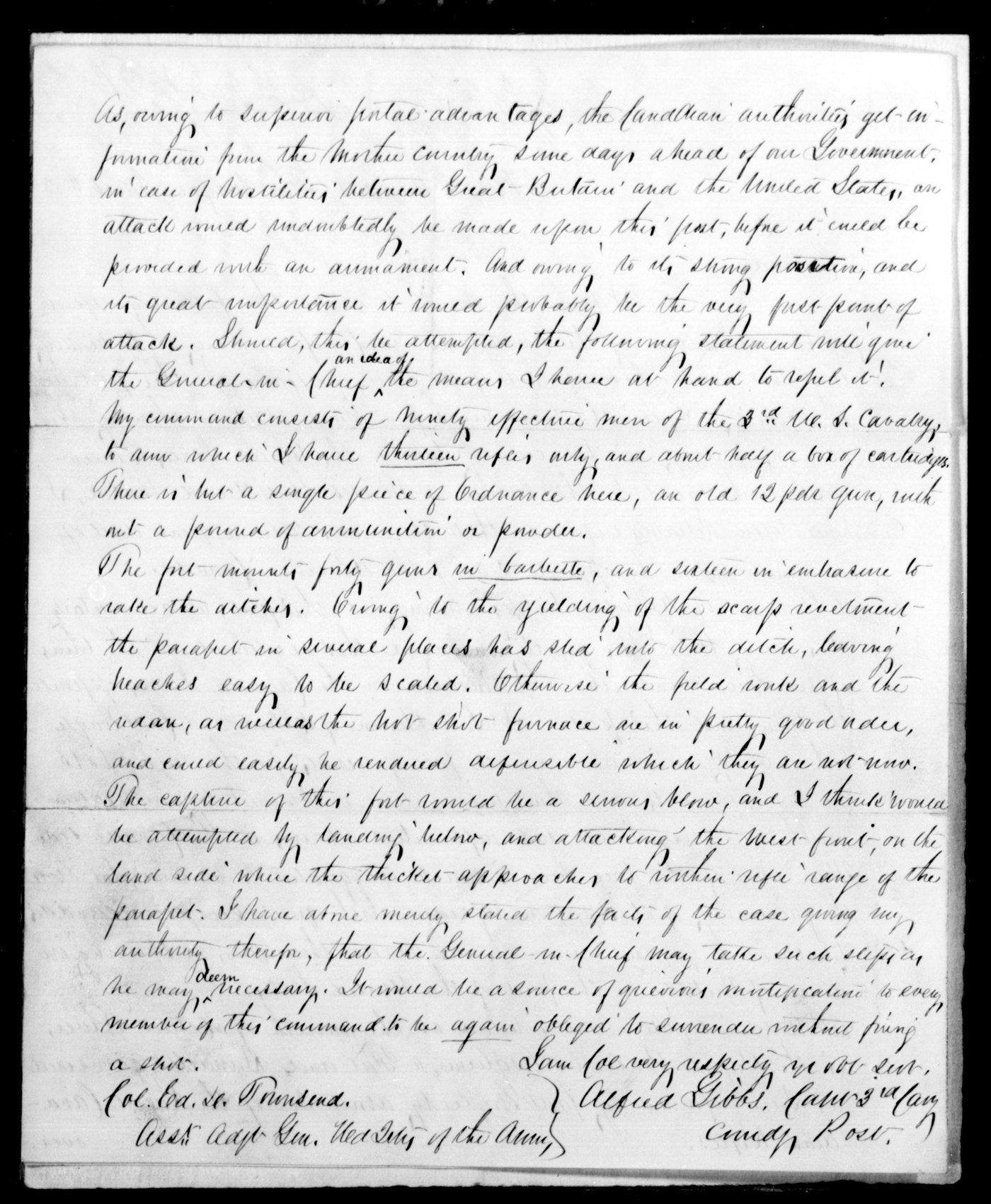
Alfred Gibbs AGO letter 85313111 85313111_001.jpg · From the linked account. Its original credits and image status are preserved there.
Read the source exhibit & its explanation
The Fort Wayne arms report, December 1861
The report states that ninety effective men had thirteen rifles and describes an old gun without powder or ball. Its endorsements show the problem moving through army offices.
What to examine: Compare the wrapper’s summary with the report, then read the proposed responses in the endorsement. Keep the American inventory separate from the reported Canadian strength.
Keep this distinction in mind: Some transcription readings are marked uncertain. A report about an opposing garrison is not the same kind of evidence as the post’s own inventory.
Keep your question in view as you explore. The reading tray retains Thirteen Rifles → Fort Wayne, Detroit, Michigan. Close it to return to this point, or deliberately choose to explore outside the chapter.
Follow a life beyond the page
People you meet here
The book brings you into these lives. Follow a person to the family, service and research records available here. Pension material is identified separately from biography and recollection.
7 connected people in this section · Showing 1 to 6
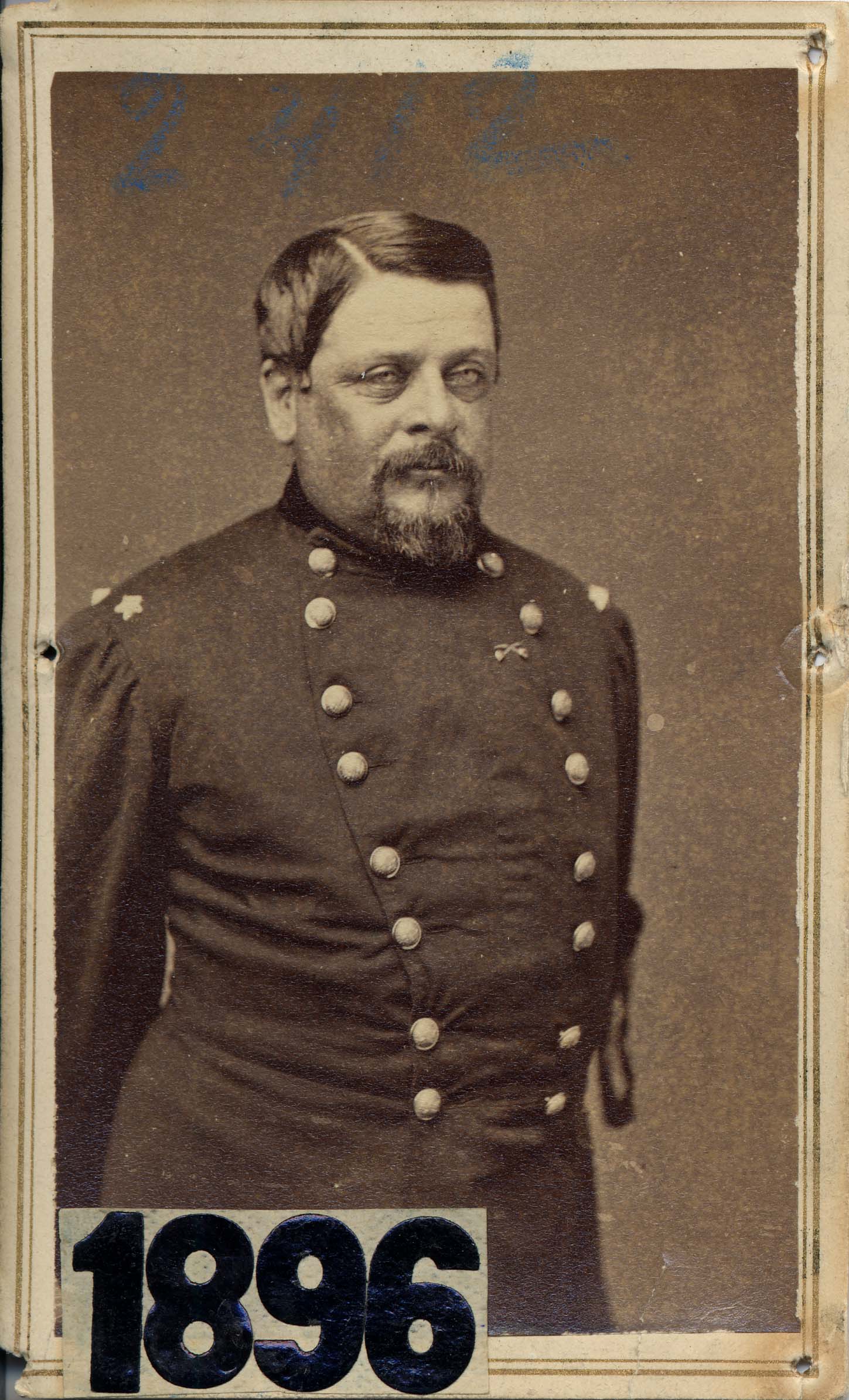
Follow Gibbs through the service and medical records, then Peggy’s petitions after his death. These sources let you distinguish what a doctor observed, what a widow asked for and what an official record actually establishes.
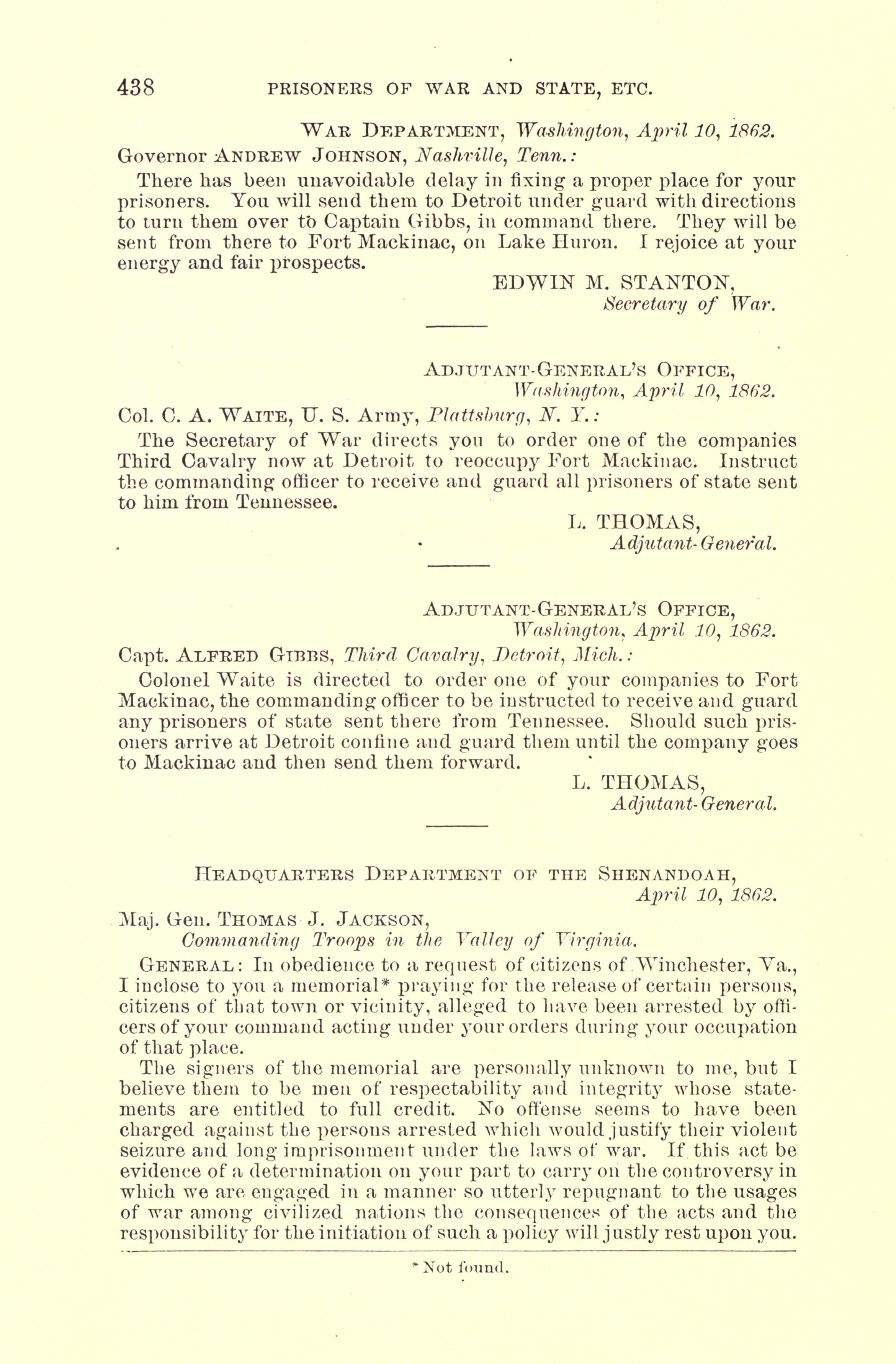
Andrew Johnson appears here as Tennessee's military governor arranging the movement of prisoners. This is the future president in a wartime administrative role.
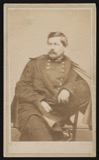
McClellan was Gibbs's West Point classmate before he became a Union commander. Garland's connected essays and letters let you explore those relationships beyond the familiar public reputation.
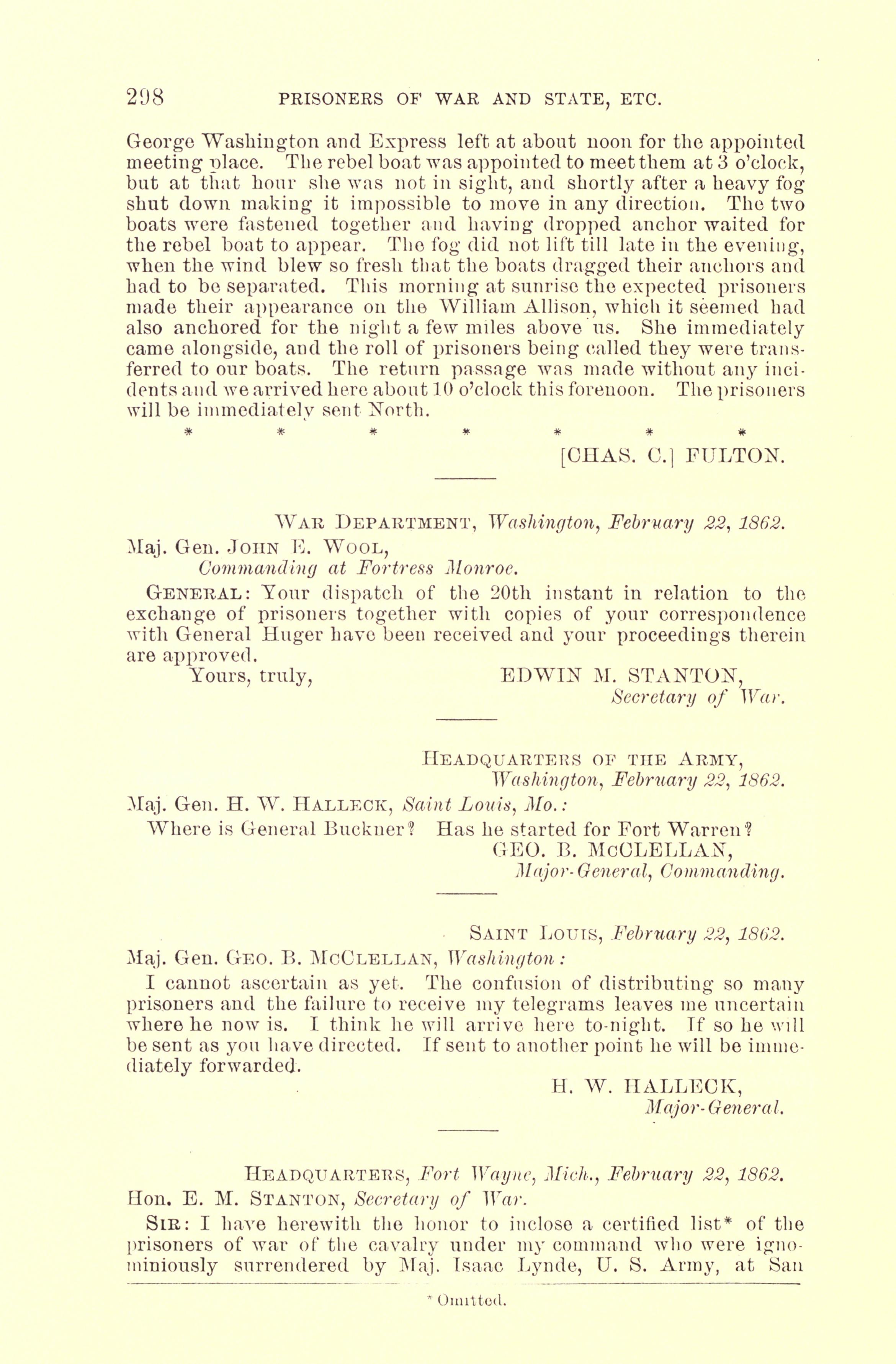
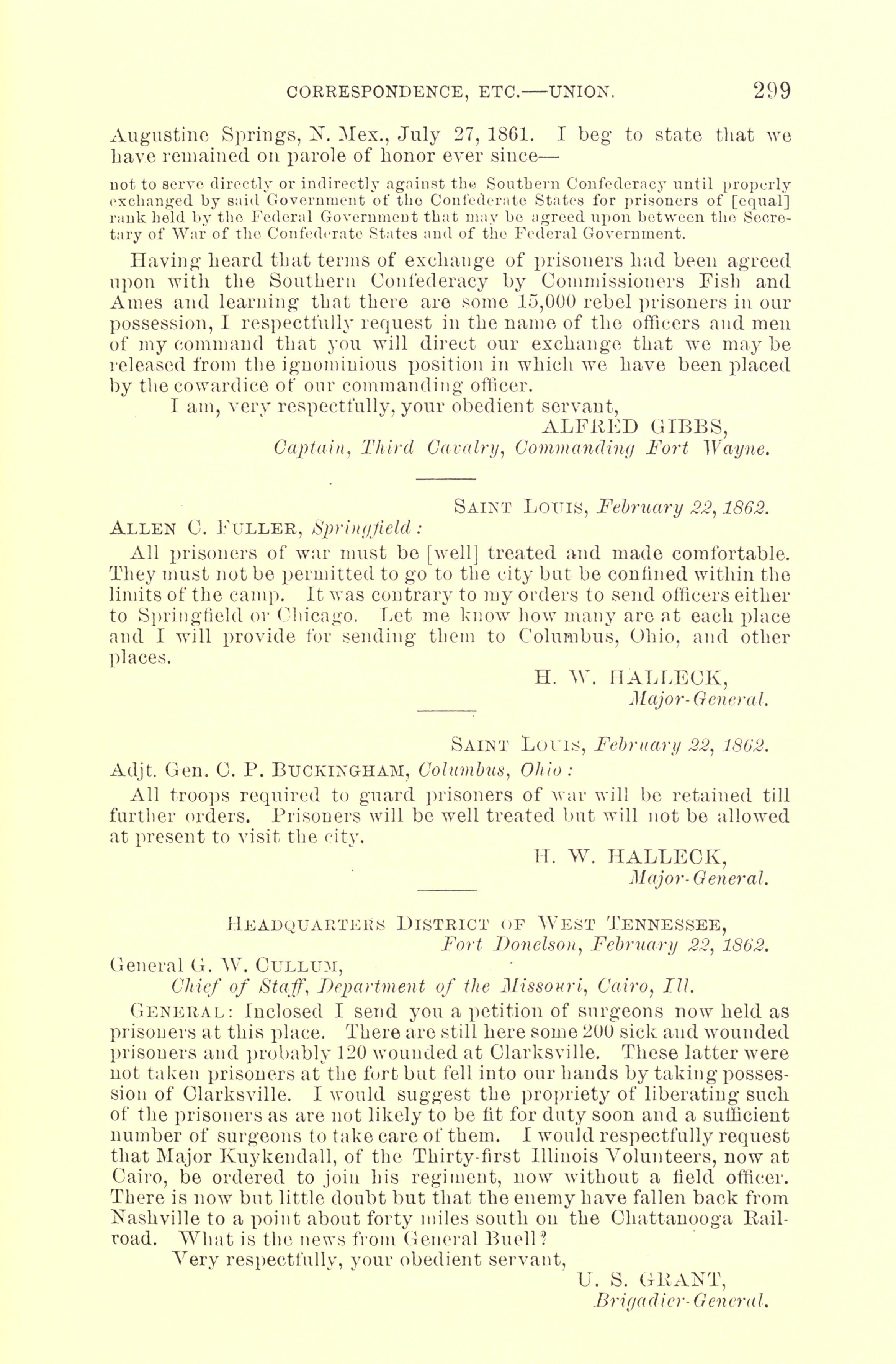
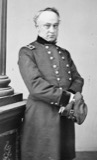
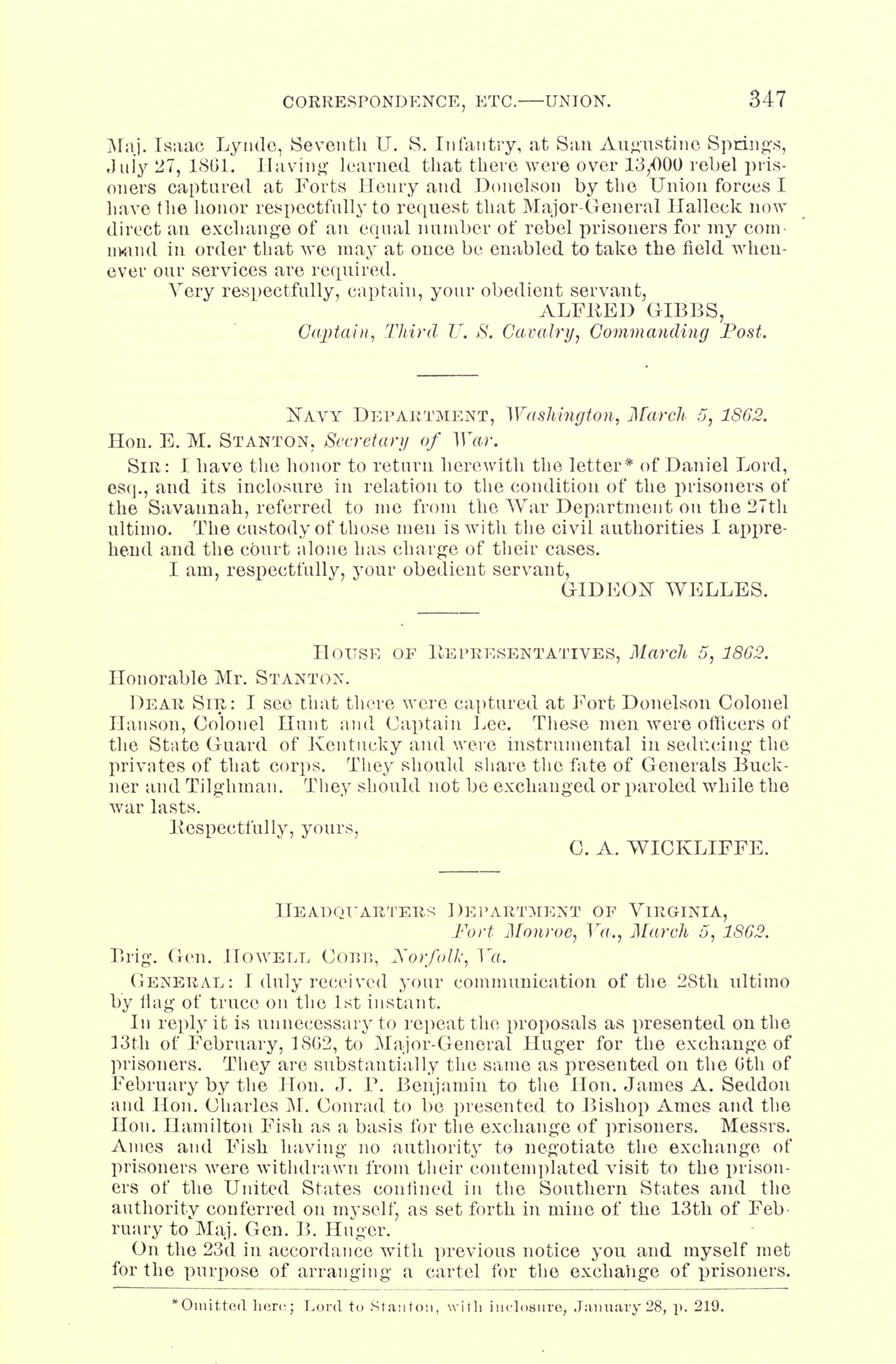
Gibbs appealed to Halleck’s headquarters for a prisoner exchange. Follow the administrative route behind his effort to return himself and his men to duty.
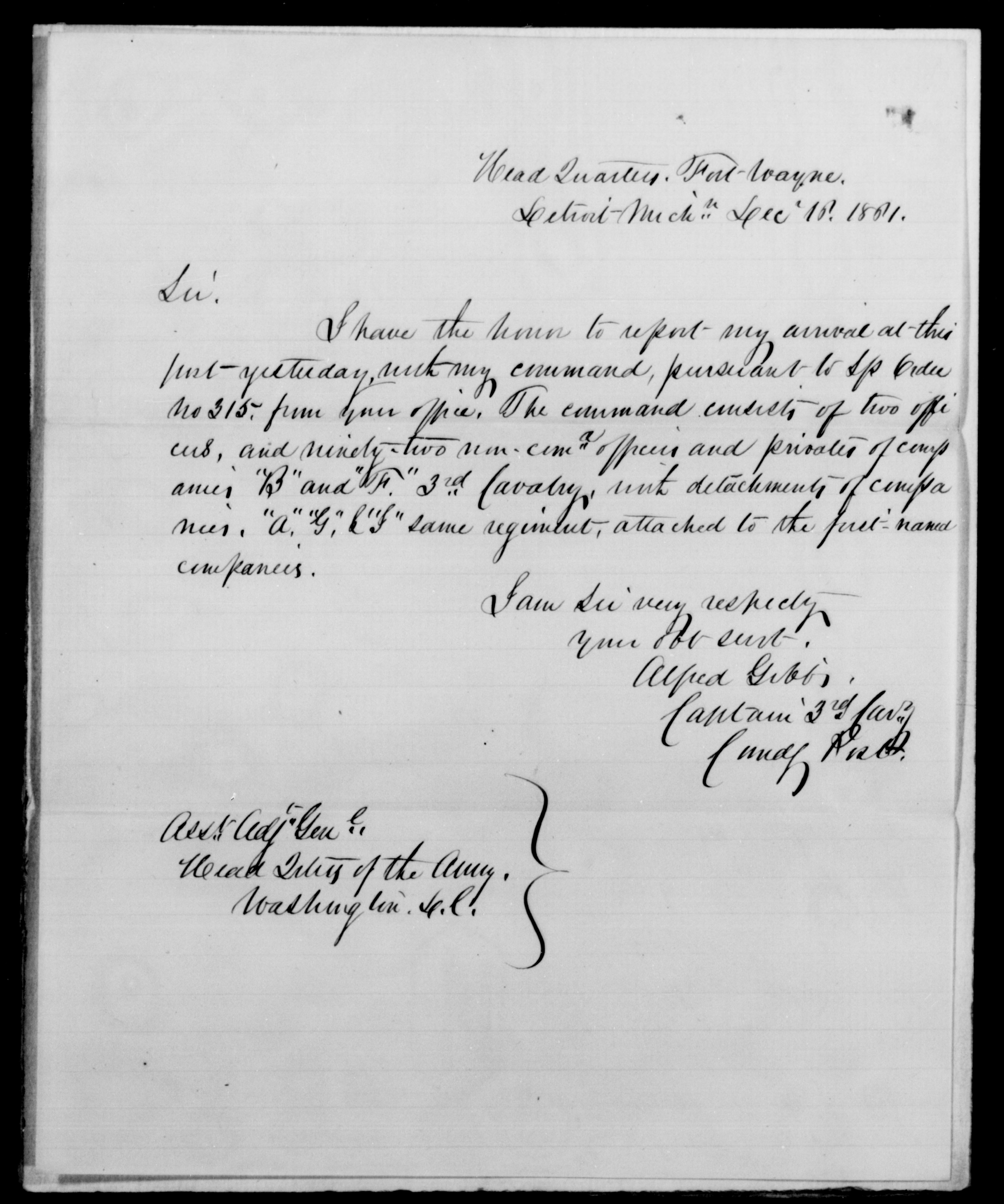
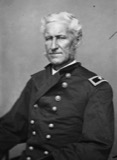
As Adjutant General, Lorenzo Thomas received Gibbs's administrative correspondence. His identity helps explain the channels through which recruiting and career requests passed.
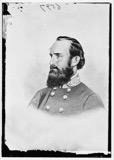
Thomas Jonathan Jackson was Gibbs’s West Point classmate before becoming the Confederate commander known as Stonewall. Follow the cadet and the later officer as parts of the same life, keeping their dates and opposing service clear.
These connections come from the v172 manuscript and existing subject pages. A pension not connected here may still exist elsewhere. Namesakes and uncertain identities are not silently joined.
Follow the words into the evidence
What caught your attention?
Find a line from your reading, then follow its document and the record around it. Matching words helps locate evidence; checking who wrote them, when, and why helps you understand it.
Fort Wayne, Detroit, Michigan · 11 entries · Page 1 of 2