Research account used in the book
Gibbs and the War Department: The Letters Received, 1846-1868
Labeled research-page illustration, not a scan. Alfred GibbsThe research archive
From your reading · 39-013
You are exploring The witnesses in The Widow's Forty Years. Compare the words used in the book with the source and the context around them.
did not expect him to live.
Words matched in source text
Phil Sheridan answered from Chicago, in his own name, as lieutenant general. He said that during the war Gibbs "was always in the saddle and at times against the advice of his physician and my own protests." He had seen him struck down by the sun at Culpeper, and again at Trevilian Station, where he "did not expect him to live." And he wrote this, plainly. "I knew him to be often so affected with
Book context excerpt, up to 400 characters. This is not the full chapter.The connected source
National Archives record · transcript_034
words found in the source text. A text match or page placement does not establish that the scan has been reviewed.
Who wrote this, and who was meant to read it? Is the writer describing an event they witnessed, reporting news from someone else, or remembering it later? Read the surrounding lines and compare dates, names and uncertain words.
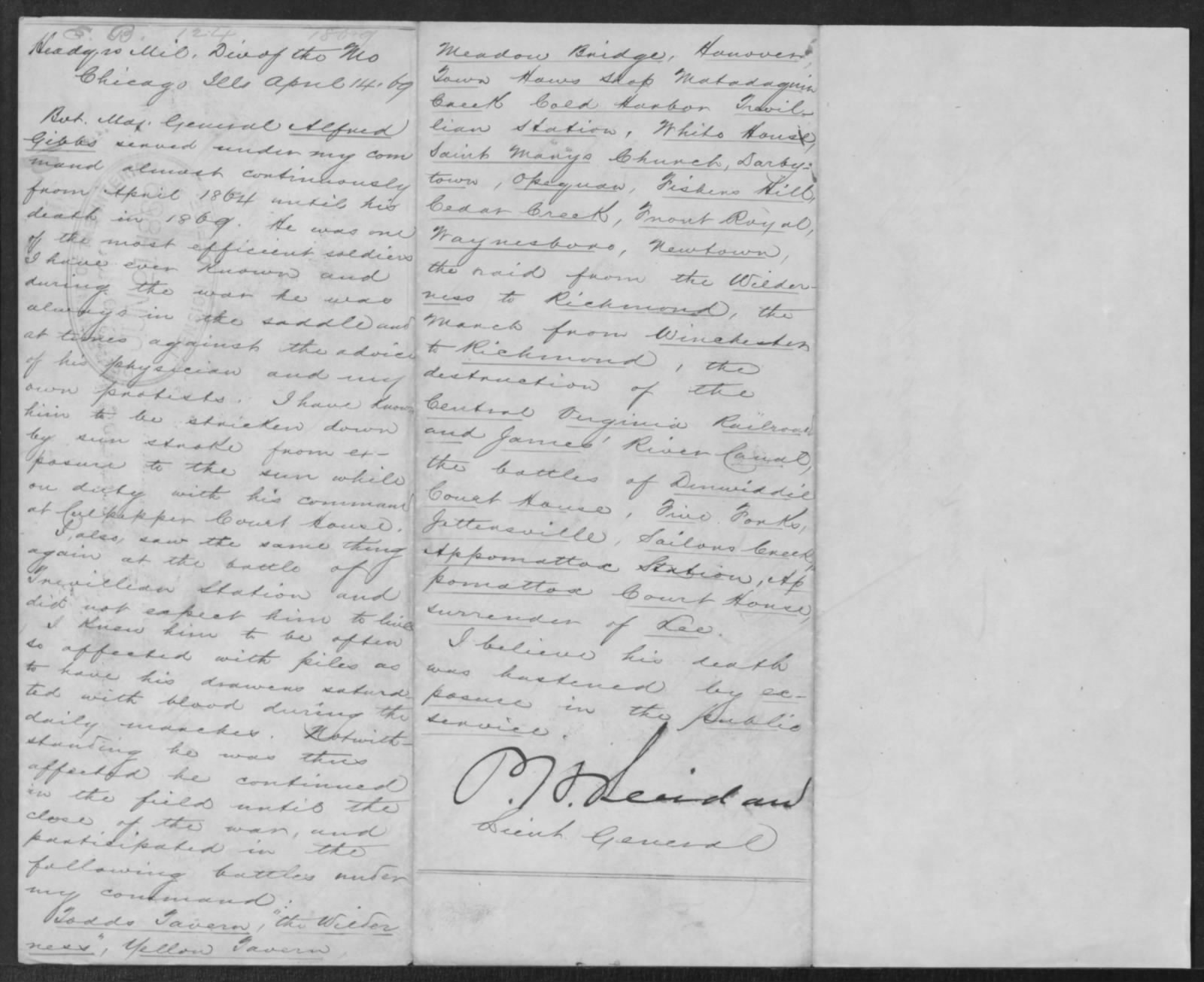
Paired by the explicitly identified WC 137,047 file and matching sheet number. This sheet has not received an individual visual transcription review.
Supplied source transcription. Preparation method is not recorded here; verify uncertain readings against the paired scan.
The book catalog explicitly points to these preserved site pages. Read the account and follow its reproduced documents and citations. A research account is an intermediary, not automatically the original evidence.
Gibbs and the War Department: The Letters Received, 1846-1868
Labeled research-page illustration, not a scan.The person behind the name
Follow the lives and existing research connected to names in these words or their book context. These person connections do not establish the source of the quotation.
Phil Sheridan is the cavalry commander. The manuscript also names his brother, Colonel Michael Sheridan. Michael escorted Gibbs’s remains and supplied testimony about his health. Those actions must not be attributed to Phil; use this profile to distinguish the commander from the witness.
Follow this person through the research →Explore the sources behind The Widow's Forty Years →
Follow the people in this chapter →
Return to The Widow's Forty Years and its quotation ledger →
I believe his death was hastened by exposure in the Public service. →