The book is finished.GIBBS: The Forgotten Warrior of the First New York Dragoons, by Garland H. Green Jr. How to order is coming soon; you can reserve a copy now. Reserve a copy →
You are exploring Third Winchester in Unfading Laurels. Compare the words used in the book with the source and the context around them.
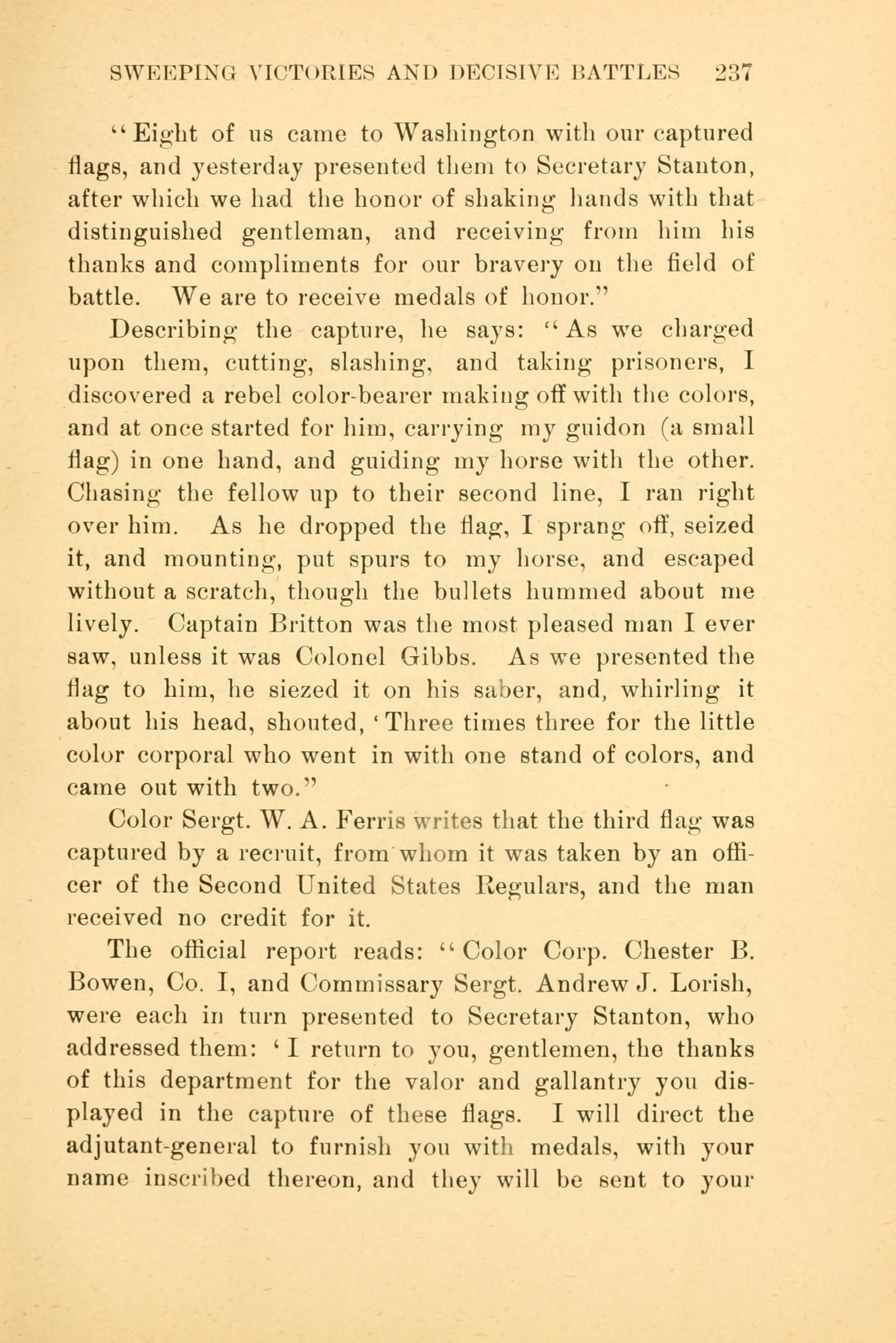
whirling it about his head, shouted, Three times three for the little color corporal who went in with one stand of colors, and came out with two.
Words matched in source text
See how the book uses these words
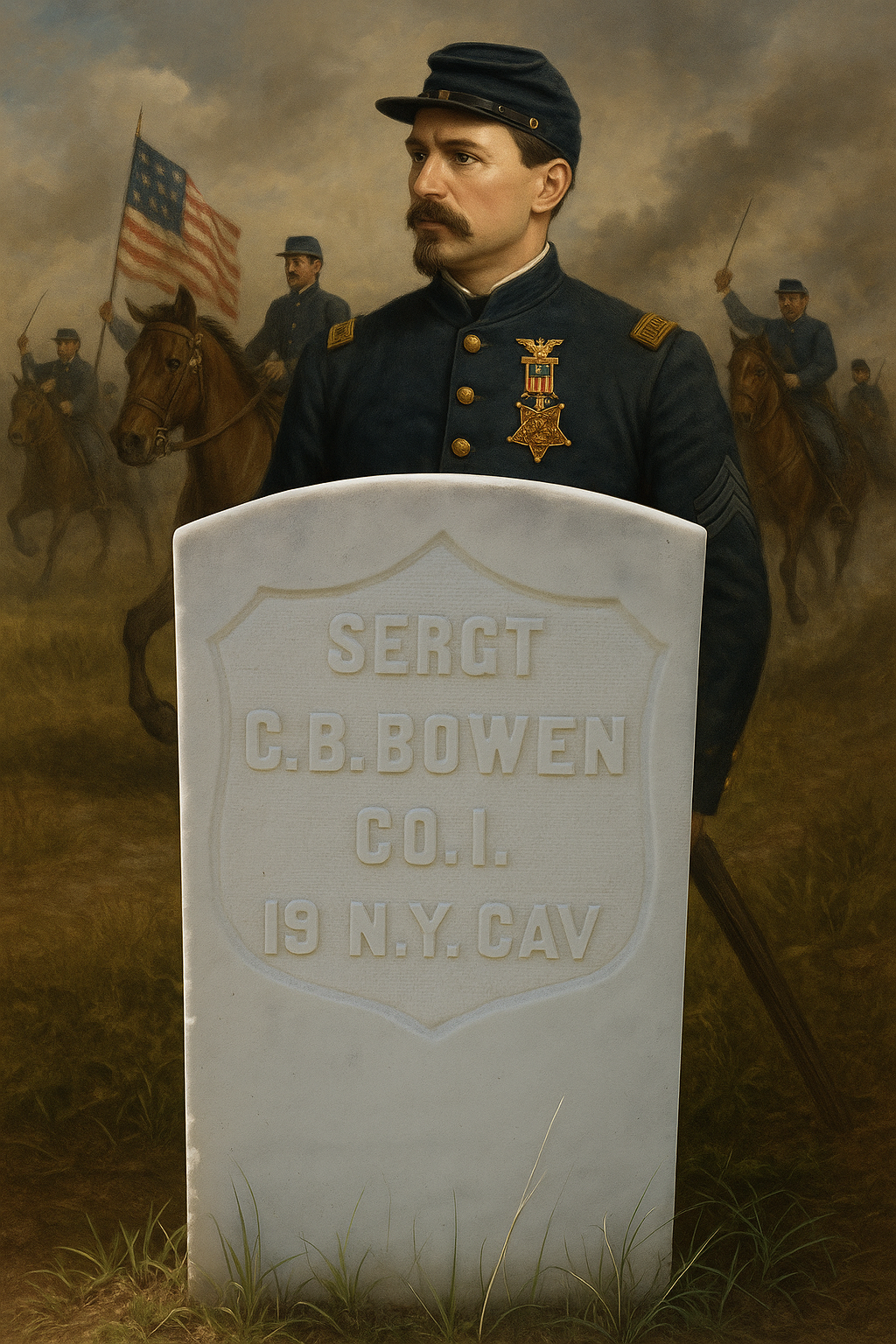
Corporal Chester Bowen, the historian's brother, rode into the Confederate line with his guidon in one hand, chased a color-bearer to the second line, ran over him, jumped down, took the flag and rode out "without a scratch, though the bullets hummed about me lively." He brought it to his officers. "Captain Britton was the most pleased man I ever saw, unless it was Colonel Gibbs." The colonel took
Book context excerpt, up to 400 characters. This is not the full chapter.
The connected source
Bowen, J. R. (1900). Regimental history of the First New York Dragoons
Printed book · p. 66
words found in the source text. A text match or page placement does not establish that the scan has been reviewed.
Questions to bring to the source
Who wrote this, and who was meant to read it? Is the writer describing an event they witnessed, reporting news from someone else, or remembering it later? Read the surrounding lines and compare dates, names and uncertain words.
Begin with the source page
Printed page 237 · Internet Archive scan
Read beside the scan
Printed page image from the Internet Archive (public domain book). The quotation's words were found on this page.
A transcription has not yet been connected to this scan.
Follow the lives and existing research connected to names in these words or their book context. These person connections do not establish the source of the quotation.
The color corporal's letters and captured flag offer a different perspective from his brother's later regimental history. Look for the difference between writing during the war and remembering it afterward.