The book is finished.GIBBS: The Forgotten Warrior of the First New York Dragoons, by Garland H. Green Jr. How to order is coming soon; you can reserve a copy now. Reserve a copy →
You are exploring Pleasant Valley, Maryland in Camp Lawton. Compare the words used in the book with the source and the context around them.
I will not rite mutch today,
Source inferred, check against scan
See how the book uses these words
"I will not rite mutch today," he finished.
Book context excerpt, up to 400 characters. This is not the full chapter.
Garland H. Green Jr.’s research
About this Letter
The new year of 1865 opened with the Confederacy visibly failing. Grant’s lines held fast around Petersburg, Sherman had reached the sea, and in the Shenandoah the fighting had ended. For a soldier in winter quarters the days now turned on letters from home, the arrival of a box, the state of his boots.
Marvin Green was still detached with Battery K, 1st United States Artillery, wintering at Pleasant Valley, Maryland, near Harpers Ferry, where the Valley troops staged and rested. This short letter to his father was written only a few days into January, its whole world the ordinary traffic between a camp and a farm.
Two letters had reached him at once, he writes, “one was stating that Mary Ann Waldina made my Boots and the other stating that Nelson Green was dead.” The boots proved “to large fer me so I sold them for 2 dollers and wate until pay day.” He frets over a box shared with another soldier, James Cavel, and asks his mother plainly, “when you send me another Box don’t send anything for any one else.”
Nowhere in this letter is there a word about Levi, for Marvin still did not know. His brother had been dead in Georgia since the fall, and only a week later two returning prisoners would carry the news to the battery. For now Marvin wrote of boots and boxes, unaware of the loss already come. Marvin was the brother who lived. Marvin’s war and his long life afterward are told on Marvin’s own page. The pages below are the family typescript prepared by Marjorie Kuski; the transcription keeps his spelling exactly as he set it down.
Preserved from Garland’s full research page. This introduction is the author’s explanation, distinct from the letter below.
The connected source
Marvin W. Green to Dear Parent, January 2, 1865
Green family letter · Green family letters (transcripts of the originals, which are in family hands)
placed by its position on the page that transcribes it (check against the scan). A text match or page placement does not establish that the scan has been reviewed.
Questions to bring to the source
Who wrote this, and who was meant to read it? Is the writer describing an event they witnessed, reporting news from someone else, or remembering it later? Read the surrounding lines and compare dates, names and uncertain words.
Begin with the source page
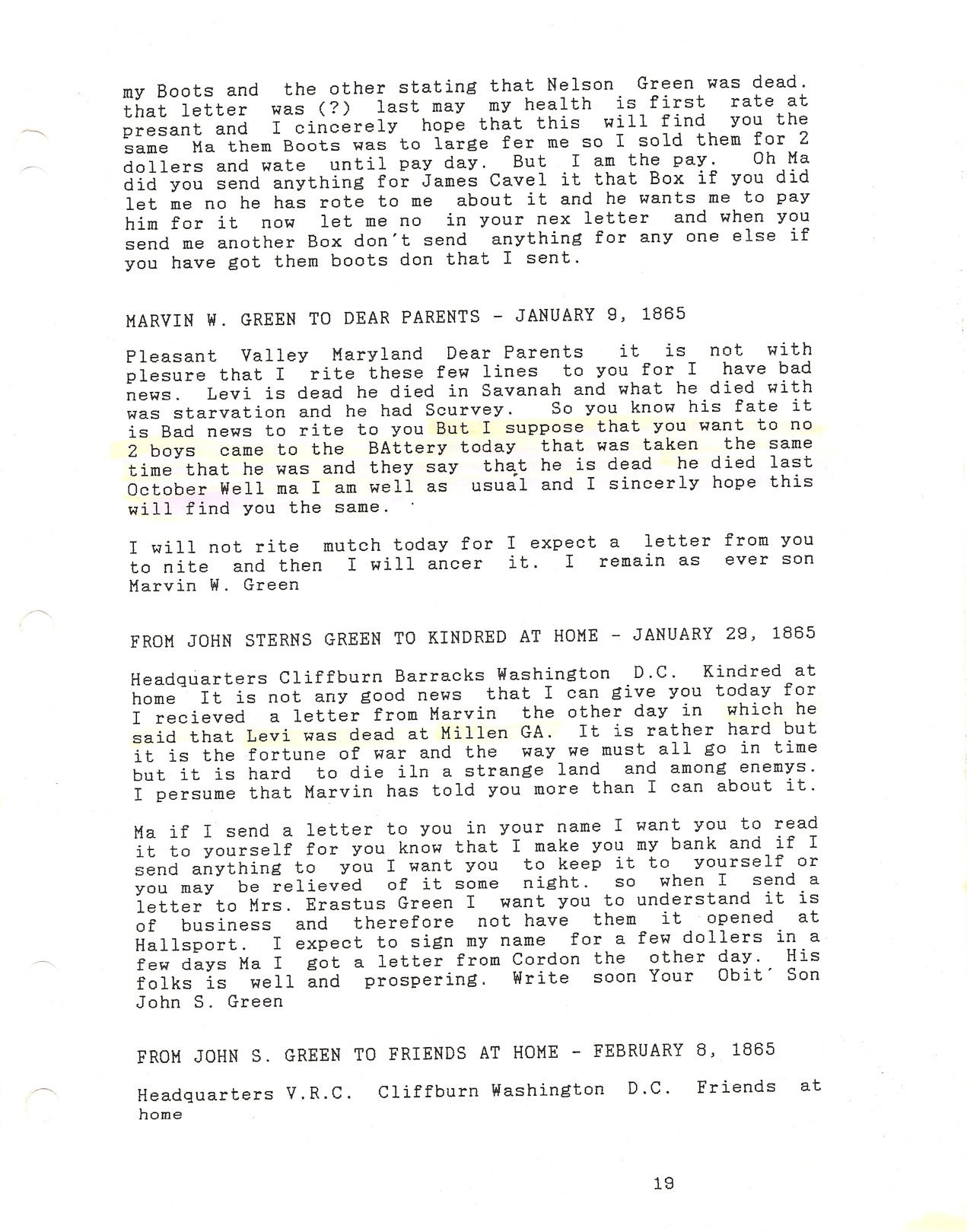
Kuski typescript, page 19
Read beside the scan
Scan of the Marjorie Kuski typescript of the Green family letters. The quotation's words were found on this page.
A transcription has not yet been connected to this scan.
The book catalog explicitly points to these preserved site pages. Read the account and follow its reproduced documents and citations. A research account is an intermediary, not automatically the original evidence.
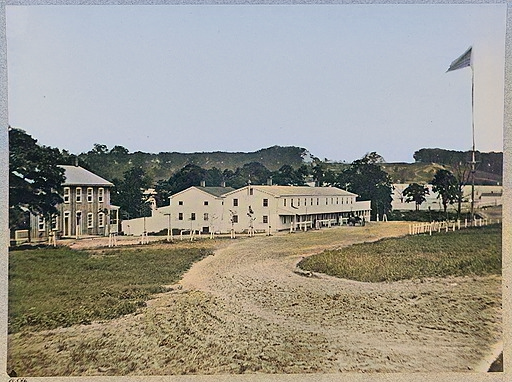
Camp Barry Washington DC · Research-page preview; original-image and enhancement credits remain on that page.