The book is finished.GIBBS: The Forgotten Warrior of the First New York Dragoons, by Garland H. Green Jr. How to order is coming soon; you can reserve a copy now. Reserve a copy →
You are exploring The trenches before Suffolk, Virginia in Furnish Half the Horses. Compare the words used in the book with the source and the context around them.
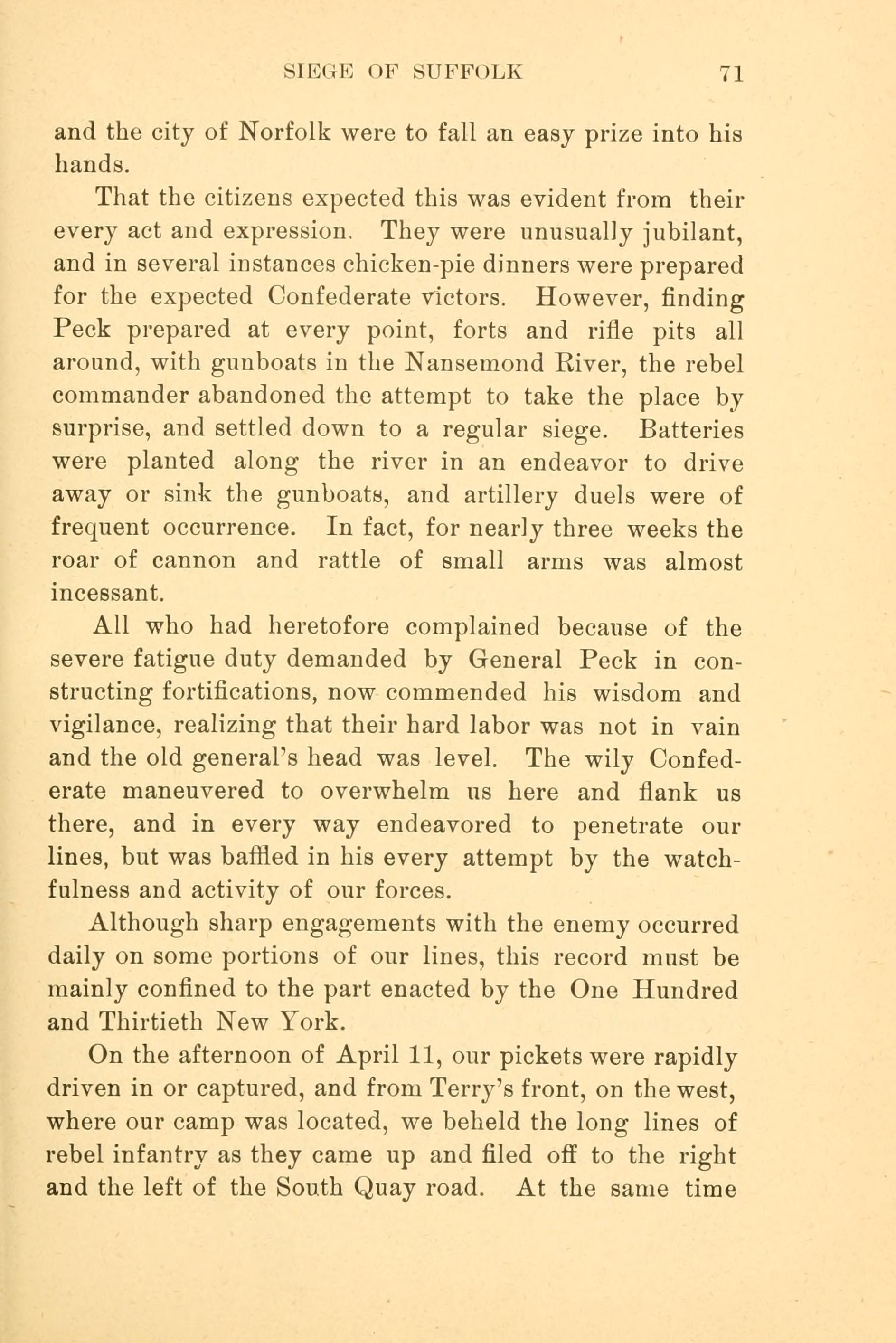
We beheld the long lines of rebel infantry as they came up and filed off to the right and the left of the South Quay road,
Words matched in source text
See how the book uses these words
The pickets came in fast that afternoon, those who were not taken. From the camp of Terry's brigade, on the western side of the town, the men of the 130th New York could see the reason coming up the South Quay road. "We beheld the long lines of rebel
infantry as they came up and filed off to the right and the left of the South Quay road," James Bowen wrote. Two more columns were marching on other
Book context excerpt, up to 400 characters. This is not the full chapter.
The connected source
Bowen, J. R. (1900). Regimental history of the First New York Dragoons
Printed book · p. 1
words found in the source text. A text match or page placement does not establish that the scan has been reviewed.
Questions to bring to the source
Who wrote this, and who was meant to read it? Is the writer describing an event they witnessed, reporting news from someone else, or remembering it later? Read the surrounding lines and compare dates, names and uncertain words.
Begin with the source page
Printed page (archive.org leaf 84) · Internet Archive scan
Read beside the scan
Printed page image from the Internet Archive (public domain book). The quotation's words were found on this page.
A transcription has not yet been connected to this scan.
Follow the lives and existing research connected to names in these words or their book context. These person connections do not establish the source of the quotation.
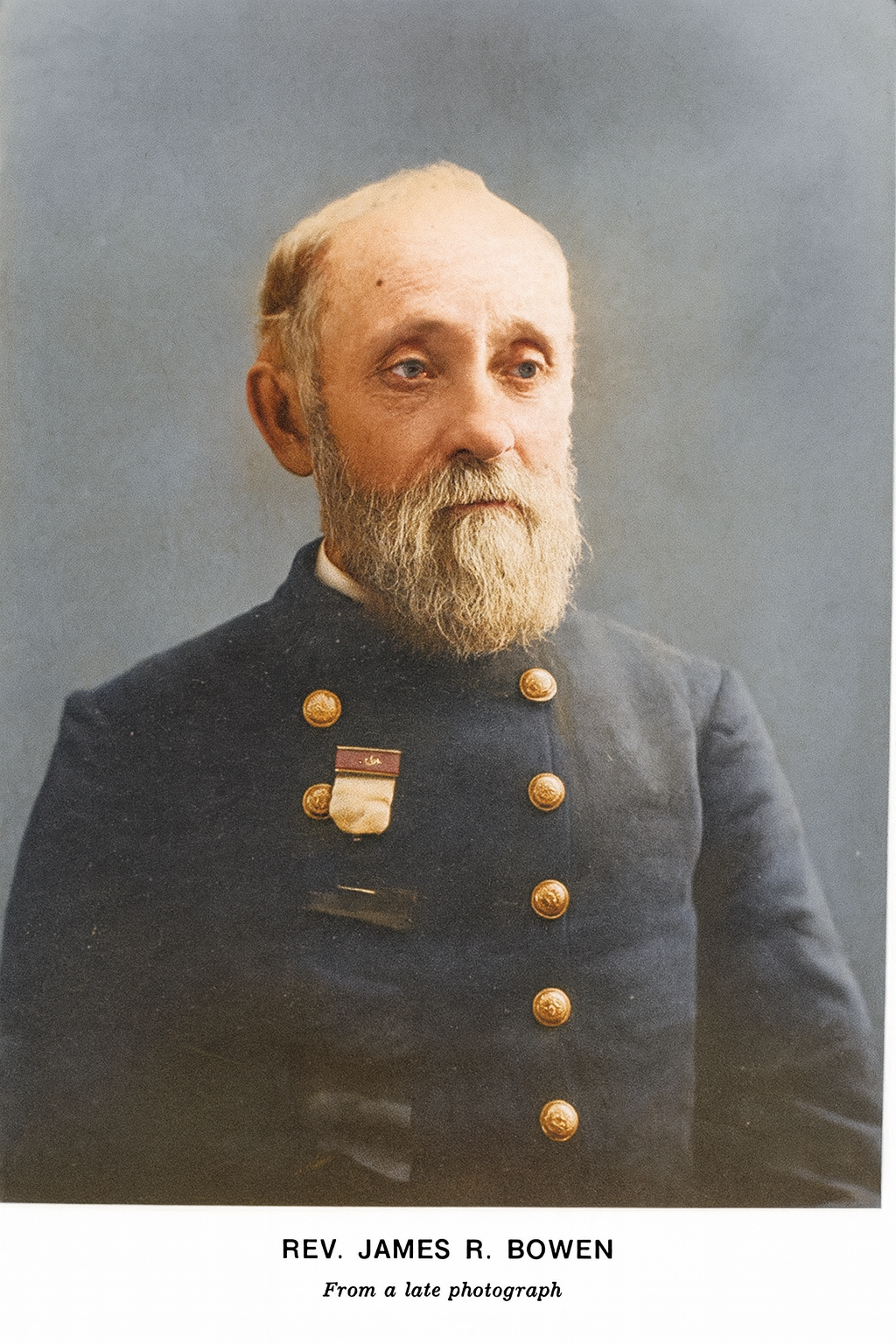
Bowen was a soldier, drummer and the regiment's later historian. Knowing who produced an account helps you weigh what he saw himself, what other veterans told him and what he wrote many years later.