
Your book journey stays with you
Stop That Ducking · The regularsFollow the person behind the name. Open the research below to inspect its records, then close the tray to return here or use the chapter link above.
First New York Dragoons · Company H
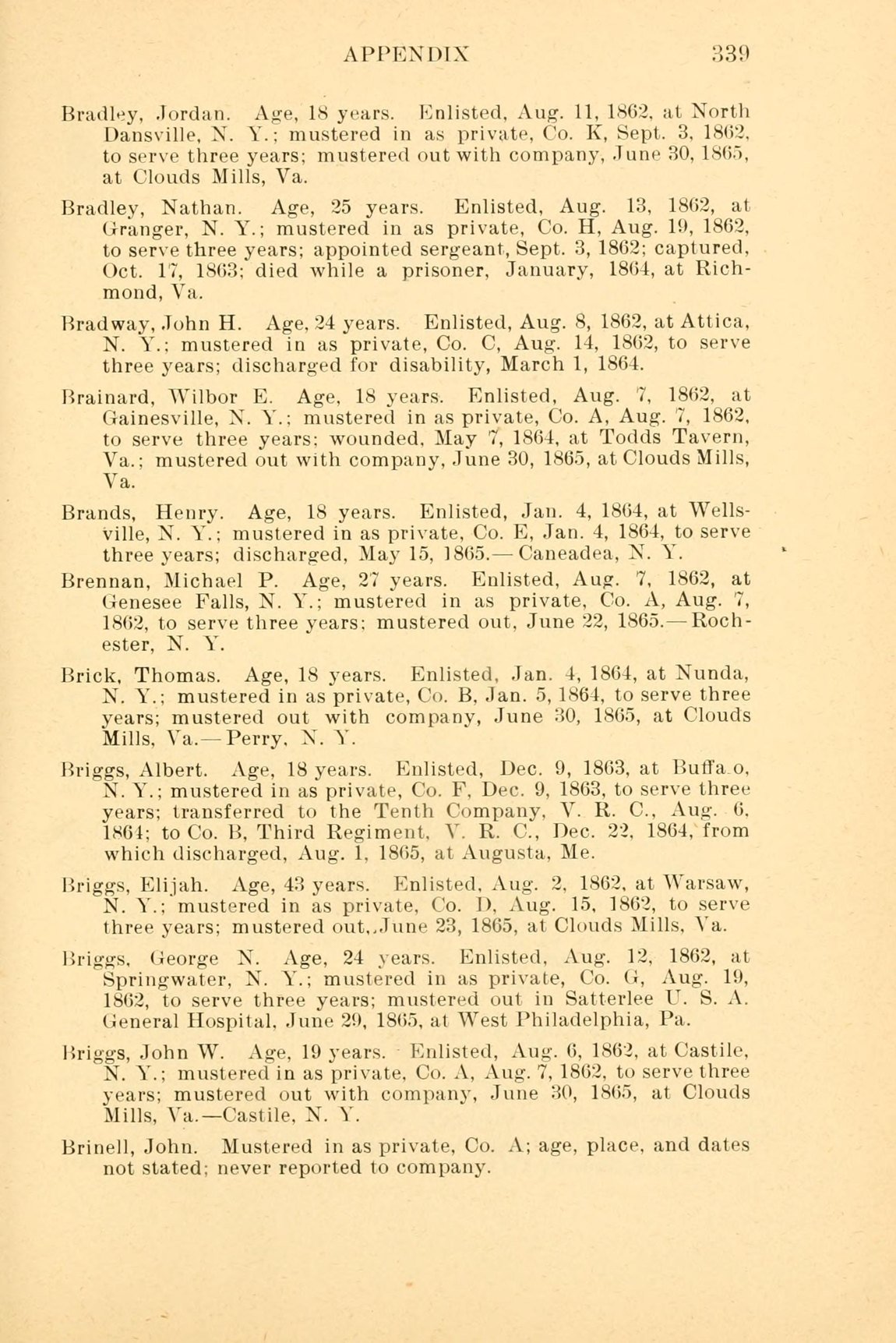
Nathan Bradley
Bradley was captured after the Manassas fighting and died in captivity. His widow's pension research shows how a family claim could proceed when the military record could not fix a death date.
- Recorded rank
- Sergeant
- Home town
- Granger, N. Y.
- Roster outcome
- Died as prisoner of war
Service details from the preserved searchable roster. Its wording is retained; a brief outcome does not tell the whole life.
Documents in this chapter · click to view
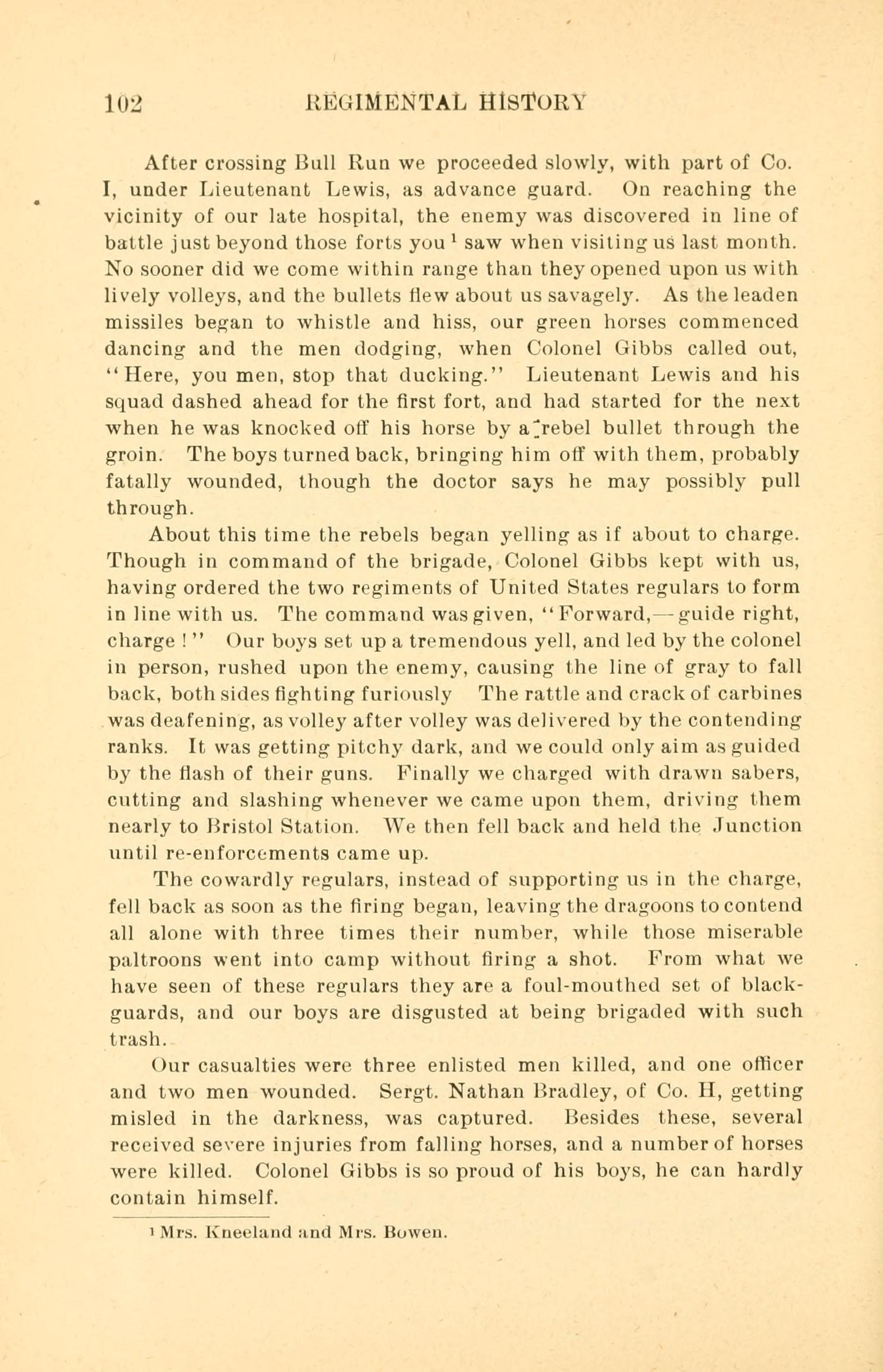
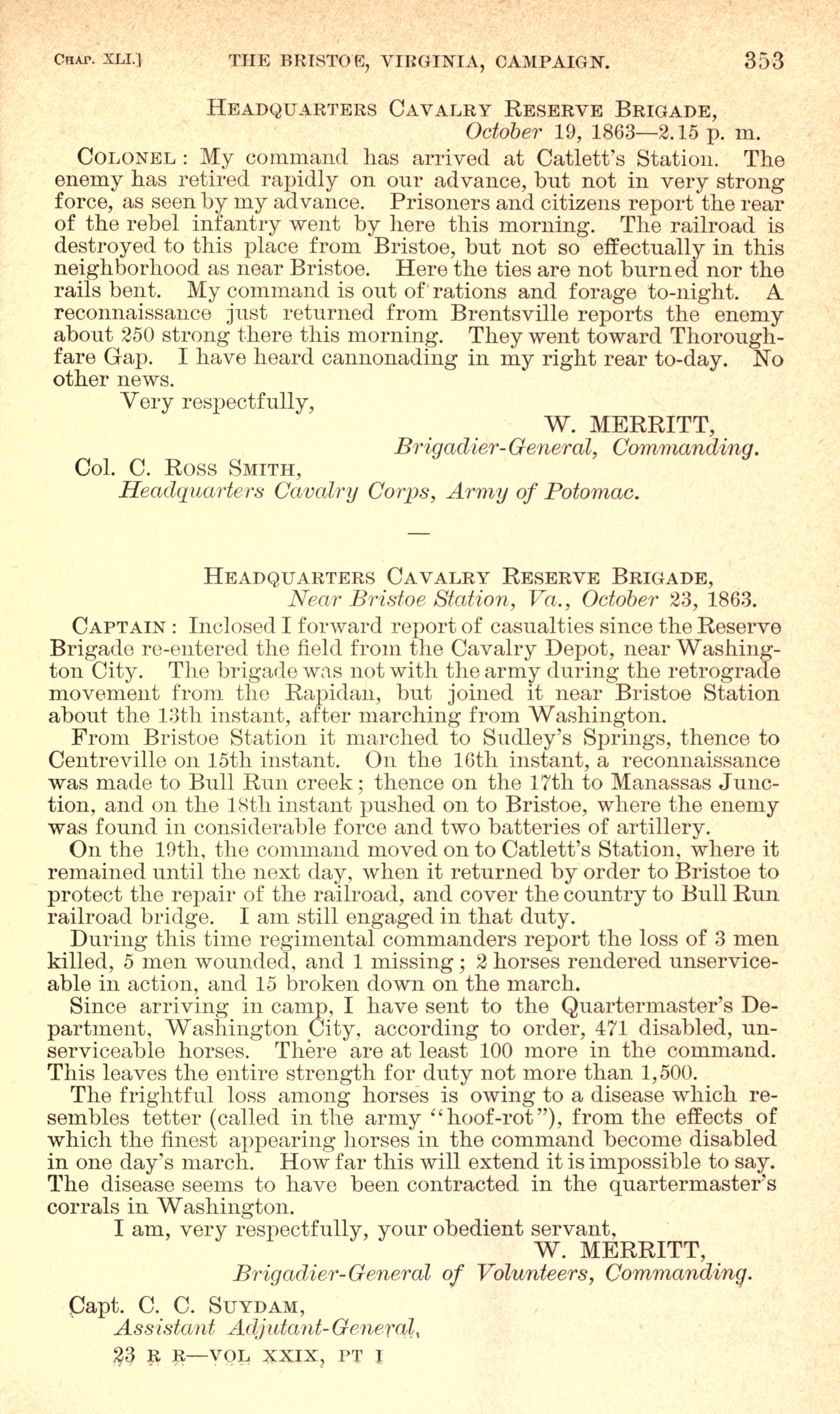
Read the sources behind Stop That Ducking →
Start with the person
These are Garland's research pages about Nathan Bradley. They bring together records and interpretation. Use the sources reproduced there to examine how an account was assembled.
Sergeant Nathan Bradley
From Garland's research page
Nathan Bradley of Granger, New York, enlisted in Company H of the regiment that became the First New York Dragoons, originally the 130th New York Volunteer Infantry, in August 1862, at the age of 25. He died while a prisoner of war.
Read the account and examine its sources →
Green, G. H., Jr. (n.d.). Sergeant Nathan Bradley. The Alfred Gibbs Project. This cites the research page, not an original document. Original-source credits remain with its reproduced evidence.
What can a family claim tell us?
Follow the pension evidence
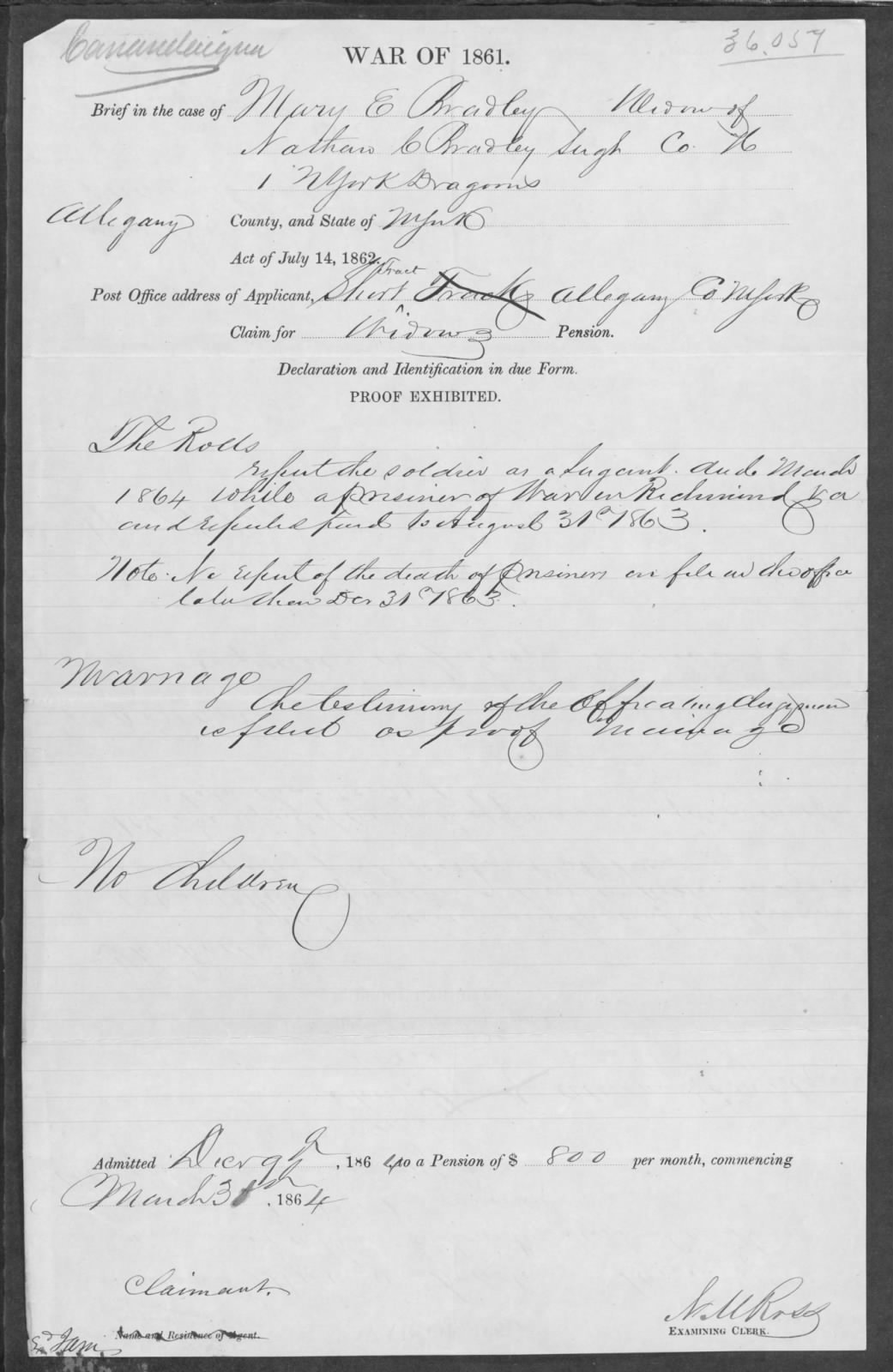
A pension record was made to establish a claim. Look for the applicant, the relationship to the soldier, dates, witnesses and what the government required as proof. A statement in an application and a decision allowing it are different pieces of evidence.
Pension certificate or claim
Garland's explanation of this material
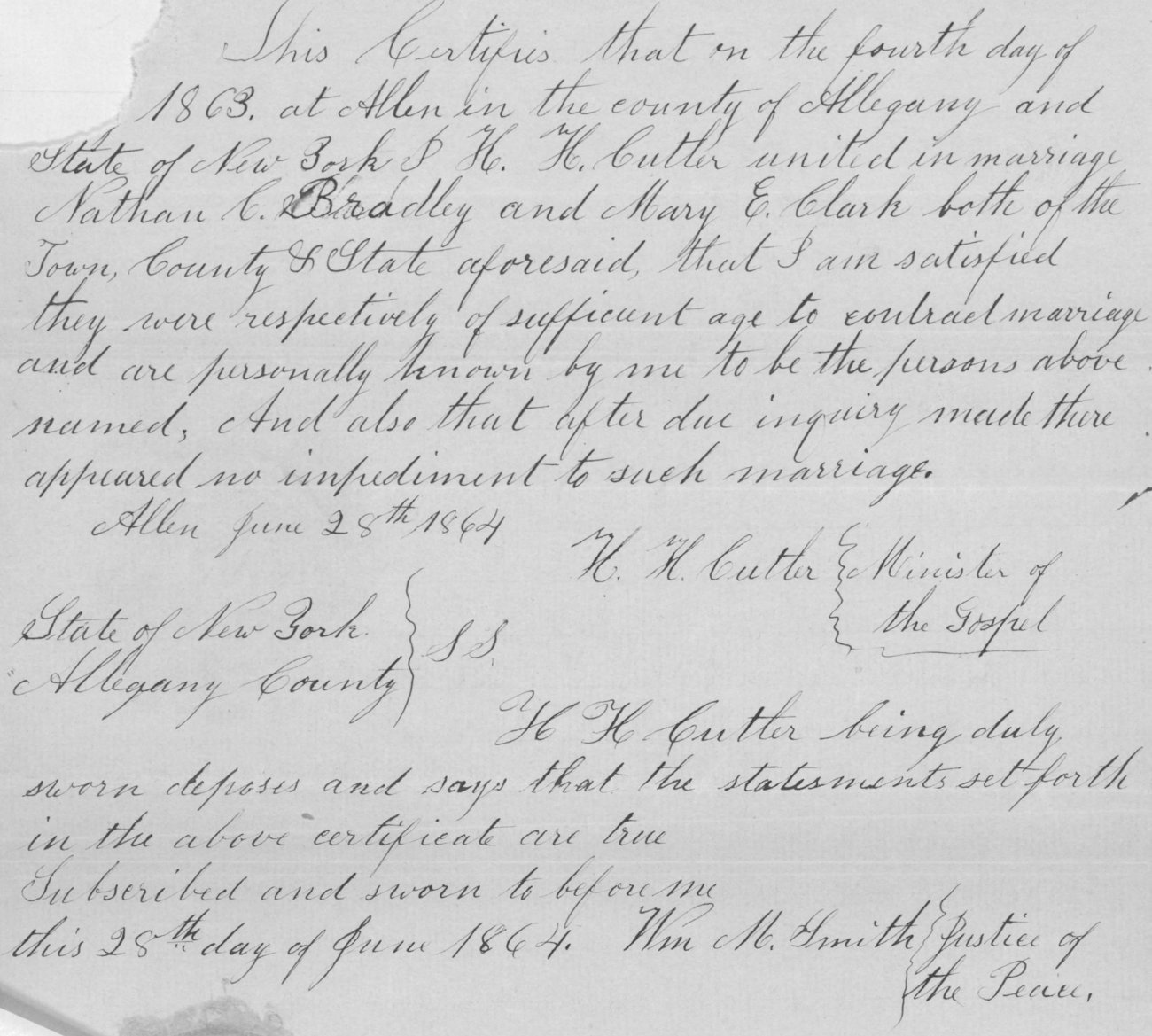
Sergeant Nathan C. Bradley of Company H died a prisoner of war. He was captured on the night of the seventeenth of October 1863, misled in the darkness after the regiment’s first cavalry charge on the plains of Manassas, and died a prisoner at Richmond, Virginia, in the winter that followed, before the great stockades at Andersonville and Salisbury had even opened. He had married Mary E. Clark at Allen, in Allegany County, only months before he marched off, and it was she who assembled the proof of that marriage, and of his death, into the pension application that now preserves the fullest record of him. The minister’s certificate she filed reads:
2 connected scans from this research page. This count is not a claim that an archival file is complete.
Follow this life through the book
Choose another connected appearance, or return to the chapter where you began.
Person connections are website annotations based on the v172 manuscript and the preserved subject pages. A matched name is not independent verification of every historical statement. No pension has been assigned by surname alone.