
Your book journey stays with you
Stop That DuckingFollow the person behind the name. Open the research below to inspect its records, then close the tray to return here or use the chapter link above.
First New York Dragoons · Company C
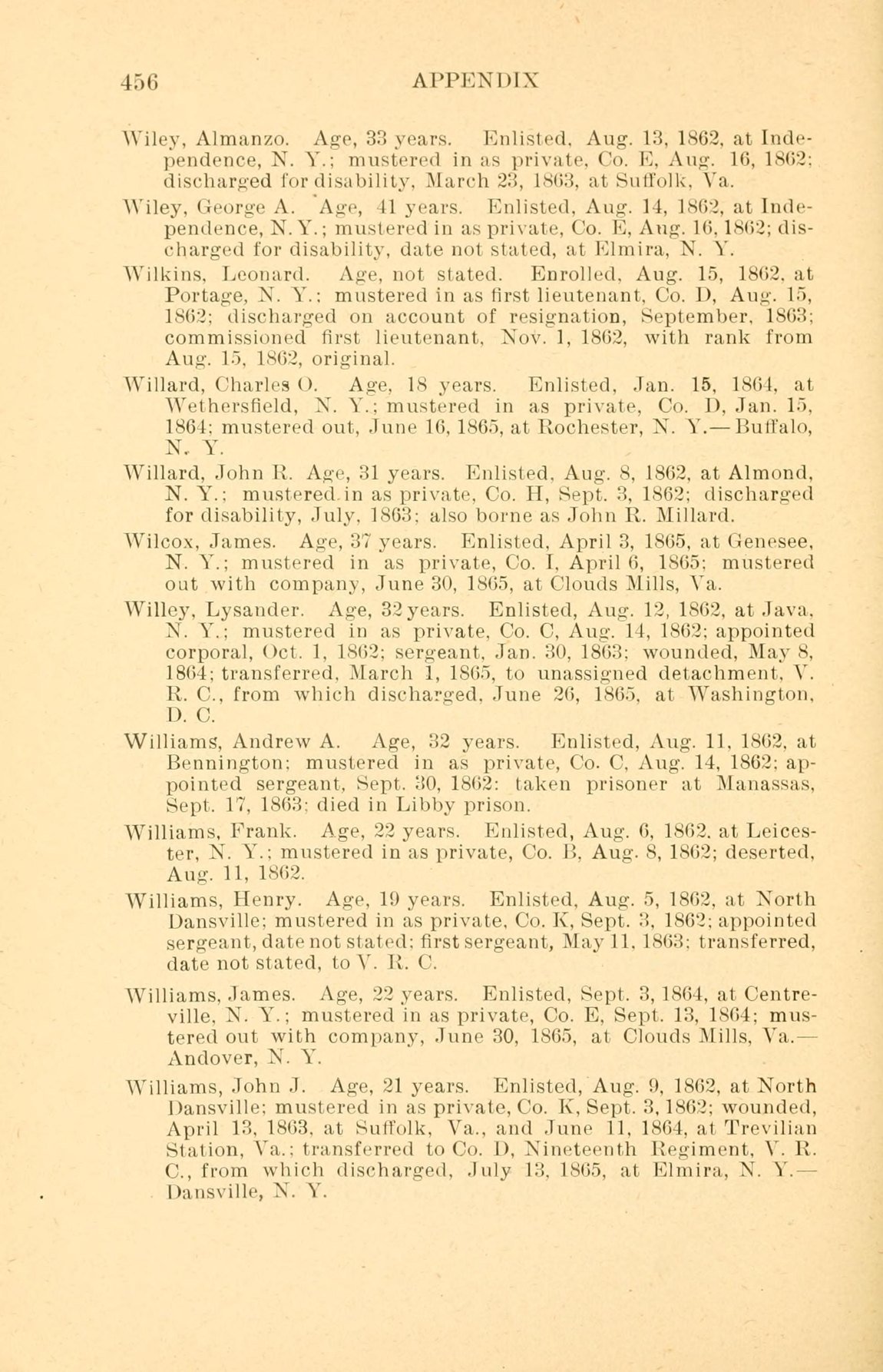
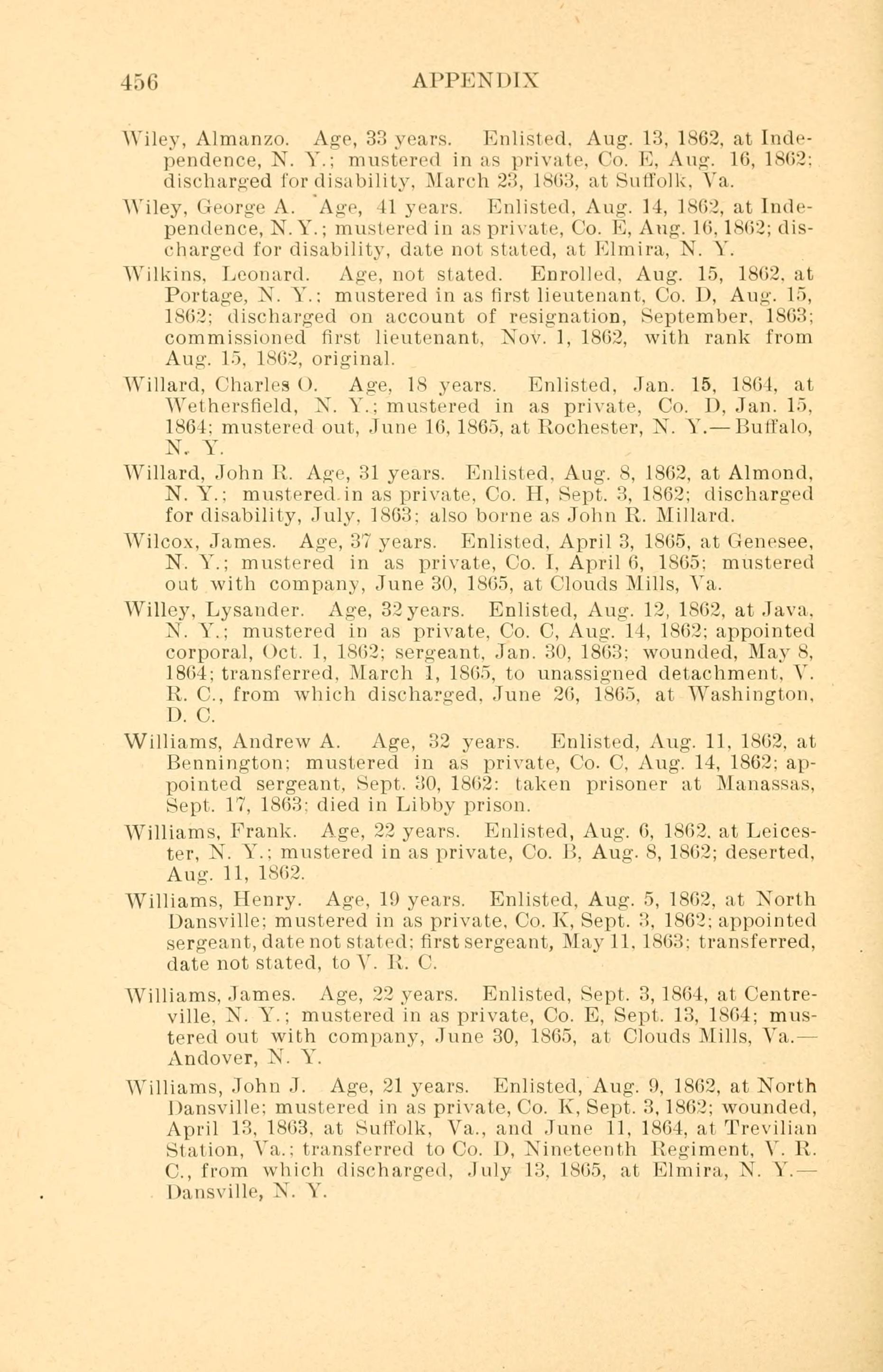
Andrew A. Williams
Williams died a prisoner, but the rolls could not fix the day. His widow Sarah's pension research shows how uncertain military information affected a family claim.
- Recorded rank
- Sergeant
- Home town
- Bennington, N. Y.
- Roster outcome
- Died as prisoner of war
Service details from the preserved searchable roster. Its wording is retained; a brief outcome does not tell the whole life.
Documents in this chapter · click to view
Read the sources behind Stop That Ducking →
Start with the person
These are Garland's research pages about Andrew A. Williams. They bring together records and interpretation. Use the sources reproduced there to examine how an account was assembled.
Sergeant Andrew A. Williams
From Garland's research page
Andrew A. Williams of Bennington, New York, enlisted in Company C of the regiment that became the First New York Dragoons, originally the 130th New York Volunteer Infantry, in August 1862, at the age of 32. He was taken prisoner at Manassas. He died in service.
Read the account and examine its sources →
Green, G. H., Jr. (n.d.). Sergeant Andrew A. Williams. The Alfred Gibbs Project. This cites the research page, not an original document. Original-source credits remain with its reproduced evidence.
What can a family claim tell us?
Follow the pension evidence
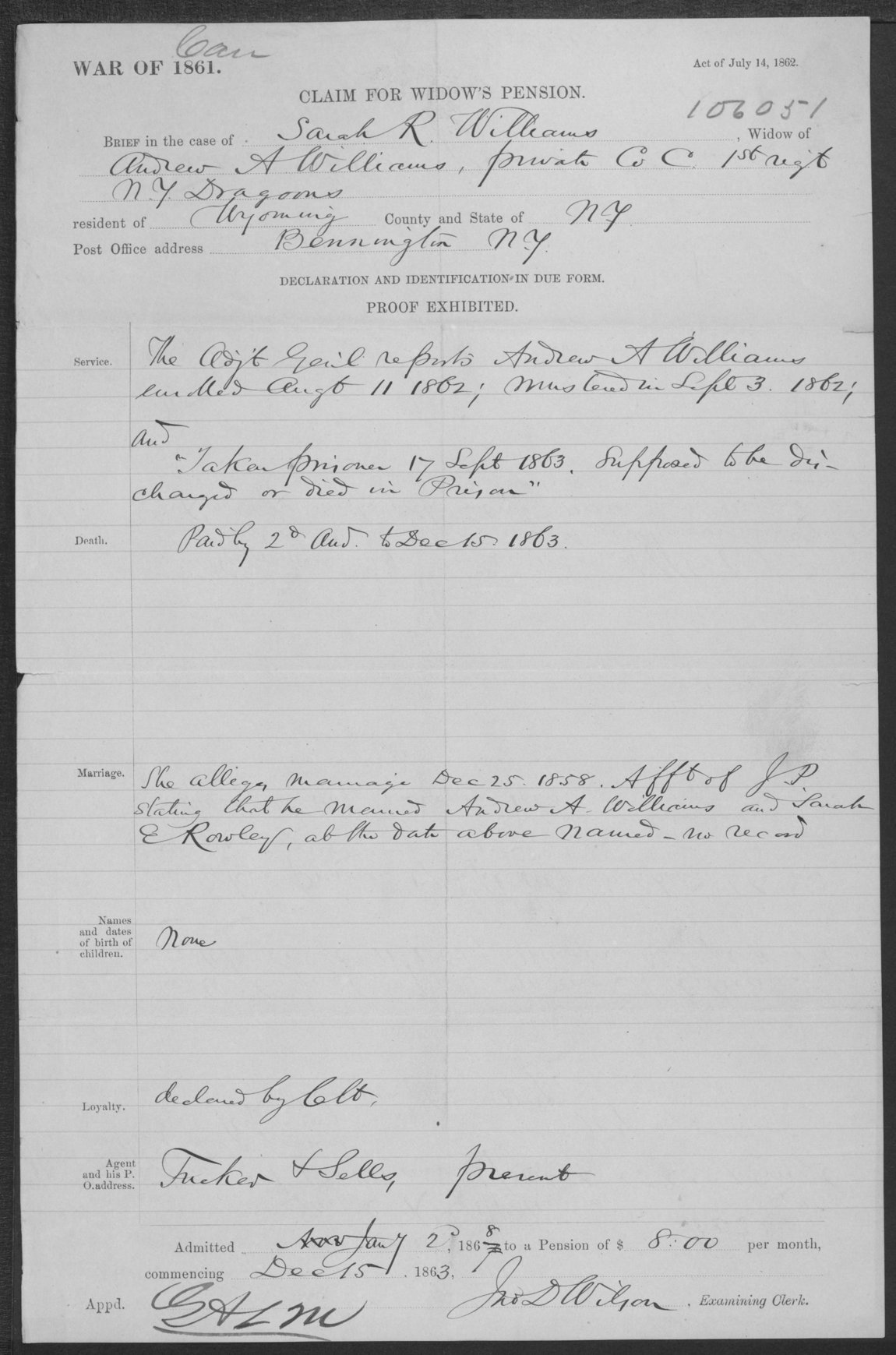
A pension record was made to establish a claim. Look for the applicant, the relationship to the soldier, dates, witnesses and what the government required as proof. A statement in an application and a decision allowing it are different pieces of evidence.
Pension certificate or claim
Garland's explanation of this material
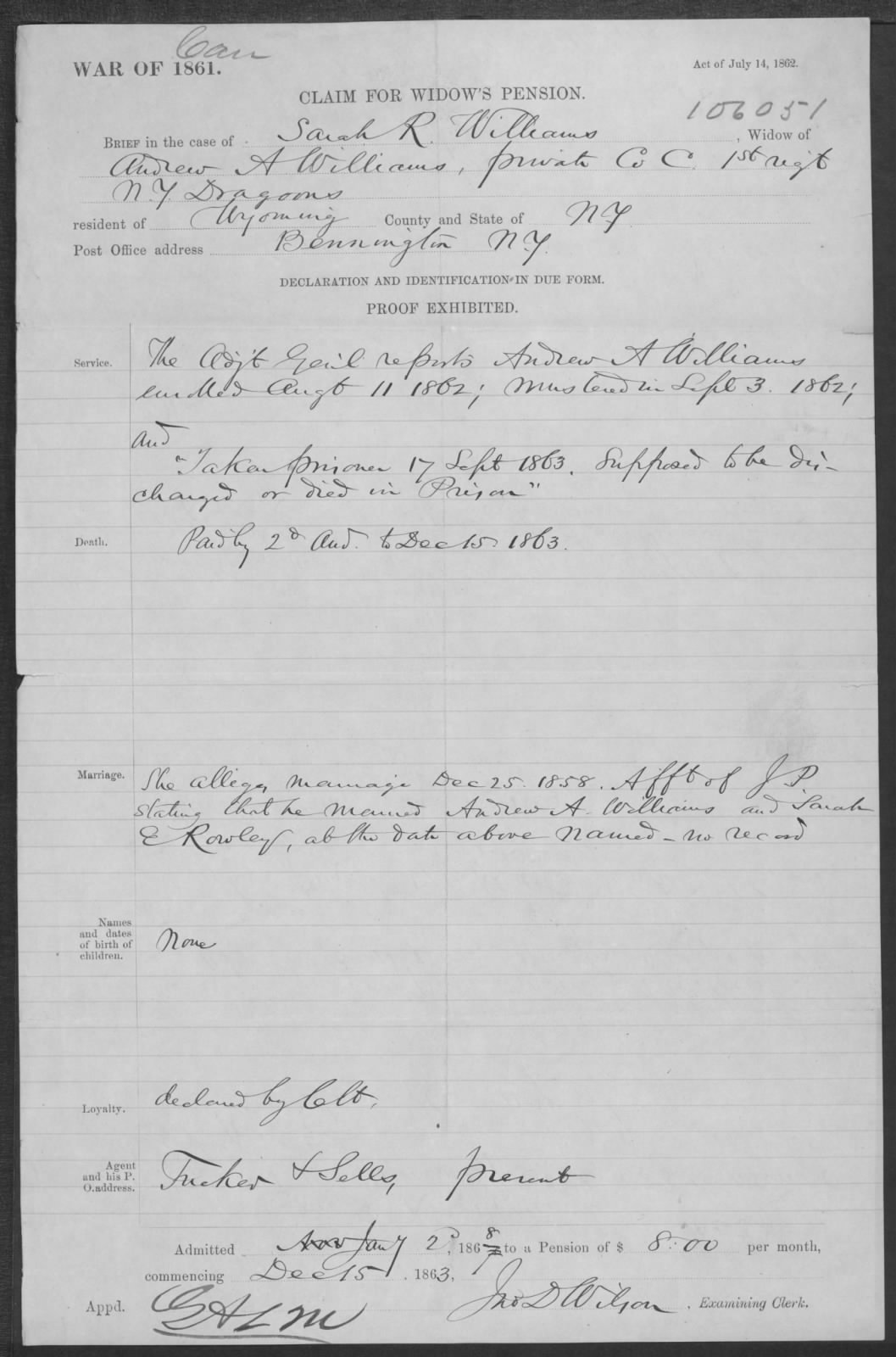
Andrew A. Williams of Bennington, in Wyoming County, a sergeant of Company C, was taken prisoner on the seventeenth of September 1863 and never came back. The rolls could say only that he was supposed to be discharged or to have died in prison. The government carried his pay to the fifteenth of December 1863 and fixed his death at that date. His widow, Sarah, whom he had married on Christmas Day 1858, applied for the pension. They had no children.
2 connected scans from this research page. This count is not a claim that an archival file is complete.
Follow this life through the book
Choose another connected appearance, or return to the chapter where you began.
Person connections are website annotations based on the v172 manuscript and the preserved subject pages. A matched name is not independent verification of every historical statement. No pension has been assigned by surname alone.