The book is finished. GIBBS: The Forgotten Warrior of the First New York Dragoons, by Garland H. Green Jr. How to order is coming soon; you can reserve a copy now. Reserve a copy →
Alfred GibbsThe research archive
Menu

The evidence behind your reading · The Regiment Gibbs Built

Read the records behind this chapter

Follow a letter, report, recollection or family record beyond the passage in the book. Each source below shows where the chapter uses it and what to examine. Open it here, compare its pages, and return without losing your chapter.

Begin with a question: What does building a regiment look like on paper?

Go beyond the book · The Regiment Gibbs Built

See how a regiment was built through ordinary orders

The Seventh Cavalry took shape through assignments, company changes, returns, and officers reporting for duty. Gibbs’s administrative work becomes visible when those small acts are read together.

New to these records? A little context.

A docket is an office’s summary or filing note; it may be on a wrapper rather than in the letter. An endorsement is another official’s response or forwarding note. Read each voice and date separately. A transcription is a reading of a document, with uncertain words marked where the exhibit provides them.

What does building a regiment look like on paper?
Research preview · An invitation into the written account, not a reproduction of an original document.

Read the source exhibit & its explanation

The Seventh Cavalry’s company assignments

The account reconstructs company assignments from Gibbs’s orders and links dates to the documents. It lets readers test an organizational claim against individual decisions.

What to examine: Pick one officer and follow the dated order into the scan and transcription. Identify what the order changes and compare it with the table’s summary.

Keep this distinction in mind: Later fame or a later battlefield death does not explain an 1867 assignment by itself. Avoid reading the Little Bighorn backward into every administrative choice.

Follow this question into Order at Fort Riley →

Keep your question in view as you explore. The reading tray retains The Regiment Gibbs Built. Close it to return to this point, or deliberately choose to explore outside the chapter.

16 distinct source records · Page 3 of 3

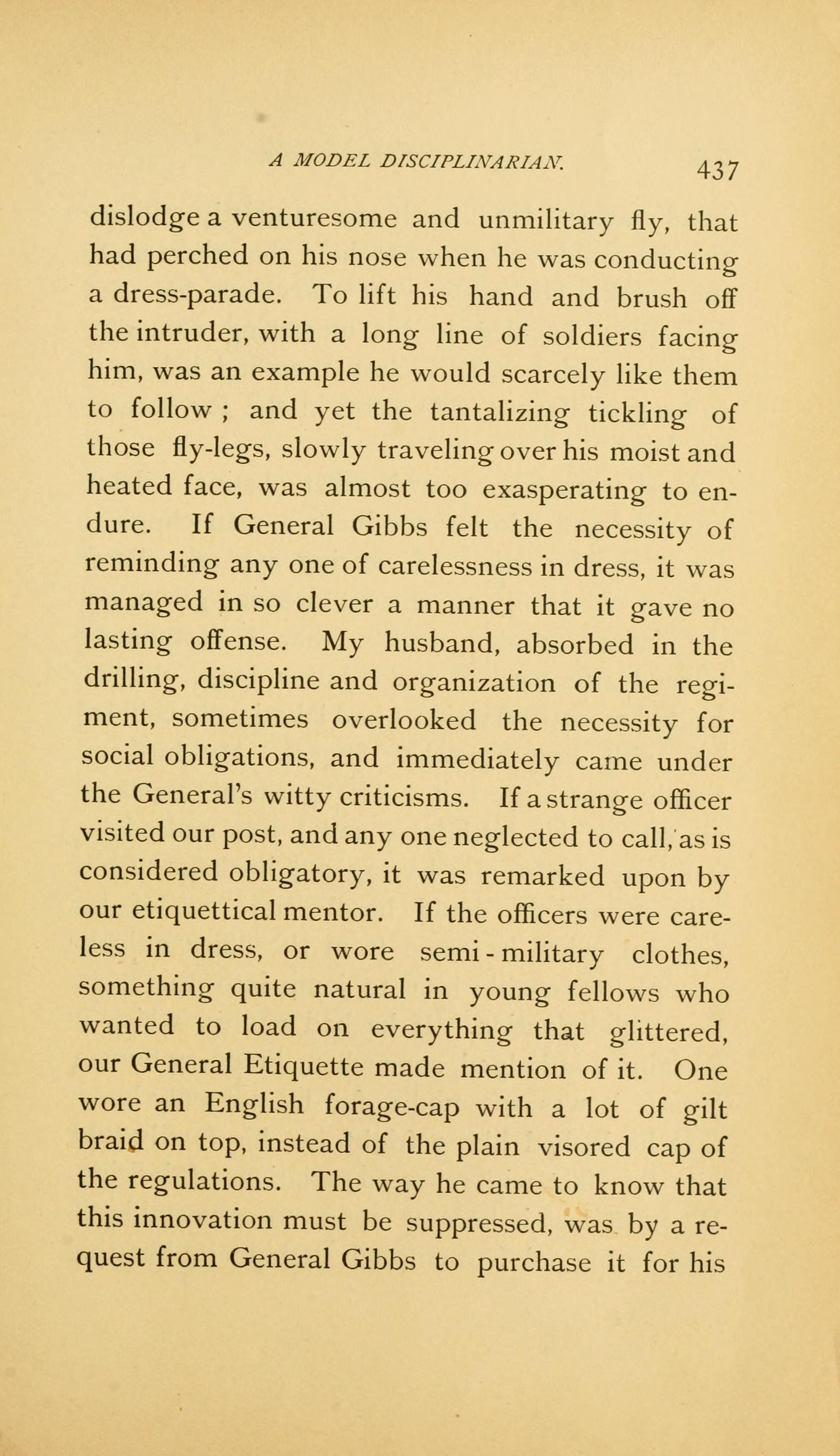
Printed page (archive.org leaf 456) · Internet Archive scan
Printed page (archive.org leaf 456) · Internet Archive scan · Document preview; the quoted page may differ.

Named source

Custer, E. B. (1887). Tenting on the plains, Chapter XIII. Charles L. Webster.

Begin with who made this record, when and for whom. Compare the book’s words with the scan and the surrounding transcription. Distinguish what the writer observed from a request, opinion or later interpretation.

Your passage · General Etiquette

an example he would scarcely like them to follow.

Source identified; page to confirm. Read the surrounding record before drawing a conclusion.

· page to confirm

Where this chapter uses this source · 1 passage

General Etiquette

an example he would scarcely like them to follow.

Source identified; page to confirm

Examine quotation 36-045 →

Open the record and its pages →

1 catalogued pages. Transcription and image availability are shown on the document view.

Citation and source credit

Custer, E. B. (1887). Tenting on the plains, Chapter XIII. Charles L. Webster.

Citation details need review.

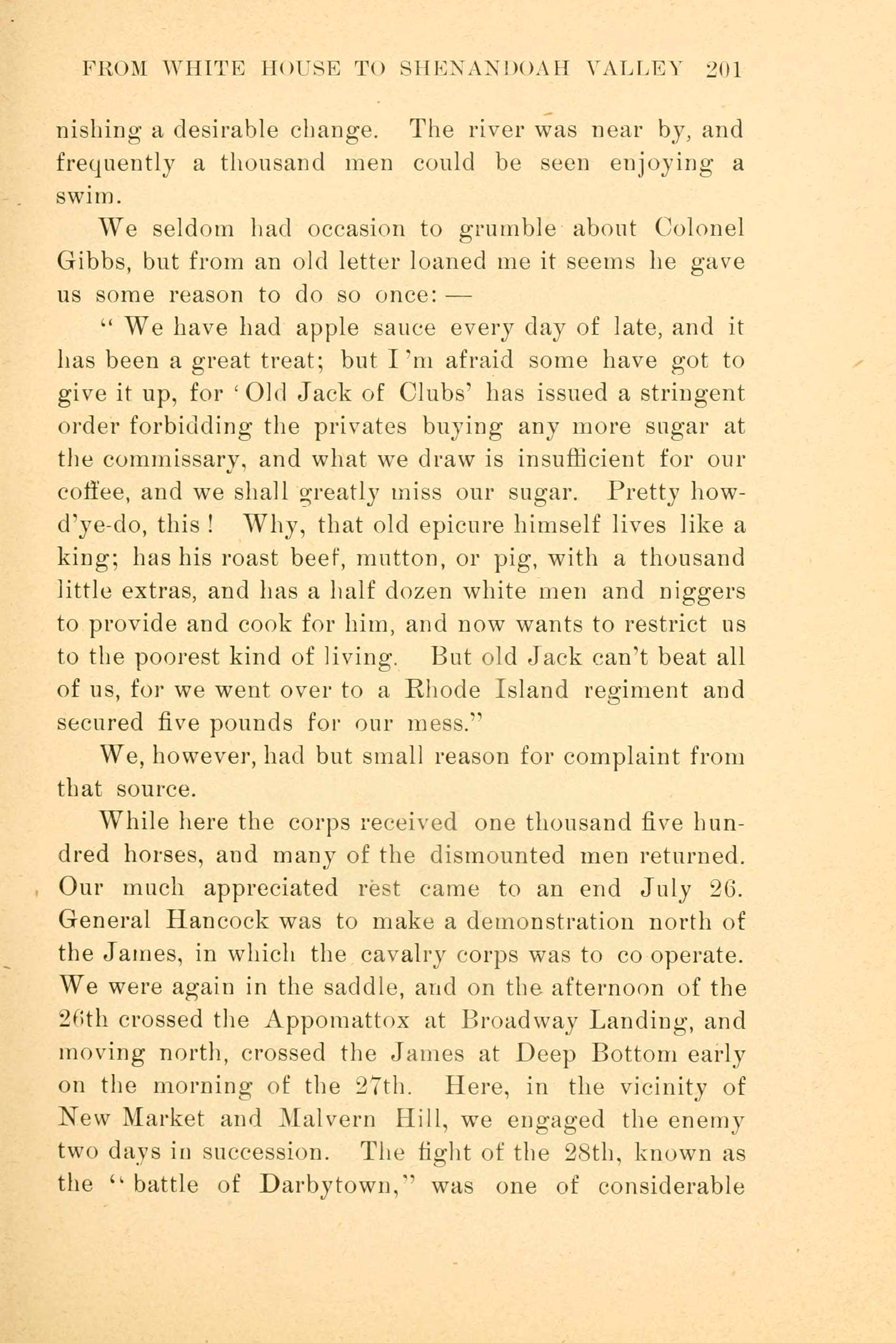
Printed page 201 · Internet Archive scan
Printed page 201 · Internet Archive scan · Document preview; the quoted page may differ.

Printed book

Bowen, J. R. (1900). Regimental history of the First New York Dragoons

Identify the author and publication date before weighing this account. A later recollection and a contemporary document answer different questions. Read the cited page and its surrounding passage.

Your passage · Order at Fort Riley

Old Jack of Clubs

Words matched in source text. Read the surrounding record before drawing a conclusion.

· p. 201

Where this chapter uses this source · 1 passage

Order at Fort Riley

Old Jack of Clubs

Words matched in source text

Examine quotation 36-063 →

Open the record and its pages →

1 catalogued pages. Transcription and image availability are shown on the document view.

Citation and source credit

Bowen, J. R. (1900). Regimental history of the First New York Dragoons

Citation details need review.

Modern article (secondary)

Page references are recorded with each quotation.

Labeled document illustration, not a scan. Local scan not connected.

Modern article (secondary)

Gleason (2009), The mounted band and field musicians of the U.S. 7th Cavalry

Read the historian’s argument in its published context. This is secondary interpretation, not an original eyewitness record. Copyrighted text is not reproduced here.

Your passage · Order at Fort Riley

organized and made efficient as rapidly as possible.

Secondary source; supplied location: Gleason's text at note 30 (journal page not given on Garland's page). Read the surrounding record before drawing a conclusion.

· Page references are recorded with each quotation.

Where this chapter uses this source · 1 passage

Order at Fort Riley

organized and made efficient as rapidly as possible.

Secondary source; supplied location: Gleason's text at note 30 (journal page not given on Garland's page)

Examine quotation 36-064 →

Open the record and its pages →

0 catalogued pages. Transcription and image availability are shown on the document view.

Citation and source credit

Gleason, B. P. (2009). The mounted band and field musicians of the U.S. 7th Cavalry during the time of the Plains Indian Wars. Historic Brass Society Journal, 21, 69-92. As quoted on AlfredGibbs.com page 11900; page in the article not yet checked.

Citation details need review.

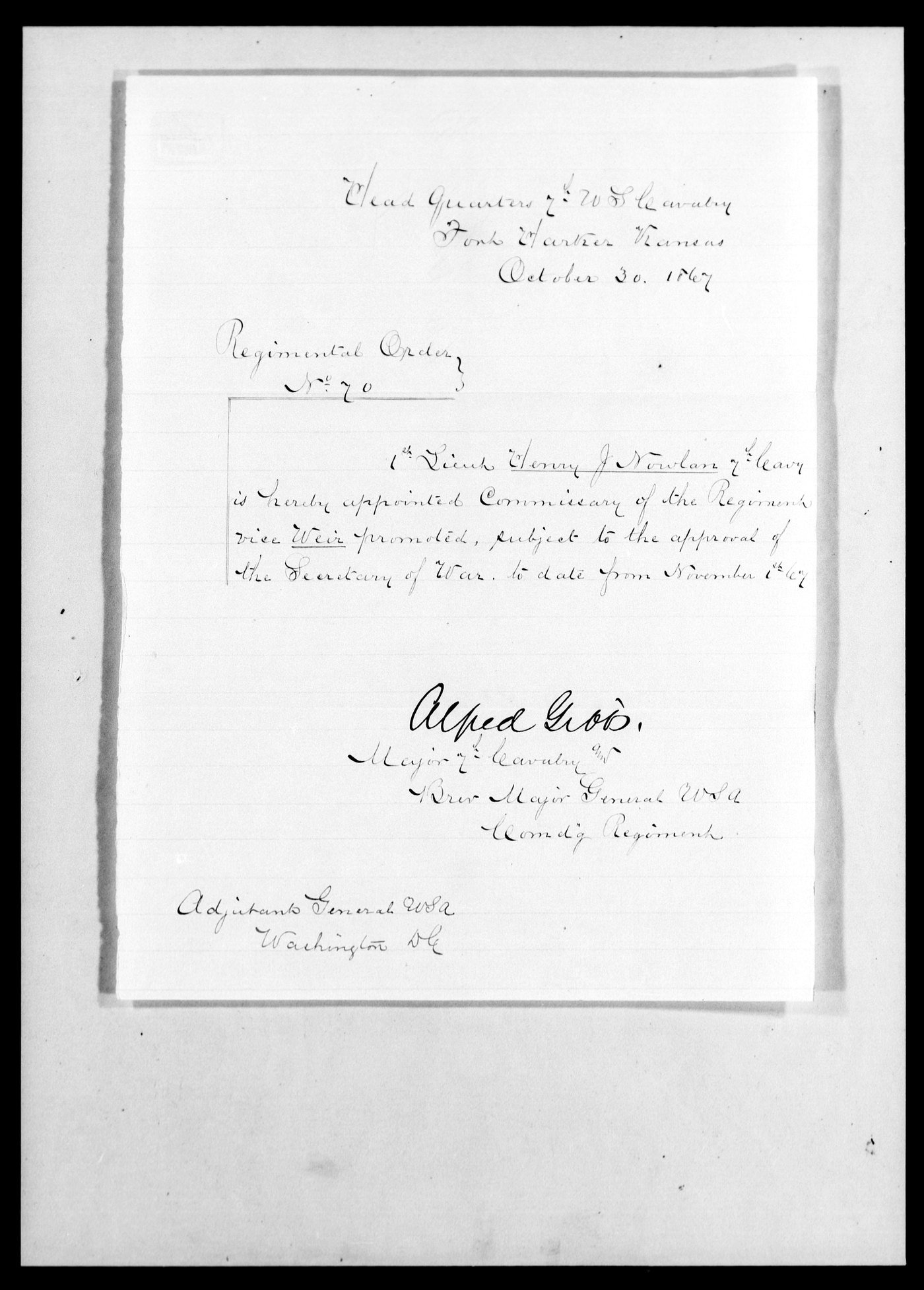
ago-70415664-70415664_004.jpg
ago-70415664-70415664_004.jpg · Supplied page connection.

National Archives record

National Archives catalog 70415664

Begin with who made this record, when and for whom. Compare the book’s words with the scan and the surrounding transcription. Distinguish what the writer observed from a request, opinion or later interpretation.

Your passage · Fort Harker

to date from November 1st /67.

Page connection supplied; check matching method. Read the surrounding record before drawing a conclusion.

·

Where this chapter uses this source · 1 passage

Fort Harker

to date from November 1st /67.

Page connection supplied; check matching method

Examine quotation 36-067 →

Open the record and its pages →

1 catalogued pages. Transcription and image availability are shown on the document view.

Citation and source credit

Gibbs, A. (1867). [Letter received, Kansas, 1867] (naId 70415664). Letters Received, Records of the Adjutant General's Office, Record Group 94. National Archives.

Citation details need review.

← Continue your chapter journey · Follow the people in this chapter →

Your chapter stays open
Your book journey · The Regiment Gibbs BuiltExplore the evidence

Compare the original with its transcription and citation.

Explore outside this journey ↗

This chapter’s source collection as JSON