The book is finished.GIBBS: The Forgotten Warrior of the First New York Dragoons, by Garland H. Green Jr. How to order is coming soon; you can reserve a copy now. Reserve a copy →
Follow a letter, report, recollection or family record beyond the passage in the book. Each source below shows where the chapter uses it and what to examine. Open it here, compare its pages, and return without losing your chapter.
Begin with a question: What did Gibbs choose to record after the fighting ended?
Go beyond the book · Appomattox
Follow the last campaign in Gibbs’s own report
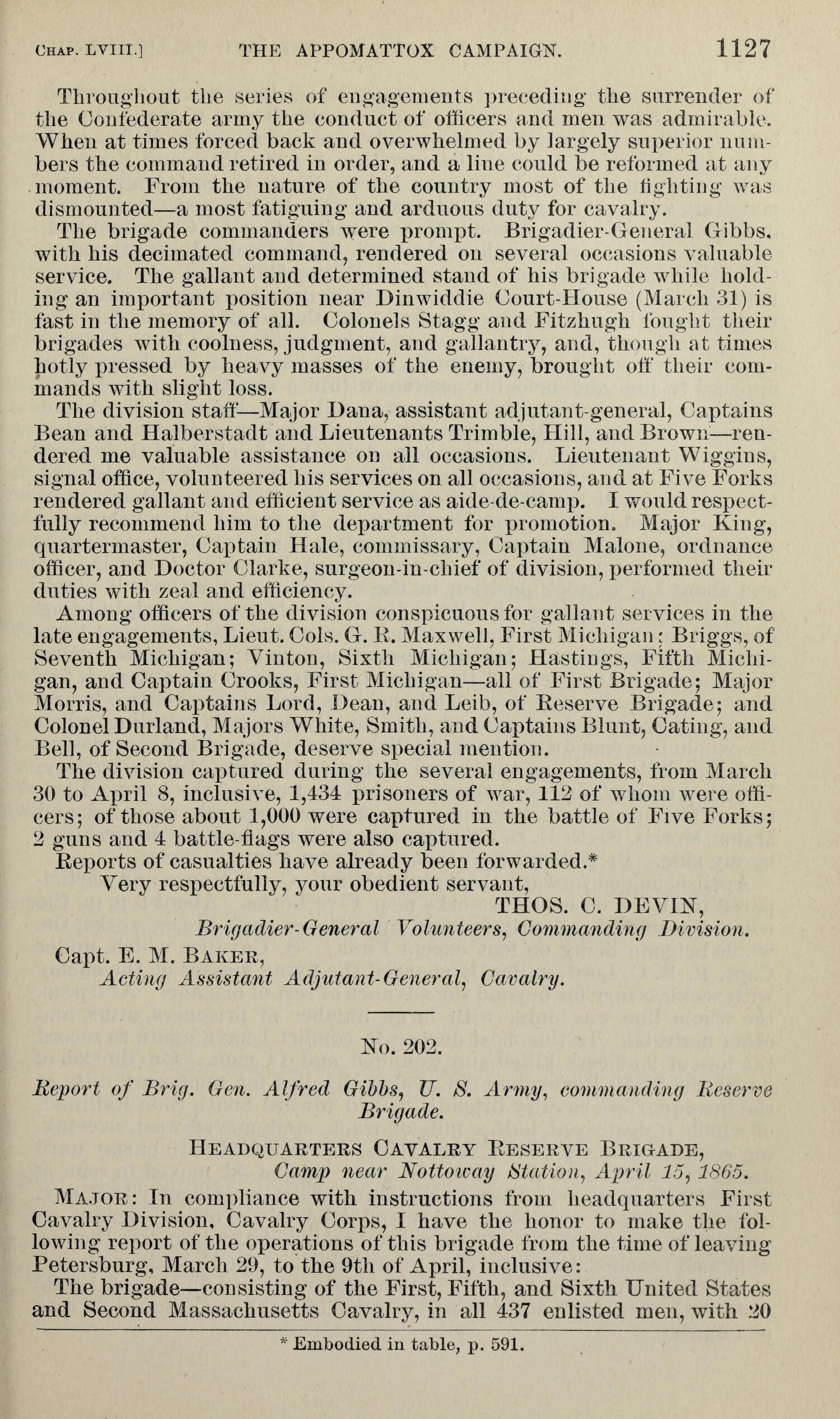
The chapter moves rapidly from the Petersburg lines to Appomattox. A report written on April 15 lets readers follow the brigade’s movements and losses through the commander’s account.
New to these records? A little context.
A docket is an office’s summary or filing note; it may be on a wrapper rather than in the letter. An endorsement is another official’s response or forwarding note. Read each voice and date separately. A transcription is a reading of a document, with uncertain words marked where the exhibit provides them.
What did Gibbs choose to record after the fighting ended?
Gibbs OR report No.202, Reserve Brigade, Appomattox 1865 (p.1127) · From the linked account. Its original credits and image status are preserved there.
Read the source exhibit & its explanation
Gibbs’s campaign report, April 15, 1865
The exhibit reproduces Report No. 202, with scans of pages 1127–1129 and a transcription. It gives a bounded primary text for investigating a large campaign.
What to examine: Follow the dates and places through the report. Notice the units named, the casualty figures, and whom Gibbs credits, then compare the narrative with other accounts.
Keep this distinction in mind: This is a retrospective official report by a participant. It records his account of the brigade, not every action of the army or every soldier’s experience.
Keep your question in view as you explore. The reading tray retains Appomattox → Camp near Nottoway Station. Close it to return to this point, or deliberately choose to explore outside the chapter.
Read Garland’s account and follow the documents it reproduces. Distinguish the account’s interpretation from the original record. Page inclusion comes from the manuscript notes; support for individual statements still needs review.
Read Garland’s account and follow the documents it reproduces. Distinguish the account’s interpretation from the original record. Page inclusion comes from the manuscript notes; support for individual statements still needs review.
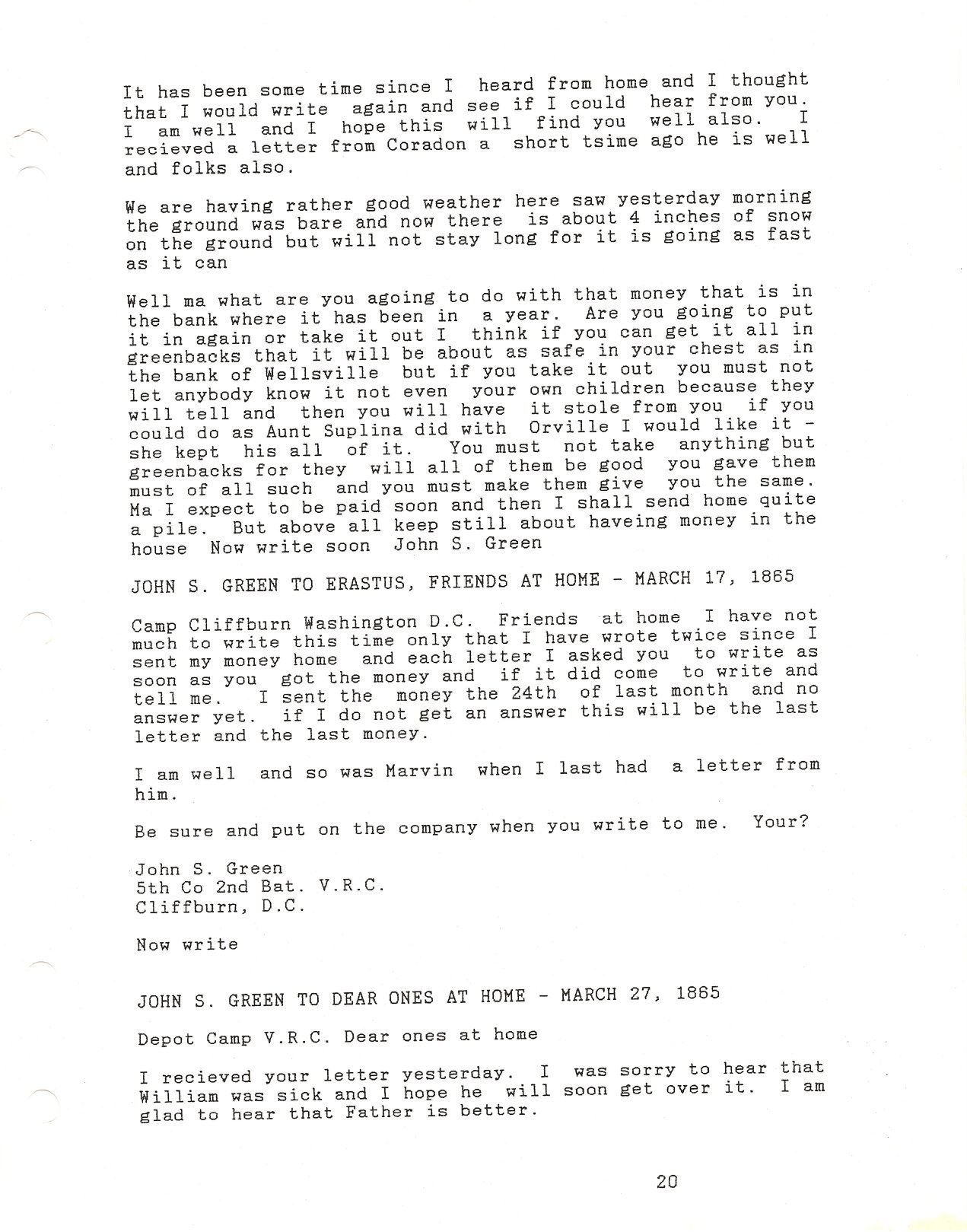
Research page from the chapter’s source notesJOHN S. GREEN TO DEAR ONES AT HOME – MARCH 27, 1865Labeled research-page illustration, not an original scan.
JOHN S. GREEN TO DEAR ONES AT HOME – MARCH 27, 1865
Read Garland’s account and follow the documents it reproduces. Distinguish the account’s interpretation from the original record. Page inclusion comes from the manuscript notes; support for individual statements still needs review.
JOHN S. GREEN TO ERASTUS, FRIENDS AT HOME – MARCH 17, 1865
Read Garland’s account and follow the documents it reproduces. Distinguish the account’s interpretation from the original record. Page inclusion comes from the manuscript notes; support for individual statements still needs review.
Read Garland’s account and follow the documents it reproduces. Distinguish the account’s interpretation from the original record. Page inclusion comes from the manuscript notes; support for individual statements still needs review.
Read Garland’s account and follow the documents it reproduces. Distinguish the account’s interpretation from the original record. Page inclusion comes from the manuscript notes; support for individual statements still needs review.