The book is finished.GIBBS: The Forgotten Warrior of the First New York Dragoons, by Garland H. Green Jr. How to order is coming soon; you can reserve a copy now. Reserve a copy →
Your book journey: Third Winchester · September 19, 1864.
What would you like to explore in Unfading Laurels?
Your chapter journey · Third Winchester · September 19, 1864
A death on the battlefield. A family in the records.
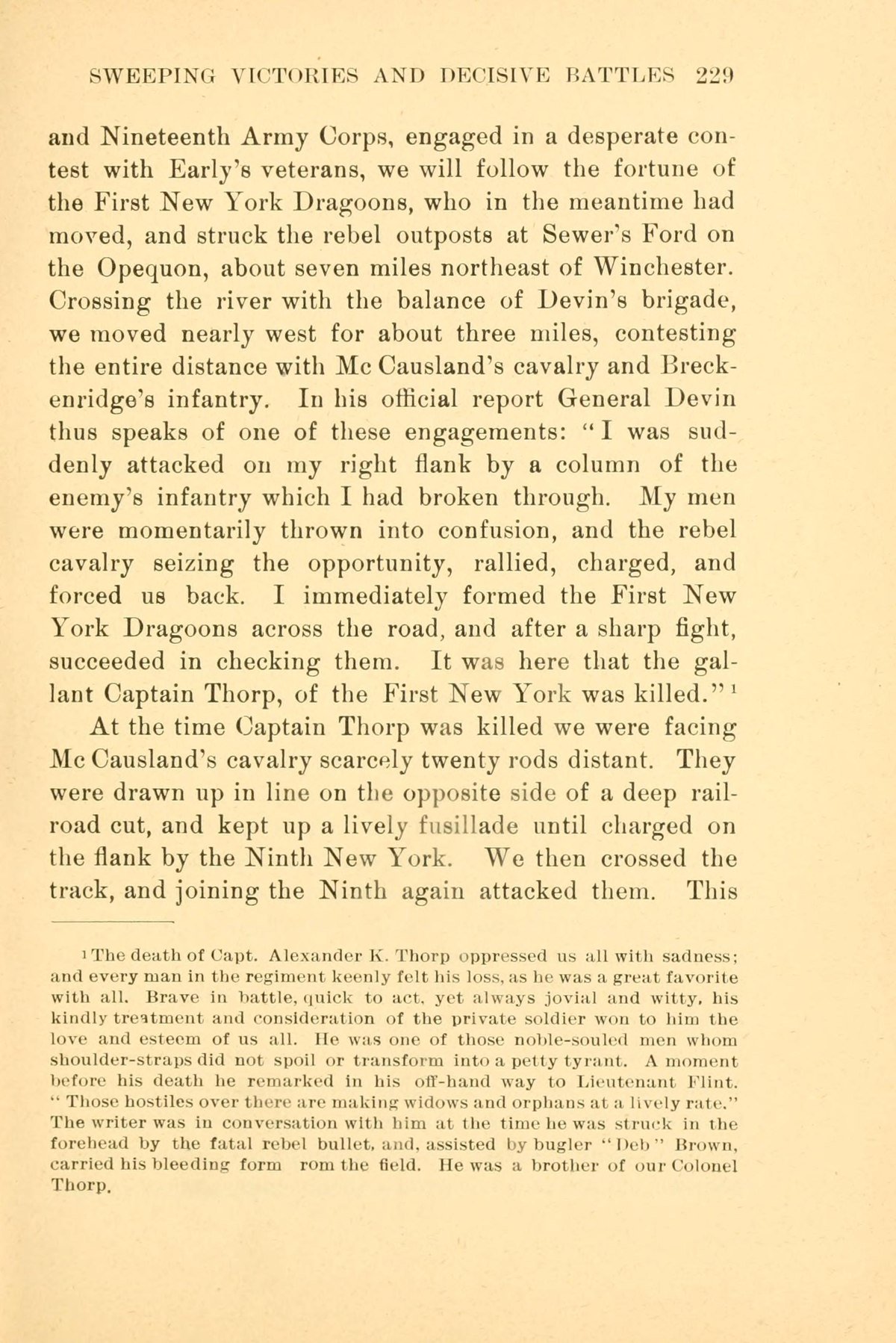
At Third Winchester on September 19, 1864, the Dragoons lost Captain Alexander K. Thorp. This part of Unfading Laurels connects the fighting to the family left behind. Follow two different kinds of evidence: a veteran’s account of the battle and the government brief prepared for Harriet Thorp’s pension claim.
New to these people and records? Start here.
Alexander K. Thorp was a captain in Company F and the brother of Colonel Thomas J. Thorp. A widow’s pension brief is an administrative summary of a claim for financial support. Its purpose helps explain why it records service, death, marriage, and children together.
How do we learn what a battlefield death meant for a family?
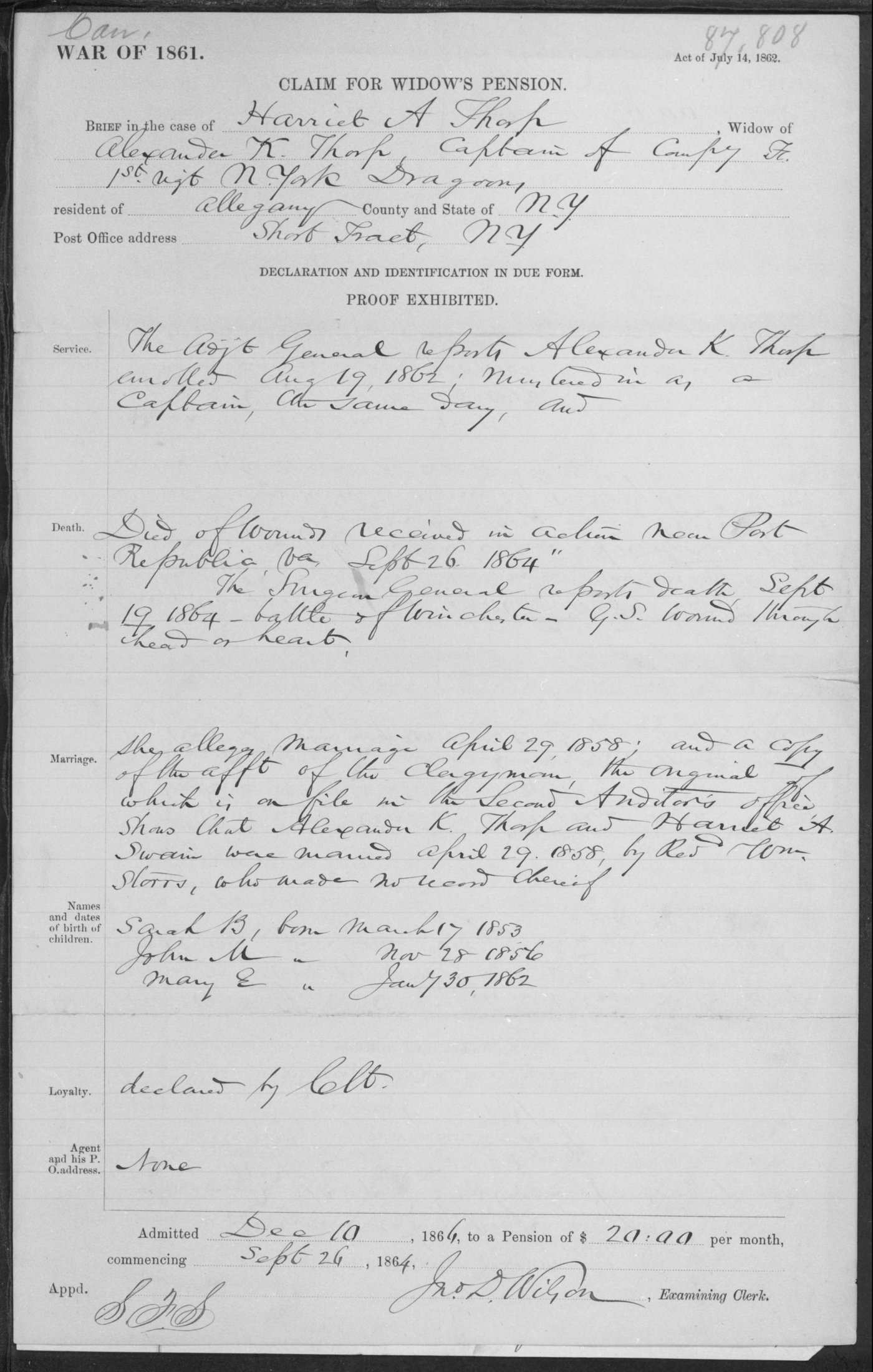
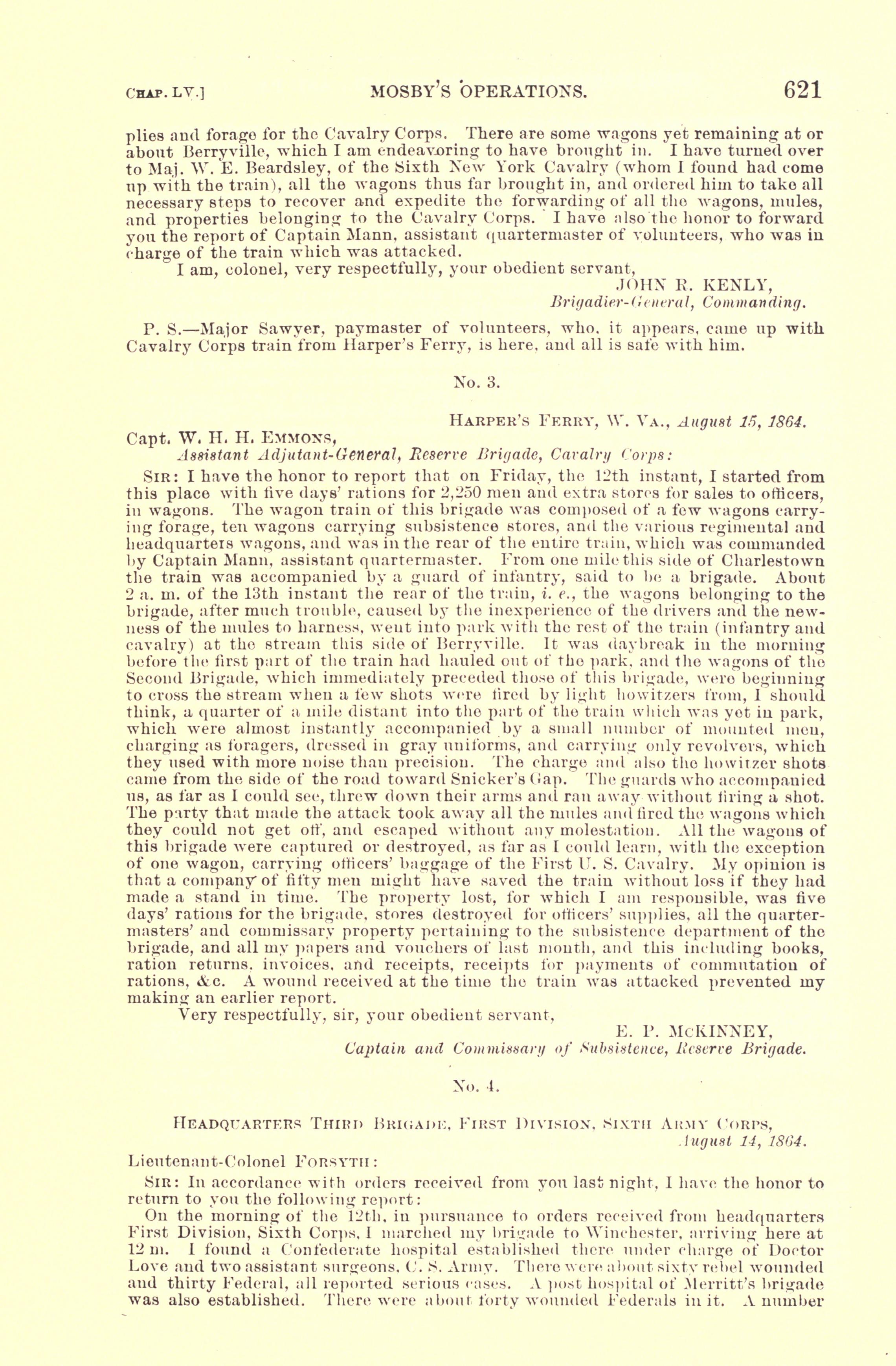
Harriet A. Thorp’s widow’s pension brief, WC 87,808. National Archives, RG 15.
Find Harriet and the children in the pension brief
This is where the battlefield story becomes a family history. The brief names Harriet and lists Sarah B., John M., and Mary E., with birth dates. It also records admission to a pension of $20 per month. These are specific statements in the record, rather than details inferred from a surname.
Look for: Start at the claimant’s name at the top. Find the “Marriage” entry, then “Names and dates of birth of children,” and the award at the bottom. Notice that the listed marriage date follows two of the children’s birth dates. This sheet alone does not explain that chronology or establish every biological relationship.
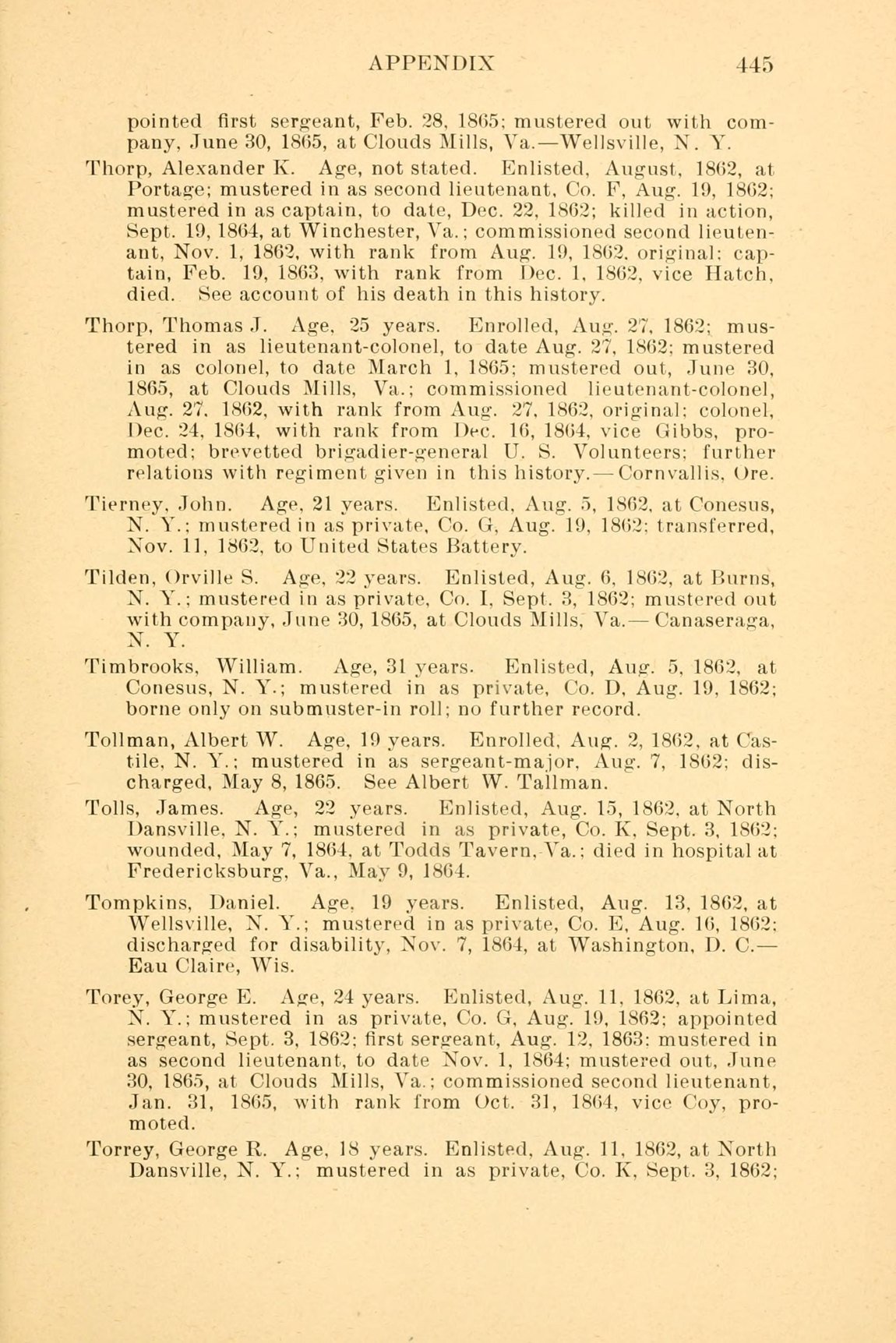
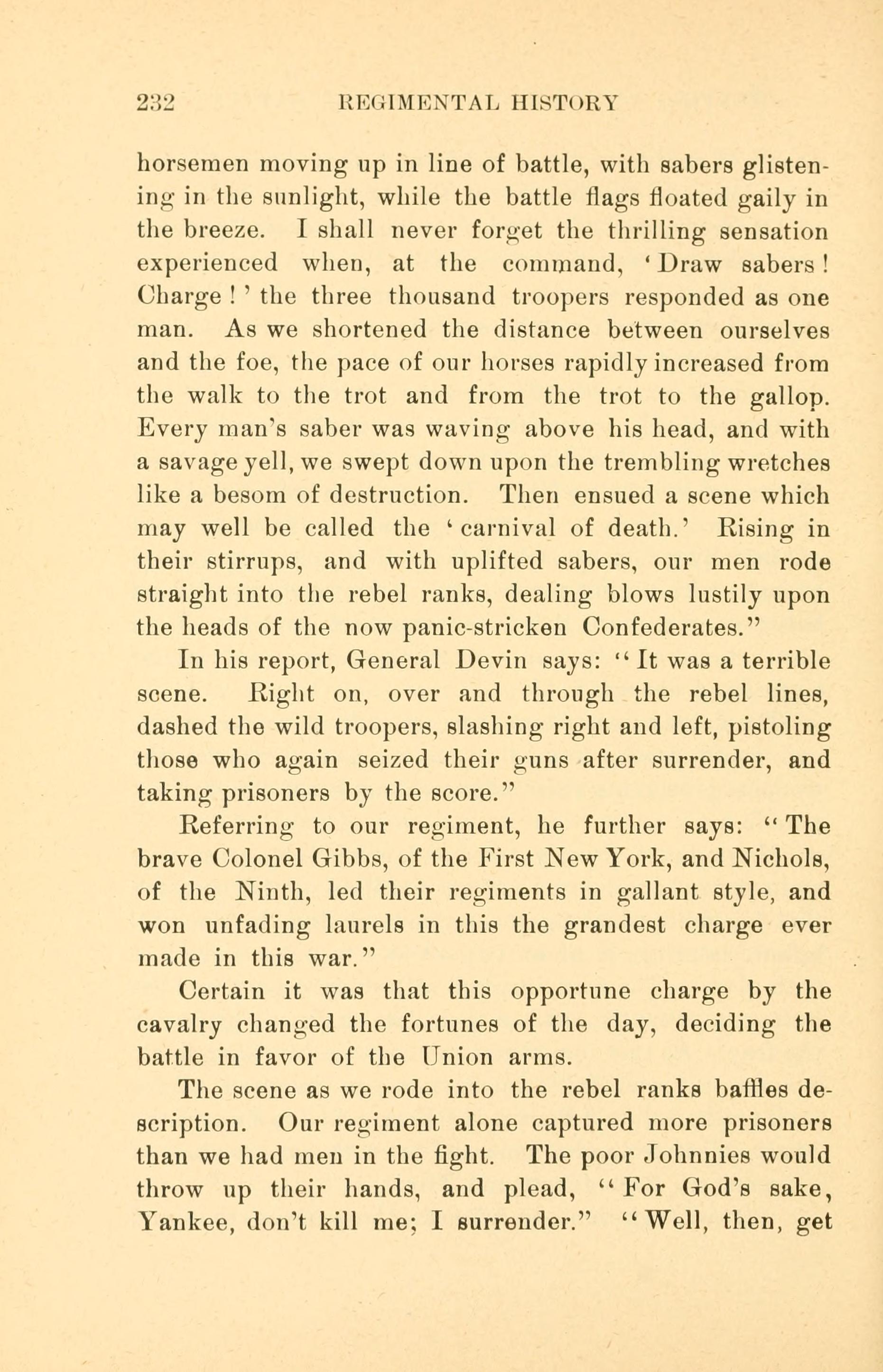
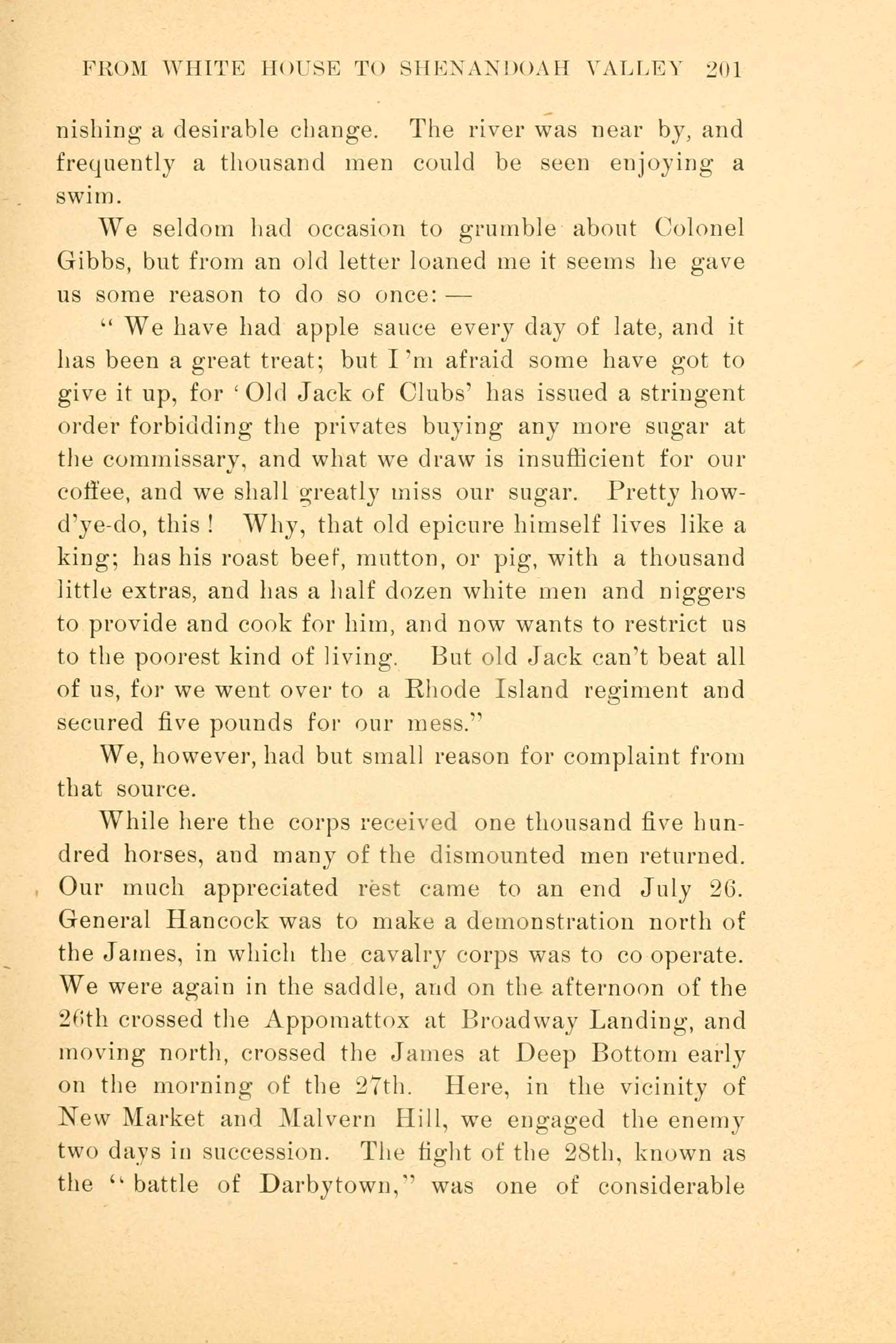
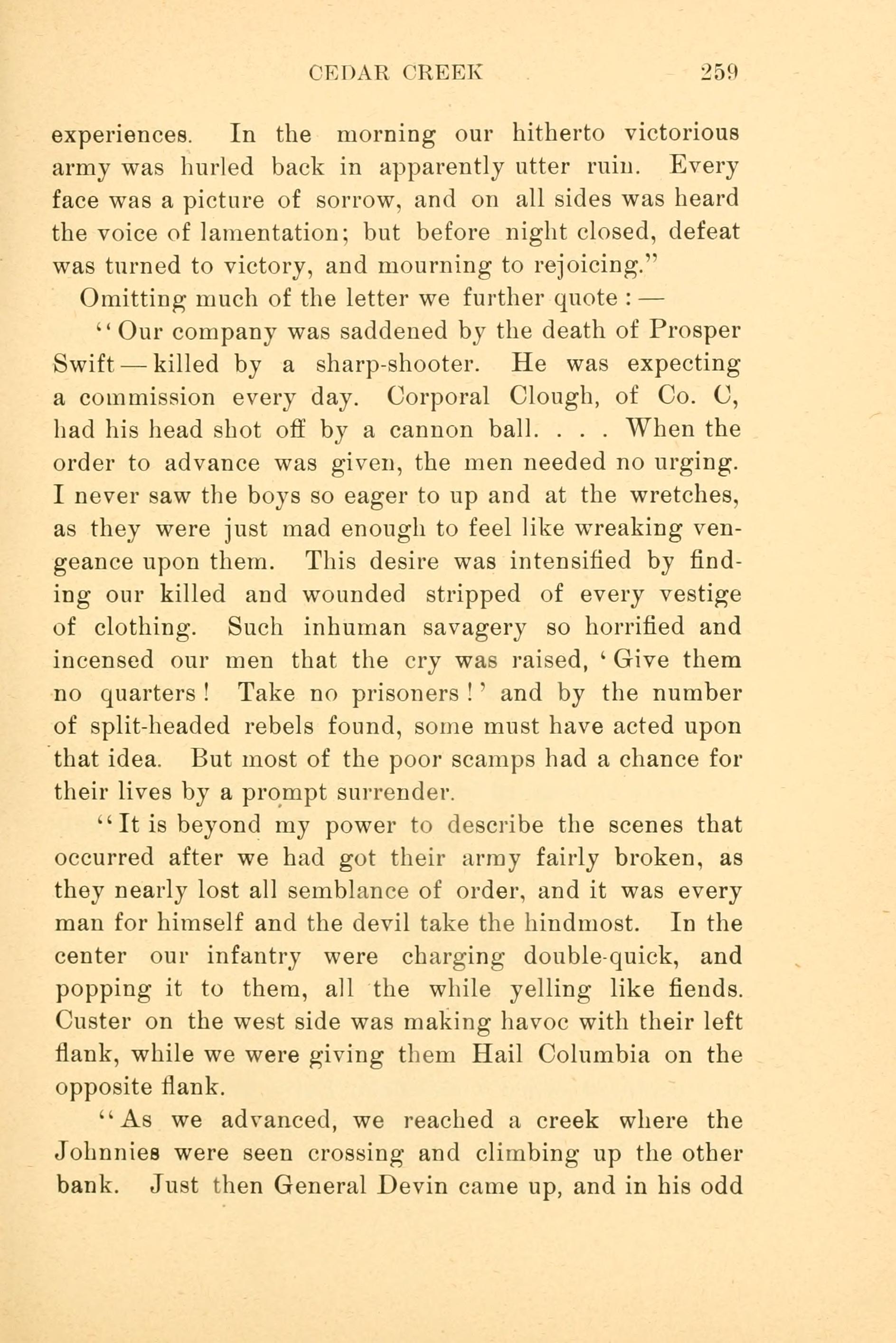
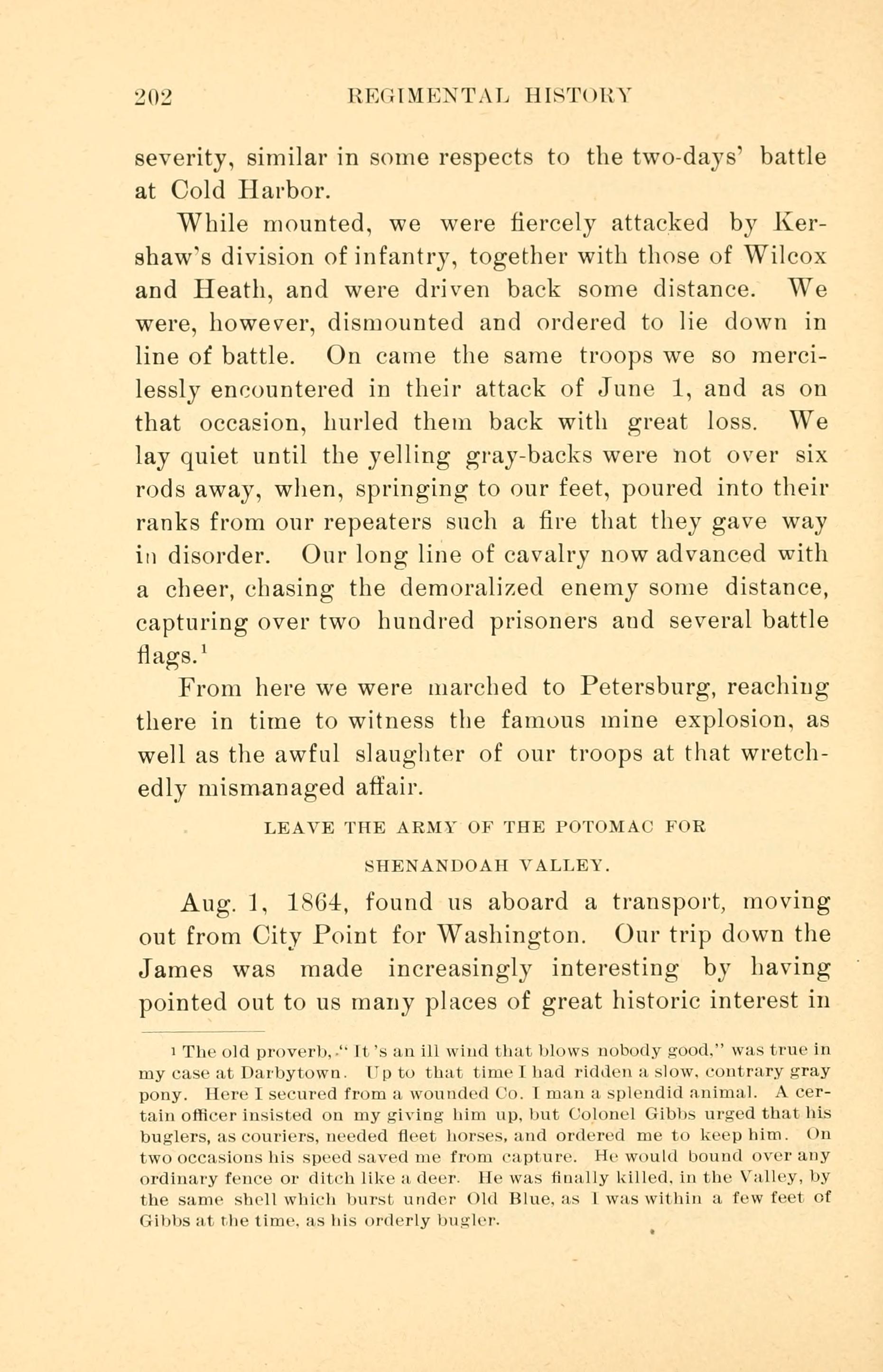
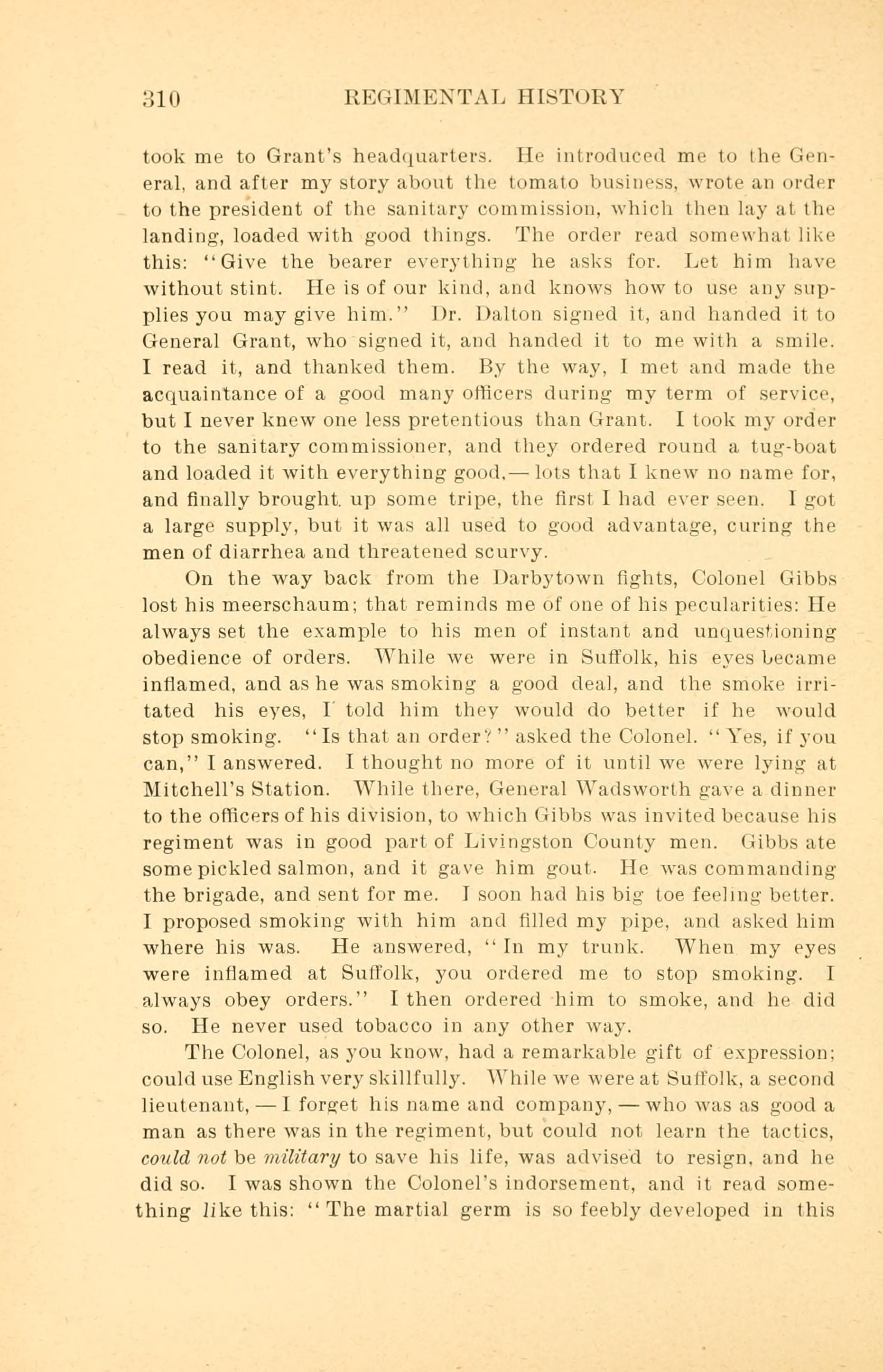
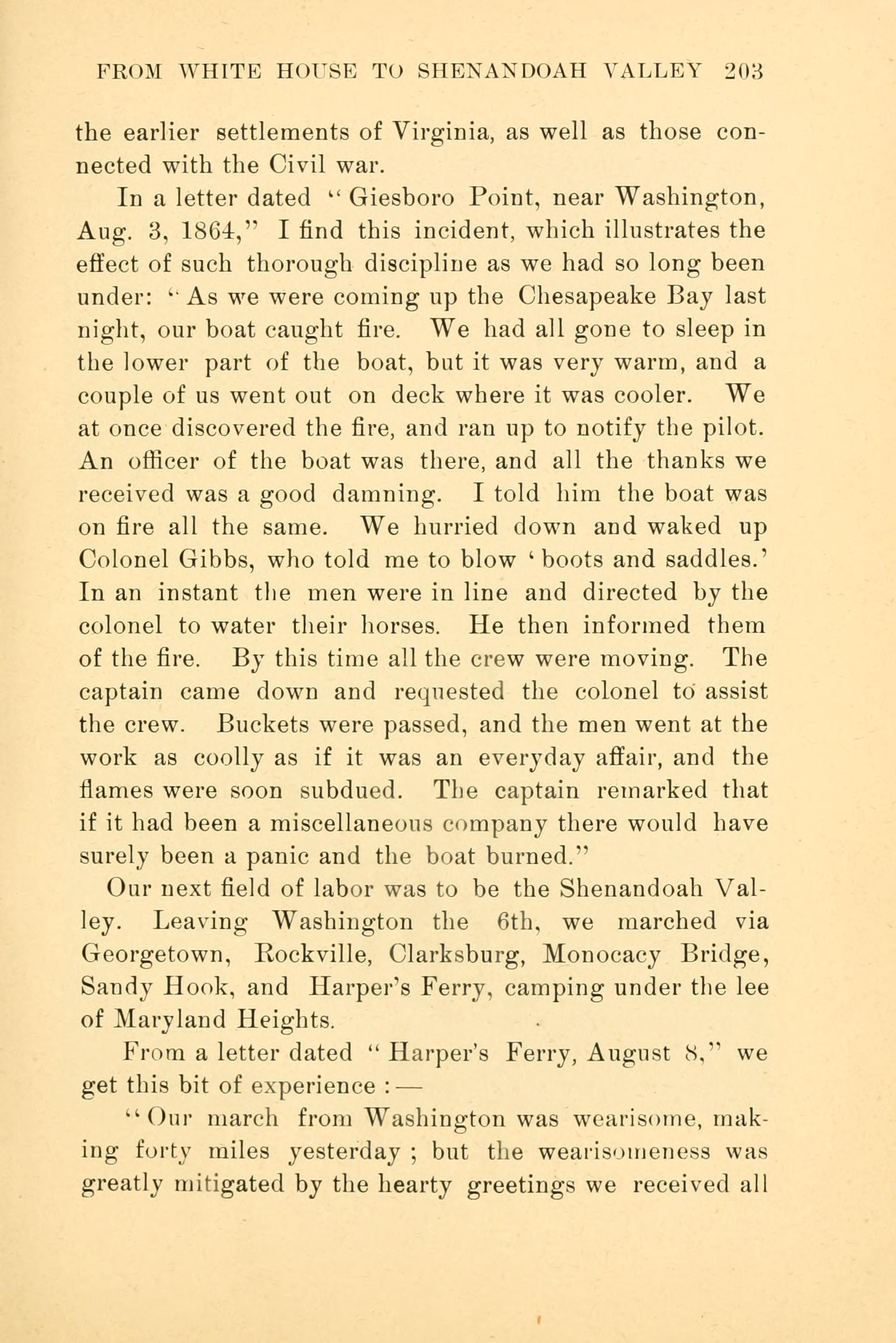
James R. Bowen, Regimental History of the First New York Dragoons (1900), page 229.
Compare the official paperwork with a veteran’s account
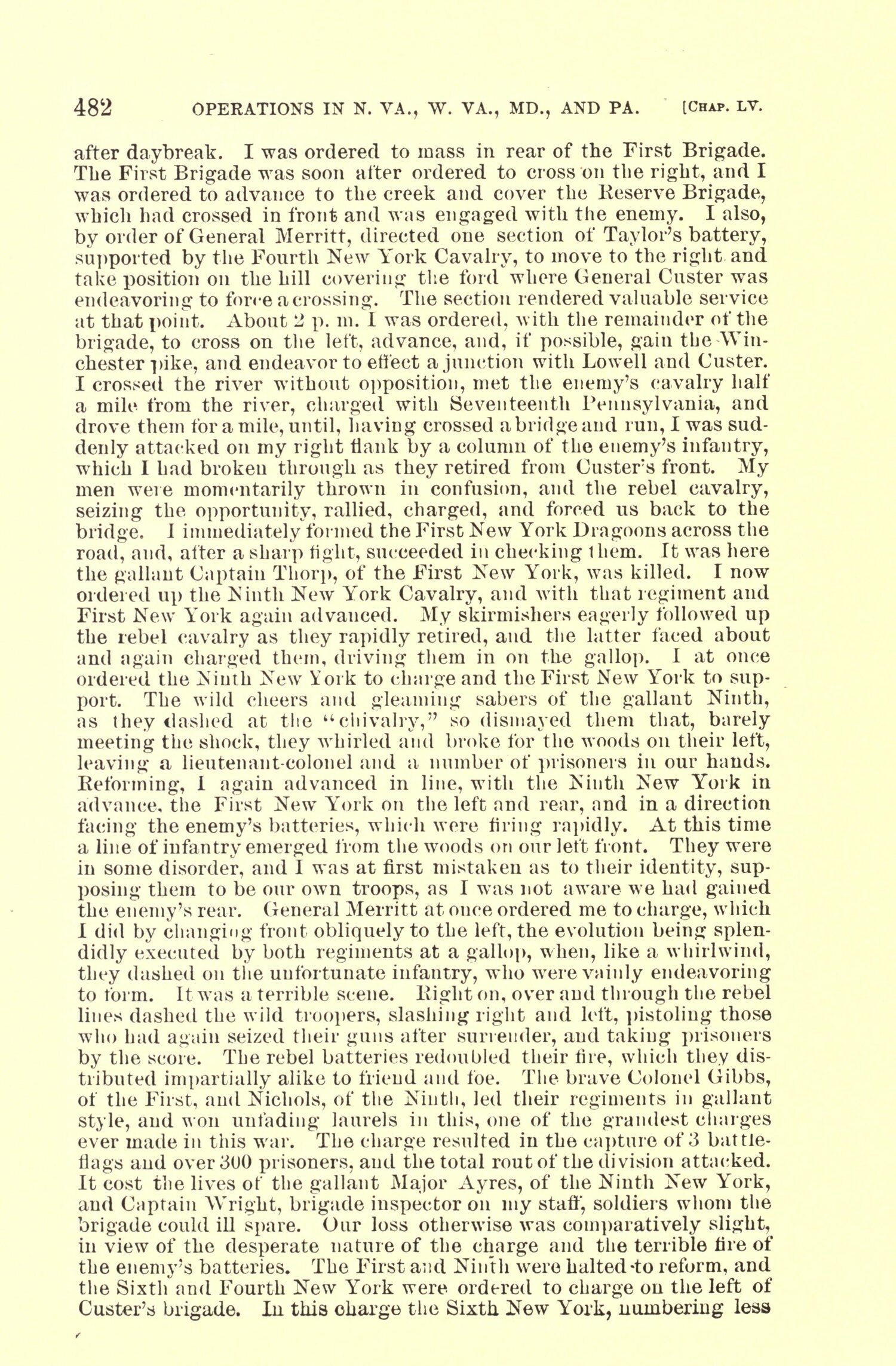
Bowen describes the regiment’s fighting and says he was speaking with Captain Thorp when Thorp was struck. His footnote remembers the man and his relationship to the soldiers. It answers different questions from a pension clerk’s brief.
Look for: Read the main paragraph that quotes General Devin, then the footnote at the bottom. Separate Devin’s report, as quoted by Bowen, from Bowen’s own recollection. Ask what each writer witnessed, what each was trying to record, and when the account was published.
Bowen’s account takes you onto the battlefield. Harriet’s brief brings her claim and the named children into view. The disagreement within the brief is a reason to examine the file further, not to erase one entry. What additional record would help you investigate the death date or the family chronology?
This guided comparison was prepared by inspecting the two displayed scans and the chapter’s Thorp research page. It does not represent a review of the entire pension file or all of Third Winchester’s sources.
Follow a life beyond the page
People you meet here
The book brings you into these lives. Follow a person to the family, service and research records available here. Pension material is identified separately from biography and recollection.
8 connected people in this section · Showing 1 to 6
Alexander Thorp was killed at the railroad cut during the Valley fighting. His widow's claim offers a family history beyond the remembered words just before his death. He is not Thomas J. Thorp.
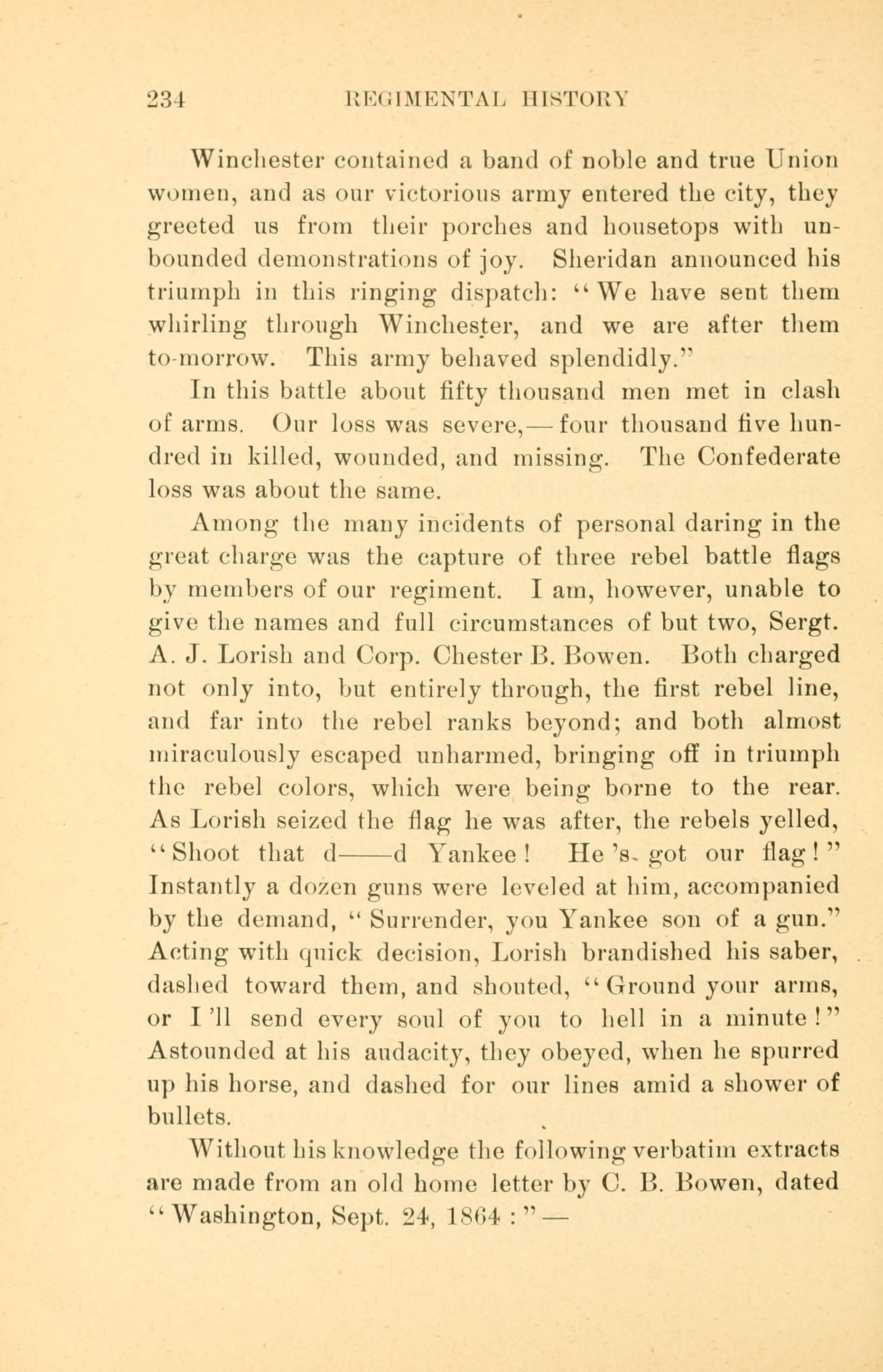
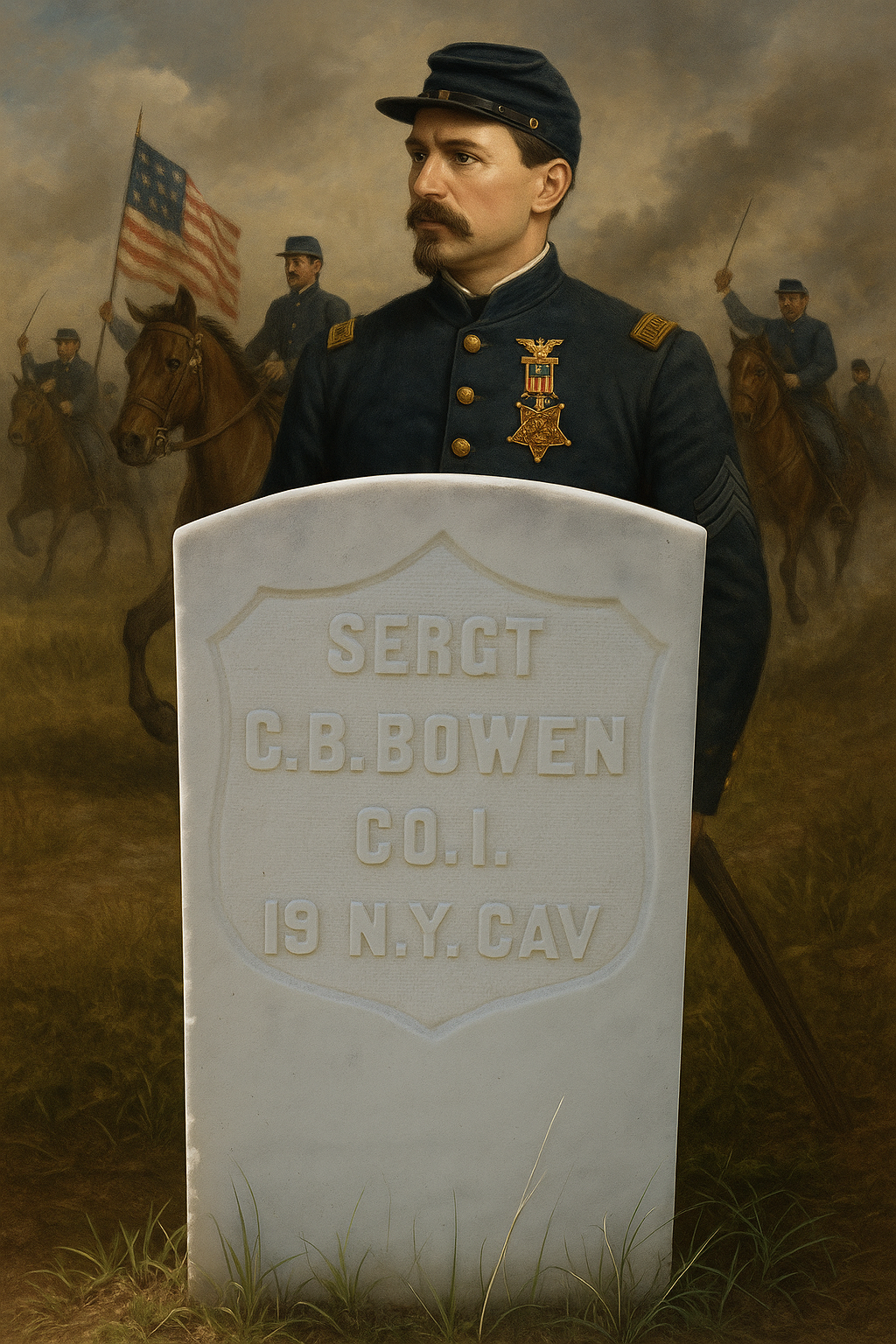
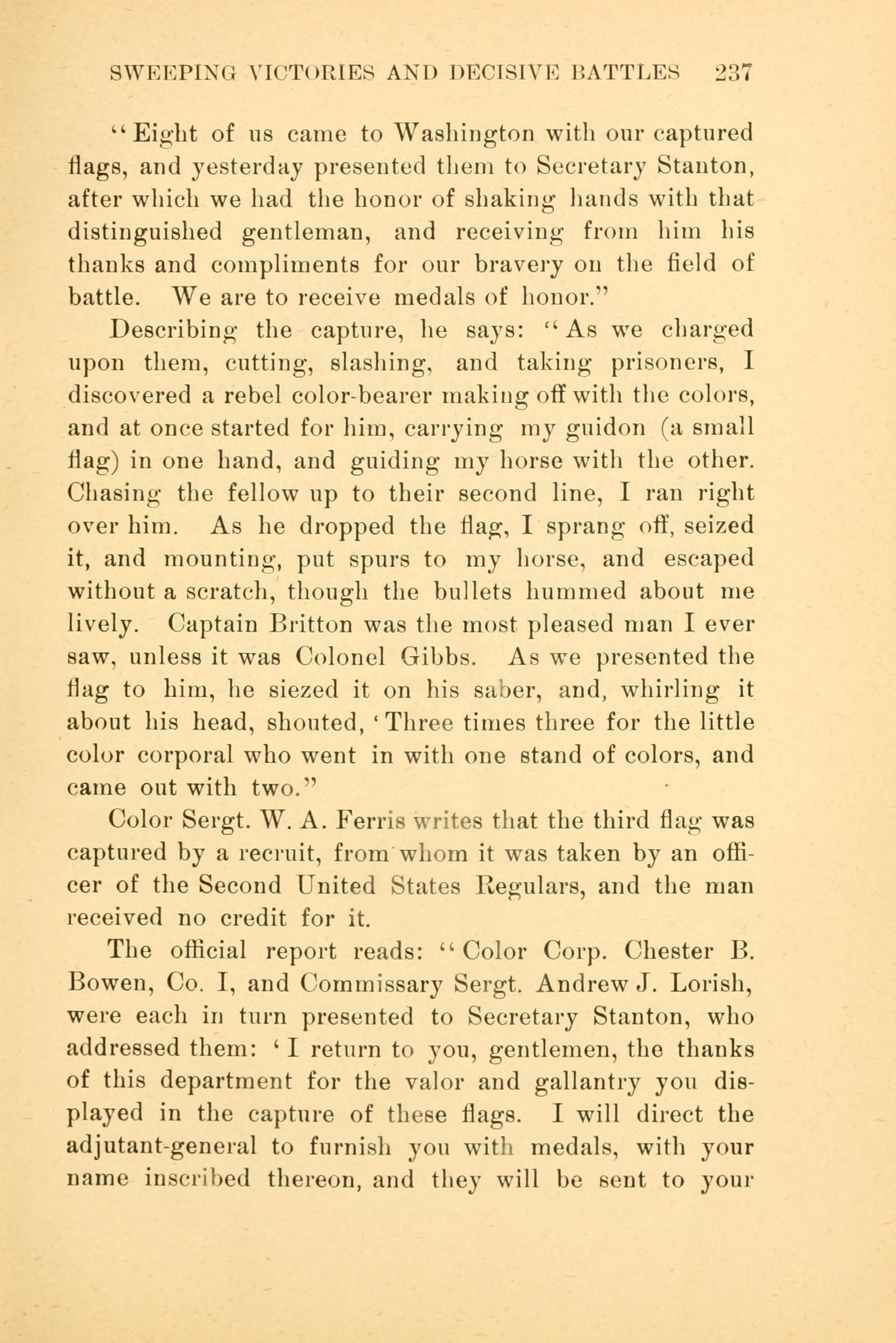
The color corporal's letters and captured flag offer a different perspective from his brother's later regimental history. Look for the difference between writing during the war and remembering it afterward.
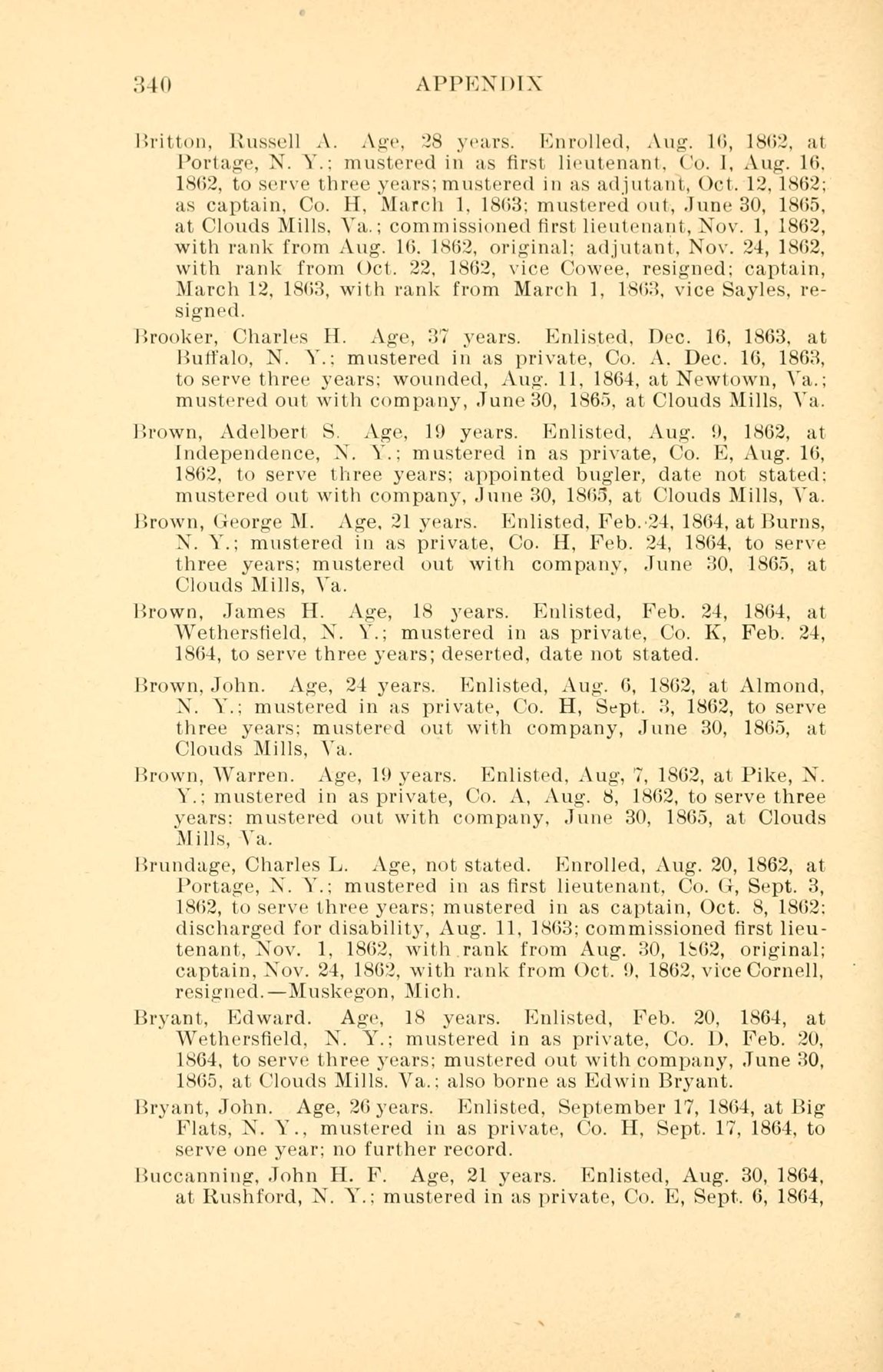
Captain Britton appears in Chester Bowen's account of returning with a captured flag. His service page adds the officer's identity to that remembered exchange.
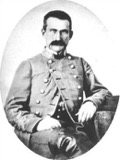
McCausland’s cavalry faced the Dragoons in the Valley. Follow the opposing officer to understand whose troops appear across the railroad cut and river crossings.
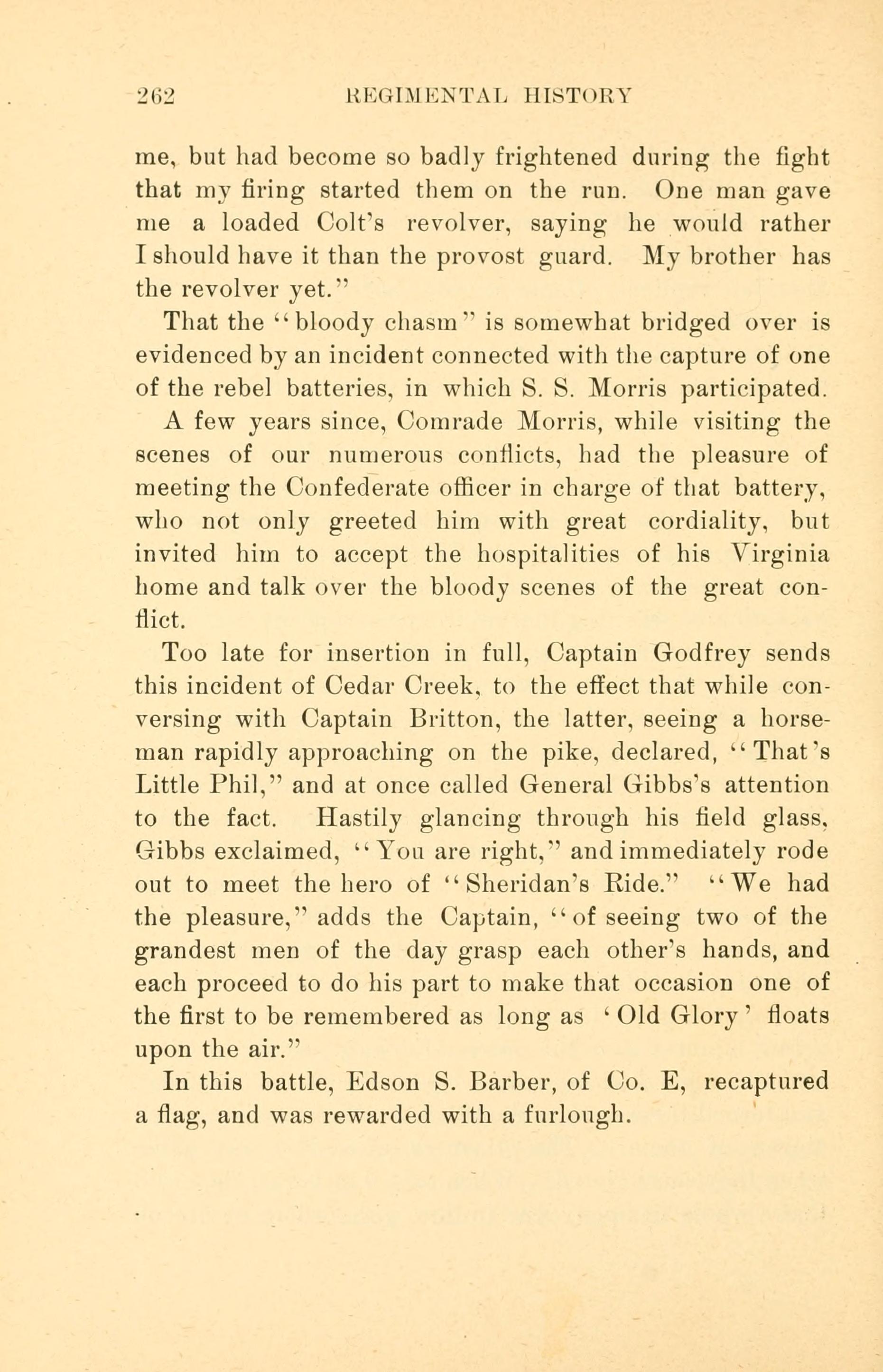
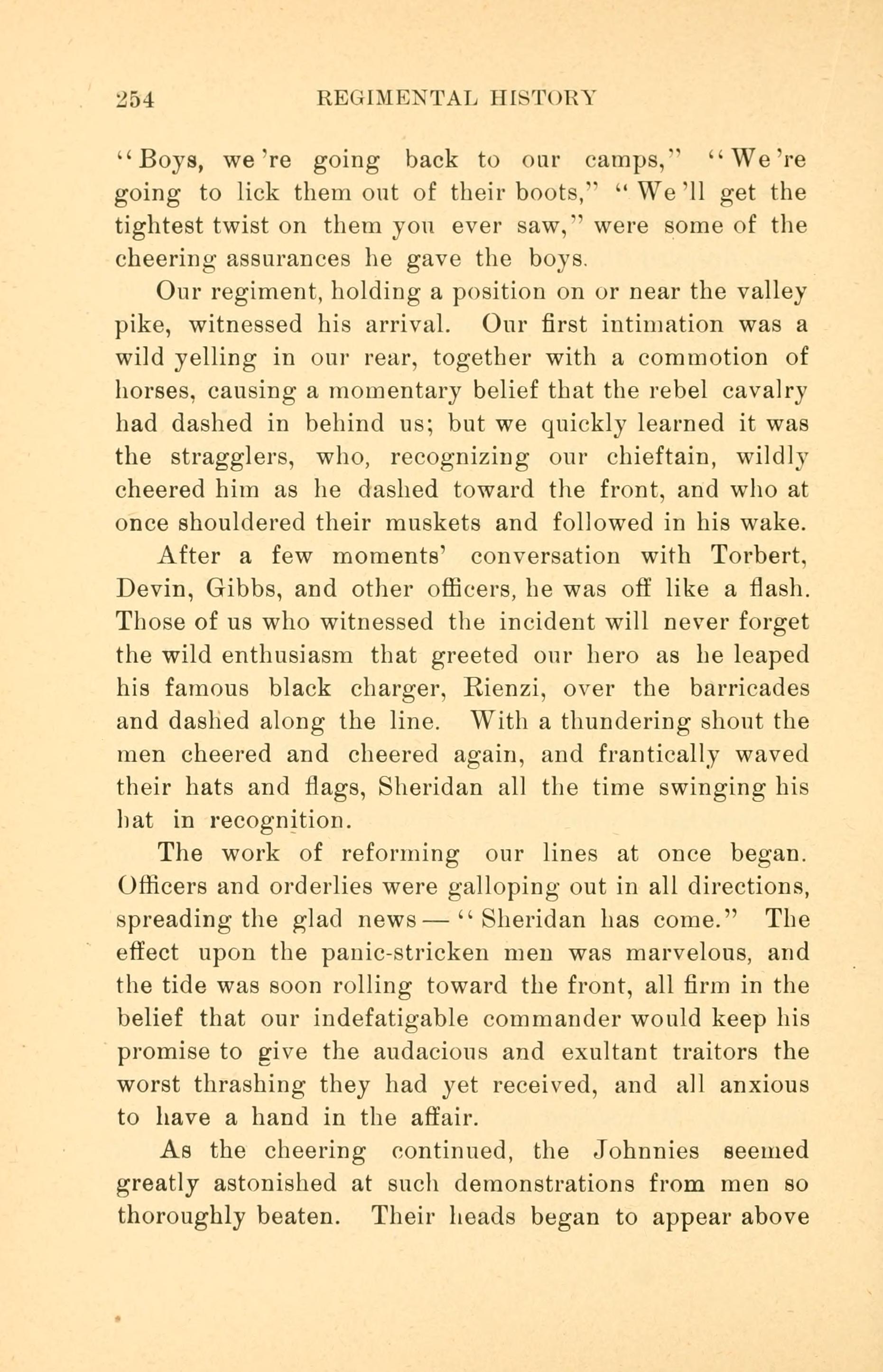
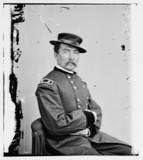
Sheridan connects the Academy's personal relationships with later cavalry command. Follow the people, recommendations and battle accounts rather than relying on a single famous image of the commander.
These connections come from the v172 manuscript and existing subject pages. A pension not connected here may still exist elsewhere. Namesakes and uncertain identities are not silently joined.
Follow the words into the evidence
What caught your attention?
Find a line from your reading, then follow its document and the record around it. Matching words helps locate evidence; checking who wrote them, when, and why helps you understand it.