The book is finished.GIBBS: The Forgotten Warrior of the First New York Dragoons, by Garland H. Green Jr. How to order is coming soon; you can reserve a copy now. Reserve a copy →
The evidence behind your reading · Furnish Half the Horses
Read the records behind this chapter
Follow a letter, report, recollection or family record beyond the passage in the book. Each source below shows where the chapter uses it and what to examine. Open it here, compare its pages, and return without losing your chapter.
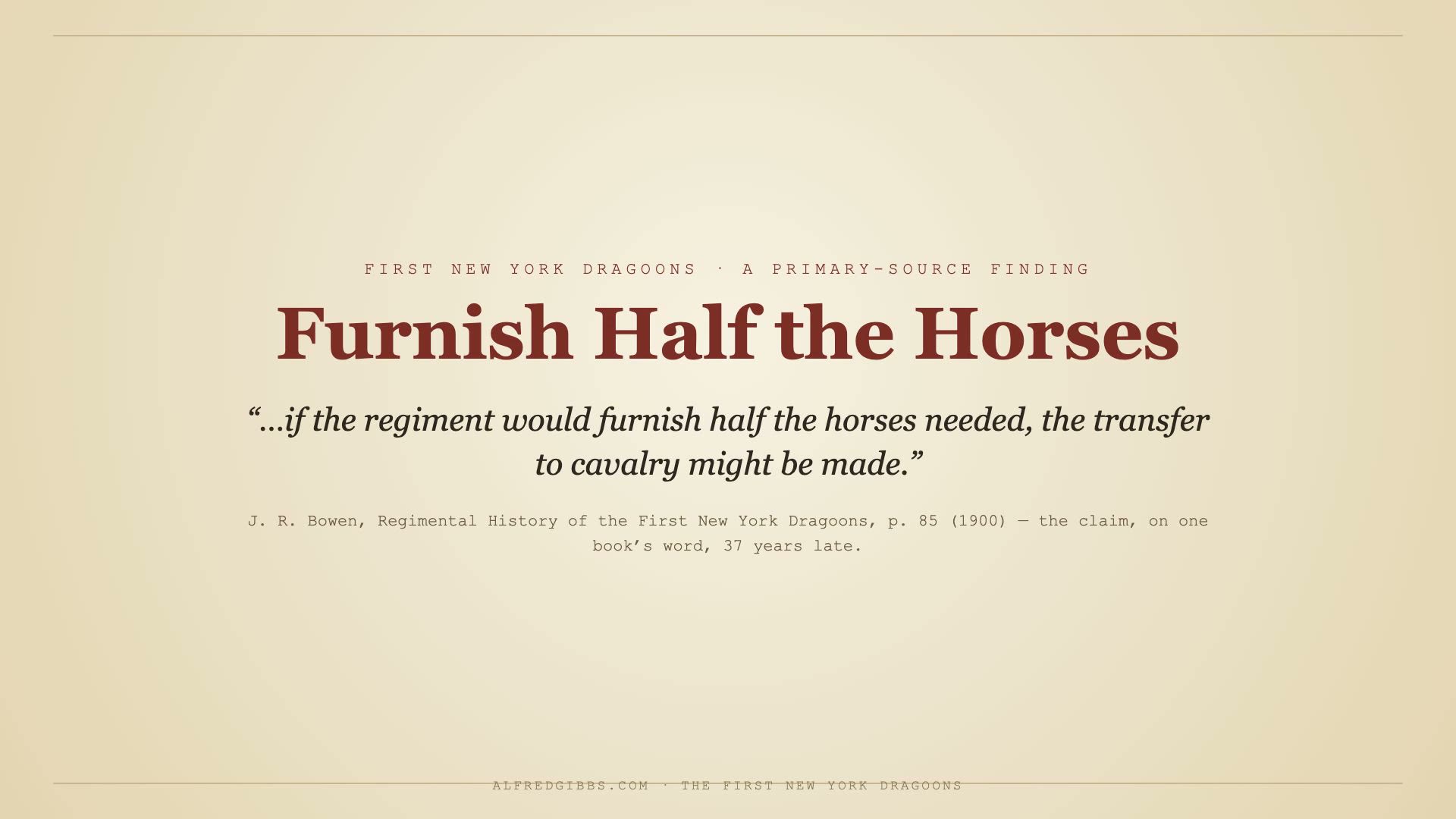
Begin with a question: Did the regiment really have to furnish half its horses?
Go beyond the book · Furnish Half the Horses
You are reading The picket line · The first night of the siege. The guided starting point below explores Yorktown and the Peninsula. Evidence for this particular section has not yet been separately assembled; chapter references remain available below.
Test a regimental tradition with wartime letters
The move from infantry to cavalry needed horses as well as a new name. A claim in Bowen’s later history can be examined alongside letters written while the change was happening.
New to these records? A little context.
A research account can combine historical documents, later recollections, images, and the author’s interpretation. Start with its source notes and captions. Ask who made each item, when it was made, and what kind of question it can answer.
Did the regiment really have to furnish half its horses?
Furnish Half the Horses video poster · From the linked account. Its original credits and image status are preserved there.
Read the source exhibit & its explanation
The horse bargain: later history and wartime letters
The investigation compares Bowen’s account with contemporary newspaper letters and private correspondence identifying the men sent to buy animals. It demonstrates how research can strengthen or challenge an inherited story.
What to examine: Start with the condition in Bowen, then compare the dates and wording of the wartime letters. Identify which claims are independently repeated and which concern a different part of the process.
Keep this distinction in mind: A repeated claim is not automatically independent corroboration. Check whether one writer could be copying another before counting separate witnesses.
Keep your question in view as you explore. The reading tray retains Furnish Half the Horses → The picket line. Close it to return to this point, or deliberately choose to explore outside the chapter.
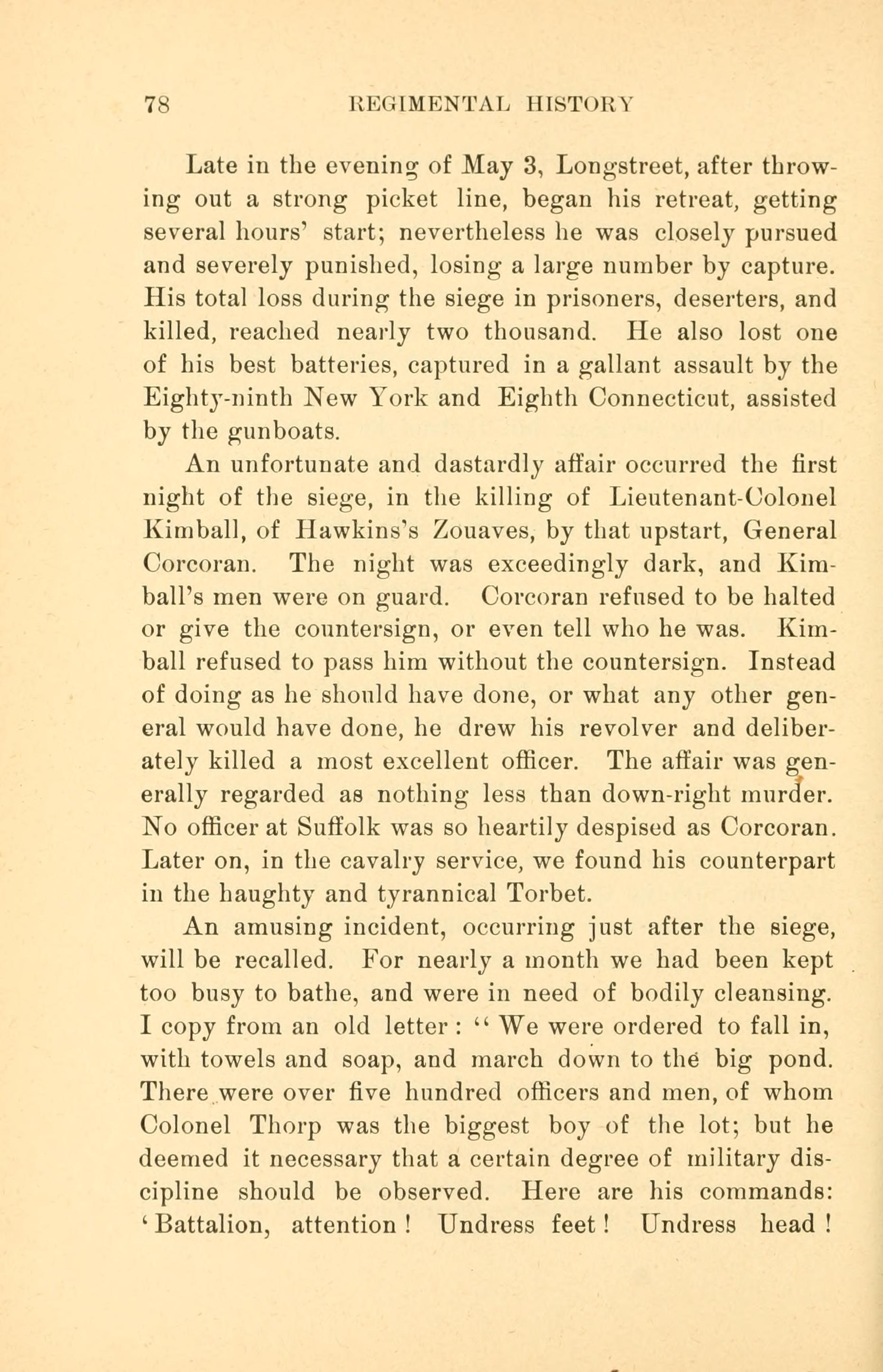
Identify the author and publication date before weighing this account. A later recollection and a contemporary document answer different questions. Read the cited page and its surrounding passage.
Your passage · The picket line
The night was exceedingly dark, and Kimball's men were on guard. Corcoran refused to be halted or give the countersign, or even tell who he was. Kimball refused to pass him without…
Close text match, check differences. Read the surrounding record before drawing a conclusion.
· p. 78
Where this chapter uses this source · 1 passage
The picket line
The night was exceedingly dark, and Kimball's men were on guard. Corcoran refused to be halted or give the countersign, or even tell who he was. Kimball refused to pass him without the countersign. In…
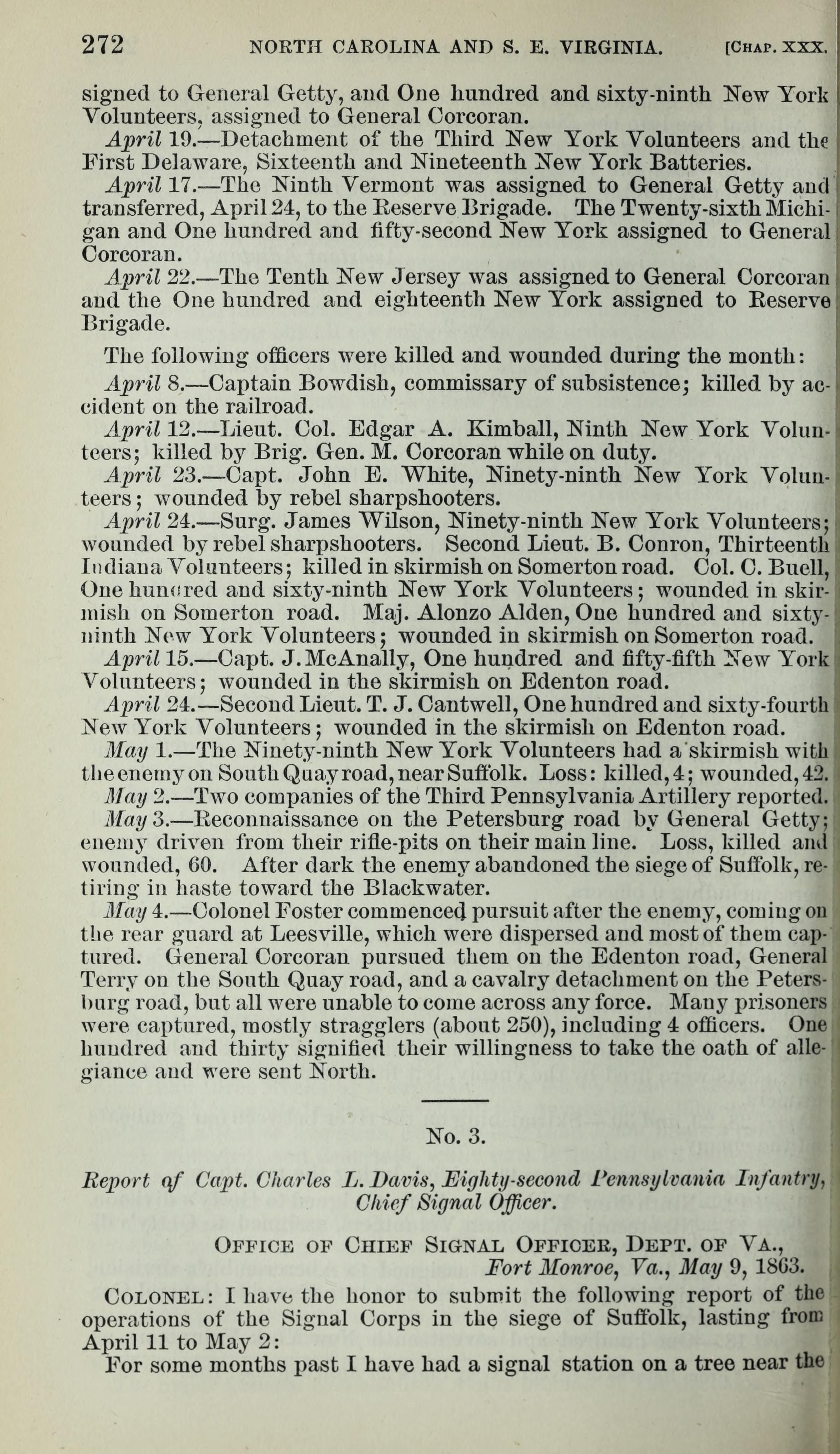
Identify the author and publication date before weighing this account. A later recollection and a contemporary document answer different questions. Read the cited page and its surrounding passage.
Your passage · The picket line
Lieut. Col. Edgar A. Kimball, Ninth New York Volunteers; killed by Brig. Gen. M. Corcoran while on duty.
Words matched in source text. Read the surrounding record before drawing a conclusion.
· p. 272
Where this chapter uses this source · 1 passage
The picket line
Lieut. Col. Edgar A. Kimball, Ninth New York Volunteers; killed by Brig. Gen. M. Corcoran while on duty.