The book is finished.GIBBS: The Forgotten Warrior of the First New York Dragoons, by Garland H. Green Jr. How to order is coming soon; you can reserve a copy now. Reserve a copy →
The evidence behind your reading · Thirteen Rifles
Read the records behind this chapter
Follow a letter, report, recollection or family record beyond the passage in the book. Each source below shows where the chapter uses it and what to examine. Open it here, compare its pages, and return without losing your chapter.
Begin with a question: What could thirteen rifles protect?
Go beyond the book · Thirteen Rifles
Count what a commander could actually defend with
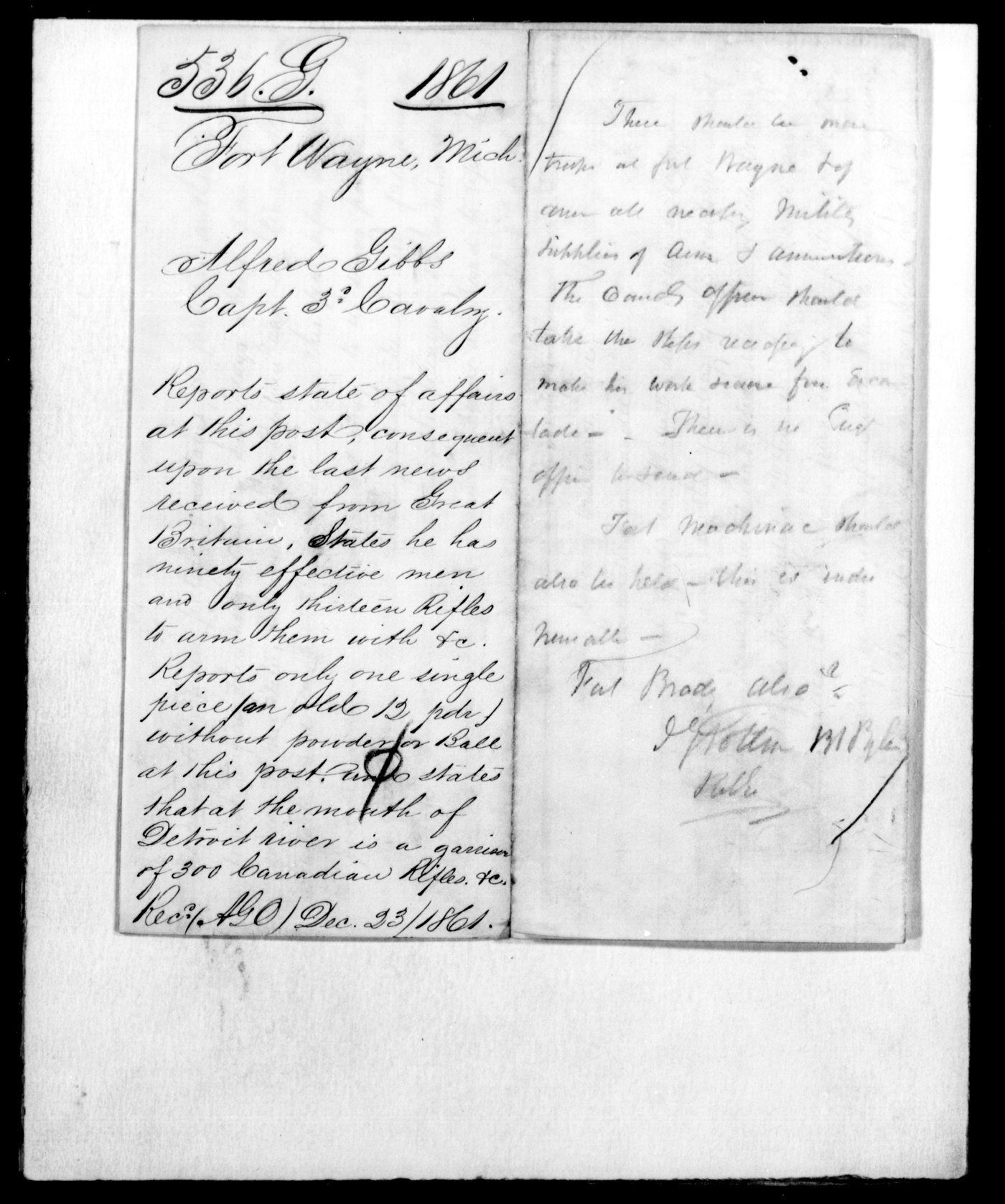
During tension with Britain after the Trent affair, Fort Wayne faced Canada across the river. Gibbs’s report turns a dramatic international crisis into a practical question of weapons and men.
New to these records? A little context.
A docket is an office’s summary or filing note; it may be on a wrapper rather than in the letter. An endorsement is another official’s response or forwarding note. Read each voice and date separately. A transcription is a reading of a document, with uncertain words marked where the exhibit provides them.
What could thirteen rifles protect?
Alfred Gibbs AGO letter 85313111 85313111_001.jpg · From the linked account. Its original credits and image status are preserved there.
Read the source exhibit & its explanation
The Fort Wayne arms report, December 1861
The report states that ninety effective men had thirteen rifles and describes an old gun without powder or ball. Its endorsements show the problem moving through army offices.
What to examine: Compare the wrapper’s summary with the report, then read the proposed responses in the endorsement. Keep the American inventory separate from the reported Canadian strength.
Keep this distinction in mind: Some transcription readings are marked uncertain. A report about an opposing garrison is not the same kind of evidence as the post’s own inventory.
Keep your question in view as you explore. The reading tray retains Thirteen Rifles. Close it to return to this point, or deliberately choose to explore outside the chapter.
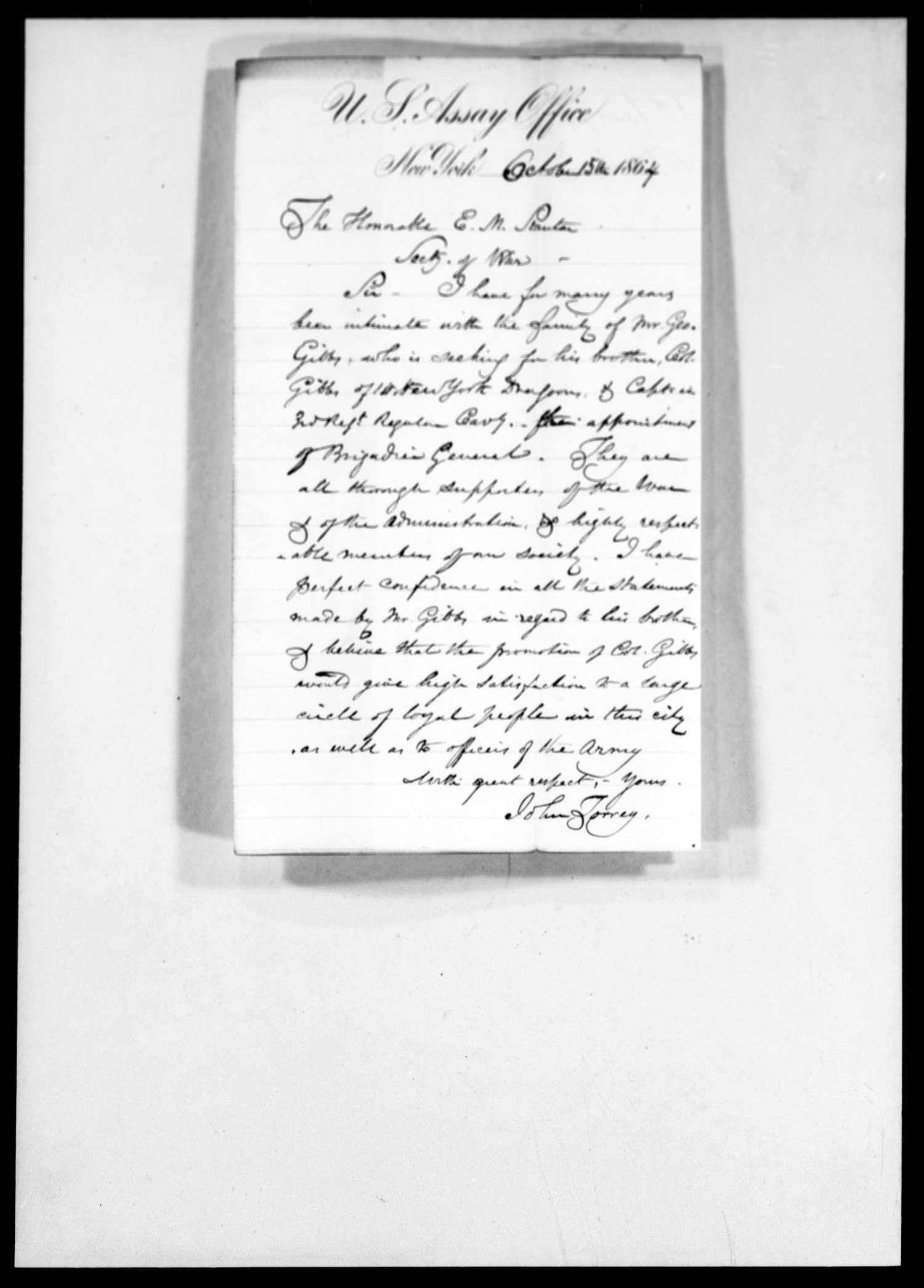
Dr. John Torrey to Sec. Stanton, recommending Col. Gibbs (enclosure) (G045)
Open this item for a closer view. For its meaning, citation and any transcription, read the research page that reproduces it. This collection can contain portraits, maps and enhancements as well as original records.
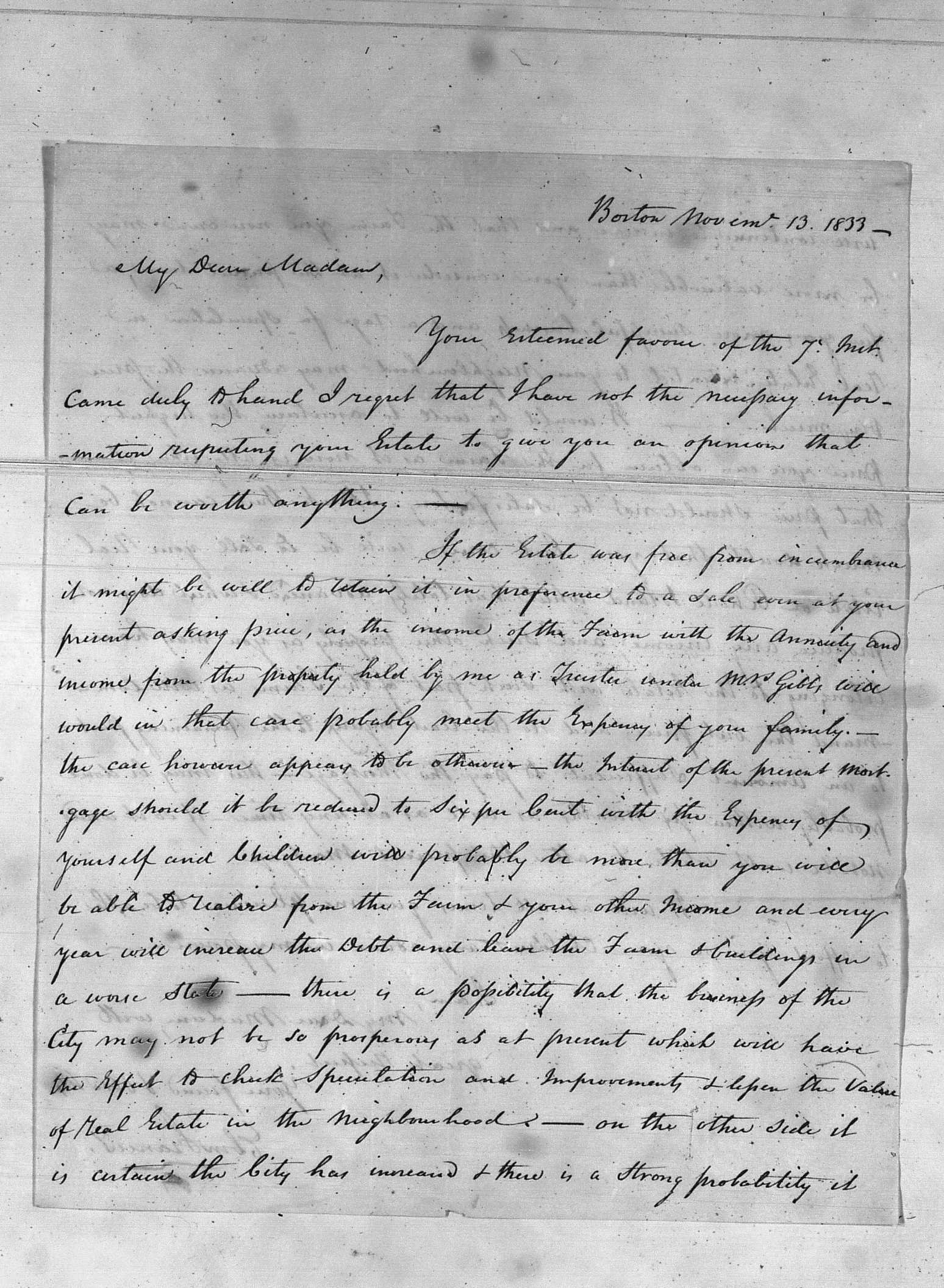
Ebenezer Francis to Laura W. Gibbs, Nov 13 1833, page 1
Open this item for a closer view. For its meaning, citation and any transcription, read the research page that reproduces it. This collection can contain portraits, maps and enhancements as well as original records.
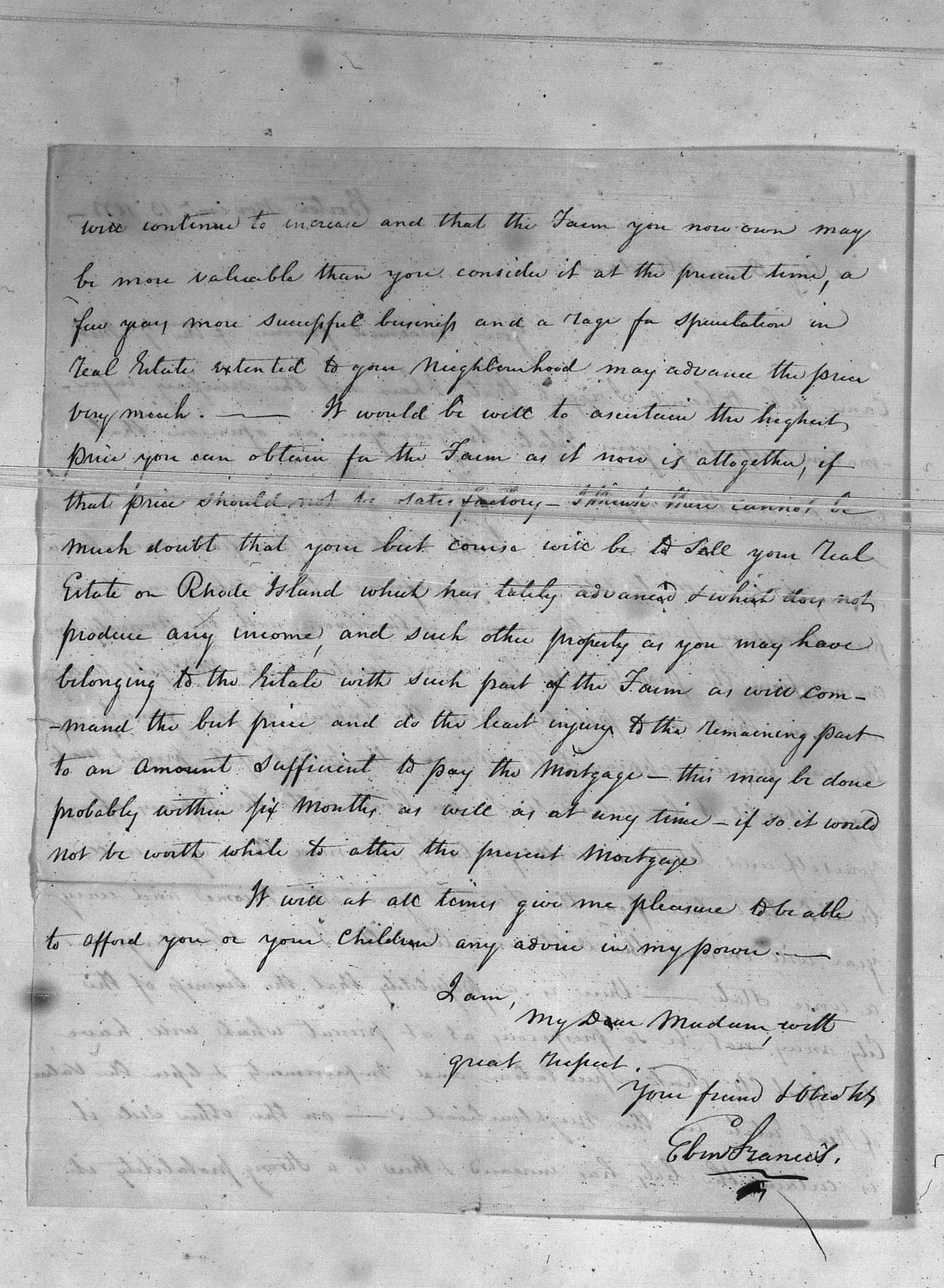
Ebenezer Francis to Laura W. Gibbs, Nov 13 1833, page 2
Open this item for a closer view. For its meaning, citation and any transcription, read the research page that reproduces it. This collection can contain portraits, maps and enhancements as well as original records.
Edward Richard Sprigg Canby (November 9, 1817 – April 11, 1873)
Open this item for a closer view. For its meaning, citation and any transcription, read the research page that reproduces it. This collection can contain portraits, maps and enhancements as well as original records.
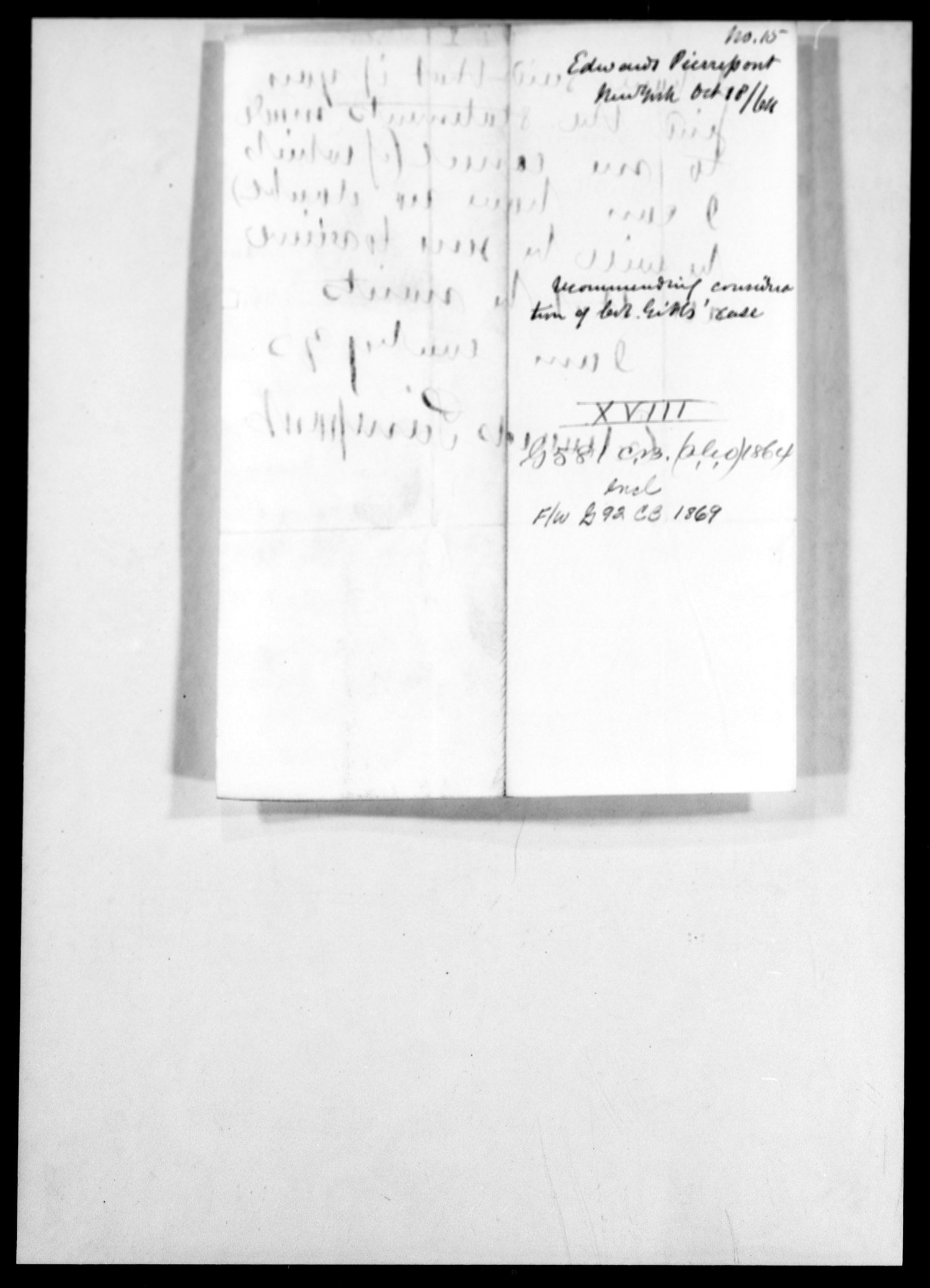
Edwards Pierrepont to Sec. Stanton, urging consideration of Col. Gibbs's case (enclosure) (G051)
Open this item for a closer view. For its meaning, citation and any transcription, read the research page that reproduces it. This collection can contain portraits, maps and enhancements as well as original records.
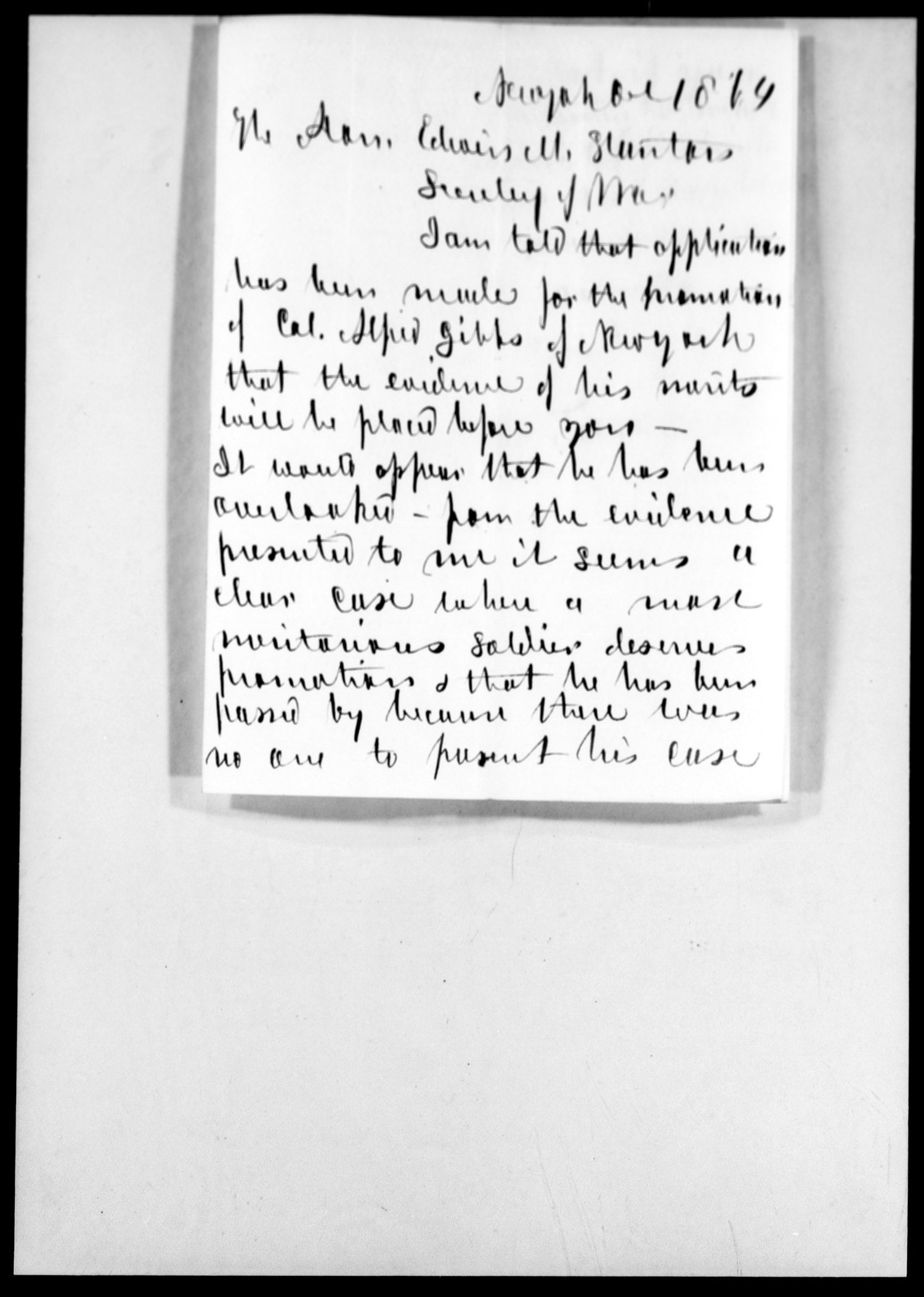
Edwards Pierrepont to Sec. Stanton, urging consideration of Col. Gibbs's case (enclosure) (G052)
Open this item for a closer view. For its meaning, citation and any transcription, read the research page that reproduces it. This collection can contain portraits, maps and enhancements as well as original records.