The book is finished. GIBBS: The Forgotten Warrior of the First New York Dragoons, by Garland H. Green Jr. How to order is coming soon; you can reserve a copy now. Reserve a copy →
Alfred GibbsThe research archive
Menu

The evidence behind your reading · On the Word of an Officer

Read the records behind this chapter

Follow a letter, report, recollection or family record beyond the passage in the book. Each source below shows where the chapter uses it and what to examine. Open it here, compare its pages, and return without losing your chapter.

Begin with a question: What did “word of honor” require of a paroled officer?

Go beyond the book · On the Word of an Officer

You are reading Santa Fe · August 28, 1861. The guided starting point below explores Fort Union, New Mexico Territory. Evidence for this particular section has not yet been separately assembled; chapter references remain available below.

Understand what an officer’s parole promised

After surrender, being free to travel did not mean being free to fight. The parole and the letter transmitting it explain the obligation that followed Gibbs away from New Mexico.

New to these records? A little context.

A docket is an office’s summary or filing note; it may be on a wrapper rather than in the letter. An endorsement is another official’s response or forwarding note. Read each voice and date separately. A transcription is a reading of a document, with uncertain words marked where the exhibit provides them.

What did “word of honor” require of a paroled officer?
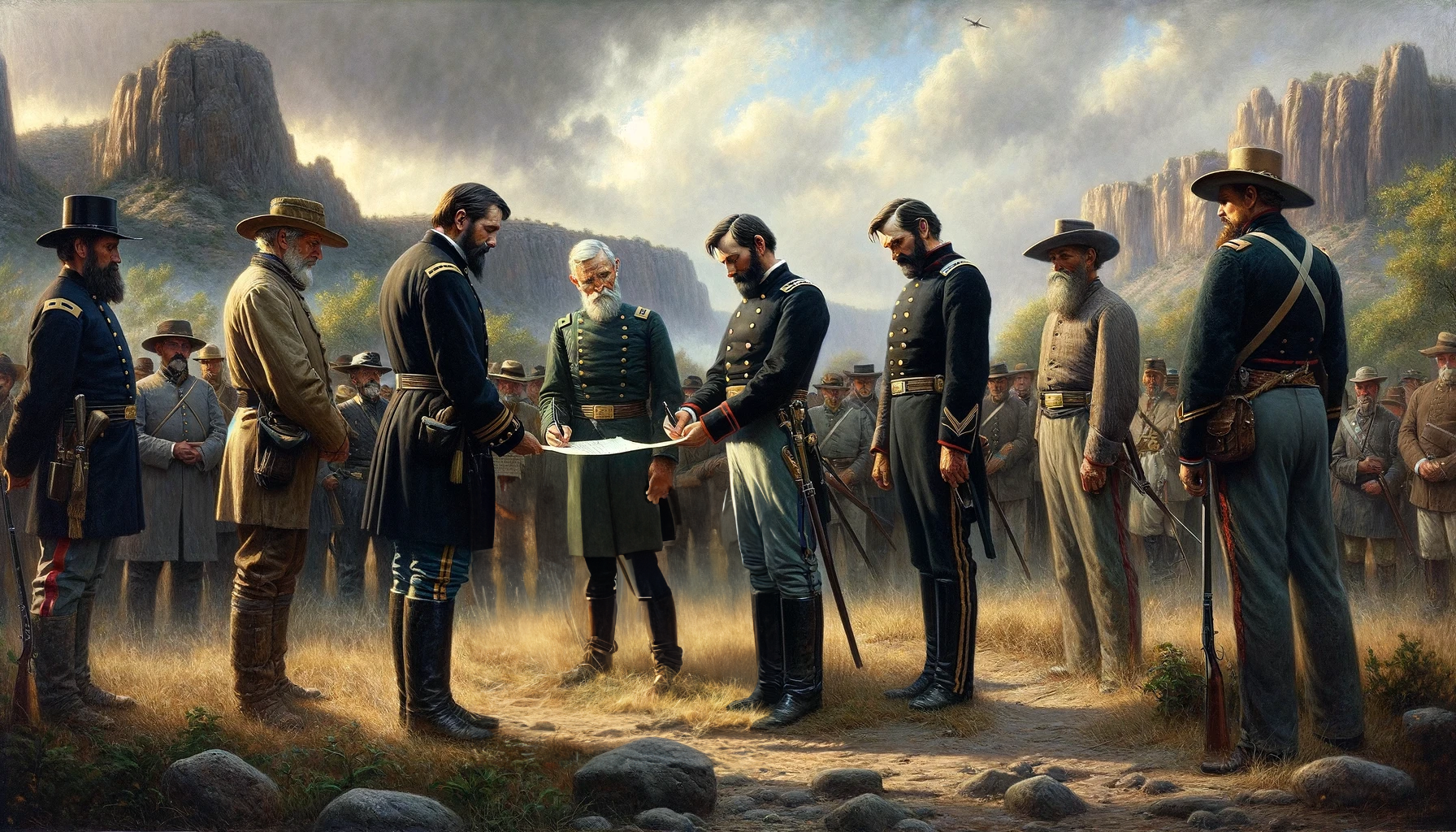
cooks pass battle - Gibbs - remastered
cooks pass battle - Gibbs - remastered · From the linked account. Its original credits and image status are preserved there.

Read the source exhibit & its explanation

The parole and the letter that transmitted it

The printed correspondence contains Gibbs’s promise not to act in a belligerent capacity and the administrative forwarding of that promise. It shows why captivity continued to shape his service.

What to examine: Read the enclosure’s terms and distinguish them from the covering letter and endorsement. Compare their dates before drawing a single timeline.
Keep this distinction in mind: Parole and exchange are different. A promise not to fight does not establish when an officer was officially released from that promise.

Keep your question in view as you explore. The reading tray retains On the Word of an Officer → Santa Fe. Close it to return to this point, or deliberately choose to explore outside the chapter.

4 distinct source records · Page 1 of 1

Excerpt, p. 160 (copyrighted book; the passage only, shown under fair use)
Excerpt, p. 160 (copyrighted book; the passage only, shown under fair use) · Supplied page connection.

Modern book (secondary)

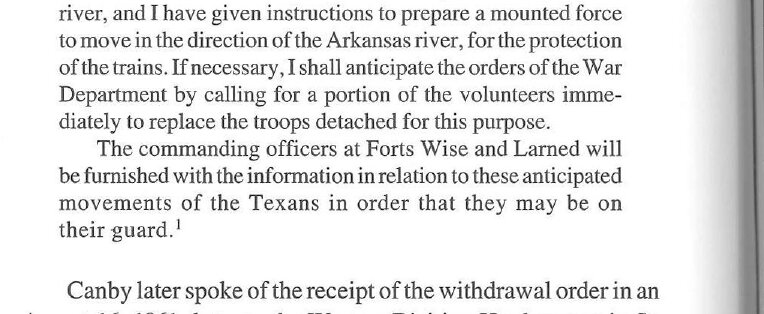
Incident at San Augustine Springs

Read the historian’s argument in its published context. This is secondary interpretation, not an original eyewitness record. Copyrighted text is not reproduced here.

Your passage · Santa Fe

via Forts Wise and Larned.

Secondary source; page to confirm. Read the surrounding record before drawing a conclusion.

· Page references are recorded with each quotation.

Where this chapter uses this source · 1 passage

Santa Fe

via Forts Wise and Larned.

Secondary source; page to confirm

Examine quotation 19-010 →

Open the record and its pages →

33 catalogued pages. Transcription and image availability are shown on the document view.

Citation and source credit

Wadsworth, R. (2002). Incident at San Augustine Springs: A hearing for Major Isaac Lynde. Yucca Tree Press.

Citation details need review.

Printed page (archive.org leaf 48) · Internet Archive scan
Printed page (archive.org leaf 48) · Internet Archive scan · Supplied page connection.

Named source

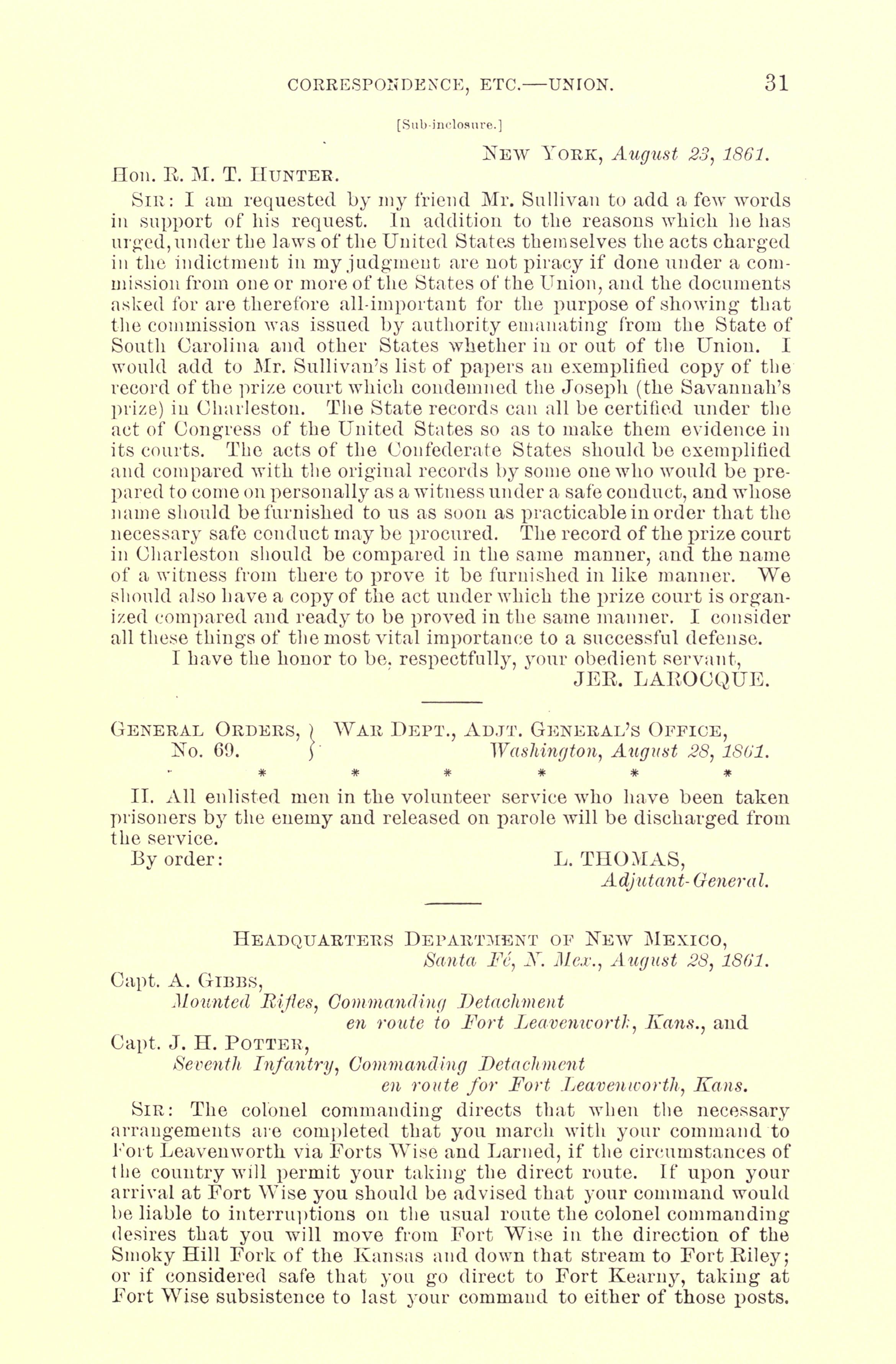
U.S. War Department (1898). The war of the rebellion: Official records of the Union and Confederate armies, Series II, Vol. 3 (Gibbs parole, Fort Wayne and exchange correspondence, 1861-1862)

Begin with who made this record, when and for whom. Compare the book’s words with the scan and the surrounding transcription. Distinguish what the writer observed from a request, opinion or later interpretation.

Your passage · Santa Fe

Capt. A. GIBBS, Mounted Rifles, Commanding Detachment en route to Fort Leavenworth, Kans.,

Source identified; supplied locator: p. 31 · Review flag: close match, not exact: check the wording against the scan. Read the surrounding record before drawing a conclusion.

· see page labels

Where this chapter uses this source · 4 passages

Santa Fe

Capt. A. GIBBS, Mounted Rifles, Commanding Detachment en route to Fort Leavenworth, Kans.,

Source identified; supplied locator: p. 31 · Review flag: close match, not exact: check the wording against the scan

Examine quotation 19-009 →

Santa Fe

Your command will be armed for defense against the Indians, for the protection of the public property in your charge and against aggression from marauding parties of any class.

Source identified; supplied locator: p. 32 · Review flag: close match, not exact: check the wording against the scan

Examine quotation 19-011 →

Santa Fe

The obligations of the parole given by the officers and men of your command apply only to the Confederate States,

Source identified; supplied locator: p. 32

Examine quotation 19-012 →

Santa Fe

the non-commissioned officers and men should understand that their present condition so far from relaxing imposes upon them additional obligations of obedience, good order and discipline.

Source identified; supplied locator: p. 32 · Review flag: close match, not exact: check the wording against the scan

Examine quotation 19-013 →

Open the record and its pages →

16 catalogued pages. Transcription and image availability are shown on the document view.

Citation and source credit

U.S. War Department. (1898). The war of the rebellion: A compilation of the official records of the Union and Confederate armies (Series II, Vol. 3). Government Printing Office. https://archive.org/details/warofrebellion0203rootrich

Citation details need review.

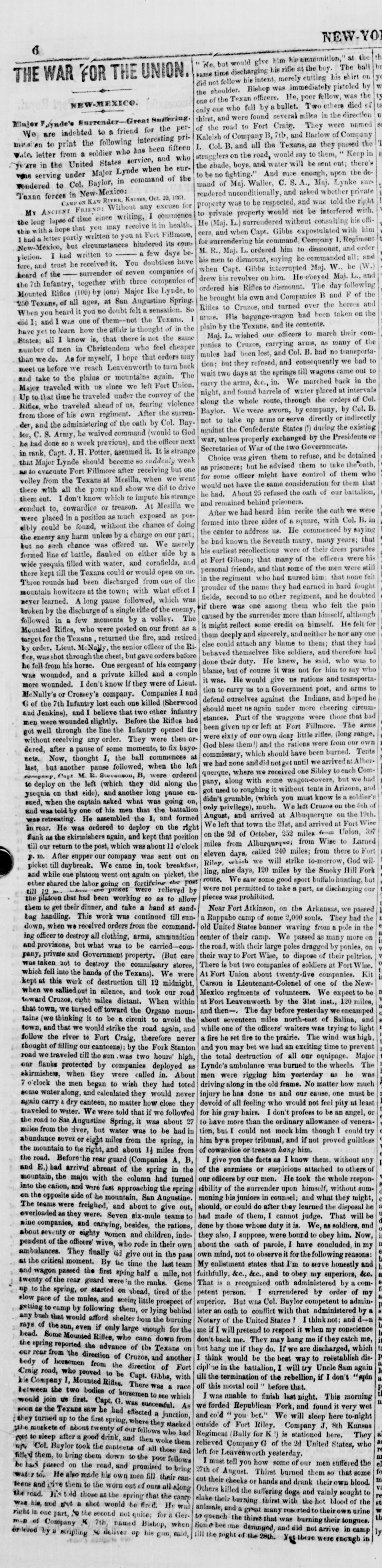
New-York Daily Tribune, 13 Nov 1861, p. 6, the letter (columns 1-2)
New-York Daily Tribune, 13 Nov 1861, p. 6, the letter (columns 1-2) · Document preview; the quoted page may differ.

Newspaper

New-York Daily Tribune, 13 November 1861, page 6: Major Lynde's Surrender

Check the newspaper title and issue date. Who supplied the report, how soon after the event was it printed, and what could the writer know?

Your passage · Santa Fe

252 miles from Union, 397 miles from Alburqurque

Page connection supplied; check matching method. Read the surrounding record before drawing a conclusion.

·

Where this chapter uses this source · 8 passages

Santa Fe

252 miles from Union, 397 miles from Alburqurque

Page connection supplied; check matching method

Examine quotation 19-014 →

Santa Fe

eleven days, called 240 miles

Page connection supplied; check matching method

Examine quotation 19-015 →

Santa Fe

nine days, 120 miles by the Smoky Hill Fork route.

Page connection supplied; check matching method

Examine quotation 19-016 →

Santa Fe

We saw some good sport buffalo hunting, but were not permitted to take a part, as discharging our pieces was prohibited.

Page connection supplied; check matching method

Examine quotation 19-017 →

Santa Fe

the old United States banner waving from a pole in the center of their camp.

Page connection supplied; check matching method

Examine quotation 19-018 →

Santa Fe

under the convoy of the Rifles, who traveled ahead of us, fearing violence from those of his own regiment.

Page connection supplied; check matching method

Examine quotation 19-019 →

Santa Fe

Major Lynde's ambulance was burned to the wheels.

Page connection supplied; check matching method

Examine quotation 19-020 →

Santa Fe

No matter how much injury he has done us and our cause, one must be devoid of all feeling who would not feel pity at least for his gray hairs.

Page connection supplied; check matching method

Examine quotation 19-021 →

Open the record and its pages →

3 catalogued pages. Transcription and image availability are shown on the document view.

Citation and source credit

The war for the Union. New-Mexico. Major Lynde's surrender. Great suffering. (1861, November 13). New-York Daily Tribune, p. 6. Chronicling America, Library of Congress.

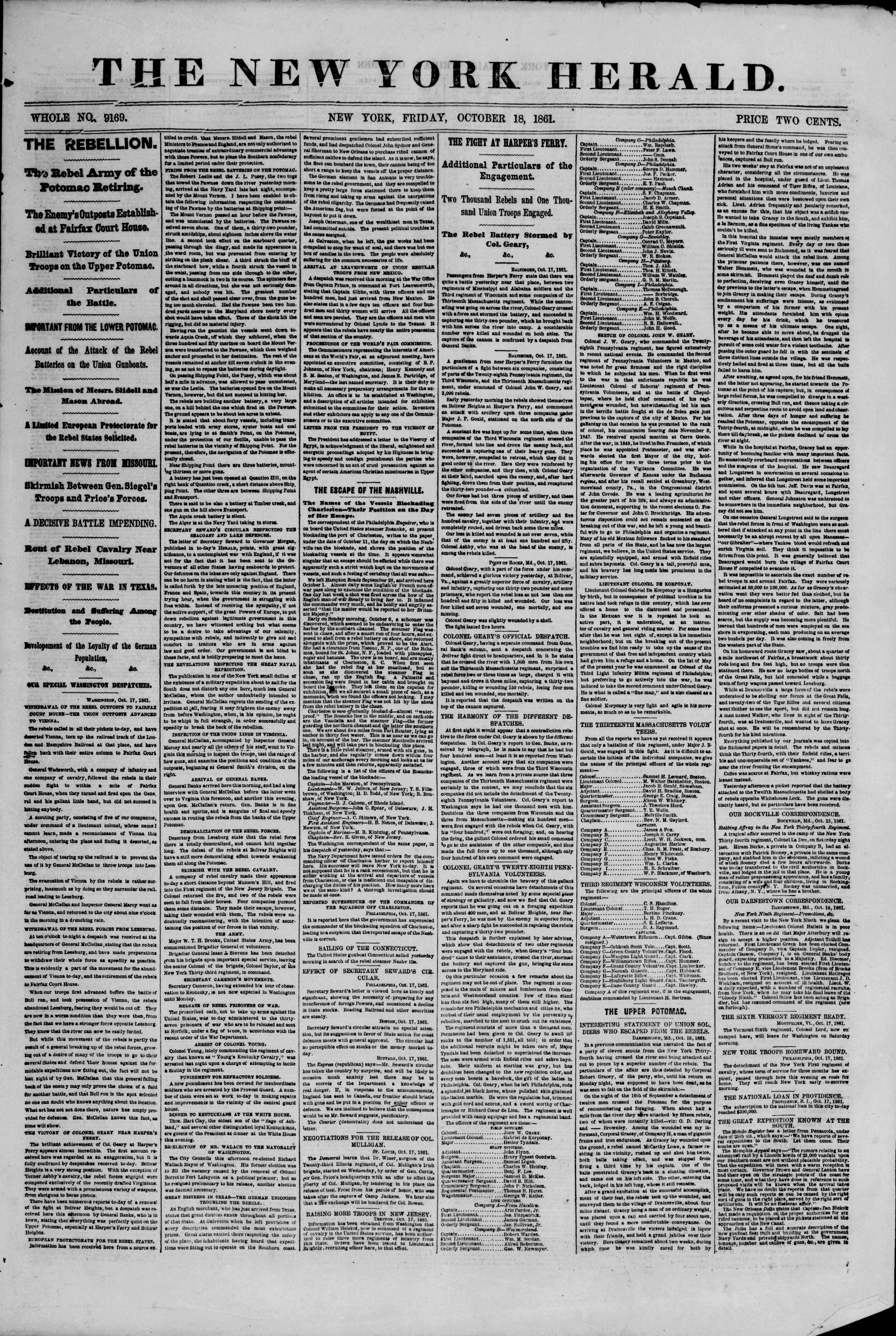
New York Herald, October 18, 1861, page 1 · Library of Congress scan
New York Herald, October 18, 1861, page 1 · Library of Congress scan · Document preview; the quoted page may differ.

Named source

New York Herald, 18 October 1861, p. 1

Begin with who made this record, when and for whom. Compare the book’s words with the scan and the surrounding transcription. Distinguish what the writer observed from a request, opinion or later interpretation.

Your passage · Santa Fe

stating that Captain Gibbs, with three officers and one hundred men, had just arrived from New Mexico.

Source identified; supplied locator: pp. 1. Read the surrounding record before drawing a conclusion.

· pp. 1

Where this chapter uses this source · 1 passage

Santa Fe

stating that Captain Gibbs, with three officers and one hundred men, had just arrived from New Mexico.

Source identified; supplied locator: pp. 1

Examine quotation 19-022 →

Open the record and its pages →

1 catalogued pages. Transcription and image availability are shown on the document view.

Citation and source credit

New York Herald, 18 October 1861, p. 1

Citation details need review.

← Continue your chapter journey · Follow the people in this chapter →

Your chapter stays open
Your book journey · On the Word of an Officer · Santa FeExplore the evidence

Compare the original with its transcription and citation.

Explore outside this journey ↗

This chapter’s source collection as JSON