The book is finished.GIBBS: The Forgotten Warrior of the First New York Dragoons, by Garland H. Green Jr. How to order is coming soon; you can reserve a copy now. Reserve a copy →
Start with the guided reading below, or search this chapter for a person, quotation or topic. Follow the writing and evidence behind this part of GIBBS.
What would you like to explore in Ready for Duty?
Go beyond the book · Ready for Duty
A commission becomes a sworn obligation
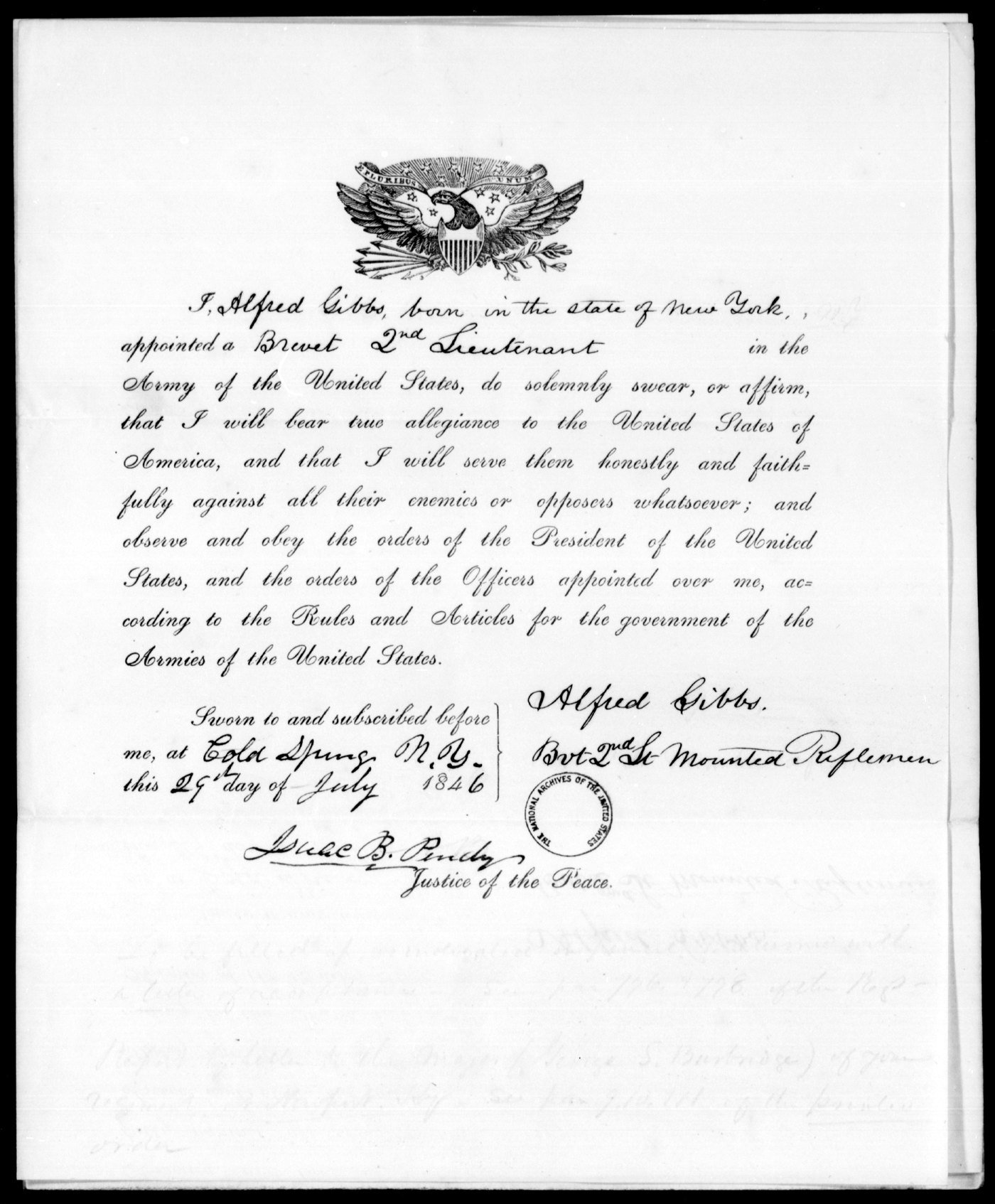
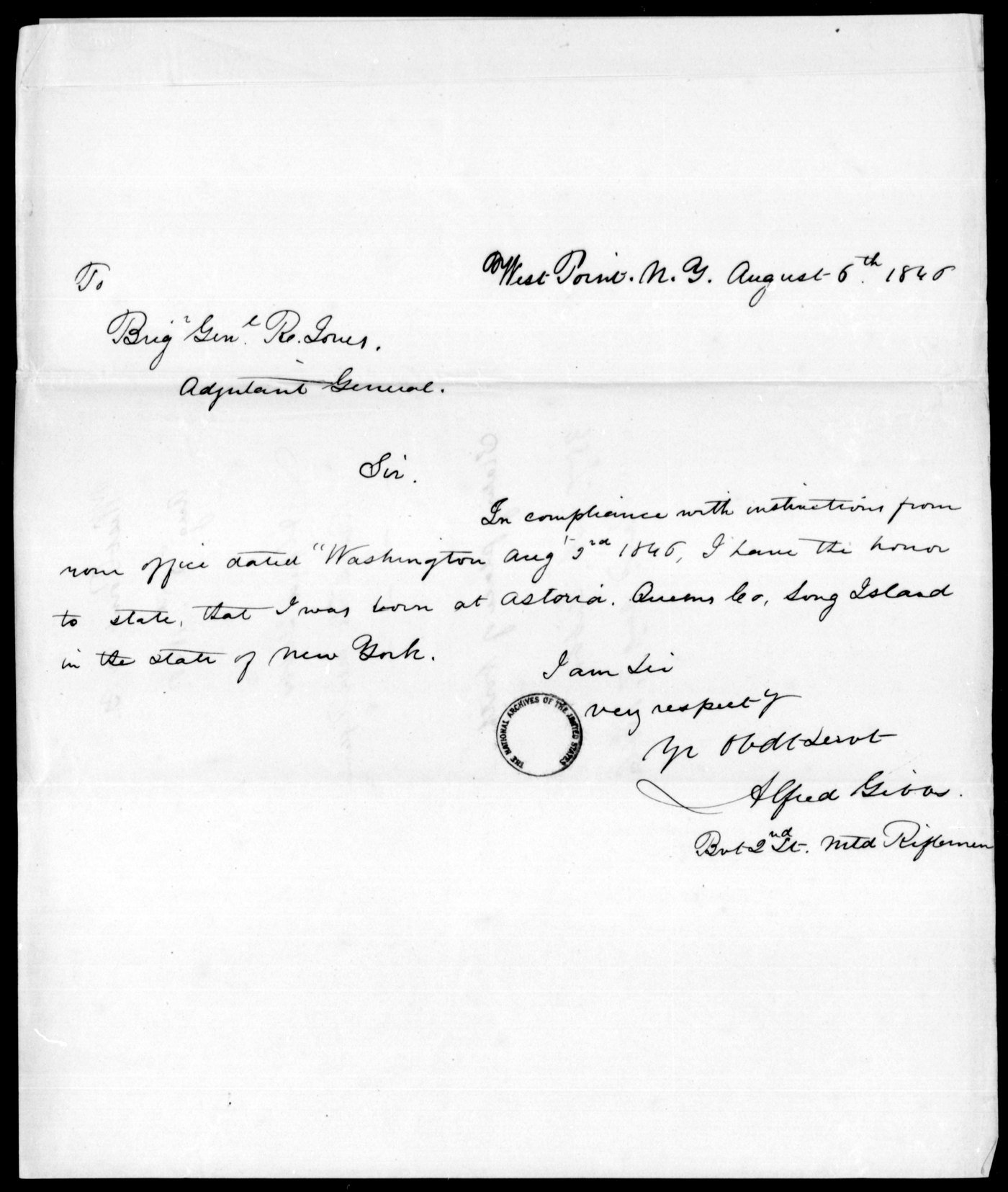
The new officer accepted his appointment and swore an oath at Cold Spring. His file preserves both an official beginning and the ordinary questions an office still needed answered about him.
New to these records? A little context.
A docket is an office’s summary or filing note; it may be on a wrapper rather than in the letter. An endorsement is another official’s response or forwarding note. Read each voice and date separately. A transcription is a reading of a document, with uncertain words marked where the exhibit provides them.
What made Alfred an officer in the written record?
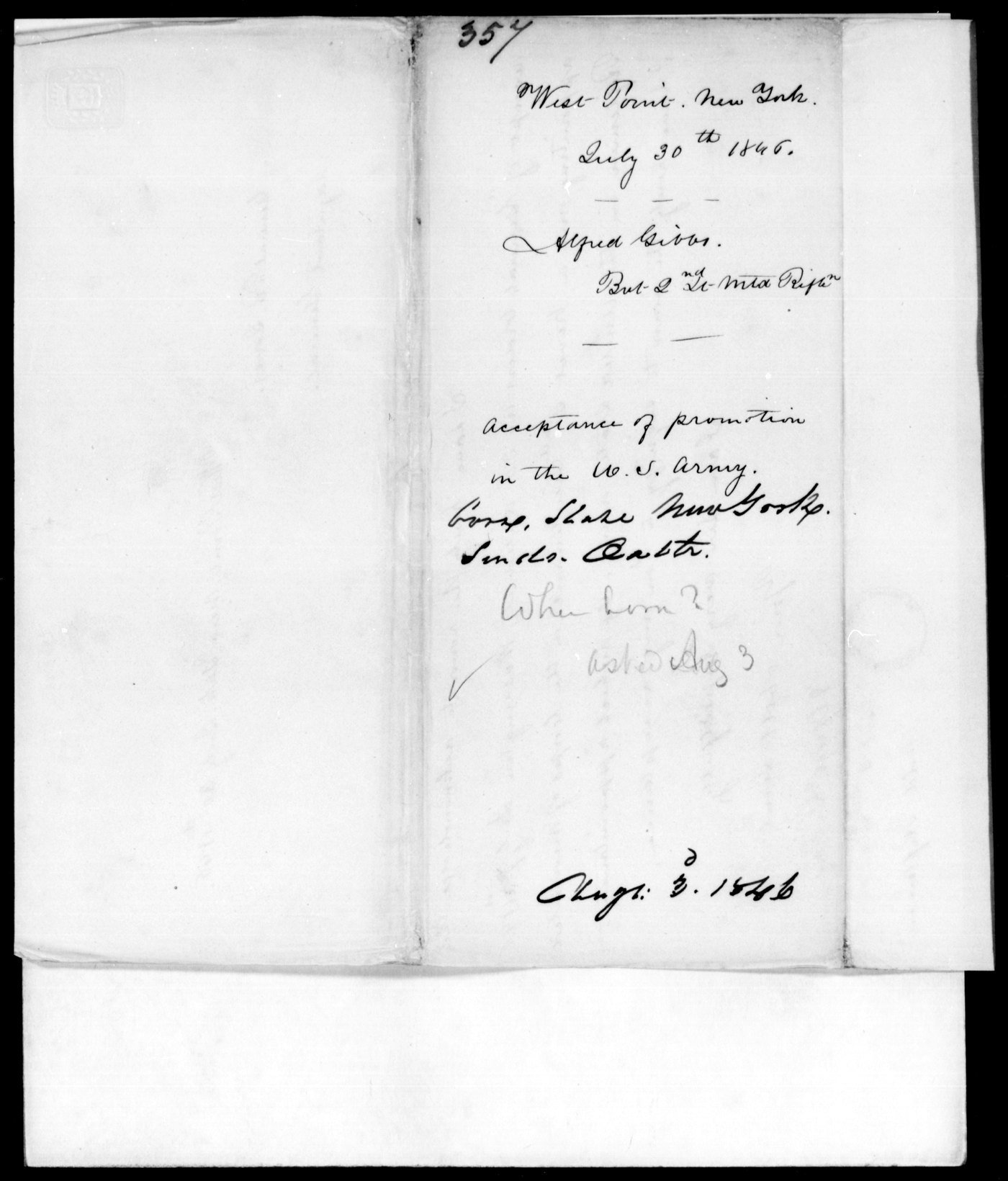
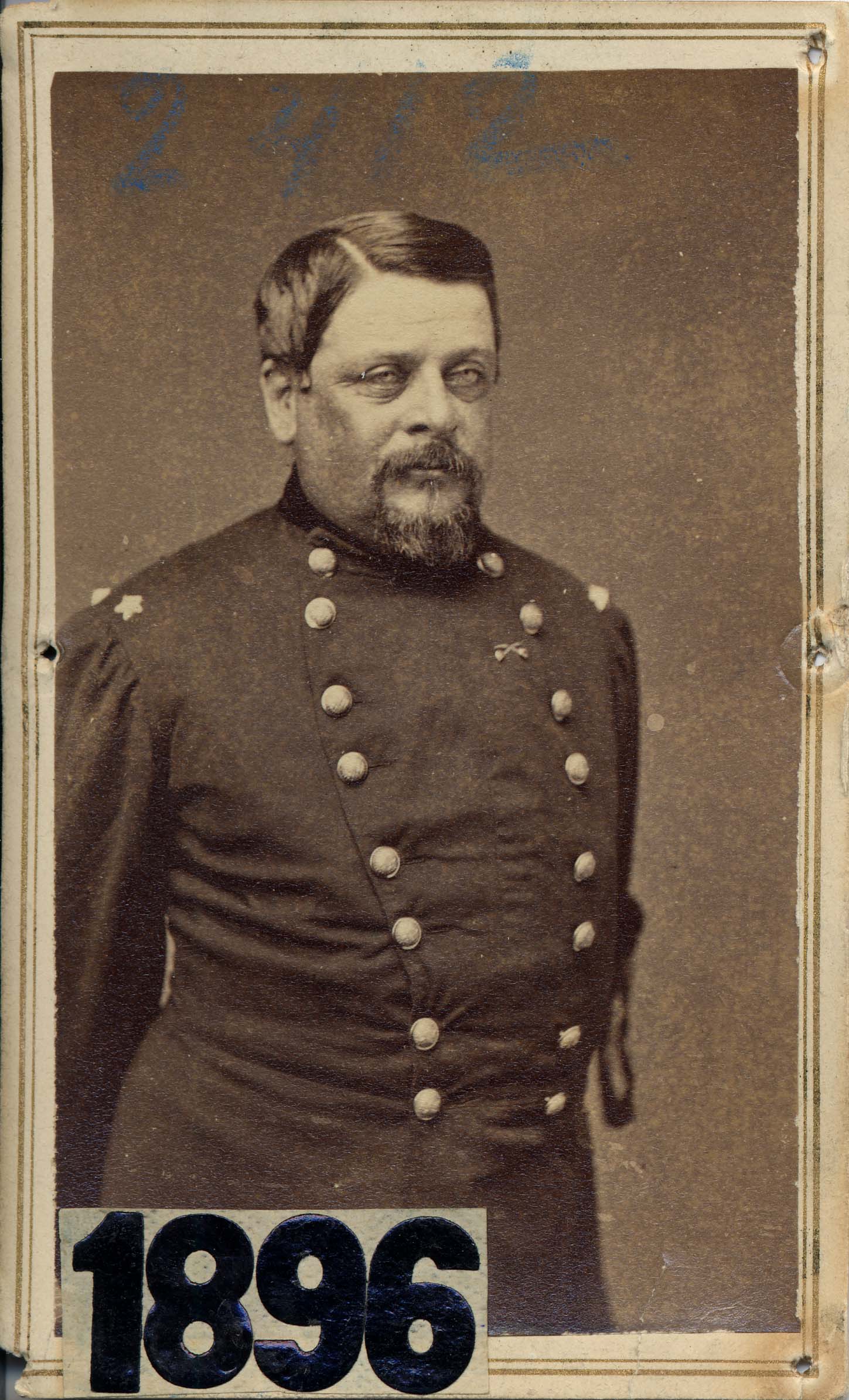
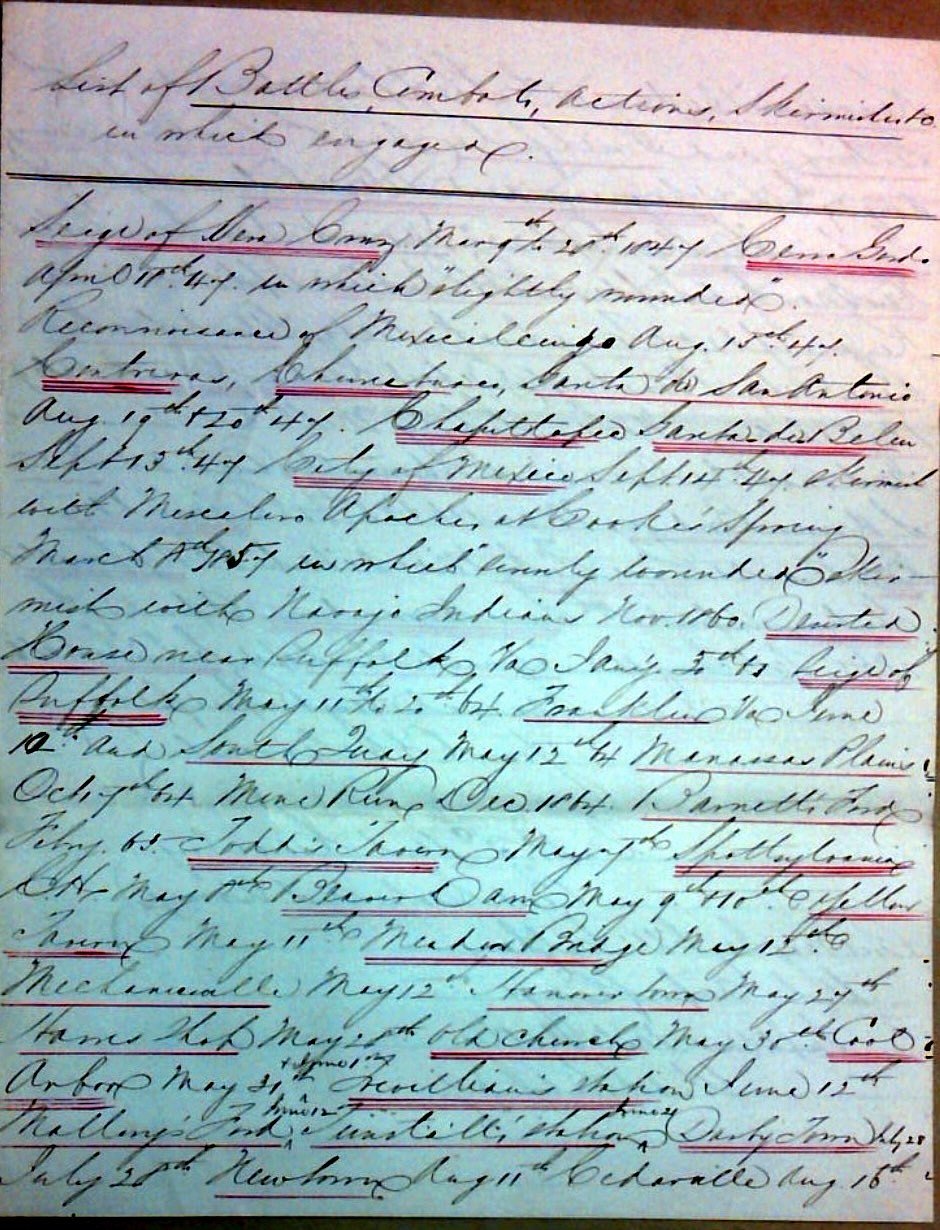
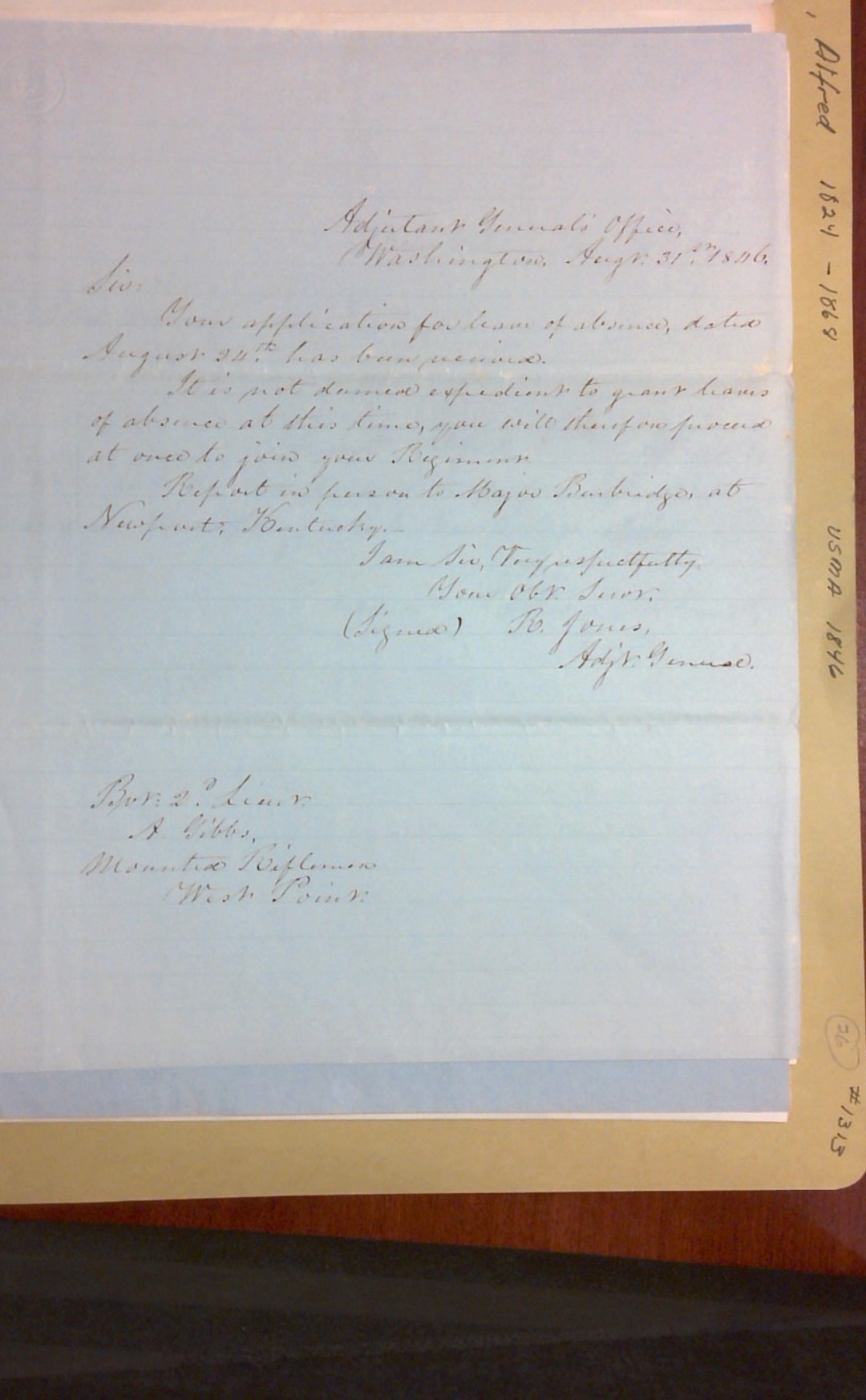
Alfred Gibbs AGO letter 28637871 28637871_001.jpg · From the linked account. Its original credits and image status are preserved there.
Read the source exhibit & its explanation
The acceptance and oath packet, July 1846
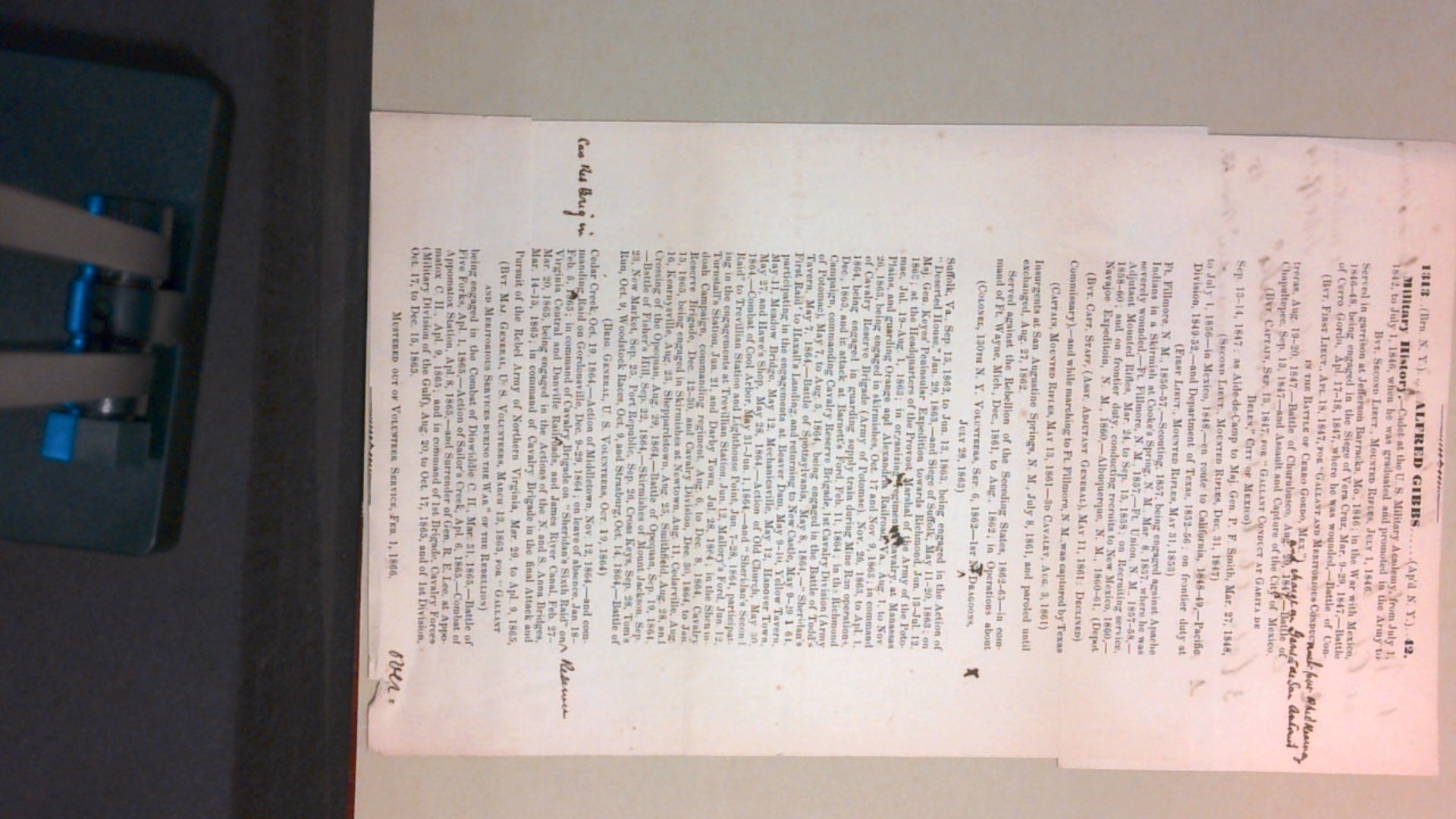
The acceptance packet includes the oath and the clerk’s question about his birth. These sheets let us see appointment, acknowledgment, and personal identification as distinct parts of the record.
What to examine: Compare the acceptance letter, oath, and wrapper. Identify who signed each item and when, and locate the answer giving Astoria, Queens County, Long Island.
Keep this distinction in mind: The packet contains several dates for different acts. Keep the oath, letter, and clerical receipt separate when constructing a chronology.
Keep your question in view as you explore. The reading tray retains Ready for Duty. Close it to return to this point, or deliberately choose to explore outside the chapter.
Follow a life beyond the page
People you meet here
The book brings you into these lives. Follow a person to the family, service and research records available here. Pension material is identified separately from biography and recollection.
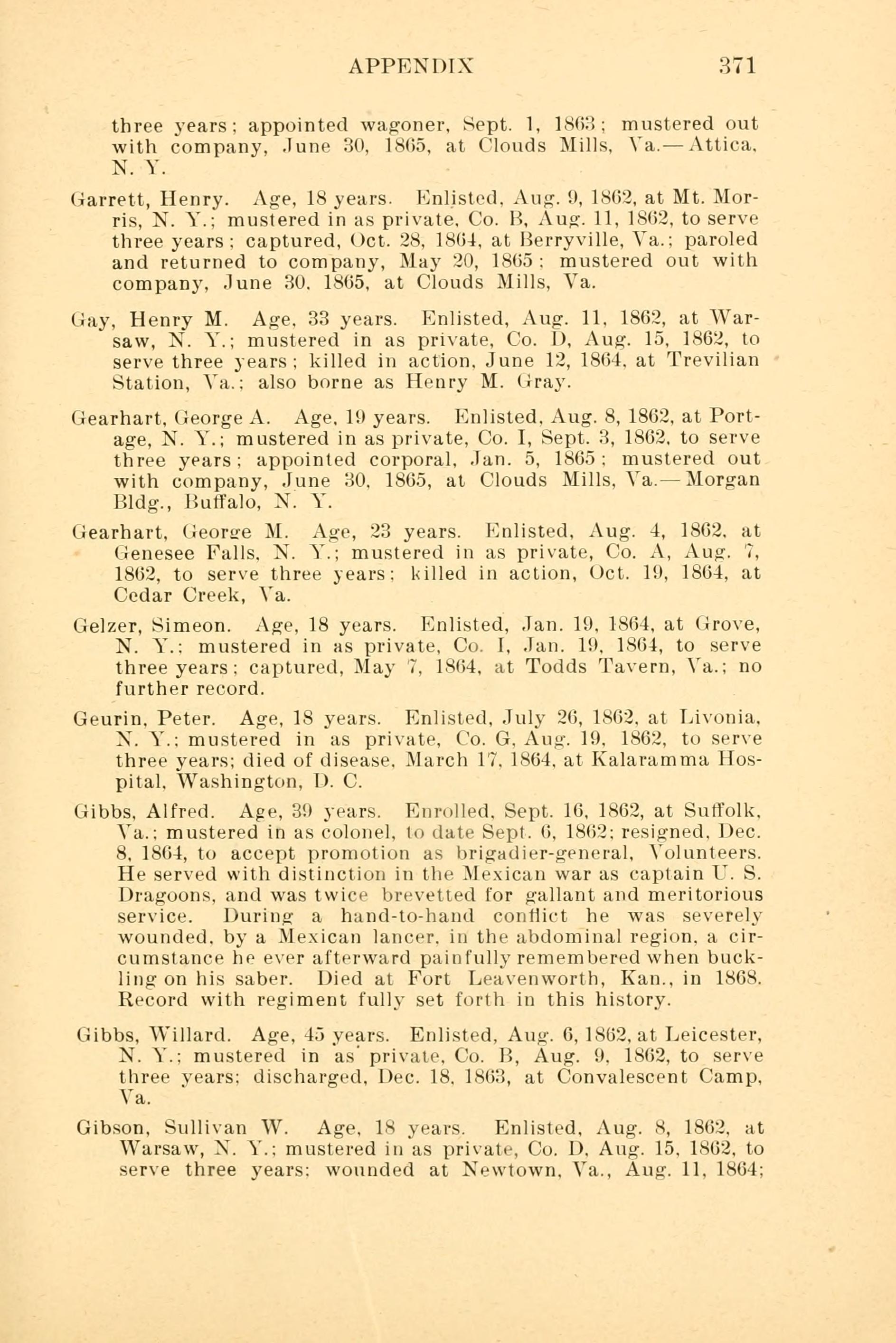
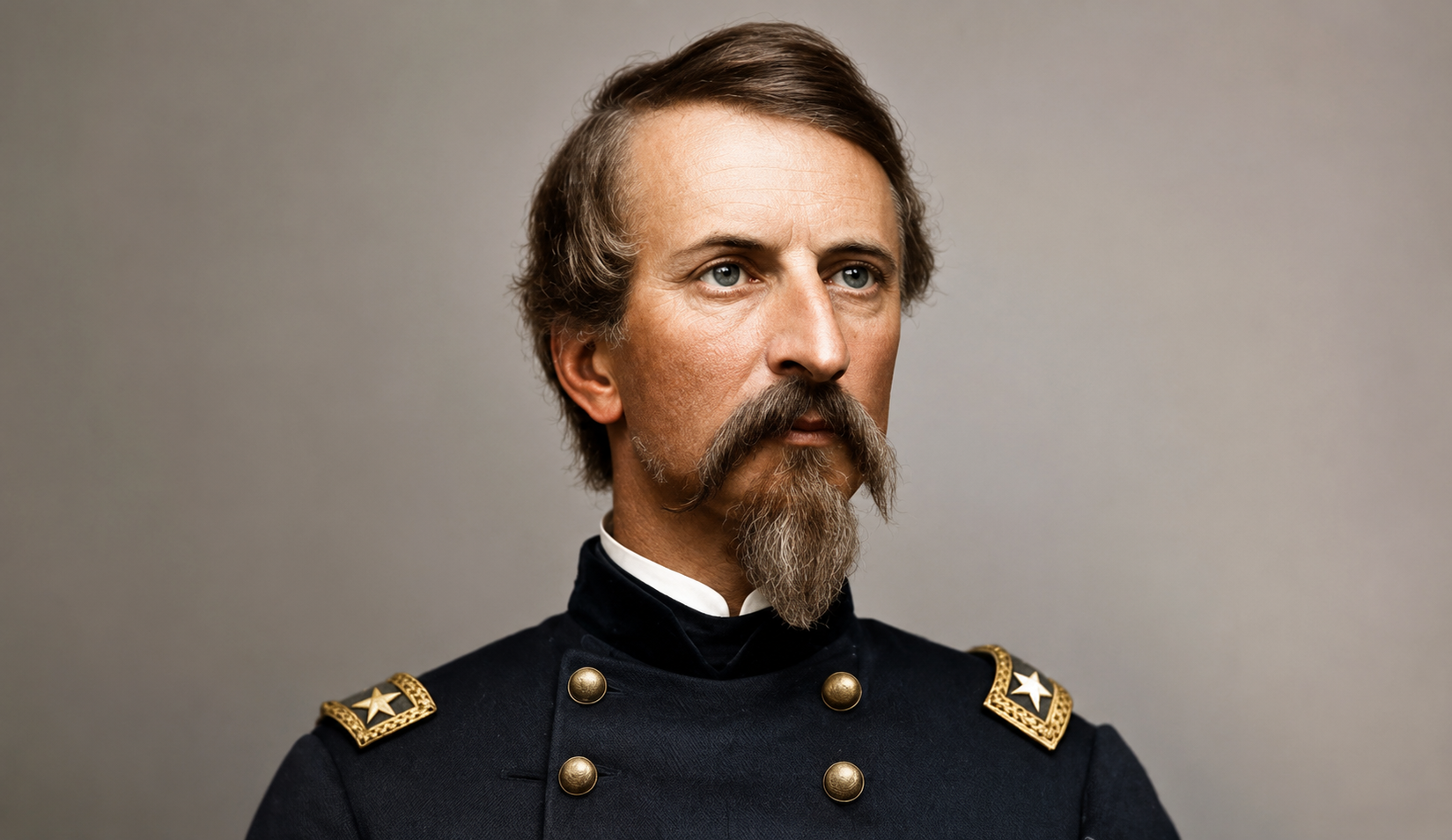
Follow Gibbs through the service and medical records, then Peggy’s petitions after his death. These sources let you distinguish what a doctor observed, what a widow asked for and what an official record actually establishes.
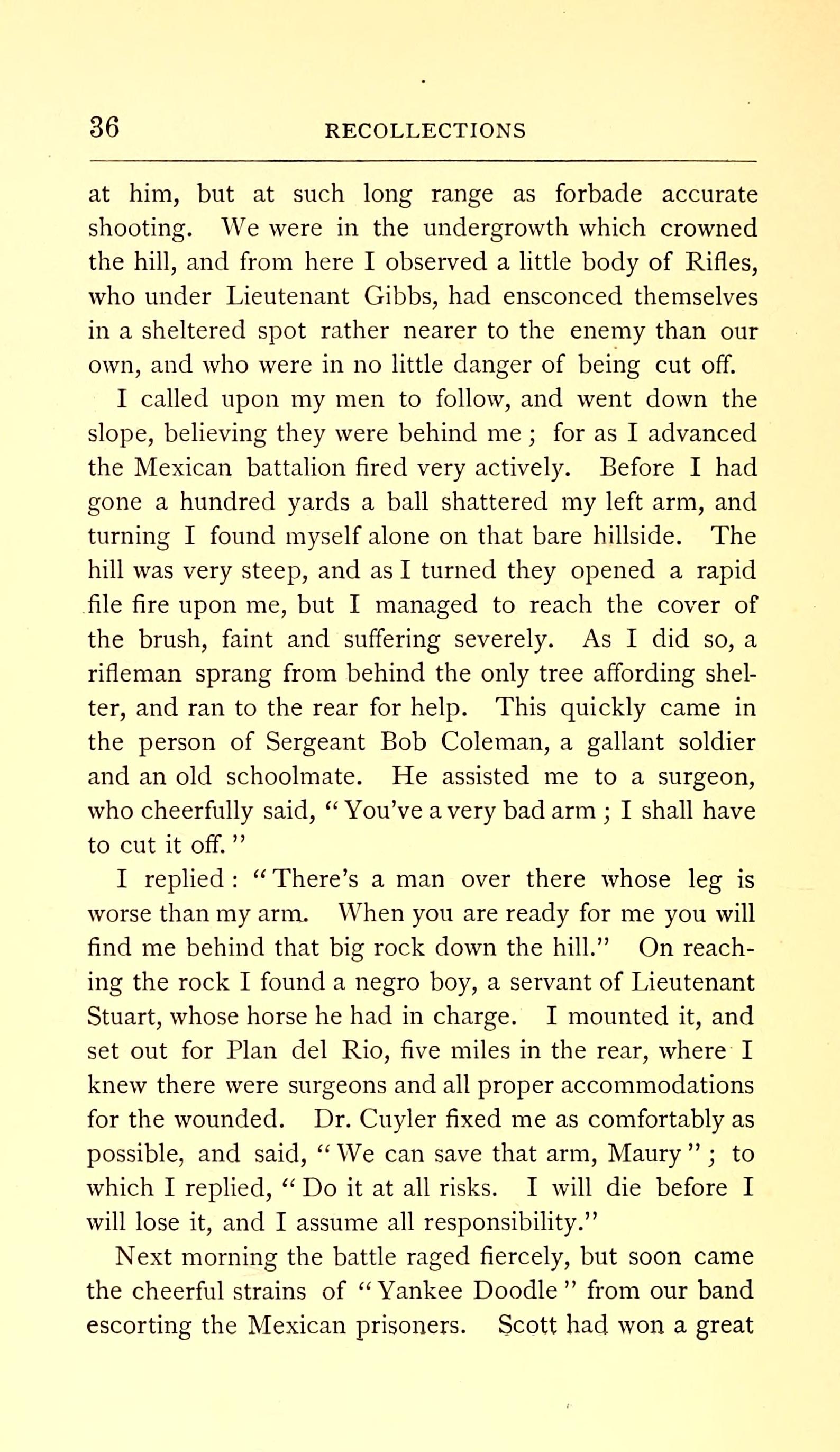
Maury supplies recollections of Academy life and later service. Notice when a remembered classroom detail comes from a classmate's account rather than Gibbs's own words.
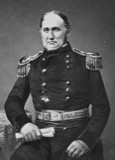
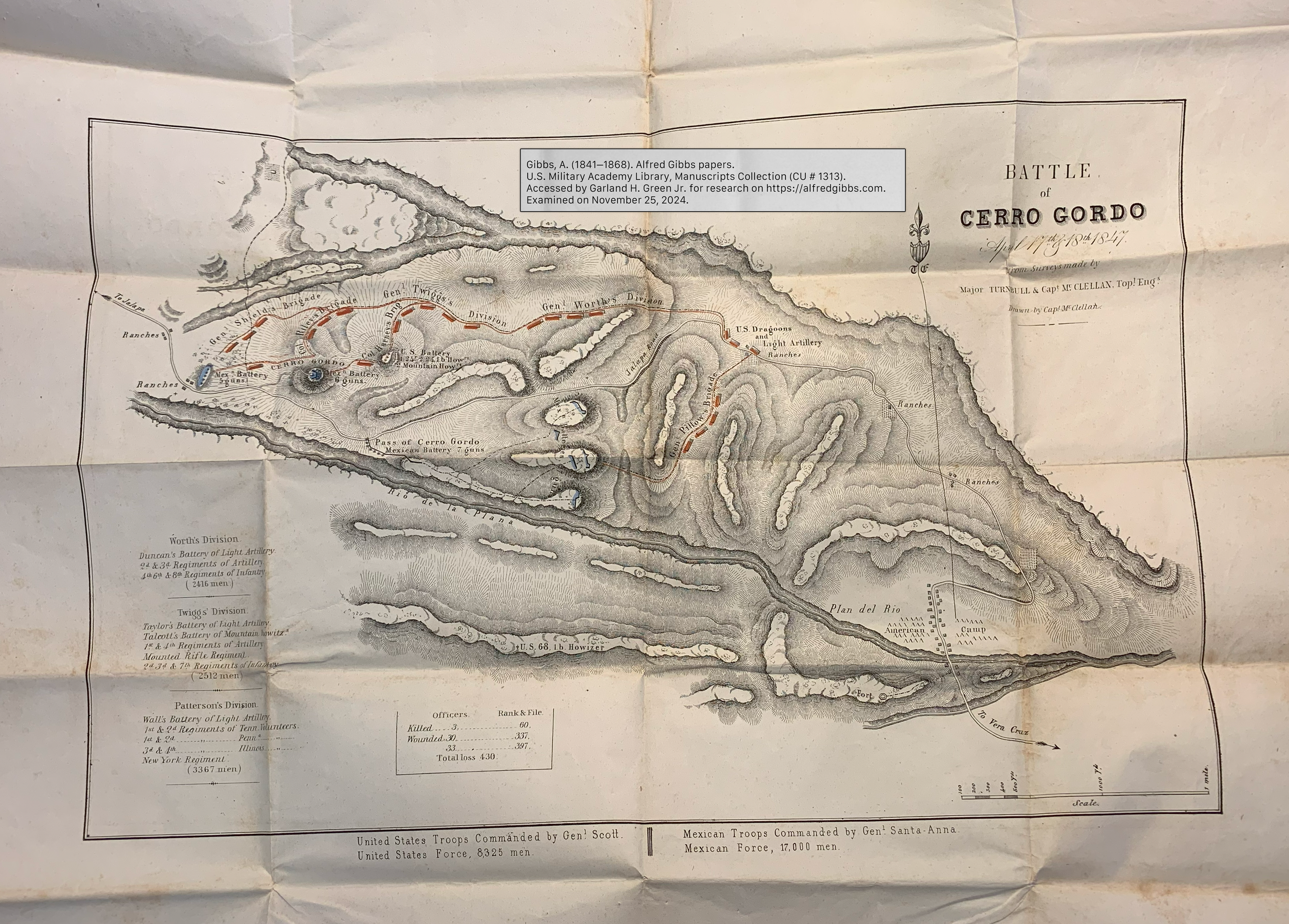
The Rifles fought in Twiggs’s division in Mexico. His command places the young Gibbs’s actions within the larger battle rather than leaving the regiment isolated on the page.
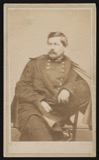
McClellan was Gibbs's West Point classmate before he became a Union commander. Garland's connected essays and letters let you explore those relationships beyond the familiar public reputation.
These connections come from the v172 manuscript and existing subject pages. A pension not connected here may still exist elsewhere. Namesakes and uncertain identities are not silently joined.
Follow the words into the evidence
What caught your attention?
Find a line from your reading, then follow its document and the record around it. Matching words helps locate evidence; checking who wrote them, when, and why helps you understand it.
Source identified; supplied locator: sheet 6 (National Archives image 6) · Review flag: Identity resolved (his executed oath). Manuscript corrected at Garland's word, 8 Nov 2026: "put his hand on the book" removed; the chapter now says he swore and signed the oath.