The book is finished.GIBBS: The Forgotten Warrior of the First New York Dragoons, by Garland H. Green Jr. How to order is coming soon; you can reserve a copy now. Reserve a copy →
Start with the guided reading below, or search this chapter for a person, quotation or topic. Follow the writing and evidence behind this part of GIBBS.
What would you like to explore in The Prospect of Epaulettes?
Go beyond the book · The Prospect of Epaulettes
Watch the cadet choose his first regiment
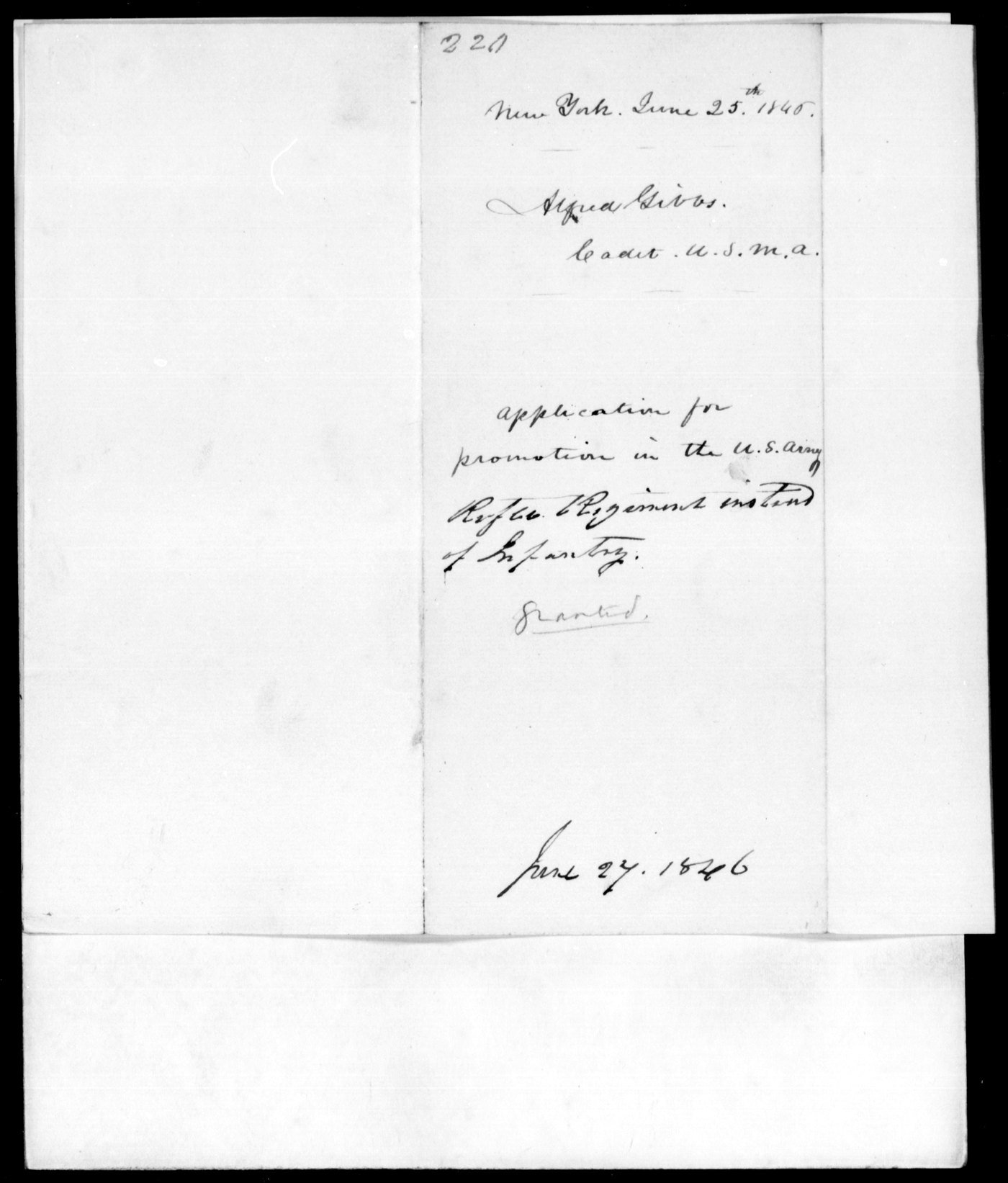
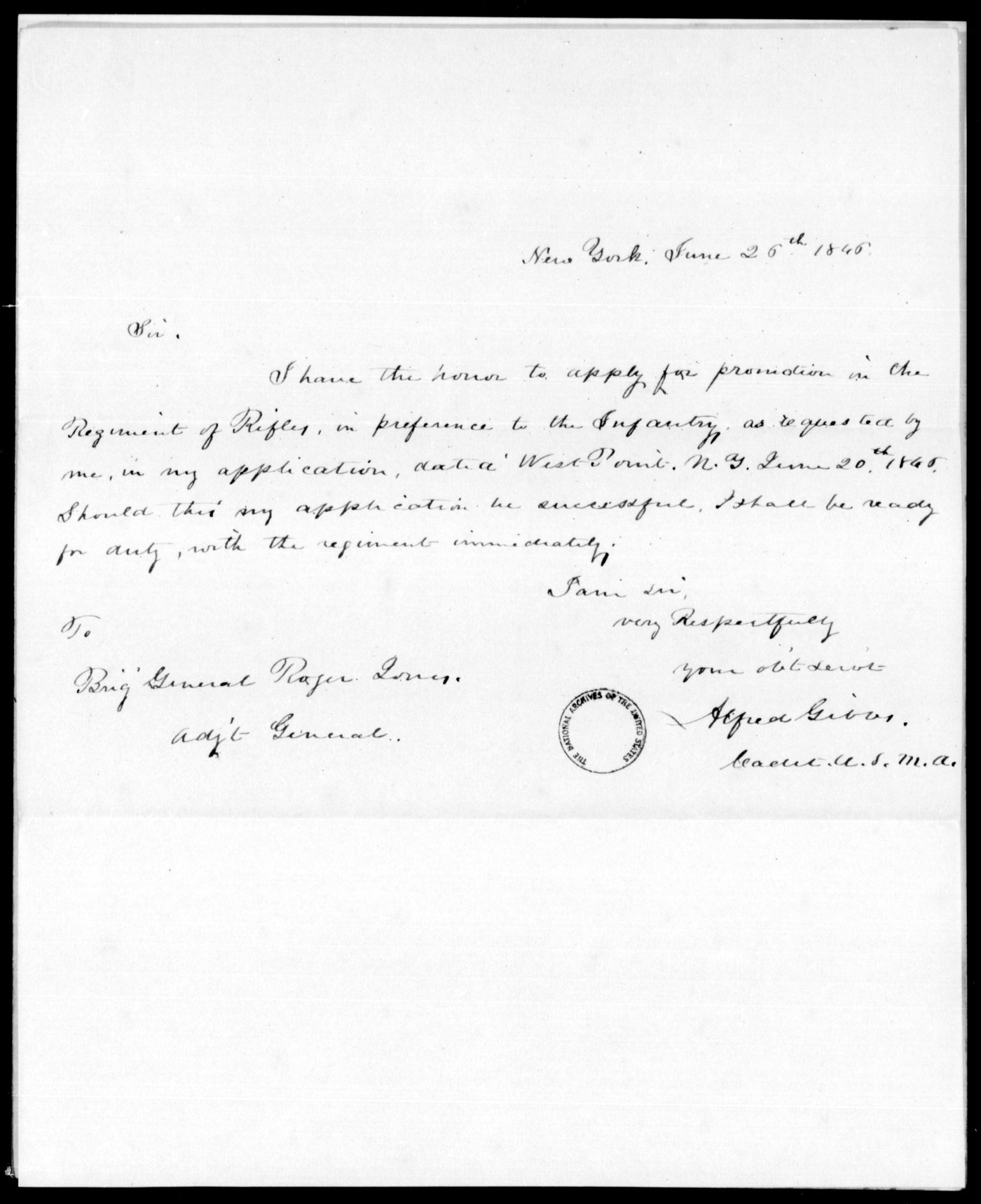
Near graduation, Alfred asked for the Regiment of Rifles rather than the Infantry. A short request and a clerk’s docket let us examine the transition from school to service.
New to these records? A little context.
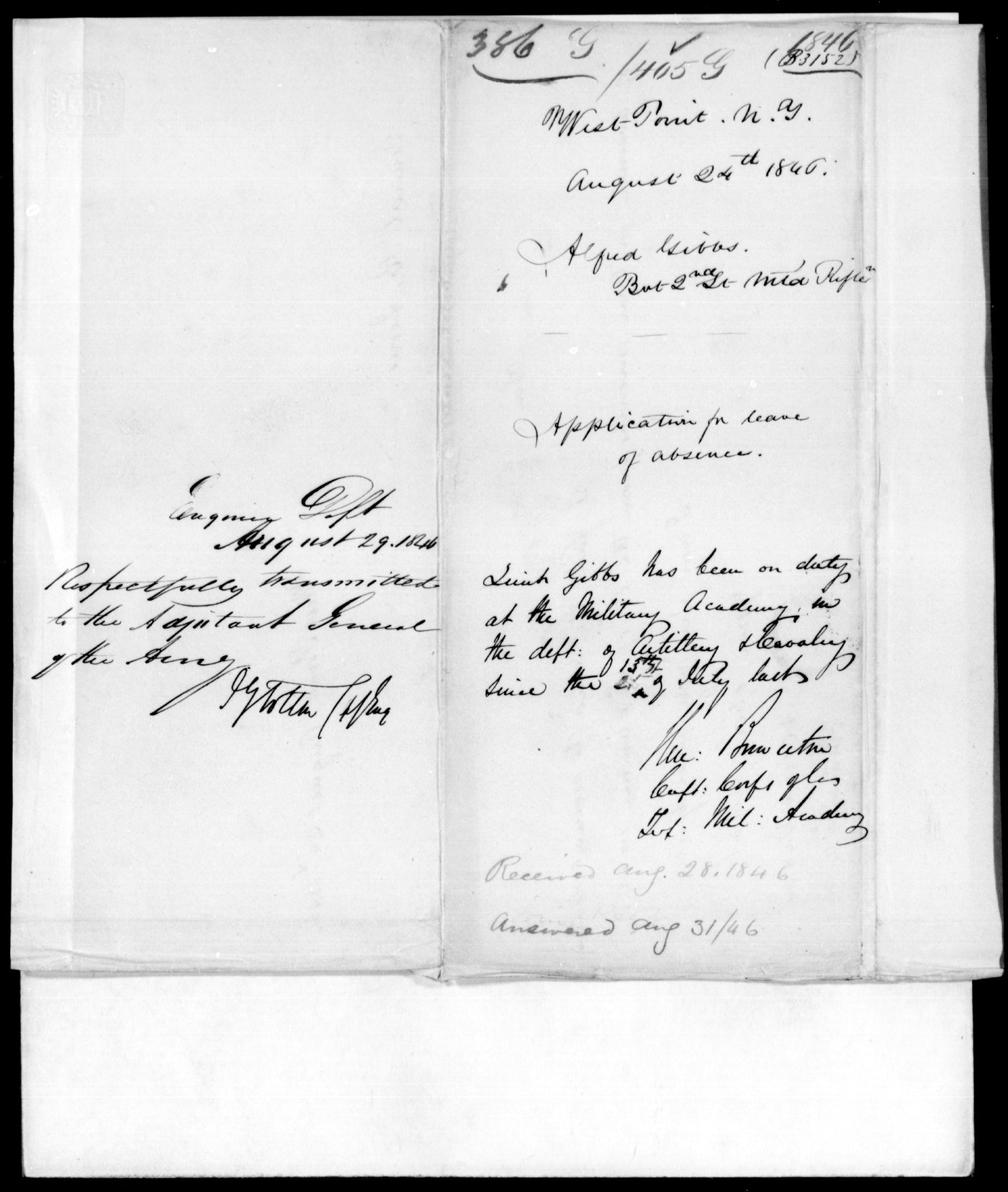
A docket is an office’s summary or filing note; it may be on a wrapper rather than in the letter. An endorsement is another official’s response or forwarding note. Read each voice and date separately. A transcription is a reading of a document, with uncertain words marked where the exhibit provides them.
What could a graduating cadet choose for himself?
Alfred Gibbs AGO letter 28637868 28637868_001.jpg · From the linked account. Its original credits and image status are preserved there.
Read the source exhibit & its explanation
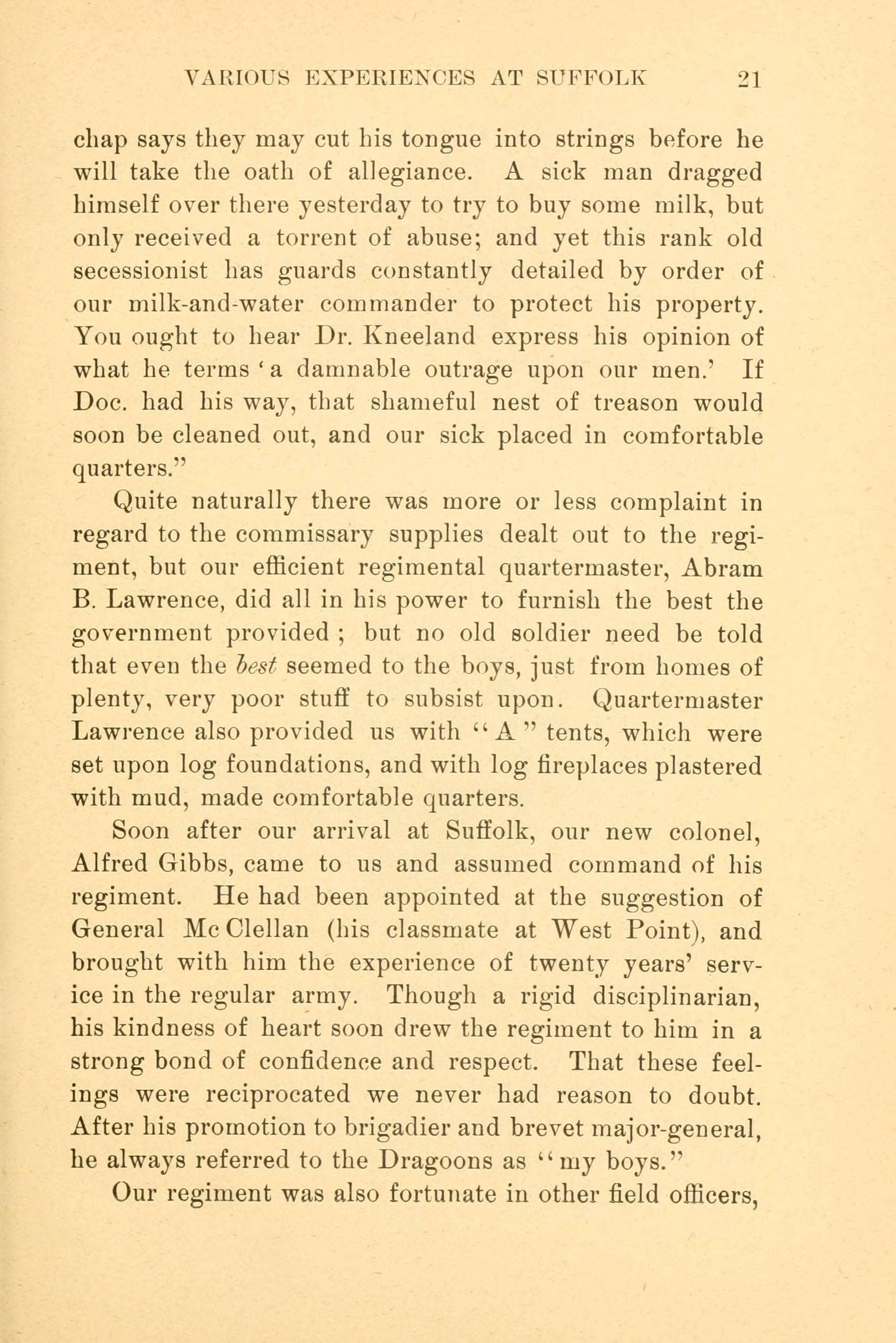
Alfred’s application for the Rifles, June 1846
The June 1846 application states his preference and readiness for duty. The wrapper records the request as granted, letting the reader compare the officer’s words with the office’s response.
What to examine: Read the letter and the docket separately. Compare their dates and find the sentence promising immediate readiness for duty.
Keep this distinction in mind: The wrapper’s date and the letter’s date need not be identical. This application establishes a request, not every circumstance of his later assignment.
Keep your question in view as you explore. The reading tray retains The Prospect of Epaulettes. Close it to return to this point, or deliberately choose to explore outside the chapter.
Follow a life beyond the page
People you meet here
The book brings you into these lives. Follow a person to the family, service and research records available here. Pension material is identified separately from biography and recollection.
Follow Gibbs through the service and medical records, then Peggy’s petitions after his death. These sources let you distinguish what a doctor observed, what a widow asked for and what an official record actually establishes.
Maury supplies recollections of Academy life and later service. Notice when a remembered classroom detail comes from a classmate's account rather than Gibbs's own words.
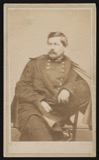
McClellan was Gibbs's West Point classmate before he became a Union commander. Garland's connected essays and letters let you explore those relationships beyond the familiar public reputation.
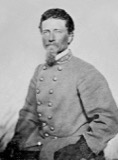
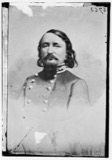
Pickett was Gibbs's classmate long before Gettysburg. Following his Academy setting broadens the person beyond the single battle most readers associate with his name.
Smith made Gibbs his aide after the Mexican War. His commands took them to the Pacific coast and Texas. Follow the commanding officer behind the travel, duties and personal relationships in these chapters.
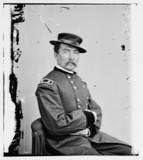
Sheridan connects the Academy's personal relationships with later cavalry command. Follow the people, recommendations and battle accounts rather than relying on a single famous image of the commander.
These connections come from the v172 manuscript and existing subject pages. A pension not connected here may still exist elsewhere. Namesakes and uncertain identities are not silently joined.
Follow the words into the evidence
What caught your attention?
Find a line from your reading, then follow its document and the record around it. Matching words helps locate evidence; checking who wrote them, when, and why helps you understand it.
Chapter quotations · 48 entries · Page 6 of 6
Text from your reading
every two months and from Captain McClellan and others of the party at intermediate t…
Source identified; supplied locator: scan image on Garland's page · Review flag: attribution: the scan beside this passage is a printed wedding announcement (1853), not The Gibbs Family of Rhode Island (1933); the 1933 book may quote it, but the scan is the original to cite
Source identified; supplied locator: scan image on Garland's page · Review flag: attribution: the scan beside this passage is a printed wedding announcement (1853), not The Gibbs Family of Rhode Island (1933); the 1933 book may quote it, but the scan is the original to cite