
The book is finished. GIBBS: The Forgotten Warrior of the First New York Dragoons, by Garland H. Green Jr. How to order is coming soon; you can reserve a copy now. Reserve a copy →
Alfred GibbsThe research archive
Menu

The evidence behind your reading · Melted Majesty

Read the records behind this chapter

Follow a letter, report, recollection or family record beyond the passage in the book. Each source below shows where the chapter uses it and what to examine. Open it here, compare its pages, and return without losing your chapter.

Begin with a question: What can a picture of 1776 actually tell us?

Go beyond the book · Melted Majesty

You are reading Litchfield, Connecticut · Summer 1776. The guided starting point below explores The road to Litchfield, Connecticut. Evidence for this particular section has not yet been separately assembled; chapter references remain available below.

From a fallen statue to a family story

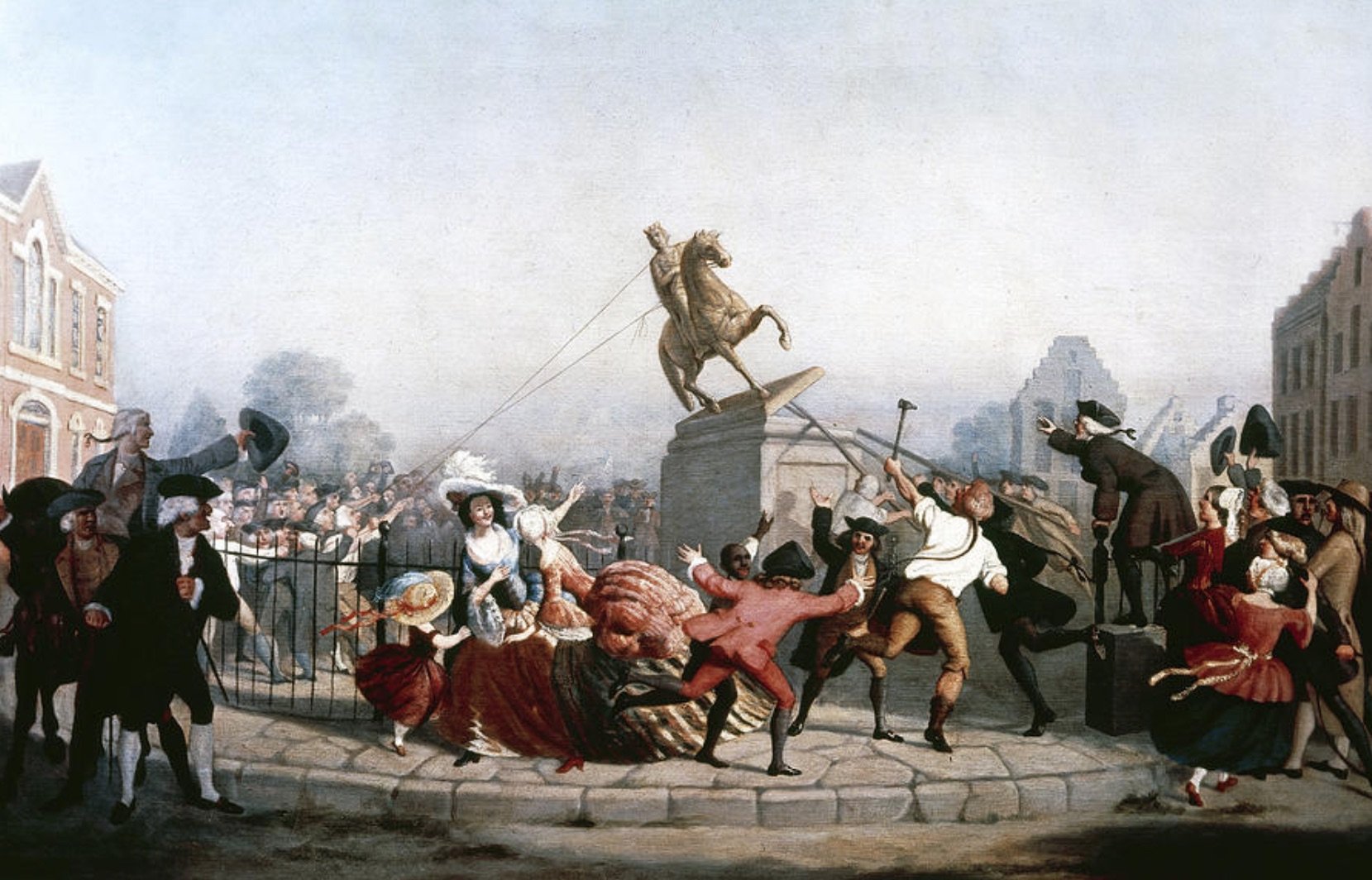
The prologue begins before Alfred was born, with a royal monument pulled down in New York and its lead carried into the Wolcott family’s Revolutionary story. Begin by separating the event, the family tradition, and later pictures of it.

New to these records? A little context.

A research account can combine historical documents, later recollections, images, and the author’s interpretation. Start with its source notes and captions. Ask who made each item, when it was made, and what kind of question it can answer.

What can a picture of 1776 actually tell us?
William_Walcutt_statue_George_III
William_Walcutt_statue_George_III · From the linked account. Its original credits and image status are preserved there.

Read the source exhibit & its explanation

The statue and the Wolcott family

This account introduces the statue and the Litchfield connection, with further readings and images. It is a later narrative, not an eyewitness document from the night the statue fell.

What to examine: Compare the dates attached to the event and the pictures. Follow the account’s references before treating a dramatic scene as evidence of exactly what happened.

Keep this distinction in mind: A later illustration can help imagine a scene without establishing its details. The linked narrative is a starting point, not a substitute for the underlying records.

Keep your question in view as you explore. The reading tray retains Melted Majesty → Litchfield, Connecticut. Close it to return to this point, or deliberately choose to explore outside the chapter.

8 entries · Page 1 of 2

From the chapter bibliographyFollow the referenceBibliographic illustration, not an original scan.

Reference from your chapter

Woodruff, G. C. (1845). The history of the town of Litchfield, Connecticut. Charles Adams.

Preserved from the working manuscript’s reference list. Publication details have not received a new independent citation audit.

Use the author, title and repository above to identify this work. A direct access link has not yet been established here.

From the chapter bibliographyFollow the referenceBibliographic illustration, not an original scan.

Reference from your chapter

Gibbs, G. (1846). Memoirs of the administrations of Washington and John Adams, edited from the papers of Oliver Wolcott, Secretary of the Treasury (Vol. 1). [Publisher VERIFY.]

Preserved from the working manuscript’s reference list. The supplied citation includes details still requiring review.

Use the author, title and repository above to identify this work. A direct access link has not yet been established here.

From the chapter bibliographyFollow the referenceBibliographic illustration, not an original scan.

Reference from your chapter

Memorial of Henry Wolcott, one of the first settlers of Windsor, Connecticut, and of some of his descendants. (1881). [Publisher VERIFY.]

Preserved from the working manuscript’s reference list. The supplied citation includes details still requiring review.

Use the author, title and repository above to identify this work. A direct access link has not yet been established here.

From the chapter bibliographyFollow the referenceBibliographic illustration, not an original scan.

Reference from your chapter

Wall, A. J. (1920). The equestrian statue of George III and the pedestrian statue of William Pitt erected in the city of New York, 1770. New-York Historical Society.

Preserved from the working manuscript’s reference list. Publication details have not received a new independent citation audit.

Use the author, title and repository above to identify this work. A direct access link has not yet been established here.

From the chapter bibliographyFollow the referenceBibliographic illustration, not an original scan.

Reference from your chapter

Bangs, I. (1890). Journal of Lieutenant Isaac Bangs, April 1 to July 29, 1776. As quoted in Wall (1920).

Preserved from the working manuscript’s reference list. Publication details have not received a new independent citation audit.

Use the author, title and repository above to identify this work. A direct access link has not yet been established here.

From the chapter bibliographyFollow the referenceBibliographic illustration, not an original scan.

Reference from your chapter

Gibbs, G. (1844, October). Account of the statue of George III, formerly standing on the Bowling Green, New York [Paper read before the New-York Historical Society]. Printed in Woodruff (1845, pp. 42-45) and Kilbourne (1859, pp. 103-105).

Preserved from the working manuscript’s reference list. The supplied citation includes details still requiring review.

Use the author, title and repository above to identify this work. A direct access link has not yet been established here.

← Continue your chapter journey · Follow the people in this chapter →

Your chapter stays open
Your book journey · Melted Majesty · Litchfield, ConnecticutExplore the evidence

Compare the original with its transcription and citation.

Explore outside this journey ↗

This chapter’s source collection as JSON